How to Create Your Own Diet Plan From Scratch

| May 13, 2022 / 15 min read
How to Create Your Own Diet Plan

Keto, paleo, low-carb, volumetrics, pescatarian, Mediterranean. These are just some of the most popular diets you can find on a quick online search. If you want an individualised healthy eating routine that focuses on your objectives, you need to create your own diet plan from scratch.

Certainly, you have heard the expression “you can’t out-train a bad diet.” This is painfully accurate. No matter how much you are working out, your end goal is going to be extremely harder, if not impossible, if your diet is not in sync.
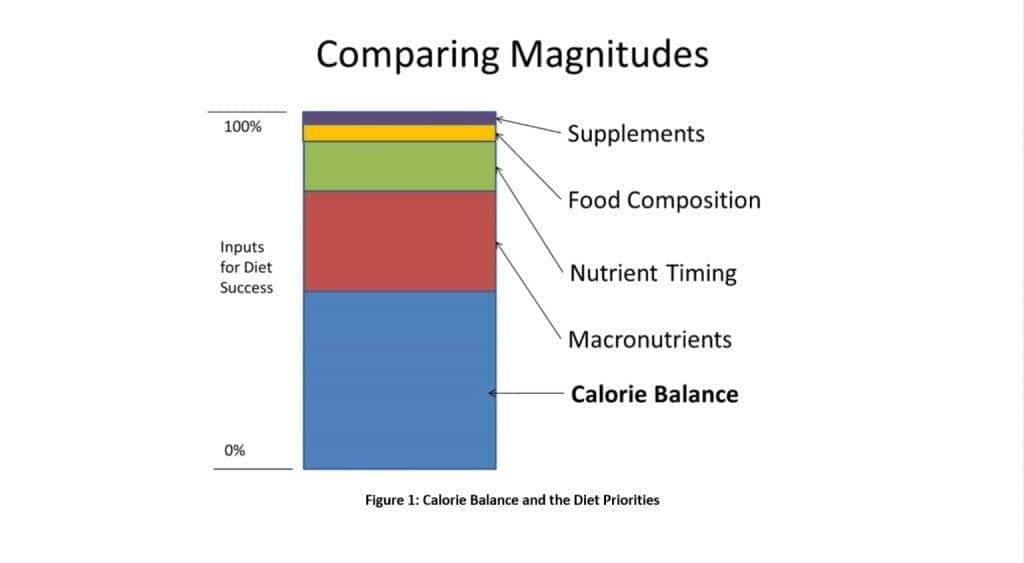
Magnitudes foe elements of nutrition

Below you will learn how many calories you need to survive, how much to eat depending on your objective (lose, maintain, or gain weight) and which foods to choose from so that you can get the most out of your new eating habit.

Although this is a step-by-step on how to create your own diet plan from scratch, you should have some basic knowledge of nutrition. If not, you can start by clicking here or here.

The Basics of a Diet

First and foremost, the word diet is usually associated with losing weight. However, that is should not be the case. The word diet in the following paragraphs means only an eating lifestyle, a habit of what you choose to eat and what you don’t, depending on your personal goals.

And that is the key here. To know what kind of diet you want to create for yourself to follow through, you need to answer a simple question and one that you probably already have the answer to: What do you want to achieve with your diet?

In the end, there are only three possible outcomes of following a diet:

  • Lose weight – caloric deficit
  • Maintain weight – caloric balance
  • Gain weight – caloric surplus

This is the first step in deciphering how to create your own diet plan as it will change substantially depending on your end goal.

What Is Calorie Deficit, Surplus, or Balance?

Calorie describes the amount of energy any type of food provides us when we consume that ingredient. We need to eat and drink calories to have our bodies functioning properly because we burn calories to perform even the most mundane activity such as sleeping or even breathing.

This balance between how much energy you ingest through food and beverages compared to how many calories you burn daily is what is referred to as energy balance.

When you hear fitness coaches or nutritionists explaining that the most important thing about your diet is calories in versus calories out, they are talking about the energy balance. At the end of the day, if you:

  • Burn more calories than you eat, you are in a caloric deficit
  • Burn as many calories as you consume, you are in a caloric balance
  • Burn fewer calories than you ingest, you are in a caloric surplus

This is the foundation of knowledge you need to know when learning how to create your own diet plan from scratch.

If you want to lose weight, you need to be on a caloric deficit diet plan. The downside of this is that you will likely lose muscle at the expense of losing extra body fat.

chin up

On the opposite side of the spectrum, if you want to build muscle, a caloric surplus diet is the way to go. This is also necessary for the hard gainers, people who eat a lot but can’t seem to gain muscle and maintain a skinny look no matter what they try to do.

However, if you are looking for body recomposition, which means to lose fat and gain muscle at the same time (maintaining your current body weight), the sweet spot might be difficult to hit, but you will be looking to have a calorie balance at the end of the day.

7 Ideal Calorie Deficit Foods

Macronutrients

You may know which category you find yourself in, but there is still another important piece of information you need to know before beginning to create your own diet plan. There are 4 macronutrients you need to get acquainted with:

  • Protein – 4 calories per gram
  • Fat – 9 calories per gram
  • Carbohydrates – 4 calories per gram
  • Alcohol – 7 calories per gram

These nutrients provide you with most of your energy. Depending on what diet plan you want to follow, the result can look very different when compared to two different nutritional approaches, even if they are both with the same amount of calories in the end.

Without getting too technical, here is what you need to know about macros:

Protein facilitates recovery, supports hypertrophy and enhances satiety. Know that not all proteins are the same, as there is a higher level of one compared to another. A 2019 study compared three different plant-based protein blends to whey protein isolate and the latter was more favourable for muscle building. So if you are vegan or vegetarian, you can still build muscle, but you probably will need to increase the amount of protein you are getting from your plant-based ingredients.

Related: Healthy Vegetarian Protein Sources for Athletes

Fat is also crucial for the functioning of your body. It is needed for cell membrane construction, hormone production, and fat-soluble vitamin absorption. Without getting too much into it, there is good fat and bad fat. Polyunsaturated fat is good for you and you can find it in fish, nuts, peanut butter, avocado and vegetable oils.

Carbs play a vital role in providing energy for high-intensity exercise (including cardio and resistance training) and it usually provides your body with a high level of fibre which can support the feeling of being satiated, blood glucose regulation and gastrointestinal health. Technically you could survive without carbs, but if you will pair your nutrition with some form of training, it is advisable to keep carbs in your diet plan.

Alcohol does not provide any nutritional value and should be kept to a minimum. Small doses of alcohol do not seem to interfere with fitness-related progress, but it can increase your calorie intake substantially which may make your new diet plan harder to follow.

Different parts of the nutritional whole

There are also micronutrients you need to keep in mind, but we won’t cover that here as it can feel like going down a rabbit hole with no return. If you want more information on micronutrients, click here.

Related: Sustainability is What Matters Most in Your Nutrition

How To Create Your Own Diet Plan From Scratch

Now you know the basics and can start to create your own diet plant and design it to your liking. For the following steps, you will need to do some calculations so grab a pen and paper.

The first step in designing your new diet plan is to estimate your total daily energy expenditure (TDEE). In other words, how many calories you burn on a daily basis. There are a few options on how you can find that out: assume, estimate, or observe.

Assume Approach

This is useful if you don’t want to lose time calculating how many calories you burn every day. This approach does not take into consideration your height, weight, sex, or age, and therefore it is less reliable compared to the other approaches available.

The magic number you are about to see below tends to get most people close to the real number they are aiming for.

CategoryTarget
Aggressive cut+- 11 cal/lb of bodyweight (24.2 cal/kg)
Moderate cut+- 13 cal/lb of bodyweight (28.6 cal/kg)
Maintenance+- 15 cal/lb of bodyweight (33.0 cal/kg)
Moderate bulk+- 17 cal/lb of bodyweight (37.4 cal/kg)
Aggressive bulk+- 19 cal/lb of bodyweight (41.8 cal/kg)

In the case above, depending on how much you weigh, you would know how many calories you should eat every day if you want to lose weight (cut) or gain weight (bulk) or anything in between.

For example, a person (let’s call him Bob) weighing 250 pounds who wants to lose weight aggressively (aggressive cut) should eat around 2,750 calories per day.

Estimate Approach

If you are not sure about utilising solely your body weight to determine how many calories you should be consuming, the estimate approach takes into consideration other variables. First, you will need to calculate your basal metabolic rate or resting metabolic rate. Here are some options on how to calculate that:

The Revised Harris-Benedict Equation

Male: 88.362 + (1.397 weight in kilo) + (4.799 x height in cm) – (5.677 x age in years)

Female: 447.593 + (9.247 x weight in kilo) + (3.098 x height in cm) – (4.330 x age in years)

The Milfin-St. Jeor Equation

Male: (9.99 x weight in kg) + (6.25 x height in cm) – (4.92 x age in year) + 5

1138.86 + 1187.5 – 172.2 + 5

Female: (9.99 x weight in kg) + (6.25 x height in cm) – (4.92 x age in years) – 161

The Cunningham Equation (1980)

500 + (22 x FFM [fat-free mass] in kilos)

The Katch-McArdle Equation

370 + (21.6 x FFM in kilos)

How to Create Your Own Diet Plan

Any of these equations should give you a good idea of your estimated basal/resting metabolic rate. If you want to get an even better number, you may use all equations and find the average.

With that number in hands, multiply it by an activity coefficient from the table below:

CategoryDescriptionMultiply By
SedentaryInactive job + very rare or minimal exercise1.2
Lightly activeLight exercise 1-3 days/week1.375
Moderately activeModerate exercise 3-5 days/week1.55
Very activeHard exercise 6-7 days/week1.725
Extremely activeHard daily exercise and other demanding tasks1.9

This final number is your rough estimate of total daily energy expenditure (TDEE) and is the number of calories you need to eat if you want to maintain your weight – body recomposition. But what about the extreme options of losing or gaining weight?

CategoryTarget
Aggressive cut60-70% of estimated TDEE
Moderate cut80-90% of estimated TDEE
Maintenance100% of estimated TDEE
Moderate bulk105-110 of estimated TDEE
Aggressive bulk115-120 of estimated TDEE

If you don’t want to work with percentages, you may use the table below with specific numbers, however, we would advise utilising the percentage approach.

CategoryTarget
Aggressive cut500-1000 fewer calories than of estimated TDEE
Moderate cut250-500 fewer calories than of estimated TDEE
MaintenanceExact amount of calories of estimated TDEE
Moderate bulk250-500 more calories than of estimated TDEE
Aggressive bulk500-1000 more calories than of estimated TDEE

Utilising the same person before as an example, Bob wants to lose weight aggressively. He weighs 114 kilos and utilising the Milfin-St Jeor Equation, his resting metabolic rate is 2159. He is moderately active which takes his TDEE to 3346. If he wants to aggressively cut weight, he would have to eat around 1000 calories less – around 2346 calories per day. In this example, that is the minimum Bob should eat, as lowering this amount in his current situation could lead to health problems.

Observe Approach

Utilising the observe approach to know how many calories you should eat requires dedication. For this, you need to track your body weight every morning and your daily energy intake (how many calories you ingested).

Like a true scientist, you need to try new things, observe, and write down your body weight fluctuations. Then you will know how many calories you should be eating to maintain, lose, or gain weight depending on your goal. The guideline is then to follow the table below.

CategoryTarget
Aggressive cutLose more than 1.0% of body weight per week
Moderate cutLose 0.25-1.0% of body weight per week
MaintenanceMaintain body weight
Moderate bulkGain 0.1-0.25% of body weight per week
Aggressive bulkGain more than 0.25% of body weight per week

What Should I Eat Then? Protein, Fat, and Carbs Quantities

Finally, you reach the practicality of how to create your own diet plan from scratch: choosing what food to eat.

Previously you found out how much energy your body needs to function (TDEE) and later, depending on your personal goal (losing, gaining, or maintaining weight) you found out how many calories you will have to eat daily.

Now, depending on how much physical activity you will be doing to achieve your goals, the amount of proteins, fats, and carbs that you will have to ingest is different.

Protein

Gaining weight:

  • 1.6-2.2 grams per kilo bodyweight
  • 0.7-1 gram per pound bodyweight

Losing weight

  • 1.8-2.7 grams per kilo bodyweight
  • 0.8-1.2 gram per pound bodyweight

Maintaining weight:

  • 1.6-2.2 grams per kilo bodyweight
  • 0.7-1 gram per pound bodyweight

When consuming protein, try to spread out your intake in all your meals.

Related: Is Eating Lots of Protein a Waste?

Some excellent options that maximise the amount of protein you get per dollar include:

  • Eggs
  • Milk
  • Canned tuna
  • Chicken breast
  • Ground turkey
  • Whey protein powder
chicken breast ideal calorie deficit foods
Chicken breast

Carbs

Carbs are the main source of energy when performing exercises. The higher the intensity of the exercise, the more our body taps into our carb storage to get fuel. However, if you are sitting at home resting or performing a minimum amount of activity, the body is utilising its fat reserve to keep functioning.

For this reason, the amount of carbs you will want to have in your diet is heavily influenced by the amount and intensity of the exercises you will be performing. A lifter that performs low volume resistance training with low rep ranges will not need to eat too many carbs, but an avid runner will.

Some people opt for a low-carb diet, although it does not significantly help with weight loss. A low-carb diet can be good for you if it fits your food preferences – some people find low-carb diets to be more satiating per calorie, therefore they end up eating less.

So what quantity of carbs should you eat now when you create your own diet plan?

  • Very low carb diet (keto style) – 50-60 grams per day
  • Low carb intake – 30% of your TDEE or up to 200 grams per day
  • Normal carb intake – 40-50% of your TDEE
  • Avid athletes – 50-60% of your TDEE or at least 6 grams of carbs per kilo of body weight

Some excellent options that maximise the amount of carbs you get per dollar include:

  • Oatmeal
  • Bananas
  • Brown rice
  • Pinto beans
  • Potatoes

How to Build Muscle for $8 a Day with Budget Meal Prepping

Fats

It is difficult to make recommendations for fat intake that can be generalised for most people. However counterintuitive it might sound, utilising your height to determine how much fat you should take is a viable option.

  • Below 150cm height – minimum of 30 grams per day of fat
  • Above 150cm height – subtract your 150 from your height (in cm), multiply the outcome by 0.5 and then add 30. The result is the minimum of grams per day of fat you should eat.

If you don’t trust this process, you should aim to keep between 20-35% of your total calories coming from fat.

You can play around with how much fat you would like to eat depending on how much you prefer carbs to fats and how dependent your physical activity is of carbs.

When choosing types of fat, limit the amount of artificial trans fats as much as possible and try to get a roughly even amount from monounsaturated, polyunsaturated and saturated fats.

Some excellent options that maximise the amount of fats you get per dollar include:

  • Olive oil
  • Peanut butter
  • Canned Tuna
  • Whole Eggs
olive oil
Olive oil

Which is Better: Carbs or Protein for Endurance?

Alcohol

Chances are you will likely drink once in a while during your new diet. While it should be kept to a minimum to not interfere with any progress inside the gym, alcohol can still be a part of your dietary plans.

Know that most alcohols are empty calories, meaning they will add up calories to your daily intake while not providing any benefit to your macros. Some types of alcohol are full of carbs and if you will ingest alcohol, consider swapping these calories with your carb intake of the day.

If you consume 200 calories in the form of alcoholic beverages, you would remove 50 grams of your daily carb intake.

Alcohol ingestion becomes more difficult if you create a strict diet in which you aim to lose weight as the calories from alcohol add up fairly quickly.

Conclusion

Now you are fueled with all the information you need and should know how to create your own diet plan from scratch. You know the number of calories your body needs to survive, the number of calories you aim to eat every day, and how you should divide your calorie intake into proteins, carbs, fats and alcohol.

But that is not the end. Once you begin following your diet, your body weight will fluctuate (if you are aiming to lose or gain weight). Body composition and energy expenditure are changing constantly and you will need to retake some of the steps you did when creating your diet.

Our bodies are programmed to survive with whatever we throw at them. If you began eating fewer calories, your body will automatically begin needing less energy to survive. Some people can also find it hard to gain weight even if they are in a caloric surplus diet.

The diet game is constantly changing and you will need to reassess your reality (physical activity, calorie intake) and reevaluate your diet plan again. You should already be tracking your body weight fluctuations and energy intake on a daily basis, so use that information in your favour.

Nutrition On a Budget

It is important not to overreact to sudden bodyweight fluctuations as there are different reasons for that to happen – hormones, water retention, glycogen storage. If after a few weeks your weight change is not going according to your plan, adjust your calorie target by altering carbs and fat intake first.

Hopefully, you are now one step closer to achieving your nutrition goals now that you know how to create your own diet plan from scratch.

Read More: How to Eat for Performance vs Health vs Looks

image sources

Tags:
build muscle create your own diet diet how to lose weight nutrition