Do you know how much dietary fat we need to consume? Don’t worry, it’s not an easy question. In fact, it is incredibly difficult to answer it straight away without having some background information laid out first.
Addressing the question of how much dietary fat is necessary can be perplexing, even for seasoned fitness professionals. To tackle this, it’s vital to precisely define the term “need.” Are we determining the minimum fat intake to prevent death, avert adverse effects, ensure practical feasibility, promote well-being, or support optimal physical function? Each aspect elicits a distinct response.
The information for this article is based on a scientific paper published by Eric Trexler at Stronger by Science website. He is a researcher, educator, coach, athlete and creator of the MacroFactor app.
This article concentrates on outlining key outcomes to establish informative boundaries for setting daily fat intake targets. Importantly, it pertains solely to healthy adults without underlying medical conditions and is not a substitute for medical advice. For personalised nutrition guidance, consulting a qualified professional with appropriate credentials and training is advisable.
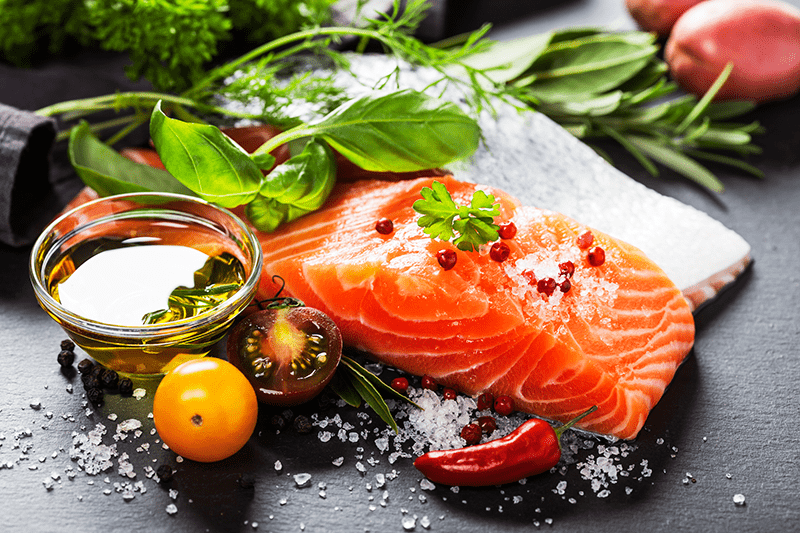
How Much Dietary Fat Do We Need to Consume?
Gallstone Prevention:
Gallstone prevention is a crucial consideration, given the gallbladder’s role in storing bile for fat digestion. Gallstones, small hardened formations within the gallbladder, can lead to painful bile buildup and may require gallbladder removal if they block a bile duct.
Clinical weight loss trials have long highlighted gallstone formation as a common side effect in cases of rapid and substantial weight loss. Quick weight loss programmes can prompt the liver to release excess cholesterol into bile, elevating the risk of gallstones. Moreover, extreme fat restriction independently increases the likelihood of gallstone formation, possibly due to reduced bile release when dietary fat is limited, allowing bile to accumulate.
In obesity-related weight loss trials, intervention diets often feature extreme measures, such as daily caloric intakes as low as 500-800 kcal and minimal fat consumption, sometimes in single-digit grams. Despite the fitness industry’s norm of discouraging diets below 1200 kcal/day, these trials have consistently demonstrated an increased risk of gallstone formation. Fortunately, adding a small amount of fat to the weight loss diet can significantly mitigate this risk. The best evidence suggests that a remarkably modest fat intake of 7-12 g/day is sufficient to counteract the negative impact of extreme fat restriction on gallstone formation.
Does Late-Night Eating Disrupt Metabolism?
Essential Fat Acids:

The need for essential fatty acids significantly influences dietary fat requirements. Fatty acids, with distinct roles based on their structure, range from short-chain to long-chain, saturated to polyunsaturated. Omega-3 and omega-6 fatty acids are crucial, with their positioning and spatial orientation defining their functions.
Humans can generally modify fatty acids, but an exception lies in omega-3 and omega-6 acids, deemed essential for optimal health. Clinical deficiencies are rare, complicating the determination of precise dietary targets. Adequate intake levels set by some authorities suggest 17 g/day of linoleic acid (omega-6) for males and 12 g/day for females, with arguments for an optimal range of 3-6 g/day. Adequate intake levels for α-linolenic acid (omega-3) are 1.6 g/day for males and 1.1 g/day for females.
Considering various global recommendations, total omega-3 fatty acids are advised at 1.4-2.5 g/day, with 140 to 600 mg/d from EPA and DHA. However, translating this into a daily total fat intake requires considering the concentrations in specific foods. For instance, while safflower oil and peanut oil both provide linoleic acid, their concentrations differ. Similarly, chia seeds and walnuts, both sources of α-linolenic acid, vary in concentration.
Setting minimum fat targets becomes complex due to unclear daily requirements for specific fatty acids and variations in concentrations among dietary sources. As a general guideline, maintaining an essential fatty acid intake could be achieved with at least 20-30 g/day of fat, especially with supplementation or intentionally choosing concentrated food sources.
Fat-Soluble Vitamin Absorption:

Vitamin absorption is a complex process with intricate interactions among micronutrients. While it’s established that dietary fat aids the absorption of fat-soluble vitamins (A, D, E, and K), the research on the specific amount of dietary fat needed and when it should be ingested lacks consistency.
Various studies show conflicting results. For instance, one study suggested that short-term vitamin D absorption improved with a low-fat meal, while others found no significant impact on long-term vitamin D levels. The impact of meal fat content on vitamin E absorption is also debated, further complicated when extending assessments to months, considering fat-soluble vitamins can be stored in body fat and tissues.
Despite knowing that fat malabsorption conditions increase the risk of fat-soluble vitamin deficiencies, determining a clear and concise daily minimum fat target for supporting absorption remains elusive. The most common recommendation suggests aiming for at least 10% of calories from dietary fat to support fat-soluble vitamin absorption. This translates to 11 g/day for a 1,000-kcal diet, 22 g/day for a 2,000-kcal diet, and 33 g/day for a 3,000-kcal diet. However, percentage-based recommendations have limitations, assuming a certain daily caloric intake. Reframing this target to 20-30 g/day acknowledges the inherent imprecision in rounding such numbers for practicality.
How to Eat for Performance Vs Health Vs Looks?
Sex Hormone Levels:
Up to this point, we’ve covered the essential aspects of establishing minimum dietary fat targets, emphasising the need to avoid elevated risks of gallstone development, insufficient essential fatty acid intake, and inadequate absorption of fat-soluble vitamins. These outcomes, from my standpoint, are unequivocally unacceptable, leading me to refrain from endorsing any diet recommendation suggesting less than 30g/day of fat. Moving beyond these non-negotiable necessities, we now delve into a desirable outcome, occasionally sacrificed in pursuit of specific athletic goals.

Numerous studies indicate that reductions in fat intake can correlate with decreases in circulating sex hormone levels. While this might not be an ideal outcome for many athletes, it’s a common observation in competitive activities such as endurance sports and physique sports.
In a meta-analysis by Whittaker and colleagues in 2021, examining the relationship between dietary fat intake and testosterone levels in men, it was found that low-fat diets induced statistically significant reductions in various testosterone measures. Similarly, a meta-analysis from 1999 revealed that transitioning from a high-fat to a low-fat diet decreased estrogen levels in women. Considering these findings, it appears justifiable to recommend maintaining fat intake at or above 20% of energy to prevent declines in sex hormones, with a lower boundary of 40-60 grams per day, based on a daily caloric intake of 2000-2500 kcal.
However, it’s crucial to acknowledge caveats. Excessive carb restriction has also been shown to reduce sex hormone levels, and framing fat intake as a percentage of total energy may not be ideal for very low-calorie diets. Additionally, low fat intake isn’t the sole factor influencing sex hormone levels in endurance and physique athletes. Insufficient energy intake and stores, relative to training load and daily energy expenditure, play substantial roles. Therefore, while adequate fat intake appears to support typical sex hormone levels, it doesn’t guarantee them or counteract drops driven by more impactful factors like extreme leanness or underfueling.
Practical Considerations:
Now that we’ve delved into the physiological and biochemical aspects, let’s touch on some practical considerations that contribute to establishing “realistic” lower boundaries for fat intake. Firstly, the presence of dietary fat enhances the overall satisfaction of a diet by influencing taste, smell, mouthfeel, and hedonic properties of meals. Coaches who have attempted recommending extremely low-fat diets often note a rapid decline in diet satisfaction and adherence reported by clients.

Setting aside hedonic preferences, aiming for extremely low fat intakes over extended periods is highly impractical. Those who have experimented with such an approach understand this reality. Fat is inherently present in foods we commonly perceive as protein or carbohydrate sources, and even foods deemed “approximately” fat-free contain trace amounts. On an individual food basis, this fat content may seem minimal, but over a full day, it accumulates surprisingly quickly. Creating a 2,000-Calorie diet with less than 20g of total fat, for instance, proves to be more challenging than expected.
Most of this article has focused on minimum daily fat requirements grounded in physiological needs. However, when transitioning to the practical aspects of designing and adhering to an extremely low-fat diet, practicality and feasibility often dictate that daily fat intake exceeds physiological bare minimums. Speculatively, this might explain why the United States and European countries recommend fat comprising 20-35% of total energy intake, while some global bodies and Asian countries set the lower boundary at 15%. Certain Asian cuisines align more with low-fat intakes, making lower average fat intake and recommendations more achievable at the population level.
If you want to read the full original article published by Eric Trexler, click here.
Conclusion:
Rather than critiquing those who find it difficult to provide a straightforward answer on how much dietary fat do we need to consume, it’s imperative to recognise the complexity inherent in the subject. Uncertainty about the lower limit of dietary fat requirements often indicates an awareness of the intricacies involved and an understanding that scientific evidence makes it challenging to present a singular, universally applicable number with high confidence.
For individuals aiming to avoid immediate medical events in the context of rapid fat loss diets lasting a few months, the daily minimum fat intake appears to be relatively low.
- Studies suggest that around 7-12 g/day of total fat intake could effectively reduce the risk of gallstone formation associated with very extreme low-fat weight loss diets. However, other factors come into play when determining the lower boundary.
- If one is concerned about ensuring adequate intake of essential fatty acids, the target for total fat depends on specific fat sources, but a heuristic of 20-30 g/day might be reasonable.
- This range could also serve as a suitable “bare minimum” target for supporting fat-soluble vitamin absorption. For those looking to maintain sex hormone levels, it’s advisable not to go below 40-60 g/day.
These are rough estimates of absolute minimums, not recommendations. It’s important to clarify that asserting or implying that low-fat diets are inherently superior to other dietary approaches in all cases is not the intention. The focus here is on addressing the question of how much fat we truly need as a “bare minimum.” Whether a low-fat (or very-low-fat) diet is optimal, advisable, enjoyable, or tolerable for an individual in specific circumstances is a different conversation.
As usual, before you make any changes to your dietary lifestyle, it is advisable to consult a doctor or nutritionist to see the implications as one might have with such changes. As everyone should know by now, each person is a unique individual with different genome, lifestyle, ambience, and predispositions that should be taken into consideration before reaching any conclusion.
Check out more content from BOXROX we are sure you are going to love it:
5 “Healthy Foods” Filled with Sugar You Should Avoid
Why You’re Always Tired and How to Fix It
How To Take the Fitness Age Challenge and Find Out How Old You Really Are