It’s very likely that you’ve seen articles and blog posts telling you to ditch a certain food over another, what products you should avoid, and how one diet is the best of them all and whatever else you try is evil.
What most of these articles fail to acknowledge is that nutrition is way more nuanced, incredibly personal, and that lasting changes take time. Ultimately, the “right” way to eat is one that aligns with your goals.
While the extent of your goals is unique to you, there are three basic approaches to your nutrition:
- Eating for performance
- Eating for health
- Eating for looks
While the basics of good nutrition are incredibly similar (if not the same) for all approaches, the finer details – the last 20% of your nutrition plan – will look different depending on your goal.
This is important, because if the basis of your nutritional habits could be improved on, there’s no point focusing your time, efforts and energy trying to improve on the marginal.
Fitness and health are both intrinsically linked with nutrition. A good fitness program unaccompanied by solid nutrition will only yield so many results. To get healthy you don’t only have to incorporate activity into your life but also build healthy nutritional habits.
Nutrition basics
Humans need to eat to fuel themselves – ultimately, that’s what nutrition comes down to: getting the necessary fuel to survive day to day.
There are higher quality fuels that can help you better maintain your health, feel good, have energy and sustain or boost your performance, but stripped down to its most basic function, nutrition will simply sustain your body’s functions and keep you moving.
Your body requires the following nutrients to thrive:
- Vitamins
- Minerals
- Protein
- Carbohydrates
- Fat
A healthy diet will include a good balance of all the nutrients above. No matter what type of diet you follow – if you follow one at all – there are a handful of healthy nutrition basics you should follow to achieve your best results. These nutrition basics can also be considered healthy eating habits, and include:
- Eating the right amount of calories: the “right” amount of calories is one that balances the energy you consume with the energy you expend, essentially supporting your physical activity without exceeding what your body needs. For most people, eating the right amount of calories is the single most important eating habit to follow to stay healthy, perform well and look good.
- Eating whole foods: whole foods refer to natural, unprocessed foods. Generally, these have a greater nutritional value than processed foods. No matter what diet you follow, predominantly eating whole foods has consistently been found to promote health and prevent disease.
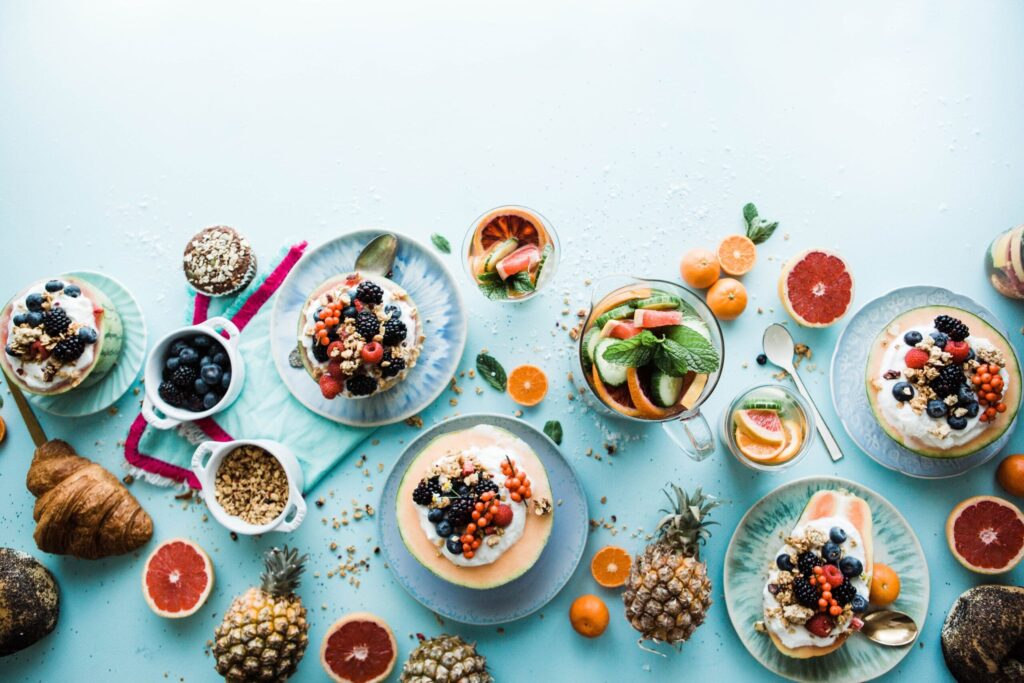
- Consuming a wide variety of nutrients: in other words, eat the rainbow. Consuming a wide range of foods will ensure you’re getting a balanced diet and your body is receiving all the nutrients it needs. A variety of colours and textures in your food is a good way to make sure you’re meeting your nutritional needs.
- Enjoying your food and be consistent: a habit is a practice you can stick to, long term. Enjoyment in your nutrition is key to building lasting habits and if you follow a restrictive diet which brings you stress, you’re less likely to succeed in the long run. Progress takes time
Eating For Performance Vs Health Vs Looks
Nutrition is more than its basics, and if you get the ground base right, it can help you build muscle, lose weight, support your performance or give you better health.
If you have mastered the above nutrition basics, then you can spend your time and place your energy and efforts into achieving a specific goal.
Using nutrition to support your health, help you look a certain way, or to enhance your performance overlaps and has the same core foundations, but if you’re chasing the fringes of these areas, you’ll get to a point where you can’t achieve it all.
At some point, chasing fitness performance stops being healthy, same goes for pursuing a certain look. Conversely, chasing health might stop you from achieving your ultimate performance levels, or reaching a specific look. The hunt for a six-pack won’t allow you to attain peak performance, and supporting your performance won’t lead to the leanest body you could ever get.
None of this means that one goal is more valid than the other, they’re just different and require different nutritional approaches.
The simplest way to understand this is to picture nutrition as a game of volumes. Whole foods with a high nutritional value are healthier but harder to digest, and you’ll need a bigger volume of them to consume the same number of calories a chocolate bar, for example, could provide.
A bunch of bananas and a bar of chocolate both provide the same amount of energy, but serve widely different purposes in the process of helping you achieve your goals.
Eating for performance
If you want to become one of the best athletes in the world and train four or five hours every day, at some point in your chase you’ll have to sacrifice some level of your overall health.
Similarly, fuelling your body to support your training won’t lead to your leanest self.
Someone in a calorie deficit will struggle to perform as well as someone who’s on a calorie balance or even calorie surplus, as they’ll have the energy to do what they demand from their bodies and the nutrients to recover.
Chasing peak performance will make you incredibly fit, it’s a career for some, and is an incredibly valid goal, but chances are you won’t be healthy. The same applies for performance and aesthetics.
“There are some athletes out there that can absolutely do that; they can be very lean and perform at an extremely high level, but for most people, being a little bit higher on body fat percentage allows them to actually be performing at a higher athletic level,” says Dr Mike Molloy, the founder of the successful nutrition coaching company M2 Performance Nutrition.
Hormonal health, which can be managed through nutrition, as well as meeting the energy demands that training places on your body, will mean you’ll hold 2-6% body fat higher than what you could achieve if you wanted to look your absolute leanest.
“Will CrossFit make you look stronger and better, and will you lose weight? Yes,” explains Dr Molly. “But once you start to train for elite performance, it’s not necessary that you’re going to reach your elite level of body composition at the same time.”
It’s also dangerous to use the best people in the planet – who often also have the best genetics – as an example for the rest of us, Dr Molloy continues.
How to eat for performance?
The core of your nutrition should still come from high-quality, unprocessed foods, but depending on how much you’re training, you’ll have to start playing the volume game.
It is simply impossible to consume enough calories through fruits, vegetables and simple carbohydrates without feeling incredibly full, which in turn affects your training session and hinders your goal. To support your performance, you’ll have to start consuming dense carbohydrate sources such as rice, bread and oats, or protein shakes, juices and sport drinks.
You have to make some sacrifices to the food quality you consume to get to the total caloric requirement that peak performance at a high level requires. But you should still consume high-quality food.
“It’s not a question of ‘do I eat less high quality, or do I eat a ton?’ It’s both,” says Dr Molloy. “Yes, you should eat a high-quality diet, but you also need to use dense sugar-based carbohydrates to eat enough food.”
Eating for aesthetics
At some point, getting leaner will not be in the overall best interest for either your health or performance.
Eating for aesthetics will alter your body composition, which is ultimately what you’re trying to achieve. To reach a lean state, most people will need to enter a calorie deficit and eat clean the vast majority of the time.
This caloric deficit should be pursued in a healthy manner, ensuring you’re still able to sleep, have energy, and your mood and hormonal health are still in good shape.
This might mean cutting your training hours. Bodybuilders don’t train for hours on end – the sweet spot in the sport is much lower than what you’d need to do to achieve your highest fitness level and trying to chase that goal in a calorie deficit would certainly lead to burnout.
“If you’re going to stress your body by going into a calorie deficit, then you need to reduce stress from other aspects of your life,” says Dr Molloy.
You’ll look your leanest at a lower body fat percentage, but you need to be willing to sacrifice your performance.
It is easy to exceed the caloric requirement for your goal by consuming dense carbohydrates that won’t satiate you. A whole plate of fruit has the same amount of calories as a sugary drink, but one you finish in less than a minute and leave you hungry for more food, while the other will satiate you.
Eating for health
Nutrition is a huge contributing aspect to health and eating healthily can prevent many forms of disease.
Eating for health – and pursuing health in all other aspects of your life – should follow the principles laid out at the start of this article; your diet should constitute of fruits, veggies, nuts and seeds, high-quality, unprocessed foods.
Your day-to-day athlete training one hour per day probably doesn’t require many complex carbohydrates to function to the level they want to, and so can get most of their calories through fruits and vegetables.
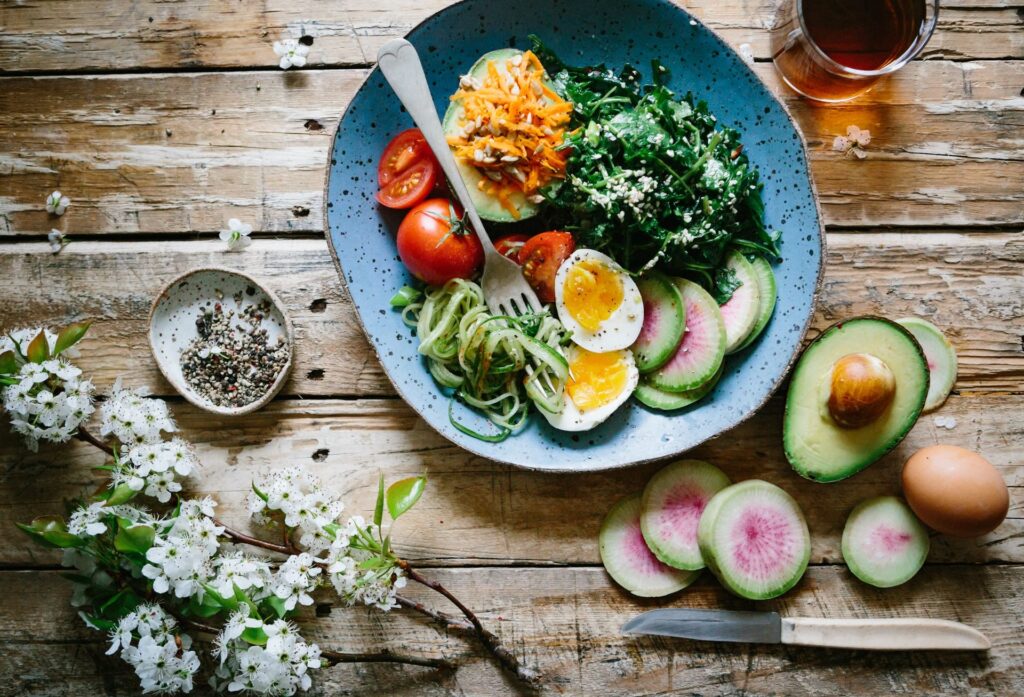
“If you used rice and oats and bread to get all of your carbs in, you’d probably end up being hungry,” explains Dr Molloy. If you’re not hungry then you’re probably overeating.
“Using potatoes and vegetables, bananas and apples and stuff like that, you’ll feel more satiated, have a higher quality diet, less inflammation,” he continues, as well as give you the energy to work a full-time job and work out on the side.
Again, it comes down to the volume game.
For example, say you should eat about 1,500 calories a day to be on a calorie balance and you eat this number of calories but are still hungry. One way to fix this is to increase the volume of the food (try to meet your calorie requisite with sweet potatoes and broccoli instead of bread), which in turn will help you feel fuller for longer.
Nutrition for different goals
Once you’ve established what your goal is, make sure you get the basics right. If this is the case, you’re already about 80% into being successful.
Only afterwards spend your energy working out the fringe details that’ll bring the last fraction of the results.
It’s important to be honest with yourself and identify what your real goal is, and then align your actions to your goal, together with your expectations to how well you commit to them.