Building six-pack abs requires more than just endless crunches and cardio. While a low body fat percentage is crucial, the foundation of any sculpted midsection is nutrition. Eating the right foods can enhance fat loss, preserve lean muscle, and promote overall metabolic health.
Below are ten scientifically-backed foods that support abdominal definition and body recomposition goals.
1. Eggs
Eggs are a complete source of protein, providing all nine essential amino acids. Protein increases satiety and boosts thermogenesis, which contributes to fat loss. A randomized controlled trial by Vander Wal et al. (2005) found that participants who consumed eggs for breakfast felt more satisfied and consumed fewer calories throughout the day compared to those who ate bagels.
[wpcode id=”229888″]Moreover, eggs contain vitamin D, which is linked to reduced abdominal fat. A 12-month study by Mason et al. (2011) found that higher serum vitamin D levels were associated with lower visceral fat levels in overweight women. Egg yolks also contain choline, a nutrient involved in fat metabolism.
2. Greek Yogurt
Greek yogurt is rich in casein and whey proteins, both of which help maintain lean muscle mass during fat loss. A study by Josse et al. (2011) revealed that women who consumed higher-protein dairy while in a calorie deficit lost more fat and gained more lean mass than those who didn’t. Greek yogurt also contains probiotics, which can influence gut microbiota composition and reduce inflammation. A balanced gut microbiome has been associated with lower body fat, as highlighted by Turnbaugh et al. (2006).

3. Salmon
Salmon provides high-quality protein and omega-3 fatty acids, particularly EPA and DHA, which have been shown to enhance fat oxidation and improve insulin sensitivity. A study by Couet et al. (1997) demonstrated that subjects consuming fish oils had significantly greater fat loss over six weeks compared to controls. Omega-3s also modulate cortisol levels, a stress hormone that can encourage abdominal fat storage. Furthermore, salmon is rich in B vitamins, which support energy metabolism.
4. Quinoa
Unlike most grains, quinoa is a complete protein and contains significant fiber, which aids in satiety and glycemic control. According to a study by Keenan et al. (2006), increased dietary fiber intake is associated with reductions in visceral fat and improvements in insulin sensitivity. Quinoa’s complex carbohydrates help stabilize blood sugar levels, preventing insulin spikes that can lead to fat storage. It is also rich in magnesium and iron, nutrients essential for efficient energy metabolism.
5. Leafy Greens
Spinach, kale, and other leafy greens are extremely low in calories but high in fiber and micronutrients, including calcium. Calcium has been shown to play a role in lipid metabolism. Zemel et al. (2004) found that increased calcium intake can enhance fat loss during calorie restriction, particularly from the abdominal region.

Additionally, leafy greens are rich in antioxidants, such as lutein and beta-carotene, which reduce inflammation and oxidative stress that can impair fat loss.
6. Almonds
Almonds are a potent source of healthy fats, protein, and fiber. A study by Wien et al. (2003) demonstrated that overweight subjects who included almonds in a calorie-restricted diet experienced greater reductions in waist circumference and fat mass than those who consumed complex carbohydrates. Almonds also provide magnesium, which supports hundreds of enzymatic reactions, including those involved in energy metabolism and fat oxidation.
7. Green Tea
Green tea contains catechins, specifically epigallocatechin gallate (EGCG), which has been shown to increase fat oxidation and thermogenesis. A study by Hursel et al. (2009) reported that green tea extract enhanced weight loss and reduced waist circumference in overweight individuals. Additionally, caffeine in green tea synergizes with catechins to promote energy expenditure. This makes green tea a thermogenic beverage that can aid abdominal fat loss.
8. Chicken Breast
Chicken breast is a lean source of protein that supports muscle maintenance and increases satiety. Protein requires more energy for digestion compared to fats and carbohydrates, a phenomenon known as the thermic effect of food (TEF).
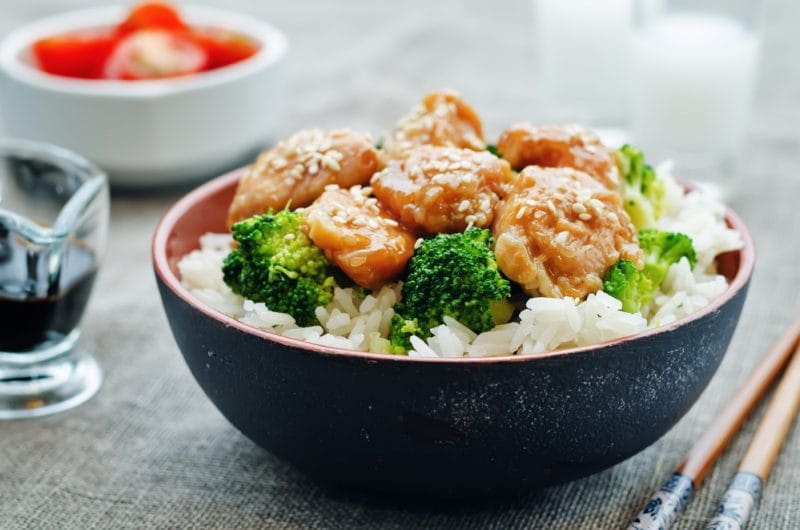
According to Halton and Hu (2004), higher-protein diets improve body composition by enhancing fat loss and preserving lean tissue. Regular inclusion of lean meats like chicken breast supports the high protein needs required during a fat loss phase.
9. Avocados
Avocados are high in monounsaturated fats, particularly oleic acid, which has been associated with reductions in belly fat. A study by Wang et al. (2014) found that participants who consumed avocado daily experienced decreases in visceral fat distribution. Avocados also offer potassium, fiber, and antioxidants, which support metabolic health and reduce inflammation. Their satiating nature helps regulate appetite and prevent overeating.
10. Berries
Berries such as blueberries, raspberries, and strawberries are low in calories and rich in fiber, which supports satiety and glycemic control. They also contain anthocyanins, plant compounds shown to influence fat metabolism and improve insulin sensitivity. A study by Prior et al. (2008) found that berry consumption improved glucose metabolism and reduced markers of inflammation. Including berries in a calorie-controlled diet can aid in reducing abdominal adiposity.
Conclusion
When aiming for a defined midsection, strategic food choices can significantly amplify your results. Incorporating nutrient-dense, thermogenic, and satiating foods can enhance fat loss while preserving muscle. Prioritizing whole foods that support metabolism, regulate hormones, and reduce inflammation creates a biochemical environment conducive to six-pack abs.
Key Takeaways Table
References
Couet, C., Delarue, J., Ritz, P., Antoine, J.M. and Lamisse, F., 1997. Effect of dietary fish oil on body fat mass and basal fat oxidation in healthy adults. International Journal of Obesity, 21(8), pp.637-643.
Halton, T.L. and Hu, F.B., 2004. The effects of high protein diets on thermogenesis, satiety and weight loss: a critical review. Journal of the American College of Nutrition, 23(5), pp.373-385.
Hursel, R., Viechtbauer, W. and Westerterp-Plantenga, M.S., 2009. The effects of green tea on weight loss and weight maintenance: a meta-analysis. International Journal of Obesity, 33(9), pp.956-961.
Josse, A.R., Atkinson, S.A., Tarnopolsky, M.A. and Phillips, S.M., 2011. Diets higher in dairy foods and dietary protein support favorable changes in body composition in women during weight loss. Journal of Nutrition, 141(9), pp.1626-1634.
Keenan, M.J., Zhou, J., McCutcheon, K.L., Raggio, A.M., Bateman, H.G., Todd, E., Jones, C.K., Tulley, R.T., Melton, S., Martin, R.J. and Davidson, L.A., 2006. Effects of resistant starch, a non-digestible fermentable fiber, on reducing abdominal fat. Nutrition & Metabolism, 3(1), p.12.
Mason, C., Xiao, L., Imayama, I., Duggan, C.R., Bain, C., Foster-Schubert, K.E., Kong, A., Campbell, K.L., Wang, C.Y., Neuhouser, M.L. and Ulrich, C.M., 2011. Effects of weight loss on serum vitamin D in postmenopausal women: the role of dietary fat reduction. Nutrition Journal, 10(1), p.28.
Prior, R.L., Wu, X., Gu, L., Hager, T.J., Hager, A. and Howard, L.R., 2008. Whole berries versus berry anthocyanins: interactions with dietary fat levels in the C57BL/6J mouse model of obesity. Journal of Agricultural and Food Chemistry, 56(3), pp.647-653.
Turnbaugh, P.J., Ley, R.E., Mahowald, M.A., Magrini, V., Mardis, E.R. and Gordon, J.I., 2006. An obesity-associated gut microbiome with increased capacity for energy harvest. Nature, 444(7122), pp.1027-1031.
Vander Wal, J.S., Marth, J.M., Khosla, P., Jen, K.L. and Dhurandhar, N.V., 2005. Short-term effect of eggs on satiety in overweight and obese subjects. Journal of the American College of Nutrition, 24(6), pp.510-515.
Wang, L., Bordi, P.L., Fleming, J.A., Hill, A.M. and Kris-Etherton, P.M., 2014. Effect of a moderate fat diet with and without avocados on lipoprotein particle number, size and subclass distribution in overweight and obese adults: a randomized, controlled trial. Journal of the American Heart Association, 4(1), p.e001355.
Wien, M., Bleich, D., Raghuwanshi, M., Gould-Forgerite, S., Gomes, J., Monahan-Couch, L. and Oda, K., 2003. Almonds vs complex carbohydrates in a weight reduction program. International Journal of Obesity, 27(11), pp.1365-1372.
Zemel, M.B., Richards, J., Milstead, A., Campbell, P. and Effects, D., 2004. Dairy augmentation of total and central fat loss in obese subjects. International Journal of Obesity, 28(9), pp.1213-1219.