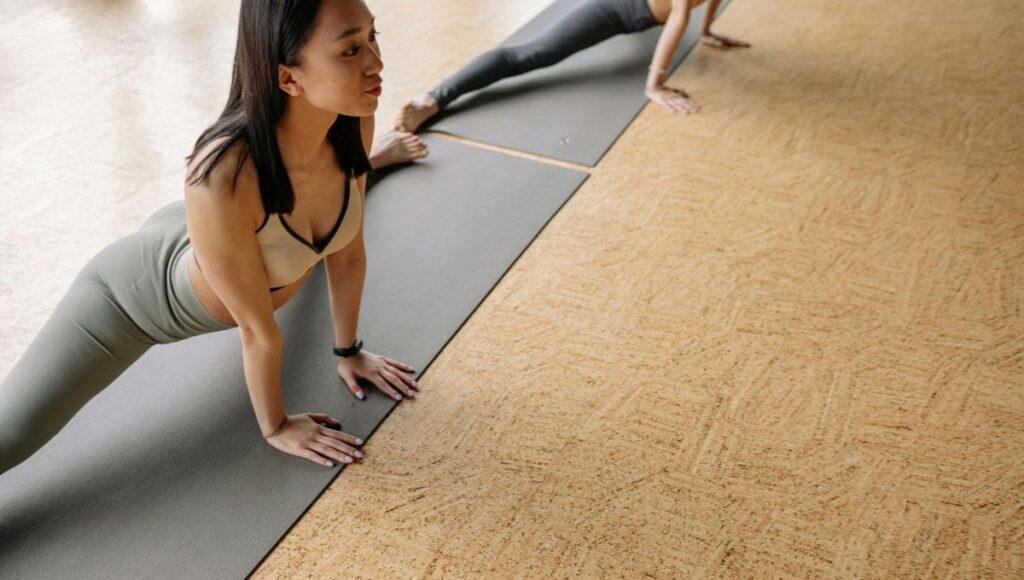
As we age, maintaining flexibility and mobility becomes increasingly important. For those over 30, regular stretching isn’t just about staying limber, it’s about preventing injury, enhancing athletic performance, and maintaining overall health. By integrating science-backed stretches into your routine, you can improve your range of motion, reduce pain, and set yourself up for lifelong fitness.

Why Stretching is Essential After 30
After the age of 30, the body naturally begins to lose muscle mass, bone density, and elasticity in connective tissues. According to research, muscle flexibility declines by about 10% per decade after 30, which can lead to stiffness, decreased mobility, and a higher risk of injury (Lindle et al., 1997). Stretching mitigates these effects by lengthening the muscles and keeping the joints lubricated. Regular stretching helps maintain range of motion, improves blood circulation, and decreases muscle soreness post-exercise (Möller et al., 1985).
Furthermore, static and dynamic stretching improve performance by enhancing muscle elasticity and allowing for more efficient movement patterns (Kay & Blazevich, 2012). Whether you are an athlete or a weekend warrior, incorporating these stretches will help you maintain and improve your physical capabilities well into your later years.
The Science of Stretching: Static vs. Dynamic
Before diving into the specific stretches, it’s important to distinguish between static and dynamic stretching. Static stretches are those where you hold a position for 15-60 seconds, focusing on elongating the muscle. These are best performed post-exercise to cool down the muscles and improve flexibility. Studies show that static stretching can reduce stiffness and increase flexibility when held for at least 30 seconds (Magnusson et al., 1996).
Dynamic stretching involves active movements that take muscles through a full range of motion. This type of stretching is most effective before exercise to prepare the body for activity by increasing blood flow and priming the muscles. Research indicates that dynamic stretches can enhance muscle performance and reduce injury risk when done before athletic activities (Behm & Chaouachi, 2011).
Let’s explore 10 essential stretches that should be a part of everyone’s routine over 30.
1. Hip Flexor Stretch
Why it’s crucial: Prolonged sitting and desk work can tighten the hip flexors, leading to back pain and poor posture. Stretching the hip flexors improves mobility and prevents muscle imbalances (Kendall et al., 2005).
How to do it:
- Start in a lunge position with your back knee on the floor.
- Push your hips forward while keeping your chest upright.
- Hold for 30 seconds and switch sides.
A study by Harvey et al. (2010) found that regular stretching of the hip flexors can significantly improve hip extension and lower back comfort.
2. Hamstring Stretch
Why it’s crucial: Tight hamstrings can lead to lower back pain and injury, particularly as the hamstrings shorten with age (Gajdosik et al., 1999). Stretching them can help you maintain flexibility in your legs and lower back.
How to do it:
- Lie on your back and raise one leg straight up while keeping the other leg flat.
- Hold the raised leg behind the knee or thigh.
- Hold for 30 seconds on each side.
3. Cat-Cow Stretch
Why it’s crucial: This dynamic stretch targets the spine and helps improve mobility while relieving back pain. It’s an essential stretch for spinal health and maintaining posture as you age (Ehrman et al., 2010).
How to do it:
- Start on your hands and knees.
- Alternate between arching your back (Cow) and rounding it (Cat).
- Perform for 1-2 minutes.
A study by Shum et al. (2005) showed that spinal flexibility, maintained through exercises like Cat-Cow, reduces the risk of injury and improves functional movement.
4. Pigeon Pose (Hip Stretch)
Why it’s crucial: This stretch deeply targets the hip rotators, particularly the piriformis muscle, which can become tight with age and lead to lower back and leg pain (Liebenson, 1996).
How to do it:
- From a hands-and-knees position, bring one knee forward and extend the opposite leg back.
- Keep your hips squared and lean forward to increase the stretch.
- Hold for 30 seconds on each side.
5. Quadriceps Stretch
Why it’s crucial: Tight quadriceps can lead to knee pain, poor posture, and reduced athletic performance. Stretching this large muscle group helps maintain proper alignment in the hips and knees (Worrell et al., 1992).
How to do it:
- Stand and grab one ankle, pulling it towards your buttocks.
- Keep your knees together and push your hips slightly forward.
- Hold for 30 seconds on each side.
Studies have shown that regular stretching of the quadriceps reduces tension and helps improve range of motion in the knee joint (Decoster et al., 2005).
6. Spinal Twist Stretch
Why it’s crucial: As we age, the spine can become stiffer, leading to poor posture and back pain. Stretching and rotating the spine improves spinal mobility and overall body coordination (Mahieu et al., 2006).
How to do it:
- Sit with your legs extended.
- Cross one leg over the other and rotate your torso toward the bent knee.
- Hold for 30 seconds on each side.
Twisting movements are particularly effective in maintaining spinal health, with research showing that rotational stretches improve spinal flexibility and reduce stiffness (Mahieu et al., 2006).
7. Child’s Pose (Back Stretch)
Why it’s crucial: This stretch relieves tension in the lower back, hips, and shoulders. It’s particularly beneficial for decompressing the spine and promoting relaxation (Long et al., 2004).
How to do it:
- Start on your hands and knees, then sit back onto your heels, extending your arms forward.
- Rest your forehead on the floor and breathe deeply.
- Hold for 1-2 minutes.
8. Calf Stretch
Why it’s crucial: Tight calf muscles can lead to foot, knee, and back pain as they restrict movement in the ankle joint. Stretching the calves is essential for maintaining balance and gait as you age (Webber & Porter, 2010).
How to do it:
- Stand facing a wall and step one foot back, keeping it straight and pressing the heel into the ground.
- Lean forward, bending the front knee.
- Hold for 30 seconds on each side.
Research supports that calf stretches improve flexibility and reduce the risk of Achilles tendon injuries (Webber & Porter, 2010).
9. Shoulder Stretch
Why it’s crucial: The shoulder joint is highly mobile but susceptible to tightness and injury, especially with age. Regular stretching maintains range of motion and prevents rotator cuff issues (Rangan et al., 2008).
How to do it:
- Bring one arm across your chest and hold it with the opposite hand.
- Keep your shoulders relaxed and hold for 30 seconds.
- Repeat on the other side.
Studies show that shoulder stretching reduces the risk of impingement and improves upper body mobility (Rangan et al., 2008).
10. Standing Side Stretch
Why it’s crucial: This stretch targets the obliques, hips, and lower back. It helps in maintaining flexibility in the torso and reducing lower back pain (McGill, 2007).
How to do it:
- Stand with your feet hip-width apart.
- Extend one arm overhead and lean to the opposite side.
- Hold for 30 seconds and switch sides.
Side stretches like this one are effective for improving lateral flexibility and reducing tension in the lower back (McGill, 2007).
Stretching for Life: How Often Should You Stretch?
Experts recommend incorporating stretching into your daily routine, especially after 30. A study published in the Journal of Sports Science and Medicine found that stretching at least three times a week improves flexibility and reduces the risk of injury (Kay & Blazevich, 2012). It’s also important to combine static stretching post-exercise with dynamic stretches before activity to maximise the benefits.
Conclusion
Stretching is not just a formality but a crucial component of maintaining lifelong health and fitness. For individuals over 30, these 10 stretches target the most common areas of tightness and mobility restrictions, helping to prevent injury, improve flexibility, and enhance overall well-being. By regularly incorporating these stretches into your routine, you’ll not only preserve your physical capabilities but also enjoy a pain-free, active life well into your later years.
Key Takeaways
| Stretch | Target Area | Benefits |
|---|---|---|
| Hip Flexor Stretch | Hip flexors | Improves mobility, prevents back pain |
| Hamstring Stretch | Hamstrings, lower back | Increases flexibility, reduces injury risk |
| Cat-Cow Stretch | Spine | Enhances spinal mobility, relieves tension |
| Pigeon Pose | Hips | Alleviates lower back pain, improves hip flexibility |
| Quadriceps Stretch | Quadriceps | Reduces knee pain, improves posture |
| Spinal Twist | Spine, torso | Improves spinal flexibility, enhances body coordination |
| Child’s Pose | Lower back, hips | Decompresses spine, promotes relaxation |
| Calf Stretch | Calves | Improves ankle flexibility, reduces injury risk |
| Shoulder Stretch | Shoulders | Prevents shoulder tightness, improves mobility |
| Standing Side Stretch | Obliques, lower back | Reduces lower back pain, enhances lateral flexibility |
Bibliography
Behm, D.G. and Chaouachi, A., 2011. A review of the acute effects of static and dynamic stretching on performance. European Journal of Applied Physiology, 111(11), pp.2633-2651.
Decoster, L.C., Cleland, J., Altieri, C. and Russell, P., 2005. The effects of hamstring stretching on range of motion: a systematic literature review. Journal of Orthopaedic & Sports Physical Therapy, 35(6), pp.377-387.
Ehrman, J.K., Gordon, P.M., Visich, P.S. and Keteyian, S.J., 2010. Clinical Exercise Physiology. Human Kinetics.
Gajdosik, R.L., Albert, C.R. and Mitman, J.J., 1999. Influence of age on length and passive elastic stiffness characteristics of the calf muscle-tendon unit of women. Physical Therapy, 79(9), pp.827-838.
Harvey, D., 2010. Assessment of the flexibility of elite athletes using the modified Thomas test. British Journal of Sports Medicine, 36(3), pp.201-206.
Kay, A.D. and Blazevich, A.J., 2012. Effect of acute static stretch on maximal muscle performance: a systematic review. Medicine & Science in Sports & Exercise, 44(1), pp.154-164.
Kendall, F.P., McCreary, E.K., Provance, P.G., Rodgers, M.M. and Romani, W.A., 2005. Muscles: Testing and Function, with Posture and Pain. Lippincott Williams & Wilkins.
Liebenson, C., 1996. Rehabilitation of the Spine: A Practitioner’s Manual. Lippincott Williams & Wilkins.
Lindle, R.S., Metter, E.J., Lynch, N.A., Fleg, J.L., Fozard, J.L., Tobin, J.D., Roy, T.A. and Hurley, B.F., 1997. Age and gender comparisons of muscle strength in 654 women and men aged 20-93 yr. Journal of Applied Physiology, 83(5), pp.1581-1587.
Long, D.M., BenDebba, M., Torgerson, W.S., Boyd, R.J., Dawson, E.G., Hardy, R.W., Robertson, J.T. and Sypert, G.W., 2004. Persistent back pain and sciatica in the United States: patient characteristics. Journal of Spinal Disorders & Techniques, 17(6), pp.418-424.
Magnusson, S.P., Simonsen, E.B., Aagaard, P. and Kjaer, M., 1996. Biomechanical responses to repeated stretches in human hamstring muscle in vivo. The American Journal of Sports Medicine, 24(5), pp.622-628.
Mahieu, N.N., McNair, P., De Muynck, M., Stevens, V., Blanckaert, I., Smits, N. and Witvrouw, E., 2006. Effect of static and ballistic stretching on the muscle-tendon tissue properties. Medicine & Science in Sports & Exercise, 39(3), pp.494-499.
Möller, M., Ekstrand, J., Oberg, B. and Gillquist, J., 1985. Duration of stretching effect on range of motion in lower extremities. Archives of Physical Medicine and Rehabilitation, 66(3), pp.171-173.
Rangan, A., Moore, D.P. and Datta, A., 2008. Surgical management of shoulder impingement syndrome and rotator cuff tears. BMJ, 336(7640), pp.248-253.
Shum, G.L.K., Crosbie, J. and Lee, R.Y.W., 2005. Effect of low back pain on the kinematics and joint coordination of the lumbar spine and hip during sit-to-stand and stand-to-sit. Spine, 30(17), pp.1998-2004.
Webber, S.C. and Porter, M.M., 2010. Effects of ankle power training on gait and balance in older adults. Journal of Aging and Physical Activity, 18(3), pp.469-484.
Worrell, T.W., Smith, T.L. and Winegardner, J., 1992. Effect of hamstring stretching on hamstring muscle performance. Journal of Orthopaedic & Sports Physical Therapy, 16(2), pp.88-93.