Achieving defined abs is one of the most sought-after goals in the fitness world. Despite the myth of endless crunches leading to a chiseled six-pack, the reality is far more nuanced and rooted in science. Visible abdominal muscles are a product of low body fat, strategic training, and sustainable lifestyle practices.
Below are ten evidence-based tips that, when followed consistently, can significantly improve abdominal definition.
1. Reduce Overall Body Fat Through a Caloric Deficit
Why Body Fat Matters More Than Crunch Reps
Abdominal muscles are already present in everyone, but their visibility is largely determined by body fat levels. According to the American Council on Exercise, men typically need to reach about 6–13% body fat and women 14–20% for defined abs to become visible. Spot reduction—losing fat from a specific area—is a myth. Studies confirm that fat loss occurs systemically (Ross et al., 2000).
Creating a calorie deficit through diet and activity is essential. This means consuming fewer calories than your body burns. Even a modest daily deficit of 300–500 kcal can lead to gradual, sustainable fat loss while preserving lean mass (Weiss et al., 2016).
2. Prioritize High-Protein Intake

Protein’s Role in Fat Loss and Muscle Preservation
During weight loss, maintaining muscle mass is vital for metabolism and aesthetic outcomes. High protein intake increases satiety, reduces muscle breakdown, and boosts thermogenesis. A study by Paddon-Jones et al. (2008) highlighted that 1.6–2.2g of protein per kilogram of body weight per day is optimal for retaining muscle during fat loss phases.
Incorporating lean protein sources such as chicken breast, eggs, Greek yogurt, and legumes supports both fat loss and muscle retention.
3. Incorporate Resistance Training for Core and Full-Body Strength
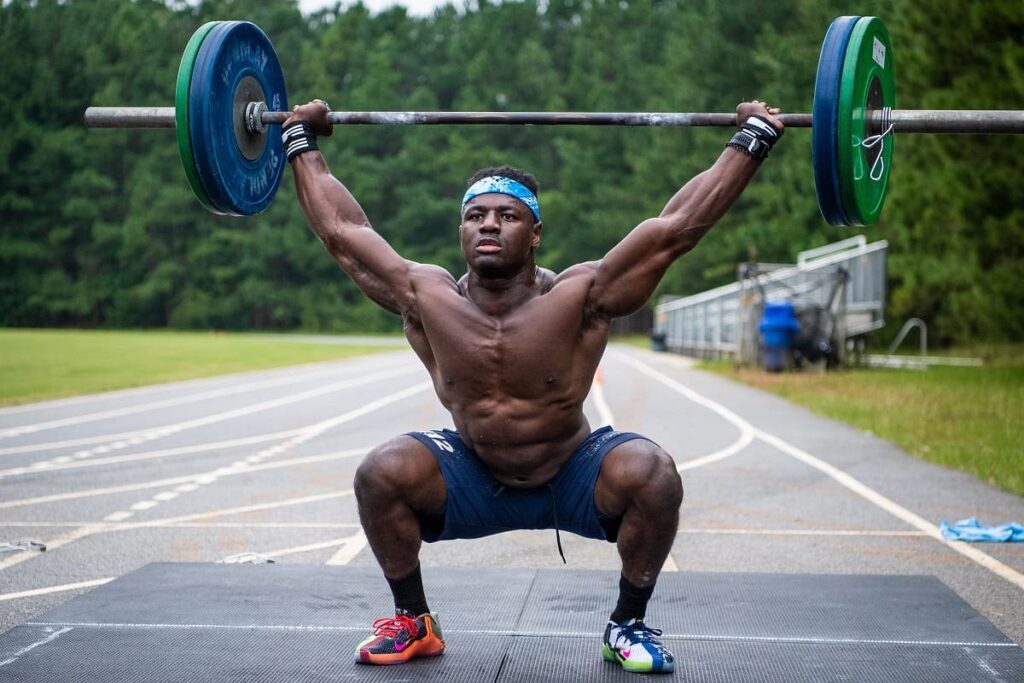
Lifting Weights Enhances Ab Definition Indirectly
While core-targeted exercises are important, full-body resistance training promotes greater fat loss by increasing muscle mass, which in turn elevates resting metabolic rate. Schoenfeld et al. (2014) demonstrated that combining resistance and aerobic training was superior for fat reduction compared to aerobic training alone.
Furthermore, compound lifts like deadlifts, squats, and overhead presses heavily engage the core musculature, providing both strength and stability benefits.
4. Don’t Skip Cardiovascular Training

The Fat-Burning Role of Cardio
Although resistance training builds muscle, cardio is effective at creating a calorie deficit and increasing fat oxidation. Both low-intensity steady state (LISS) and high-intensity interval training (HIIT) have merit.
A meta-analysis by Keating et al. (2017) concluded that HIIT and moderate-intensity continuous training produced similar fat loss outcomes, but HIIT offered time efficiency and improved VO₂ max. For optimal results, incorporating both can maximize energy expenditure and cardiovascular health.
5. Train Your Abs with Progressive Overload
Abs Are Muscles—Train Them Accordingly
Abdominals should be trained like any other muscle group. Progressive overload—gradually increasing the resistance or intensity—is key to developing muscle thickness and definition.
Research from Willardson (2007) shows that abdominal hypertrophy responds best to moderate-to-high rep ranges (8–20 reps) with controlled resistance. Weighted crunches, cable woodchoppers, hanging leg raises, and ab wheel rollouts are excellent choices.
6. Improve Insulin Sensitivity and Blood Sugar Control
How Metabolic Health Affects Fat Storage
Chronic insulin elevation promotes fat storage, particularly in the abdominal region. Improving insulin sensitivity through regular physical activity and dietary choices can promote fat loss and better energy partitioning.
A study by Duvivier et al. (2013) found that simply reducing sedentary behavior and increasing low-intensity movement (e.g., walking) improved insulin sensitivity more than a single bout of daily exercise. Furthermore, consuming fiber-rich carbohydrates and limiting added sugars helps regulate blood glucose levels, improving fat mobilization.
7. Manage Stress and Cortisol Levels
Cortisol’s Impact on Abdominal Fat
Chronic stress elevates cortisol, a hormone associated with fat retention—especially in the abdominal region. Epel et al. (2000) found that women with higher cortisol reactivity accumulated more visceral fat over time, regardless of caloric intake.
Stress-reduction strategies like meditation, adequate sleep, and moderate physical activity can attenuate cortisol production and support fat loss.
8. Get Quality Sleep and Optimize Sleep Duration

Sleep’s Critical Role in Fat Loss
Sleep deprivation undermines weight loss efforts by impairing insulin sensitivity, increasing hunger hormones (ghrelin), and decreasing satiety hormones (leptin). Research by Nedeltcheva et al. (2010) showed that participants on a calorie-restricted diet lost 55% less fat when sleep-deprived compared to those with adequate sleep.
Aim for 7–9 hours of high-quality sleep per night to optimize recovery, hormonal balance, and fat loss.
9. Limit Alcohol Consumption
Alcohol and Ab Fat: A Direct Link
Alcohol not only contributes empty calories but also alters lipid metabolism, impairing fat oxidation. Suter (2005) noted that alcohol is prioritized as a fuel source, meaning dietary fat is more likely to be stored when alcohol is present.
Moreover, excessive alcohol intake is associated with increased abdominal fat accumulation (Dallongeville et al., 1998). Reducing alcohol frequency and volume can directly impact fat loss and abdominal definition.
10. Be Consistent and Patient—There Are No Shortcuts
The Long-Term Nature of Ab Definition
Abdominal definition requires sustained effort over weeks or months, depending on starting body fat and metabolic factors. Unrealistic expectations or inconsistent behavior are the biggest obstacles.
A 2011 review by Thomas et al. stressed that long-term weight loss and maintenance depend on behavioral adherence and realistic timelines. This applies equally to body composition improvements and achieving visible abs.
Setting performance-based goals, such as improving planking time or lifting capacity, can help maintain motivation during the journey toward ab definition.
Bibliography
Dallongeville, J., Marecaux, N., Isorez, D., Ziegler, O., Fruchart, J. C., & Romon, M. (1998). Influence of alcohol consumption and various beverages on waist circumference and waist-to-hip ratio in a sample of French men and women. International Journal of Obesity, 22(12), 1178–1183.
Duvivier, B. M., Schaper, N. C., Bremers, M. A., van Crombrugge, G., Menheere, P. P., Kars, M., & Savelberg, H. H. (2013). Minimal intensity physical activity (standing and walking) of longer duration improves insulin action and plasma lipids more than shorter periods of moderate to vigorous exercise (cycling) in sedentary subjects when energy expenditure is comparable. PLoS ONE, 8(2), e55542.
Epel, E., Lapidus, R., McEwen, B., & Brownell, K. (2000). Stress may add bite to appetite in women: a laboratory study of stress-induced cortisol and eating behavior. Psychoneuroendocrinology, 26(1), 37–49.
Keating, S. E., Johnson, N. A., Mielke, G. I., & Coombes, J. S. (2017). A systematic review and meta-analysis of interval training versus moderate-intensity continuous training on body adiposity. Obesity Reviews, 18(8), 943–964.
Nedeltcheva, A. V., Kilkus, J. M., Imperial, J., Kasza, K., Schoeller, D. A., & Penev, P. D. (2010). Sleep curtailment is accompanied by increased intake of calories from snacks. The American Journal of Clinical Nutrition, 92(2), 361–368.
Paddon-Jones, D., Westman, E., Mattes, R. D., Wolfe, R. R., Astrup, A., & Westerterp-Plantenga, M. (2008). Protein, weight management, and satiety. The American Journal of Clinical Nutrition, 87(5), 1558S–1561S.
Ross, R., Dagnone, D., Jones, P. J., Smith, H., Paddags, A., Hudson, R., & Janssen, I. (2000). Reduction in obesity and related comorbid conditions after diet-induced weight loss or exercise-induced weight loss in men. Annals of Internal Medicine, 133(2), 92–103.
Schoenfeld, B. J., Aragon, A. A., & Krieger, J. W. (2014). Effects of resistance training frequency on measures of muscle hypertrophy: A systematic review and meta-analysis. Sports Medicine, 45(4), 577–585.
Suter, P. M. (2005). Alcohol, nutrition and health maintenance: selected aspects. Proceedings of the Nutrition Society, 64(1), 81–88.
Thomas, D. M., Martin, C. K., Heymsfield, S., & Redman, L. M. (2011). Predicting successful long-term weight loss from short-term weight-loss outcomes: new insights from a dynamic energy balance model. The American Journal of Clinical Nutrition, 94(3), 609–616.
Weiss, E. P., Racette, S. B., Villareal, D. T., Fontana, L., Steger-May, K., Schechtman, K. B., Klein, S., & Holloszy, J. O. (2016). Improvements in glucose tolerance and insulin action induced by increasing energy expenditure or decreasing energy intake: a randomized controlled trial. American Journal of Clinical Nutrition, 84(5), 1033–1042.
Willardson, J. M. (2007). The effectiveness of resistance exercises performed on unstable equipment. Strength and Conditioning Journal, 29(5), 36–43.