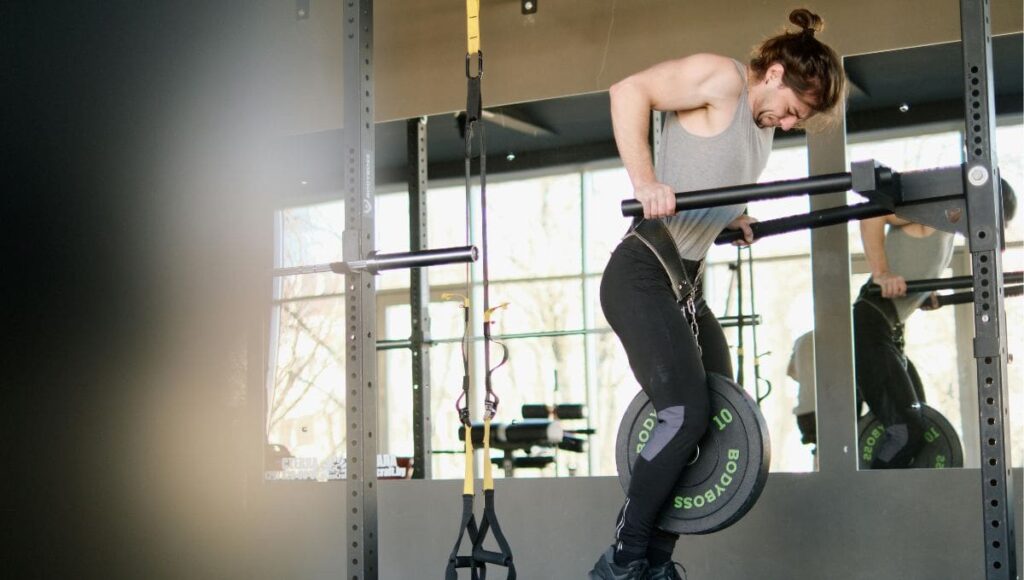
Dips are an excellent exercise for building upper body strength, targeting the chest, triceps, and shoulders. However, they can sometimes cause discomfort or pain, particularly in the shoulders or sternum.
Dips are a fundamental exercise in many strength training routines, but they can often lead to discomfort or pain, particularly in the shoulders and sternum. Alan Thrall has experienced this firsthand. Despite being able to bench press 360 lbs without issues, he found bodyweight dips caused significant sternum pain.
Alan Thrall is an accomplished strength coach and owner of Untamed Strength, a 24-hour access gym in Sacramento and a somewhat famous online influencer focused on making people comfortable with their bodies to achieve their peak in fitness.
Over time, through trial and error, Thrall developed strategies to incorporate dips pain-free into his routine. Here, we share his top ten tips for performing dips without pain, ensuring you can benefit from this powerful exercise safely and effectively.
Alan Thrall, a seasoned strength coach, shared his valuable insights on how to perform dips without experiencing pain on a recent video. Here are ten tips based on his advice.
10 Tips to Do Dips Without Pain
Tip #1: Start Slow
Incorporate dips into your routine gradually. Alan Thrall suggests beginning with dips just once a week. “One time per week is a low enough frequency that should be pretty tolerable,” he says. This allows your body to adapt to the new movement and stress without overwhelming it. Starting slow helps build tolerance and reduce the risk of injury.
Tip #2: Expect Nothing
When starting dips, it’s essential to manage your expectations. “Don’t expect a bunch of muscle hypertrophy or a sick pump right away,” Thrall advises. Treat the dip as a stretching or rehab movement initially. The goal is to expose your tissues to the movement gradually. Patience is key to earning the benefits of dips over time.
Read Also: What Happens To Your Body When You Do 100 Dips Every Day
Tip #3: Don’t Expect To Be Pain-Free
It’s important to acknowledge that some discomfort may persist initially. Thrall explains, “Pain is weird and there’s a lot of psychological input at play.” If the discomfort remains stable or decreases as you warm up, it’s generally okay. However, if the pain worsens, scale back your activity.
Tip #4: Don’t Start With Dips

If dips are causing significant discomfort, consider starting with other exercises that simulate the dip movement. Thrall recommends deficit push-ups, ring push-ups, or guillotine push-ups. These exercises provide a deep stretch and help your body get used to the range of motion required for dips.
Tip #5: Drop Your Ego
Using an assisted dip machine or resistance bands can help you master the dip movement without excessive strain. “Assisted dips can really help you focus on the movement without fear,” says Thrall. It’s crucial to prioritize form and gradual progression over ego.
Tip #6: Have a Rep Range
Thrall advises starting with a rep range of 10-15 reps to avoid going to failure immediately. This range allows you to adjust the assistance level and helps you gauge your progress. “If you can only do eight reps, add assistance; if you can do 25, reduce it,” he says.
Tip #7: Use EMOM or Total Reps

For those without access to an assisted dip machine, focus on total reps rather than reps per set. Thrall suggests aiming for 30-40 total reps, using as many sets as needed. “This approach helps you stay within your pain threshold and still get the volume in,” he explains.
Tip #8: Don’t Be Afraid of Low Reps
Once your tissues have adapted, incorporating lower rep ranges can be beneficial. Thrall notes, “Weighted dips can actually help control the swing and allow for more force production.” Low reps can help build strength without compromising form or stability.
Tip #9: Use Small Plates
When adding weight to your dips, start with small increments. “Using small plates helps you gradually increase the load without overwhelming your body,” Thrall advises. This method builds confidence and strength progressively.
Tip #10: Let Progress Come to You
Focus on progressive loading rather than forcing progressive overload. Consistency and patience are key. “Doing the same workout repeatedly isn’t wasting time; it’s building strength,” Thrall emphasizes. Let progress come naturally as your body adapts.

Incorporating dips into your workout routine can be a great way to build upper body strength, but it’s crucial to do so without causing pain. By starting slow, managing expectations, and focusing on gradual progression, you can safely incorporate dips into your training. Remember to use assistance if needed, respect your body’s signals, and be patient with your progress. As Alan Thrall’s experience shows, with the right approach, you can perform dips pain-free and reap their full benefits.
By following these tips from Alan Thrall, you can safely incorporate dips into your routine and build upper body strength without pain.
Key Takeaways
| Tip | Key Advice |
| Start Slow | Begin with dips once a week to allow your body to adapt. |
| Expect Nothing | Manage expectations and treat dips as a stretch initially. |
| Don’t Expect To Be Pain-Free | Acknowledge discomfort but avoid pushing through worsening pain. |
| Don’t Start With Dips | Use alternative exercises like deficit push-ups to build tolerance. |
| Drop Your Ego | Use assisted dip machines or bands to master the movement. |
| Have a Rep Range | Aim for 10-15 reps to avoid failure and adjust assistance as needed. |
| Use EMOM or Total Reps | Focus on total reps, aiming for 30-40, using multiple sets if necessary. |
| Don’t Be Afraid of Low Reps | Incorporate lower rep ranges to build strength without compromising form. |
| Use Small Plates | Start with small weight increments to build confidence and strength. |
| Let Progress Come to You | Focus on consistency and gradual progression, allowing your body to adapt naturally. |
Read More: 10 Mind-Blowing Tricep Dips WODs to Kickstart Bigger Arms