The bench press is a cornerstone of strength training, revered for its ability to build upper body mass and power. However, for those looking to accelerate muscle growth and strength gains, relying solely on the traditional flat bench press can limit potential progress. Incorporating variations into your routine can target different muscle fibres, reduce the risk of injury, and break through plateaus.
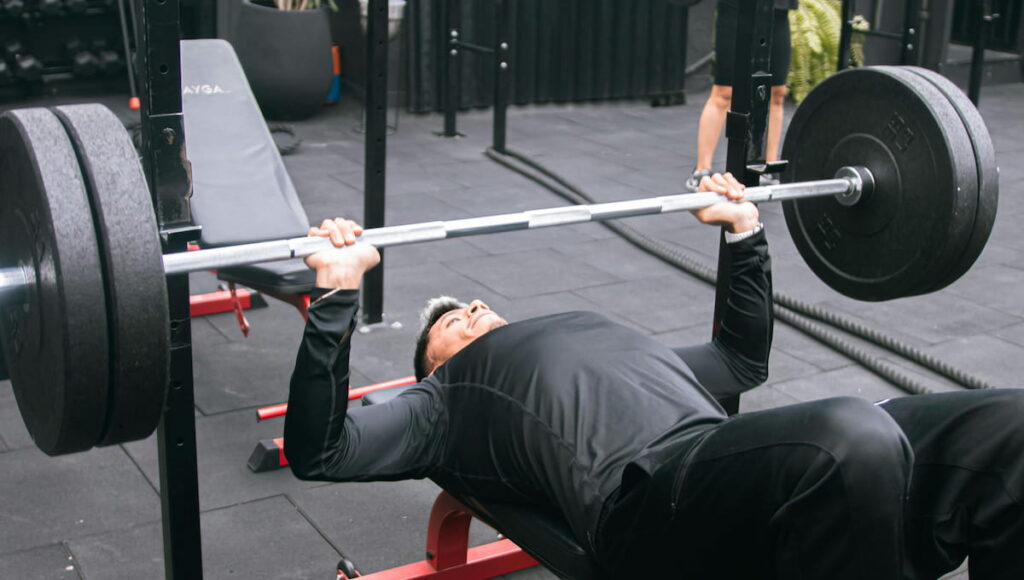
This article will explore three of the best bench press variations to enhance your muscle-building efforts, backed by scientific evidence. By integrating these variations, you can achieve a more well-rounded and effective workout, ultimately getting you jacked faster.
The Decline Bench Press
Why It Works
The decline bench press, where the bench is set at a downward angle of approximately 15 to 30 degrees, is an underutilised variation that targets the lower portion of the pectoral muscles more effectively than the flat or incline bench press. Research has shown that different bench angles can alter muscle activation patterns significantly.
A study published in the Journal of Strength and Conditioning Research demonstrated that the decline bench press elicits greater activation of the lower pectorals compared to the flat and incline bench press. This variation is also beneficial because it reduces the range of motion slightly, allowing you to lift heavier weights and further stimulate muscle growth through progressive overload .
Proper Execution
- Set the Bench: Position the bench at a 15-30 degree decline. Ensure that your feet are secure under the pads to maintain stability.
- Grip the Bar: Use a medium grip, slightly wider than shoulder-width, to maximise pectoral engagement.
- Unrack and Lower: Unrack the barbell, bringing it directly above your chest. Lower the barbell in a controlled manner until it touches your lower chest.
- Press Up: Drive the barbell back to the starting position, fully extending your arms but not locking out your elbows.
Benefits
- Increased Lower Pectoral Activation: Enhances the overall chest development by targeting the often-neglected lower portion.
- Heavier Lifts: The decline position allows for greater weight to be lifted, which can help break through strength plateaus.
- Joint-Friendly: The decline angle reduces stress on the shoulders, making it a safer alternative for those with shoulder issues.
The Close-Grip Bench Press
Why It Works
The close-grip bench press is a variation where the hands are placed closer together on the barbell, typically shoulder-width apart or narrower. This variation shifts the emphasis from the pectoral muscles to the triceps while still engaging the chest and shoulders. It’s particularly effective for building tricep strength, which is crucial for improving your bench press performance overall.
Research has indicated that the close-grip bench press is highly effective in targeting the triceps brachii. A study published in The Journal of Sports Science and Medicine found that the close-grip bench press generates significantly greater triceps activation compared to the traditional bench press . This variation also promotes balanced upper body strength, reducing the risk of muscle imbalances that can lead to injury.
Proper Execution
- Grip the Bar: Position your hands shoulder-width apart or slightly narrower on the barbell. Ensure your wrists are straight and aligned with your elbows.
- Unrack and Lower: Unrack the barbell and bring it over your chest. Lower the barbell towards your sternum, keeping your elbows tucked in close to your body.
- Press Up: Push the barbell back to the starting position, fully extending your arms without locking out your elbows.
Benefits
- Enhanced Tricep Development: By placing more emphasis on the triceps, the close-grip bench press helps build strength that translates to a stronger overall bench press.
- Reduced Shoulder Strain: Keeping the elbows tucked in minimises stress on the shoulder joints, making it a safer option for those prone to shoulder injuries.
- Improved Bench Press Lockout: Strengthening the triceps directly benefits the lockout portion of the bench press, helping you push through sticking points.
The Spoto Press
Why It Works
Named after bench press specialist Eric Spoto, the Spoto press is a variation that involves pausing the barbell a few centimetres above the chest before pressing it back up. This movement increases time under tension and emphasises control, leading to greater muscle hypertrophy and strength.
A study in the Journal of Sports Science highlights the importance of time under tension for muscle growth, demonstrating that longer eccentric phases can significantly increase hypertrophy compared to faster repetitions . The Spoto press enhances this principle by incorporating a pause during the most challenging part of the lift.
Proper Execution
- Grip the Bar: Use a standard bench press grip, with hands slightly wider than shoulder-width apart.
- Unrack and Lower: Unrack the barbell and lower it in a controlled manner, stopping just a few centimetres above your chest.
- Pause: Hold the barbell in this position for 1-2 seconds, maintaining tension in your chest, shoulders, and triceps.
- Press Up: Push the barbell back to the starting position, fully extending your arms without locking out your elbows.
Benefits
- Increased Muscle Activation: The pause increases time under tension, promoting greater muscle activation and growth.
- Enhanced Stability and Control: By pausing above the chest, you improve your control and stability during the lift, which can translate to better overall bench press performance.
- Reduced Risk of Injury: The controlled nature of the movement, combined with the pause, reduces the risk of bouncing the bar off your chest, which can cause injury.
Conclusion
Incorporating these bench press variations into your routine can dramatically improve your strength, muscle hypertrophy, and overall bench press performance. The decline bench press targets the lower pectorals, helping to develop a well-rounded chest. The close-grip bench press shifts the focus to the triceps, improving your lockout strength and reducing the risk of muscle imbalances. Finally, the Spoto press enhances control and time under tension, leading to greater muscle activation and growth.
By strategically rotating these variations into your training, you can prevent plateaus, reduce the risk of injury, and accelerate your gains, ultimately getting jacked faster.
Key Takeaways
| Variation | Primary Muscles Targeted | Benefits | Key Tips |
|---|---|---|---|
| Decline Bench Press | Lower Pectorals | Increased lower chest activation, heavier lifts, joint-friendly | Set the bench at a 15-30 degree decline, use a medium grip |
| Close-Grip Bench Press | Triceps, Chest, Shoulders | Enhanced tricep development, reduced shoulder strain, improved lockout | Use a shoulder-width or narrower grip, keep elbows tucked in |
| Spoto Press | Chest, Triceps, Shoulders | Increased muscle activation, enhanced stability, reduced injury risk | Pause a few centimetres above chest, maintain tension |
References
- Barnett, C., Kippers, V., & Turner, P. (1995). Effects of variations of the bench press exercise on the EMG activity of five shoulder muscles. Journal of Strength and Conditioning Research, 9(4), pp. 222-227.
- Lockie, R. G., Dawes, J. J., Kornhauser, C. L., & Holmes, R. J. (2017). Relationships between Bench Press and Push-Up Strength Capacities in Police Recruits. Journal of Sports Science and Medicine, 16(4), pp. 445-450.
- Schoenfeld, B. J., Ogborn, D., Krieger, J. W. (2015). Effects of Resistance Training Frequency on Measures of Muscle Hypertrophy: A Systematic Review and Meta-Analysis. Journal of Sports Science, 33(2), pp. 149-157.