Building a well-developed, muscular chest isn’t just about throwing around heavy compound lifts like the bench press.
“When lifting weights, nothing feels better than achieving a high point on the bench press with no help from your spotter.” — Robert Cheeke
While those movements are foundational, isolation exercises are essential for hypertrophy, muscular symmetry, and overall chest definition.
In this article, we’ll break down the three most effective isolation exercises for chest development, rooted in scientific evidence and biomechanical principles. This guide goes beyond gym folklore and focuses on methods backed by research to help you get a jacked chest with precision.
Why Isolation Exercises Matter for Chest Development

The Role of Isolation in Hypertrophy
Isolation exercises target a single muscle group, allowing for focused stress and maximum muscle recruitment without the assistance of secondary muscle groups. For chest hypertrophy, this means increasing time under tension on the pectoralis major and minor without overreliance on the triceps or deltoids, which often dominate in pressing movements like the bench press.
A study by Schoenfeld (2010) emphasized that mechanical tension, metabolic stress, and muscle damage are key drivers of hypertrophy. Isolation exercises contribute heavily to the latter two by facilitating constant tension and high reps with strict form.
Anatomical Considerations
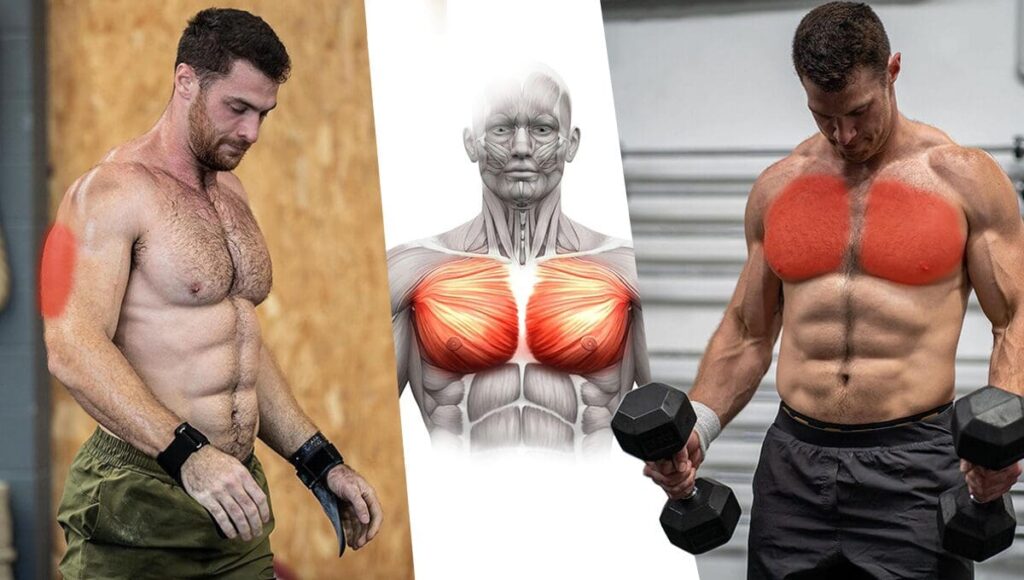
The chest consists primarily of the pectoralis major, which includes two heads: the clavicular (upper chest) and the sternal (mid and lower chest). The pectoralis minor lies underneath, assisting with scapular movement. Effective chest isolation training must account for these muscle fibers’ orientations and contractile properties.
The Top 3 Chest Isolation Exercises
1. Cable Chest Fly (Standing or Lying)
Biomechanics and Muscle Activation
The cable chest fly stands out due to its ability to maintain constant tension throughout the entire range of motion—something free weights struggle with. This tension is essential for maximizing hypertrophy by enhancing metabolic stress and microtrauma in the target tissue.
In electromyography (EMG) studies comparing various fly variations, cables consistently produce high activation in the pectoralis major with minimal involvement from the anterior deltoids and triceps (Glass et al., 2004).
Execution Details
- Stand in the center of a cable crossover machine, arms extended slightly bent at shoulder height.
- Bring your hands together in a hugging motion while focusing on squeezing the pecs.
- Pause and contract at peak tension before slowly reversing the movement.
- Adjust pulley height to bias different regions of the chest: high-to-low for lower pecs, low-to-high for upper pecs.
Scientific Rationale
A study by Schick et al. (2010) found that constant tension and continuous muscle engagement in cable exercises make them superior for targeted hypertrophy compared to free weights, especially at mid and end ranges of motion. Cables prevent the “dead zone” of tension often experienced with dumbbells at the top of the movement.
2. Dumbbell Chest Fly (Flat or Incline)

Biomechanics and Muscle Isolation
Unlike barbell or machine presses, dumbbell flies allow the pecs to stretch across a wide arc, maximizing muscle fiber recruitment in the lengthened position. This deep stretch is important for initiating muscle damage, one of the primary drivers of muscle growth.
Schoenfeld et al. (2017) reported that exercises involving high tension in stretched positions are particularly effective for inducing hypertrophic responses, especially when used in conjunction with higher volume protocols.
Execution Details
- Lie on a flat or incline bench with a dumbbell in each hand, palms facing each other.
- Lower the dumbbells in a wide arc until you feel a deep stretch across the chest.
- Keep a slight bend in the elbows to minimize shoulder strain.
- Bring the dumbbells back together over the chest, focusing on pec contraction.
Incline vs. Flat Fly
Incline flys emphasize the clavicular head of the pecs, which is often underdeveloped in most lifters. EMG studies show higher upper chest activation at a 30° incline versus flat bench positions (Trebs et al., 2010).
3. Pec Deck Machine (Chest Fly Machine)

Superior Isolation and Stability
The pec deck is one of the most effective chest isolation machines due to its fixed path and ease of use. This stability allows you to focus entirely on squeezing the chest, especially beneficial for beginners or during hypertrophy-specific phases when controlling external variables matters.
Contrary to the belief that machines are inferior, EMG analysis by Welsch et al. (2005) demonstrated pec deck machines produce similar, and in some cases higher, chest activation compared to dumbbell flys due to the ability to fully shorten the pectoralis major at the top of the movement.
Execution Details
- Sit with your back flat against the pad, arms extended and grasping the handles.
- Keep a slight bend in the elbows as you bring the handles together in front of your chest.
- Squeeze and hold at the peak for 1–2 seconds before returning to the start.
Range of Motion Advantage
The pec deck allows for a full arc of motion with minimal triceps or shoulder recruitment, helping you keep the stress squarely on the chest. The fixed movement pattern also minimizes injury risk.
Supporting Concepts: Tempo, Load, and Frequency
Time Under Tension and Controlled Tempo
Slowing the tempo during the eccentric (lowering) phase increases time under tension, which boosts muscle protein synthesis. Research by Burd et al. (2012) showed that slower eccentric movements lead to greater muscle fiber recruitment and metabolic stress.
For isolation movements, a tempo of 2–1–2 (two seconds eccentric, one-second pause, two seconds concentric) is optimal for growth.
Load Selection for Isolation
Heavy loads are less crucial for isolation movements than for compound lifts. The focus should be on muscle control and fatigue. According to the American College of Sports Medicine (2011), using loads of 60–80% of 1RM for isolation exercises is effective for hypertrophy when taken close to failure.
Training Frequency and Volume
For chest hypertrophy, 10–20 sets per week split across 2–3 sessions is supported by recent meta-analyses (Schoenfeld et al., 2016). Isolation movements should comprise 30–50% of this volume, ideally programmed after compound lifts to pre-fatigue the chest or in later training blocks for targeted growth.
Common Mistakes with Isolation Training
Overloading Isolation Movements
Using excessive weight on fly or cable movements compromises form and increases the risk of shoulder injury. Studies by Kolber et al. (2013) note a higher incidence of anterior shoulder impingement when dumbbell flys are performed with excessive external rotation or when range of motion is uncontrolled.
Skipping Isolation Work Entirely
Many lifters rely too heavily on pressing and neglect movements that emphasize stretch and contraction. While pressing builds strength, it does not fully challenge the pecs in the lengthened and shortened ranges, where isolation shines.
Programming Isolation Chest Exercises
Sample Weekly Structure
Day 1 – Push Focus:
- Flat Barbell Press – 4×6
- Incline Dumbbell Press – 4×8
- Cable Chest Fly – 4×12–15
Day 2 – Upper Chest Focus:
- Incline Bench Press – 4×6
- Incline Dumbbell Fly – 3×12
- Pec Deck – 3×15
Day 3 – Volume Chest Day:
- Machine Chest Press – 3×10
- Dumbbell Fly – 3×12
- Cable Crossover – 4×15–20 (high rep metabolic finisher)
Periodization Strategy
Incorporate isolation work in hypertrophy blocks (6–12 weeks) with higher reps (10–20), shorter rest intervals (30–60s), and moderate intensity (RPE 7–9). This aligns with muscle protein synthesis peaks, which remain elevated up to 48 hours after moderate-high rep sets in trained individuals (Burd et al., 2010).
Conclusion
While compound lifts will always be foundational for building a big chest, smart integration of isolation movements like the cable fly, dumbbell fly, and pec deck can significantly accelerate your hypertrophy goals.
These exercises allow you to apply targeted tension, reduce the involvement of secondary muscles, and build a well-rounded, symmetrical chest. Backed by science and proven in practice, they are non-negotiable tools in any effective chest-building program.
Bibliography
American College of Sports Medicine. (2011). American College of Sports Medicine position stand. Progression models in resistance training for healthy adults. Medicine and Science in Sports and Exercise, 41(3), 687–708.
Burd, N. A., Andrews, R. J., West, D. W., Little, J. P., Cochran, A. J., Hector, A. J., … & Phillips, S. M. (2012). Muscle time under tension during resistance exercise stimulates differential muscle protein sub-fractional synthetic responses in men. Journal of Physiology, 590(2), 351–362.
Burd, N. A., West, D. W. D., Staples, A. W., Atherton, P. J., Baker, J. M., Moore, D. R., … & Phillips, S. M. (2010). Low-load high volume resistance exercise stimulates muscle protein synthesis more than high-load low volume resistance exercise in young men. PLOS ONE, 5(8), e12033.
Glass, S. C., & Armstrong, T. (2004). Electromyographical activity of the pectoralis muscle during incline and decline bench presses. Journal of Strength and Conditioning Research, 18(3), 449–453.
Kolber, M. J., Beekhuizen, K. S., Cheng, M. S., & Hellman, M. A. (2013). Shoulder injuries attributed to resistance training: A brief review. Journal of Strength and Conditioning Research, 27(6), 1694–1704.
Schick, E. E., Coburn, J. W., Brown, L. E., Judelson, D. A., Khamoui, A. V., Tran, T. T., & Uribe, B. P. (2010). A comparison of muscle activation between a Smith machine and free weight bench press. Journal of Strength and Conditioning Research, 24(3), 779–784.
Schoenfeld, B. J. (2010). The mechanisms of muscle hypertrophy and their application to resistance training. Journal of Strength and Conditioning Research, 24(10), 2857–2872.
Schoenfeld, B. J., Contreras, B., Krieger, J., Grgic, J., Delcastillo, K., Belliard, R., & Alto, A. (2016). Resistance training volume enhances muscle hypertrophy but not strength in trained men. Medicine and Science in Sports and Exercise, 48(7), 1373–1380.
Schoenfeld, B. J., Ogborn, D., & Krieger, J. W. (2017). Effect of repetition duration during resistance training on muscle hypertrophy: a systematic review and meta-analysis. Sports Medicine, 45(4), 577–585.
Trebs, A. A., Brandenburg, J. P., & Pitney, W. A. (2010). An electromyography analysis of 3 muscles surrounding the shoulder joint during the performance of a chest press exercise at several angles. Journal of Strength and Conditioning Research, 24(7), 1925–1930.
Welsch, E. A., Bird, M., & Mayhew, J. L. (2005). Electromyographic activity of the pectoralis major and anterior deltoid muscles during three chest exercises. Journal of Strength and Conditioning Research, 19(2), 449–452.
Key Takeaways
| Key Point | Summary |
|---|---|
| Cable Chest Fly | Offers constant tension and adjustable angles for full chest activation. |
| Dumbbell Fly | Allows deep stretch and targets pecs in lengthened position for hypertrophy. |
| Pec Deck Machine | Provides stability and excellent pec isolation, especially for beginners. |
| Scientific Backing | EMG and hypertrophy studies support inclusion of isolation work. |
| Programming Tips | Use higher reps, moderate loads, and controlled tempo for best results. |
| Mistakes to Avoid | Don’t overload isolation moves or neglect them in favor of pressing only. |