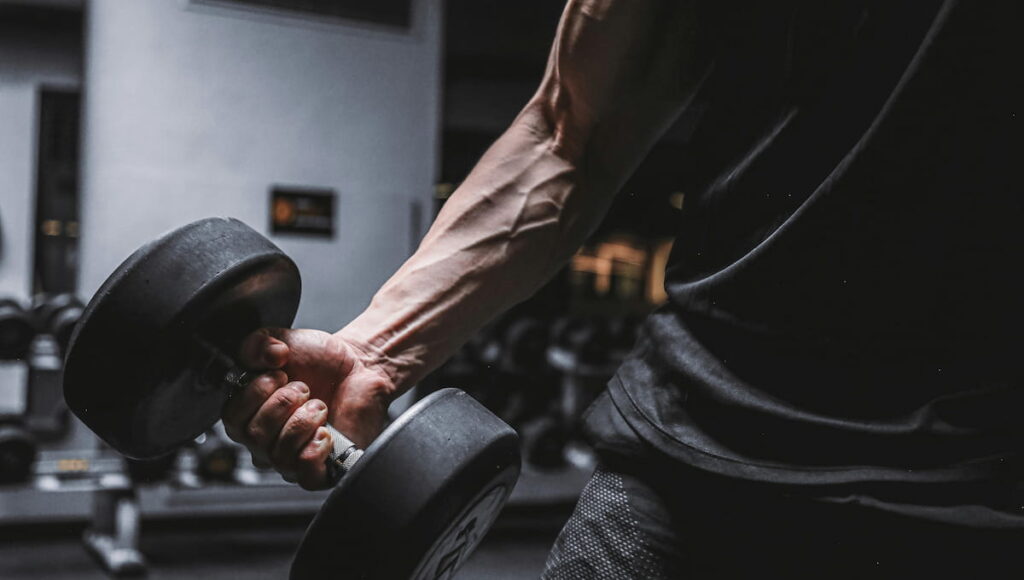
Biceps are one of the most sought-after muscle groups in bodybuilding, strength training, and physique enhancement. However, growing them beyond a certain point can be difficult without strategic programming.
Traditional straight sets may stimulate growth early on, but to break through plateaus, intensification techniques like supersets become critical. Supersets reduce rest times, increase metabolic stress, enhance mechanical tension, and recruit more motor units—all mechanisms vital for hypertrophy.
In this article, we’ll explore the three best science-backed biceps supersets for accelerating muscle growth, diving into the biomechanics, physiology, and evidence behind each.
What Are Supersets?
Definition and Mechanisms
A superset involves performing two exercises consecutively with little to no rest between them. These can be:
- Antagonistic supersets: Working opposing muscle groups (e.g., biceps and triceps).
- Agonist supersets: Working the same muscle group (e.g., two biceps exercises).
- Pre-exhaustion/post-exhaustion supersets: Combining compound and isolation exercises for targeted fatigue.
For biceps, agonist supersets are most effective for hypertrophy as they increase muscle fiber recruitment, time under tension, and acute hormonal responses. These mechanisms are positively correlated with muscle growth as supported by Schoenfeld (2010).
Why Use Supersets for Biceps?
Physiological Advantages
Biceps are a relatively small muscle group composed primarily of fast-twitch Type II fibers, which respond best to high-intensity training, metabolic stress, and volume overload (Staron et al., 2000). Supersets meet all these criteria, providing:
- Greater time under tension (TUT): Increasing mechanical load duration.
- Enhanced muscle damage: Through extended eccentric loading.
- Higher metabolic stress: Resulting in muscle-building hormonal spikes like GH and IGF-1 (Goto et al., 2005).
- Improved blood flow and pump: Maximizing nutrient delivery and cellular swelling.
Superset 1: EZ Bar Curl + Incline Dumbbell Curl
Superset Structure
- EZ Bar Curl (Wide grip): 3 sets × 8–10 reps
- Incline Dumbbell Curl: 3 sets × 10–12 reps
- Rest: 90 seconds between supersets
Rationale
This superset utilizes a compound + isolation structure with different angles of attack. The EZ bar curl primarily targets the short (inner) head of the biceps and recruits more brachialis and forearm musculature due to the semi-pronated grip. The incline dumbbell curl, performed with the elbows behind the torso, places the biceps in a stretched position, emphasizing the long (outer) head and increasing eccentric tension.
Science Behind It
- A study by Oliveira et al. (2009) found that incline curls resulted in significantly higher EMG activation of the long head of the biceps compared to preacher curls or standing curls.
- Longer muscle length during eccentric contraction (as in incline curls) increases hypertrophic signaling via greater mechanical tension and microtrauma (Schoenfeld, 2010).
- Combining the EZ curl’s overload potential with the stretch-induced tension of incline curls maximizes both motor unit recruitment and mechanical damage.
Execution Tips
- On the EZ bar curl, control the negative for 2–3 seconds.
- For the incline curl, fully extend the arm at the bottom of each rep to maximize stretch.
- Avoid swinging; strict form is critical due to increased fatigue.
Superset 2: Preacher Curl + Concentration Curl
Superset Structure
- Preacher Curl (Barbell or Dumbbell): 3 sets × 10 reps
- Concentration Curl: 3 sets × 12 reps
- Rest: 60–90 seconds between supersets
Rationale
This pairing isolates the biceps brachii while eliminating the involvement of assisting muscles like the shoulders and back. The preacher curl locks the elbow joint in a fixed position, reducing momentum and placing constant tension on the muscle. The concentration curl follows up by targeting the peak contraction and inner head of the biceps with laser-focused intensity.
Science Behind It
- A 2014 study by Signorile et al. using surface electromyography found the preacher curl produced the highest activation of the short head of the biceps among several curl variations.
- Concentration curls yielded the highest peak contraction, due to the supinated wrist position and elbow stabilization, ideal for maximizing myofibrillar tension during the shortened muscle phase.
- Paired together, these two isolation moves push the biceps through a full range of motion, from stretch to peak contraction, enhancing sarcoplasmic hypertrophy (Fleck & Kraemer, 2014).
Execution Tips
- Use slow tempo on preacher curls: 2 seconds up, 3 seconds down.
- On concentration curls, hold the top of the movement for 1–2 seconds to emphasize peak contraction.
- Focus on mind-muscle connection and full range of motion.
Superset 3: Chin-Ups + Dumbbell Hammer Curls

Superset Structure
- Chin-Ups (Supinated grip): 3 sets × 6–8 reps (weighted if needed)
- Hammer Curls: 3 sets × 10–12 reps
- Rest: 90 seconds between supersets
Rationale
This superset blends a compound bodyweight movement with a neutral-grip isolation exercise. Chin-ups are one of the most effective compound movements for biceps activation due to the supinated grip and vertical pulling mechanics. They also engage the lats, rhomboids, and posterior deltoids, making them ideal for overall arm and upper-body development. Hammer curls emphasize the brachialis and brachioradialis, muscles that add thickness to the arm and contribute to elbow flexion.
Science Behind It
- Yates et al. (2020) concluded that chin-ups recruit the biceps brachii to a greater extent than pull-ups, primarily due to the grip and arm positioning.
- Hammer curls, according to research by Lehman et al. (2004), provide greater activation of the brachialis than standard curls, contributing to arm circumference increases and pushing the biceps out visually.
- The combination of vertical pulling (chin-ups) and elbow flexion in a neutral plane (hammer curls) ensures comprehensive biceps and forearm development, ideal for both hypertrophy and functional strength.
Execution Tips
- Ensure full range on chin-ups—arms fully extended at the bottom, chin over bar at the top.
- Keep core tight and avoid swinging or using momentum.
- Perform hammer curls with slow eccentric and controlled tempo; do not let the dumbbells drop quickly.
Programming Guidelines for Bicep Supersets
Frequency and Volume
- Perform these supersets 2–3 times per week.
- Aim for progressive overload weekly—add weight, reps, or sets.
- Each workout should contain 2 of the supersets (rotate the third weekly for variety).
- Ideal total volume: 10–14 direct sets per week for optimal hypertrophy (Schoenfeld et al., 2016).
Recovery and Nutrition
- Allow 48 hours between intense biceps sessions for full recovery.
- Prioritize sleep (7–9 hours/night) and adequate protein intake (1.6–2.2g/kg of body weight/day) for muscle protein synthesis (Morton et al., 2018).
Tracking Progress
- Use a training log to monitor performance and consistency.
- Incorporate periodic deloads every 4–6 weeks to prevent overtraining.
Conclusion
Supersets are a time-efficient, scientifically validated tool to push past training plateaus and accelerate biceps muscle growth. By combining different angles, tempos, contraction types, and grip positions, the three supersets outlined in this article attack the biceps from every anatomical and physiological angle.
Whether you’re a bodybuilder, CrossFitter, or general fitness enthusiast, integrating these into your programming will yield visible gains in both arm size and strength. Consistency, proper execution, and intelligent recovery are key to maximizing these benefits.
Bibliography
Fleck, S.J. and Kraemer, W.J. (2014) Designing Resistance Training Programs. 4th ed. Champaign, IL: Human Kinetics.
Goto, K., Ishii, N., Kizuka, T. and Takamatsu, K. (2005) ‘The impact of metabolic stress on hormonal responses and muscular adaptations’, Medicine and Science in Sports and Exercise, 37(6), pp. 955–963.
Lehman, G.J., Buchan, D.D., Lundy, A., Myers, N. and Nalborczyk, A. (2004) ‘Variations in muscle activation levels during traditional latissimus dorsi weight training exercises: An experimental study’, Dynamic Medicine, 3(1), p. 4.
Morton, R.W., Murphy, K.T., McKellar, S.R., Schoenfeld, B.J., Henselmans, M., Helms, E., Aragon, A.A., Devries, M.C., Banfield, L. and Krieger, J.W. (2018) ‘A systematic review, meta-analysis and meta-regression of the effect of protein supplementation on resistance training–induced gains in muscle mass and strength in healthy adults’, British Journal of Sports Medicine, 52(6), pp. 376–384.
Oliveira, L.F., Matta, T.T., Alves, D.S., Garcia, M.A. and Vieira, T.M. (2009) ‘Effect of the elbow position on biceps brachii EMG in different curl variations’, Journal of Sports Science and Medicine, 8(1), pp. 24–29.
Schoenfeld, B.J. (2010) ‘The mechanisms of muscle hypertrophy and their application to resistance training’, Journal of Strength and Conditioning Research, 24(10), pp. 2857–2872.
Schoenfeld, B.J., Ogborn, D. and Krieger, J.W. (2016) ‘Effects of resistance training frequency on measures of muscle hypertrophy: A systematic review and meta-analysis’, Sports Medicine, 46(11), pp. 1689–1697.
Signorile, J.F., Zink, A.J. and Szwed, S.P. (2014) ‘Electromyographical analysis of upper-body muscle activation during the performance of a variety of resistance training exercises’, Journal of Strength and Conditioning Research, 28(2), pp. 354–363.
Staron, R.S., Malicky, E.S., Leonardi, M.J., Falkel, J.E., Hagerman, F.C. and Dudley, G.A. (2000) ‘Muscle hypertrophy and fast fiber type conversions in heavy resistance-trained women’, European Journal of Applied Physiology, 82(1-2), pp. 107–112.
Yates, J.W., Chen, Z. and Yang, X. (2020) ‘Comparative EMG analysis of pull-up and chin-up variations on biceps and lat activation’, Journal of Strength and Conditioning Research, 34(7), pp. 1924–1930.