Unilateral exercises—movements that train one limb at a time—are an essential component of any serious strength and hypertrophy program. For glute development, unilateral training offers unique benefits that bilateral exercises like squats or deadlifts cannot fully replicate. By isolating each side independently, unilateral work can improve muscle activation, address imbalances, and enhance overall functional performance in sports and daily activities.
The gluteus maximus, medius, and minimus play a critical role in hip extension, abduction, and rotation. Strengthening these muscles is not only aesthetic but also crucial for athletic performance, lower-body strength, and injury prevention, particularly for the knees and lower back. This article outlines the three most effective unilateral exercises for building stronger glutes, supported by peer-reviewed scientific research.
Why Unilateral Exercises Are Important for Glute Development
Unilateral exercises demand greater stability, core engagement, and motor control than their bilateral counterparts. Research shows that unilateral training can activate stabilizing muscles more effectively, including the gluteus medius, which is often under-stimulated during traditional bilateral lifts. This has implications for improving lateral hip stability, reducing injury risk, and optimizing movement efficiency.
A study by McCurdy et al. (2005) demonstrated that single-leg squats produced higher electromyographic (EMG) activity in the gluteus medius compared to bilateral squats, emphasizing the role of unilateral work in targeting specific glute functions. Similarly, Bishop et al. (2018) found that unilateral training improved sprint performance and change-of-direction ability more than bilateral training, indicating functional benefits for athletes.
Exercise 1: Bulgarian Split Squat

Overview
The Bulgarian split squat is a rear-foot-elevated split squat variation that heavily targets the gluteus maximus, particularly when performed with a forward torso lean and increased hip flexion. This setup shifts the load toward the posterior chain, making it one of the most effective unilateral exercises for glute hypertrophy and strength.
Biomechanics
By elevating the rear foot, the working leg undergoes greater hip flexion at the bottom of the movement, increasing stretch-mediated hypertrophy potential. Research by Schoenfeld (2010) emphasizes the role of mechanical tension and muscle stretch in stimulating growth, both of which are amplified in this position.
Execution
- Stand a few feet in front of a bench, holding dumbbells at your sides.
- Place the top of your non-working foot on the bench behind you.
- Descend by bending the front knee and allowing the torso to lean slightly forward, keeping the spine neutral.
- Push through the heel of the working foot to return to the starting position.
Programming Tips
- Use moderate to heavy loads for 6–10 reps per leg for strength, or 10–15 reps for hypertrophy.
- Maintain a controlled eccentric phase of 2–3 seconds to maximize time under tension.
- For glute emphasis, keep the shin slightly angled forward and avoid excessive vertical torso positioning.
Scientific Evidence
Research by Contreras et al. (2015) using EMG analysis shows that split squats with a forward torso lean increase gluteus maximus activation compared to a more upright posture. This makes the Bulgarian split squat particularly effective when the goal is glute hypertrophy.
Exercise 2: Single-Leg Romanian Deadlift (RDL)
Overview
The single-leg Romanian deadlift is a hip hinge variation that emphasizes the gluteus maximus and hamstrings, with a strong stability and balance component. It also heavily recruits the gluteus medius to maintain frontal plane stability throughout the movement.
Biomechanics
The unilateral hip hinge requires active control of hip adduction and internal rotation, increasing the involvement of the lateral glute musculature. As hip extension is performed under a stretched position, the exercise is particularly effective for posterior chain hypertrophy.
Execution
- Stand on one leg, holding a dumbbell or kettlebell in the opposite hand.
- Hinge at the hips, keeping the working knee slightly bent.
- Lower the weight toward the floor while extending the non-working leg backward for balance.
- Drive the hips forward to return to the starting position.
Programming Tips
- Focus on balance and stability before adding heavy loads.
- Use 8–12 reps per leg for hypertrophy and 4–6 reps for strength development.
- Keep the hips square to prevent compensatory rotation.
Scientific Evidence
Research by Distefano et al. (2009) found that single-leg deadlifts elicited high activation in the gluteus medius, surpassing that of many common rehabilitation and strength exercises. Additionally, eccentric loading during the hip hinge increases muscle remodeling potential.
Exercise 3: Step-Up (High Box Variation)
Overview
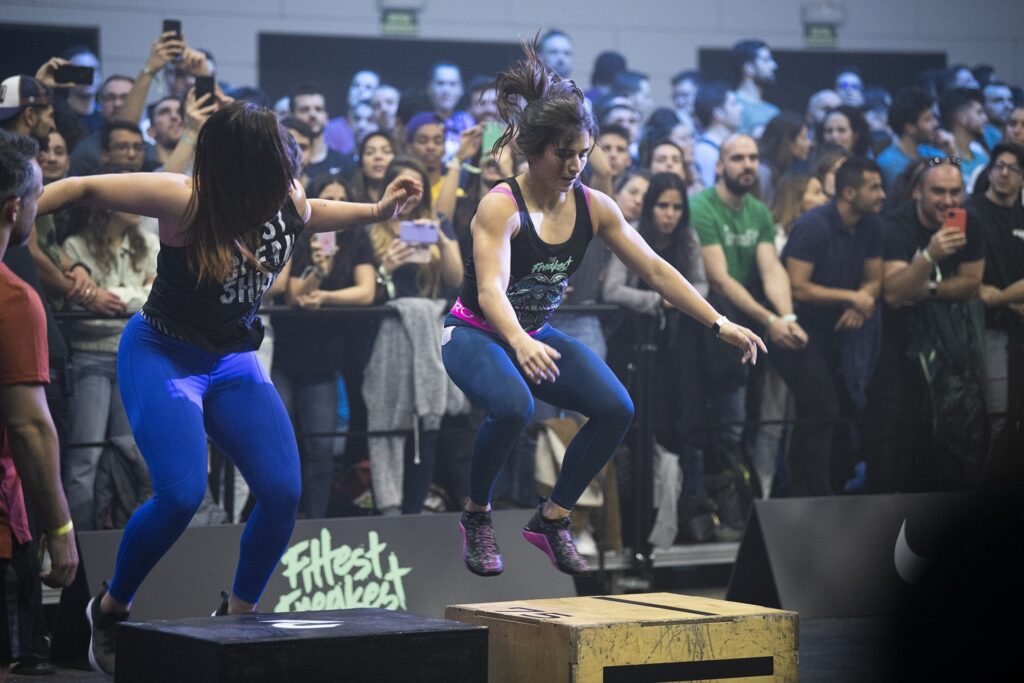
The step-up is a highly functional unilateral exercise that mimics natural movement patterns like climbing or sprinting. When performed onto a higher box, the exercise demands more hip flexion and extension, increasing gluteus maximus recruitment.
Biomechanics
A higher box increases the degree of hip flexion at the start of the movement, enhancing mechanical tension in the glutes. Unlike many closed-chain exercises, the step-up also integrates concentric power development with minimal spinal loading, making it a safer alternative for individuals with lower back issues.
Execution
- Stand in front of a box or bench at knee height or higher.
- Place one foot fully on the surface and drive through the heel to step up.
- Fully extend the hip and knee before bringing the trailing leg up.
- Step back down under control.
Programming Tips
- Use a load that challenges you for 8–12 reps per leg.
- Avoid pushing off excessively with the trailing leg.
- For power development, perform explosive step-ups with lighter loads.
Scientific Evidence
Ebben et al. (2009) showed that step-ups produced EMG activation levels in the gluteus maximus comparable to squats and lunges. Additionally, Wirth et al. (2016) noted that the unilateral nature of the step-up reduces spinal compression compared to bilateral lifts, making it suitable for long-term joint health.
Additional Benefits of Unilateral Glute Training
Improved Hip Stability
Weakness or asymmetry in the gluteus medius can contribute to valgus knee collapse, linked to increased ACL injury risk. Unilateral training directly addresses this by forcing each hip to stabilize independently.
Injury Prevention
By improving single-leg stability and strength, athletes can better handle the unpredictable forces encountered in sport. This is supported by research from Zazulak et al. (2007), which found a correlation between core and hip stability and reduced injury incidence.
Greater Range of Motion
Unilateral exercises often allow deeper ranges of motion due to reduced limitations from bilateral stance mechanics. Greater range of motion has been linked to superior hypertrophic outcomes (McMahon et al., 2014).
Programming Recommendations
For most lifters, incorporating 2–3 unilateral glute-focused exercises per week is optimal. These can be included after bilateral compound lifts or as the main lower-body stimulus for athletes prioritizing balance, coordination, or injury resilience. Rotating between Bulgarian split squats, single-leg RDLs, and step-ups ensures comprehensive stimulation of the gluteus maximus and medius.
Bibliography
- Bishop, C., Turner, A. & Read, P. (2018) ‘Effects of inter-limb asymmetries on physical and sports performance: a systematic review’, Journal of Sports Sciences, 36(10), pp.1135–1144.
- Contreras, B., Vigotsky, A., Schoenfeld, B., Beardsley, C. & Cronin, J. (2015) ‘A comparison of gluteus maximus, biceps femoris, and vastus lateralis EMG amplitude in the parallel, full, and front squat’, Journal of Applied Biomechanics, 31(6), pp.452–458.
- Distefano, L., Blackburn, J., Marshall, S. & Padua, D. (2009) ‘Gluteal muscle activation during common therapeutic exercises’, Journal of Orthopaedic & Sports Physical Therapy, 39(7), pp.532–540.
- Ebben, W., Feldmann, C., Dayne, A., Mitsche, D., Alexander, P. & Knetzger, K. (2009) ‘Muscle activation during lower body resistance training’, International Journal of Sports Medicine, 30(3), pp.168–174.
- McCurdy, K., Langford, G., Cline, A., Doscher, M. & Hoff, R. (2005) ‘The reliability of 1- and 3RM tests of unilateral strength in trained and untrained men and women’, Journal of Sports Science and Medicine, 4(2), pp.190–196.
- McMahon, J., Morse, C., Burden, A., Winwood, K. & Comfort, P. (2014) ‘Impact of range of motion during ecologically valid resistance training protocols’, Journal of Strength and Conditioning Research, 28(2), pp.449–456.
- Schoenfeld, B. (2010) ‘The mechanisms of muscle hypertrophy and their application to resistance training’, Journal of Strength and Conditioning Research, 24(10), pp.2857–2872.
- Wirth, K., Keiner, M., Hartmann, H., Sander, A. & Mickel, C. (2016) ‘Effect of 8 weeks of free-weight and machine-based strength training on strength and power performance’, Journal of Strength and Conditioning Research, 30(4), pp.1038–1045.
- Zazulak, B., Hewett, T., Reeves, N., Goldberg, B. & Cholewicki, J. (2007) ‘Deficits in neuromuscular control of the trunk predict knee injury risk: prospective biomechanical-epidemiologic study’, American Journal of Sports Medicine, 35(7), pp.1123–1130.
Key Takeaways
| Exercise | Primary Glute Target | Secondary Benefits | Evidence Strength |
|---|---|---|---|
| Bulgarian Split Squat | Gluteus maximus | Hip flexor mobility, unilateral strength | Strong EMG support |
| Single-Leg Romanian Deadlift | Gluteus maximus, medius | Balance, hamstring strength | Strong EMG & functional support |
| High Box Step-Up | Gluteus maximus | Power, knee-friendly loading | Comparable activation to squats |