Deadlifts are a staple in many fitness routines, renowned for their ability to build overall strength, particularly in the lower back, glutes, and hamstrings. However, there are numerous reasons why someone might need an alternative to this powerful exercise. Injuries, lack of equipment, or simply looking for variety in a workout regime are all valid reasons. Here, we present three excellent alternative exercises that can effectively target similar muscle groups and provide comparable benefits to the deadlift.
Why Some People Can’t Deadlift
Before delving into the alternatives, it’s important to understand why deadlifts might not be suitable for everyone. Deadlifts require proper form to avoid injury, particularly to the lower back. Individuals with pre-existing back problems, herniated discs, or other musculoskeletal issues might find deadlifts aggravating or risky. Additionally, some gyms might lack the necessary equipment, such as barbells or appropriate weights.
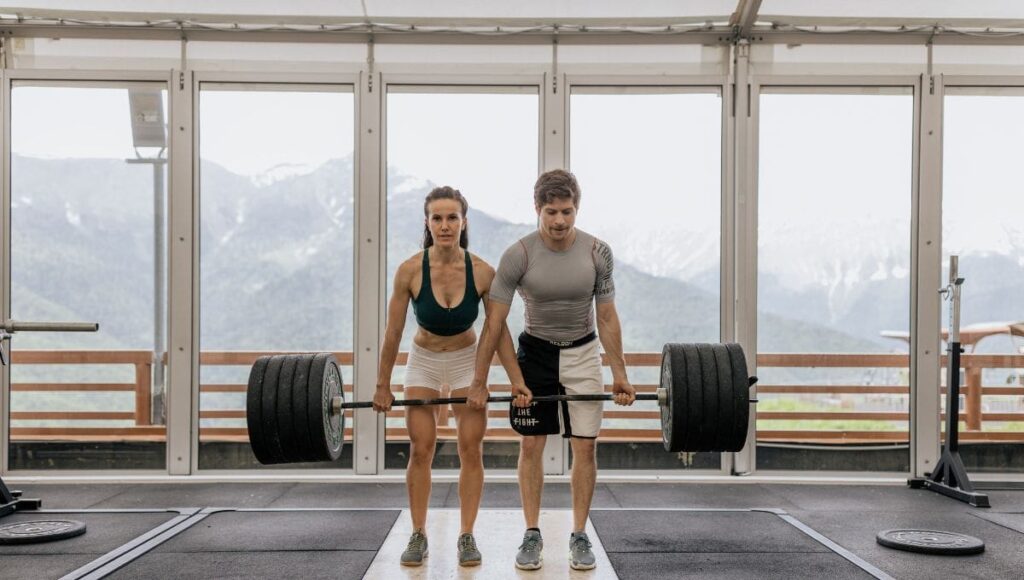
Moreover, beginners might find deadlifts intimidating or difficult to perform correctly without supervision. In such cases, starting with alternative exercises can build the necessary strength and confidence to eventually incorporate deadlifts into a fitness routine.
1. Romanian Deadlifts (RDLs)
How to Perform Romanian Deadlifts
Romanian Deadlifts are a fantastic alternative that targets the hamstrings, glutes, and lower back without the need for heavy weights or advanced technique.
- Starting Position: Stand with feet hip-width apart, holding a barbell or dumbbells in front of your thighs with an overhand grip.
- Movement: Keeping your knees slightly bent and back straight, hinge at the hips and lower the weights along the front of your legs.
- Lowering Phase: Lower the weights until you feel a stretch in your hamstrings, usually around mid-shin level.
- Returning to Start: Engage your glutes and hamstrings to lift back to the starting position.
Benefits and Scientific Backing
Romanian Deadlifts are particularly effective for targeting the posterior chain—the group of muscles running along the back of your body. A study by Hales, Johnson, and Johnson (2009) found that RDLs significantly activate the hamstrings and glute muscles, making them a strong contender for those looking to replicate the muscle engagement of traditional deadlifts . Furthermore, because RDLs involve less knee flexion, they place less strain on the lower back and are often recommended for individuals with back issues.
2. Hip Thrusts
How to Perform Hip Thrusts
Hip Thrusts are another excellent alternative, primarily targeting the glutes and also engaging the hamstrings and lower back.
- Starting Position: Sit on the ground with your upper back against a bench and a loaded barbell over your hips.
- Movement: Roll the barbell over your hips and position your feet flat on the ground, hip-width apart.
- Thrusting Phase: Drive through your heels and lift your hips towards the ceiling, squeezing your glutes at the top.
- Lowering Phase: Lower your hips back down to the starting position with control.
Benefits and Scientific Backing
Hip Thrusts are renowned for their ability to isolate the glutes. Research by Contreras et al. (2011) demonstrated that hip thrusts lead to greater glute activation compared to squats and deadlifts . This makes them an optimal choice for those specifically looking to enhance glute strength and size. Additionally, hip thrusts place minimal stress on the lower back, making them suitable for individuals with back pain or those recovering from back injuries.
3. Kettlebell Swings
How to Perform Kettlebell Swings
Kettlebell Swings are a dynamic exercise that improves power, endurance, and strength, particularly in the posterior chain.
- Starting Position: Stand with feet shoulder-width apart and a kettlebell on the ground in front of you.
- Grasping the Kettlebell: Bend at the hips and slightly at the knees to grasp the kettlebell with both hands.
- Swinging Phase: Hinge at the hips to swing the kettlebell between your legs, then explosively extend your hips to swing the kettlebell up to shoulder height.
- Lowering Phase: Let the kettlebell swing back between your legs and repeat the movement.
Benefits and Scientific Backing
Kettlebell Swings are effective for developing power and endurance in the posterior chain. A study by Lake and Lauder (2012) found that kettlebell swings significantly enhance the strength and power of the hip extensors . Moreover, they are excellent for cardiovascular conditioning, providing a full-body workout that also engages the core muscles.
Choosing the Right Alternative
Selecting the right alternative exercise depends on your specific needs and limitations. Here are some factors to consider:
- Back Health: If you have a history of back problems, hip thrusts might be the best option as they place minimal stress on the lower back.
- Glute Activation: For those focused on glute development, hip thrusts are scientifically proven to be highly effective.
- Functional Strength: If you’re looking for a functional, dynamic movement that improves power and endurance, kettlebell swings are ideal.
- Posterior Chain Development: Romanian Deadlifts are excellent for overall posterior chain development with a focus on hamstrings and glutes.
Incorporating Alternatives into Your Routine
To effectively integrate these alternatives into your workout regimen, consider the following guidelines:
- Frequency: Aim to include these exercises 2-3 times per week, allowing at least one day of rest between sessions to ensure adequate recovery.
- Volume and Intensity: Start with moderate weights and gradually increase the load as your strength improves. Perform 3-4 sets of 8-12 repetitions for each exercise.
- Warm-Up and Cool-Down: Always include a proper warm-up to prepare your muscles and joints, and a cool-down to aid recovery and prevent injury.
Conclusion
While deadlifts are an exceptional exercise, they are not the only path to building strength and muscle in the posterior chain. Romanian Deadlifts, Hip Thrusts, and Kettlebell Swings offer viable alternatives, each with unique benefits supported by scientific research. By incorporating these exercises into your fitness routine, you can achieve similar, if not superior, results without the need for traditional deadlifts.
References
- Hales, M.E., Johnson, B.F., & Johnson, J.T. (2009). Kinematic Analysis of the Powerlifting Style Squat and the Conventional Deadlift during the Sticking Point. Journal of Strength and Conditioning Research, 23(2), 415-421.
- Contreras, B., Cronin, J., Schoenfeld, B., Nates, R., & Sonmez, G.T. (2011). Are All Hip Extension Exercises Created Equal? Strength and Conditioning Journal, 33(4), 19-25.
- Lake, J.P., & Lauder, M.A. (2012). Kettlebell swing training improves maximal and explosive strength. Journal of Strength and Conditioning Research, 26(8), 2228-2233.
Key Takeaways
| Exercise | Primary Muscles Targeted | Benefits | Considerations |
|---|---|---|---|
| Romanian Deadlifts (RDLs) | Hamstrings, Glutes, Lower Back | Effective posterior chain activation | Moderate weight, focus on form |
| Hip Thrusts | Glutes, Hamstrings, Lower Back | Superior glute activation, low back stress | Requires bench and barbell, controlled movement |
| Kettlebell Swings | Posterior Chain, Core | Enhances power and endurance, full-body workout | Dynamic movement, suitable for cardiovascular fitness |
By selecting and properly performing these alternative exercises, you can maintain a robust and effective fitness regimen even without traditional deadlifts.