The benefits of the muscle snatch are undeniable, and it is one of the most underappreciated exercises in strength training.
While it looks simple compared to the full snatch, this variation delivers a powerful combination of strength development, explosive power, and upper-body athleticism. Because it removes the catch in a deep squat, the muscle snatch forces the lifter to rely on upper-body and hip extension strength to finish the lift.
That unique demand makes it a valuable tool for weightlifters, CrossFit athletes, and anyone looking to enhance whole-body performance.
What Is the Muscle Snatch?
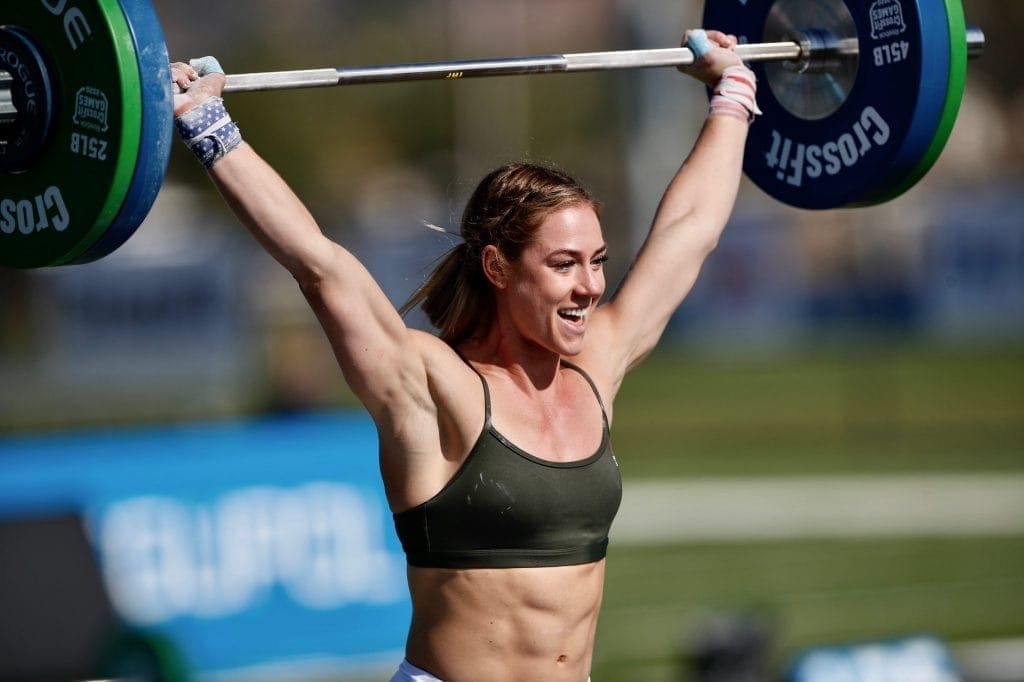
The muscle snatch is an Olympic lifting variation similar to the barbell snatch, except the athlete never drops under the bar into a squat to catch it. Instead, the bar is driven overhead through constant upward movement until the arms lock out. There is no re-bending of the knees and no receiving position below parallel.
This means the bar path must be efficient, the hips must produce aggressive but controlled power, and the shoulders, upper back, and triceps must complete the lift with strong overhead mechanics.
Because the movement removes the technical challenge of catching the bar in a squat, the muscle snatch can be taught quickly and practiced safely—even at moderate loads—while still delivering impressive physical benefits.
Why the Muscle Snatch Is Worth Your Time
The muscle snatch trains the full body through a blend of rapid hip extension, upper-body pulling strength, and stable overhead lockout. Scientifically, these qualities contribute to improvements in power output, neuromuscular coordination, and shoulder function.
These improvements translate directly into athletic performance but also have implications for injury prevention and long-term movement health.
Benefit 1: Improved Explosive Power and Rate of Force Development
Explosive hip extension lies at the heart of almost every athletic movement—jumping, sprinting, throwing, and rapid change of direction. The muscle snatch trains this quality intensely because the lifter must generate enough force to pull the bar all the way overhead without the help of dropping under the bar.
How the Muscle Snatch Boosts Power
Research indicates that Olympic lifting variations stimulate some of the highest power outputs recorded in resistance training. Studies on the snatch, power snatch, and related movements show peak power values that exceed those found in traditional lifting exercises such as deadlifts or squats (Suchomel et al., 2018).
Because the muscle snatch maintains many of the same force-production mechanics as the traditional snatch—especially the explosive triple extension of the hips, knees, and ankles—it provides a similar stimulus for increasing rate of force development (RFD).
RFD is one of the strongest predictors of athletic performance. Athletes who can generate force faster are able to accelerate more efficiently, jump higher, and perform explosive actions with greater ease (Mann et al., 2015).
Why the Muscle Snatch Is Especially Effective
The muscle snatch is uniquely demanding because the athlete cannot hide behind technique. In the full snatch, if the bar is not pulled high enough, you can drop under and still complete the lift. In the muscle snatch, insufficient force means the bar simply will not reach the overhead position.
This reinforces:
- maximal intent on every rep
- clean and efficient bar paths
- proper sequencing of hip, knee, and shoulder movement
- strong finishing mechanics through the upper body
Research shows that simplified Olympic variations—like the muscle snatch, high pull, or hang variations—are just as effective as complex variations for power development, especially when used with athletes who are still polishing technique (Comfort et al., 2014).
Real-World Application
If your goal is to sprint faster, jump higher, or hit harder—whether you are a CrossFit athlete, weightlifter, or recreational lifter—the muscle snatch develops the explosive qualities that underpin those abilities.
Its combination of speed, power, and precision makes it a reliable choice for power training sessions, warm-ups, and technique reinforcement days.
Benefit 2: Enhanced Shoulder Strength and Stability
The overhead lockout of the muscle snatch is one of its defining characteristics. Unlike other snatch variations where the athlete catches the bar in a squat, the lifter here must press and pull the bar to full arm extension using the shoulders, traps, and triceps.

This creates a unique stimulus for strengthening the structures that stabilize the shoulder joint.
The Science Behind Shoulder Stability
The shoulder is the most mobile joint in the human body—and because of this, it is also one of the least stable. The rotator cuff, scapular stabilizers, and upper-back muscles all work together to maintain safe and controlled movement.
Studies have shown that overhead lifting strengthens these stabilizers and improves neuromuscular control of the joint (Escamilla et al., 2009). This is important because poor scapular control is strongly associated with shoulder pain and increased injury risk.
The muscle snatch requires coordinated activation of:
- rotator cuff muscles
- upper trapezius
- middle trapezius
- lower trapezius
- serratus anterior
- deltoids
- triceps
This combination improves upward rotation of the scapula, which is essential for healthy overhead motion.
Unique Advantages of the Muscle Snatch
The continuous upward movement of the bar in the muscle snatch forces the lifter to maintain scapular upward rotation and external rotation of the shoulders throughout the movement.
Research shows that exercises promoting upward rotation and overhead external rotation can significantly reduce shoulder dysfunction and improve movement efficiency during overhead sports (Ludewig & Reynolds, 2009).
Additionally, the rapid contraction of the upper-back and shoulder muscles during explosive lifts improves both dynamic stability and motor control at high speeds—a quality essential for athletes performing fast overhead actions, such as throwing or swimming (Wagner et al., 2010).
Practical Training Outcomes
Stronger, more stable shoulders mean:
- improved pressing strength
- better overhead mobility
- enhanced ability to receive the bar in snatch or jerk variations
- reduced risk of rotator cuff injuries
- increased resilience during high-volume CrossFit workouts
For athletes who spend large amounts of time in overhead positions, the muscle snatch acts as a bridge between strength training and dynamic shoulder control.
Benefit 3: Better Technique and Efficiency in the Full Snatch
The muscle snatch reinforces many of the essential components of the full snatch—but in a simplified and more accessible format. This makes it a valuable tool for both beginner and advanced lifters.
How the Muscle Snatch Sharpens Snatch Mechanics
Because the lift removes the catch phase, the athlete must rely on:
- a precise bar path
- an aggressive but controlled hip extension
- correct timing of the pull and turnover
- stable overhead lockout mechanics
Research suggests that breaking complex lifts into component parts accelerates skill acquisition by reducing cognitive load and reinforcing correct motor patterns (Graham & Cleather, 2018).
The muscle snatch is one of the best isolation drills for improving the turnover—the moment when the bar transitions from being pulled overhead to being locked out. Studies examining the snatch turnover identify the need for coordinated shoulder external rotation, elbow flexion, and upward bar acceleration (Ho et al., 2014).

The muscle snatch emphasizes these qualities more heavily than most variations.
Why Technique Improvements Transfer to Heavier Lifts
The turnover is often the most technically challenging part of the snatch. When the bar path, timing, and shoulder mechanics are off, the lift becomes unstable or impossible to perform consistently.
By practicing the movement with a muscle snatch:
- athletes learn to keep the bar close
- the turnover becomes faster and smoother
- overhead strength improves, creating stronger catch positions
- timing errors decrease
- confidence increases when the bar moves quickly
Over time, these improvements translate into more efficient full snatches and more consistency in both heavy and moderate-load lifting.
Ideal Applications in Training
The muscle snatch is valuable in:
- warm-ups to prime proper snatch mechanics
- beginner programs to simplify learning
- strength cycles to strengthen the turnover
- technical training blocks for refining bar path
- accessory work in CrossFit and Olympic lifting programs
Because it can be trained with relatively light loads, it places minimal stress on the joints while providing a high technical return.
Additional Positive Effects Worth Mentioning
While the article focuses on the three primary Benefits of the Muscle Snatch, research shows that the movement may also support:
Improved Postural Strength
The lift strengthens the posterior chain and upper back, both of which play key roles in maintaining upright posture. Research demonstrates that exercises enhancing scapular retraction and thoracic extension improve overall posture and reduce back pain (Kibler et al., 2006).
Better Motor Unit Recruitment
Olympic lifting variations recruit high-threshold motor units responsible for fast, forceful actions. Studies have shown that rapid ballistic lifts improve neural activation patterns more effectively than slow lifts (Cormie et al., 2011).
Increased Training Variety
Variation prevents plateaus, and programs that include Olympic-style lifts often demonstrate improved strength and power development over time due to better neuromuscular adaptation (Haff & Nimphius, 2012).
Although these are secondary benefits, they contribute significantly to the overall value of including the muscle snatch in training.
Practical Tips for Performing the Muscle Snatch
Keep the bar close
A tight bar path reduces wasted energy and improves lift efficiency.
Extend fully before pulling overhead
Rushing the turnover weakens power output and compromises bar height.
Drive the elbows high and outside
This reinforces proper sequencing and keeps the bar aligned with your center of mass.
Punch aggressively into the lockout
Strong finishing mechanics train the shoulders to stabilize the bar overhead.
Start light and build gradually
The muscle snatch is about speed, technique, and precision—not maximal loading.
Final Thoughts
The muscle snatch deserves far more recognition than it typically receives. By blending power development, upper-body strength, and technical refinement, it offers benefits that transfer directly to athletic performance, Olympic lifting mechanics, and overall functional fitness.
The scientific evidence is clear: incorporating the muscle snatch into your training can enhance explosive power, improve shoulder stability, and build better snatch mechanics—all of which contribute to long-term performance and durability.
When used consistently and with proper form, the muscle snatch becomes one of the most valuable tools in a well-rounded strength and conditioning program.
Bibliography
- Comfort, P., Allen, M. and Graham-Smith, P. (2014) ‘Kinetic comparisons during variations of the power clean’, Journal of Strength and Conditioning Research, 28(12), pp. 3084–3089.
- Cormie, P., McCaulley, G. and McBride, J. (2011) ‘Power versus strength-power jump squat training’, European Journal of Applied Physiology, 111(3), pp. 409–416.
- Escamilla, R., Yamashiro, K., Paulos, L. and Andrews, J. (2009) ‘Shoulder muscle activity and function in common shoulder rehabilitation exercises’, Sports Medicine, 39(8), pp. 663–685.
- Graham, S. and Cleather, D. (2018) ‘A comparison between learning through whole body and part practice in the snatch’, International Journal of Sports Science & Coaching, 13(1), pp. 3–11.
- Haff, G. and Nimphius, S. (2012) ‘Training principles for power’, Strength and Conditioning Journal, 34(6), pp. 2–12.
- Ho, L., Lorenzen, C. and Wilson, C. (2014) ‘The snatch turnover: An analysis of technique and sequencing’, Journal of Sports Sciences, 32(14), pp. 1375–1382.
- Kibler, W., Ludewig, P., McClure, P., Michener, L., Bak, K. and Sciascia, A. (2006) ‘Clinical implications of scapular dyskinesis in shoulder injury’, British Journal of Sports Medicine, 40(9), pp. 776–780.