Achieving significant muscle growth requires a combination of resistance training and proper nutrition. Protein is the fundamental building block for muscle development, and incorporating high-protein snacks into your daily meals can accelerate the process.
For many, lunch is an opportunity to consume enough protein to support their goals without interrupting their day. This article will provide you with three high-protein lunch snacks specifically designed to build muscle mass faster.
Why Protein is Crucial for Muscle Growth
Protein plays a pivotal role in muscle growth because it provides the amino acids necessary for muscle repair and recovery after exercise. When you engage in strength training or resistance exercises, muscle fibres undergo microscopic tears. Protein helps repair and rebuild these fibres, making them larger and stronger over time. This process is known as muscle hypertrophy.
According to research published in the Journal of the International Society of Sports Nutrition, consuming adequate protein post-exercise is critical for promoting muscle protein synthesis (MPS). The general recommendation for individuals looking to build muscle is to consume between 1.6 to 2.2 grams of protein per kilogram of body weight per day.
Spacing out protein consumption throughout the day helps maintain a steady state of muscle protein synthesis, which is why incorporating high-protein snacks during lunch is essential.
Snack 1: Chicken and Avocado Wraps
Chicken is one of the best sources of lean protein, rich in essential amino acids that fuel muscle repair and growth. Avocados, on the other hand, are packed with healthy fats, which are essential for overall health and hormone production. Combining these two foods in a convenient wrap provides a delicious, high-protein lunch snack perfect for anyone trying to bulk up.
Protein Content
A standard wrap with 100 grams of grilled chicken breast contains approximately 30 grams of protein. Adding avocado contributes about 2 grams of protein, bringing the total to 32 grams for the entire meal.
Why It’s Effective
Chicken is a high-quality, complete protein, meaning it contains all nine essential amino acids required by the body for muscle repair. Studies have shown that consuming lean proteins like chicken post-exercise can significantly boost muscle protein synthesis. A study published in The American Journal of Clinical Nutrition found that eating 20–40 grams of protein in one meal maximally stimulates MPS.
Additionally, avocados provide monounsaturated fats, which help regulate hormones like testosterone, a critical factor in muscle development. Research has demonstrated that healthy fats are crucial for maintaining optimal testosterone levels, particularly in men.
How to Prepare
To make a chicken and avocado wrap, grill or roast a 100-gram chicken breast. Slice it into strips and place it on a whole-grain wrap. Add half an avocado, some mixed greens, and a drizzle of olive oil for extra healthy fats. Season with salt, pepper, and any spices you prefer, then wrap it up. This quick snack is perfect for lunch, providing a well-rounded source of protein, healthy fats, and fibre.
Snack 2: Cottage Cheese and Greek Yoghurt Parfait
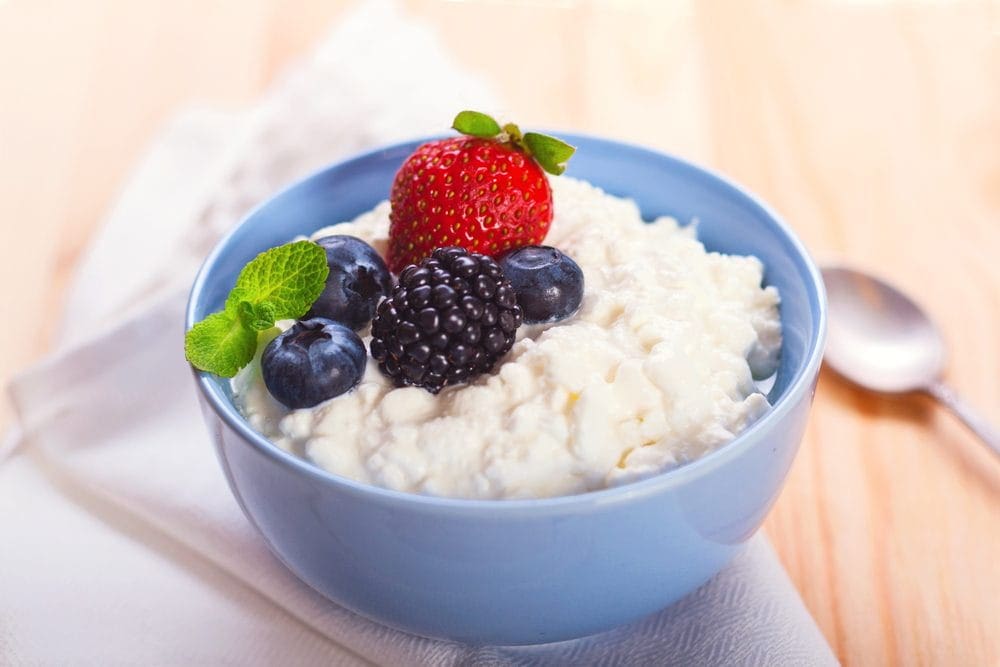
Cottage cheese and Greek yoghurt are both excellent sources of casein and whey protein, which digest at different rates. Casein is a slow-digesting protein, which provides your muscles with a steady supply of amino acids over a longer period, while whey is rapidly digested, quickly boosting muscle protein synthesis. Together, they make a powerful duo for muscle growth.
Protein Content
A 150-gram serving of cottage cheese offers around 15 grams of protein, while a 170-gram serving of Greek yoghurt provides about 17 grams. Combining them results in a total protein intake of around 32 grams.
Why It’s Effective
Cottage cheese is particularly high in casein, a slow-digesting protein that has been shown to reduce muscle breakdown . According to research published in Nutrients, casein can help prevent muscle catabolism during periods of fasting or extended breaks between meals.
Greek yoghurt, on the other hand, is high in whey protein, which has been proven to be one of the most effective proteins for promoting muscle protein synthesis post-exercise.
This combination ensures that your muscles get an immediate boost of whey protein to kickstart recovery, followed by a sustained release of casein to keep amino acid levels elevated for hours. This makes cottage cheese and Greek yoghurt parfaits ideal for a mid-day snack that supports continuous muscle growth.
How to Prepare
In a bowl, combine 150 grams of cottage cheese and 170 grams of Greek yoghurt. Layer this mixture with fresh fruits like berries or bananas, which provide antioxidants and micronutrients that aid recovery. Add some nuts or seeds for healthy fats, and top it with a drizzle of honey for extra sweetness if desired. This snack is easy to prepare and offers a balanced macronutrient profile that supports muscle-building goals.
Snack 3: Hard-Boiled Eggs and Almonds
Eggs are a staple in muscle-building diets due to their high-quality protein content and rich nutrient profile. Almonds, meanwhile, are packed with healthy fats, fibre, and additional protein, making them an excellent snack option for those aiming to increase muscle mass.

Protein Content
One large hard-boiled egg contains about 6 grams of protein, while a serving of 28 grams (about a handful) of almonds adds another 6 grams. Eating three hard-boiled eggs and a handful of almonds gives you around 24 grams of protein.
Why It’s Effective
Eggs are often considered a “gold standard” for protein quality, as they contain all nine essential amino acids in the right ratios for muscle repair. Studies have found that eggs not only support muscle growth but also improve overall strength and recovery when consumed regularly in a resistance training program.
Almonds are a nutrient-dense snack that provides additional protein along with healthy fats and vitamins such as vitamin E. Vitamin E is an antioxidant that plays a role in reducing oxidative stress during muscle recovery. A study published in the Journal of the International Society of Sports Nutrition found that consuming whole eggs post-exercise resulted in greater muscle protein synthesis than just eating egg whites.
How to Prepare
Boil three large eggs and peel them. Pair them with a handful of almonds for a portable, high-protein snack that you can enjoy on the go. This snack is not only rich in protein but also provides healthy fats that support muscle growth and overall well-being.
Conclusion
Incorporating high-protein snacks into your lunch can significantly boost muscle growth, providing your body with the necessary amino acids for recovery and repair. The three snacks detailed here—chicken and avocado wraps, cottage cheese and Greek yoghurt parfaits, and hard-boiled eggs with almonds—each offer a substantial amount of protein and healthy fats to enhance muscle-building efforts.
When choosing high-protein snacks, it’s essential to focus on nutrient-dense, whole foods that offer complete protein profiles, along with healthy fats and micronutrients to support overall muscle development. By consuming these snacks consistently, alongside a well-balanced diet and regular strength training, you can maximise muscle mass gains.
Key Takeaways Table
| Snack | Protein Content | Benefits |
|---|---|---|
| Chicken and Avocado Wrap | 32g | Complete protein for muscle repair, healthy fats for hormone regulation |
| Cottage Cheese and Greek Yoghurt Parfait | 32g | Rapid and slow-digesting proteins for continuous muscle synthesis |
| Hard-Boiled Eggs and Almonds | 24g | High-quality protein and healthy fats for sustained energy and recovery |
References
- Journal of the International Society of Sports Nutrition (2018). “Protein intake and exercise for optimal muscle mass and function.” DOI:10.1186/s12970-018-0216-3.
- Phillips, S.M. (2014). “A brief review of critical processes in exercise-induced muscular hypertrophy.” European Journal of Applied Physiology, 114(3), 531-542.
- USDA (2023). “Chicken, Broilers or Fryers, Breast, Meat Only, Raw.” United States Department of Agriculture.
- Paddon-Jones, D., & Rasmussen, B.B. (2009). “Dietary protein recommendations and the prevention of sarcopenia.” Current Opinion in Clinical Nutrition and Metabolic Care, 12(1), 86-90.
- Witard, O.C., et al. (2014). “Protein requirements for muscle mass maintenance in young and older adults.” The American Journal of Clinical Nutrition, 99(1), 1490-1502.
- Allen, N.E., et al. (2008). “Testosterone and other sex hormones in relation to prostate cancer.” British Journal of Cancer, 98(7), 1254-1258.
- USDA (2023). “Cottage Cheese, Low Fat, 2% Milkfat.” United States Department of Agriculture.
- USDA (2023). “Yogurt, Greek, Plain, Nonfat.” United States Department of Agriculture.
- Phillips, S.M., & Van Loon, L.J.C. (2011). “Dietary protein for athletes: From requirements to optimum adaptation.” Journal of Sports Sciences, 29(sup1), S29-S38.
- Boirie, Y., et al. (1997). “Slow and fast dietary proteins differently modulate postprandial protein accretion.” Proceedings of the National Academy of Sciences,94(26), 14930-14935.