Hybrid athletes train for both strength and endurance. They want to run fast while still being strong, powerful and durable. This approach requires smart programming, because building speed demands a blend of force production, explosive power, tissue resilience and neuromuscular efficiency.
Strength training is not just compatible with improving running speed—it is one of the best ways to do it when properly structured.
This article explains why strength training enhances running speed, then presents three lifting sessions designed for hybrid athletes who want to run faster. Each session is backed by scientific evidence, and every claim is supported with references in a Harvard-style bibliography at the end. No fluff—just clear, friendly, evidence-based guidance.
Why Strength Training Improves Running Speed
If you want to run faster, you need to apply more force to the ground in less time. That is the core biomechanical requirement of speed: greater force production during each stride and reduced ground contact time. Strength training improves this by increasing muscular force output, enhancing muscle–tendon stiffness and refining neuromuscular coordination.
Running economy and why strength helps it
Running economy refers to how much oxygen or energy you use to run at a given speed. Better running economy means more speed for the same effort. Multiple systematic reviews have shown that strength training—particularly high-load training—significantly improves running economy in middle- and long-distance runners. These improvements stem from better neuromuscular efficiency, increased stiffness of the muscle–tendon unit and improved rate of force production.
A 2024 meta-analysis concluded that strength training led to moderate to large improvements in running performance measures such as time trials and time-to-exhaustion tests, even when VO₂max remained unchanged. This reflects more efficient movement, not necessarily greater aerobic capacity.
The role of maximal strength in speed
Maximal strength training—lifting heavy loads for low repetitions—improves your ability to produce force. Research shows that increases in maximal strength correlate with improvements in sprint performance, particularly in the early acceleration phase where high horizontal force production is essential.
Greater maximal strength also enhances your ability to tolerate training load. Stronger tissues mean lower risk of overuse injuries, better resilience to heavy running volume and improved ability to maintain technique late in a race.
The importance of explosive strength and plyometrics
Explosive lifts and plyometrics increase the rate of force development (RFD). RFD is a key predictor of sprint performance because sprinters have only milliseconds to apply force during foot strike. Plyometric training has consistently been shown to improve running economy, neuromuscular efficiency and stiffness of the muscle–tendon unit. This makes each stride more powerful and more reactive.
A review of sprint performance training found that strength and power training improved stride frequency, stride length, ground reaction force and reduced ground contact time—all essential components of speed.
Concurrent training: lifting + running can work
Concerns about the “interference effect” often discourage hybrid athletes from strength training. The interference effect is the idea that endurance training inhibits gains in strength and muscle size, and vice versa. However, recent scientific reviews show that with proper sequencing, loads and recovery, strength and endurance training can be combined successfully.
In other words: hybrid training can work. Strength training can improve running performance, not hinder it, when programmed well.
How to Use the Three Lifting Sessions
Before presenting the sessions, here are some universal guidelines:
- Warm up thoroughly with dynamic mobility, activation and light plyometrics.
- Prioritise technical quality over load—especially in explosive lifts.
- Rest adequately between sets, especially in strength and power sessions.
- If lifting and running on the same day, lift first if speed or strength is the priority.
- Keep weekly running load consistent to avoid spikes that impair recovery.
- Use these sessions for 4–8 week blocks, then reassess.
Each session targets a different aspect of speed development:
- Session 1: Maximal strength
- Session 2: Explosive strength and plyometrics
- Session 3: Hybrid strength maintenance with running-transfer focus
Together they form a complete system for hybrid athletes aiming to improve speed.
Session 1: Max Strength Foundation
Purpose
This session focuses on increasing maximal force output. Higher maximal strength means you can produce more propulsive force during each stride. Research shows that heavy strength training improves running economy, time-to-exhaustion, and overall running performance, even for trained runners.
Heavy compound lifts strengthen the entire posterior chain, improve core stability and increase the body’s capacity to tolerate high-intensity running.
Structure
- Back Squat: 4 sets of 4–6 reps at 85–90% 1RM
- Deadlift or Romanian Deadlift: 3 sets of 4–6 reps at ~85% 1RM
- Bulgarian Split Squat: 3 sets of 6 reps per leg (heavy)
- Nordic Ham Curl or Glute-Ham Raise: 3 sets of 6–8 reps
- Farmer’s Carry: 3 rounds of 30–40 m (heavy)
Why it works
Back Squat: Improves total lower-body force production. Greater strength in the hips, quads and glutes improves propulsive force and contributes to better acceleration.
Deadlift/RDL: Targets the posterior chain—hamstrings, glutes and spinal erectors—which are crucial for hip extension during running.
Bulgarian Split Squat: Running is a single-leg movement. Unilateral training improves stride stability, force production per leg and reduces asymmetries.
Nordic Ham Curl: Strengthens hamstrings eccentrically—a key factor in preventing hamstring injuries common in speed work.
Farmer’s Carry: Reinforces global stability, trunk stiffness and postural strength, all of which help maintain running mechanics under fatigue.
Tips
- Take 2–3 minutes rest between heavy sets.
- Do not chase failure; aim for high-quality reps.
- Avoid heavy running on the same day—light jogging only.
Session 2: Explosive Strength + Plyometric Transfer
Purpose
This session builds the ability to apply force quickly. Explosive lifts and plyometrics enhance rate of force development (RFD), a crucial factor in sprinting and speed endurance.
Plyometrics also improve the stretch-shortening cycle (SSC), which enhances elastic energy return. A more efficient SSC leads to stronger and quicker strides.
Structure
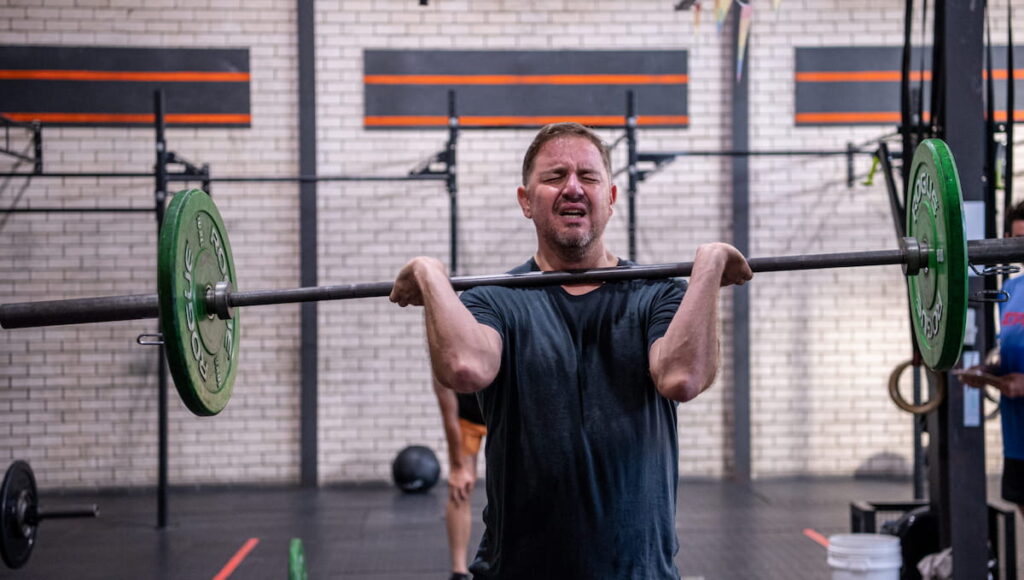
- Hang Power Clean: 3 sets of 3–5 reps at ~70% 1RM (fast, explosive)
- Push Press or Split Jerk: 3 sets of 3 reps at ~70–75% 1RM
- Broad Jumps: 3 sets of 5 reps
- Single-Leg Bounds: 3 sets of 6 per leg
- Depth Jump to Acceleration (drop box > accelerate 10–20 m): 3 rounds
Why it works
Hang Power Clean: Develops triple extension—hips, knees and ankles—key drivers of sprint power.
Push Press/Split Jerk: Improves rapid force transfer through the kinetic chain, helping posture and arm drive in sprinting.
Broad Jumps: Build horizontal power, closely related to acceleration.
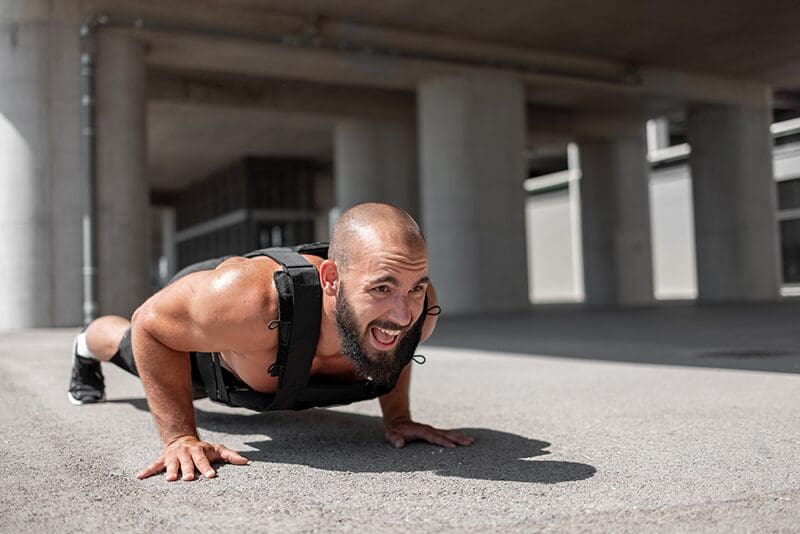
Single-Leg Bounds: Mimic the unilateral mechanics of running, improving stiffness, reactivity and stride dynamics.
Depth Jump + Sprint: Provides a high-quality plyometric stimulus with direct transfer to sprint acceleration.
Tips
- Prioritise quality and explosiveness; never sacrifice speed for load.
- Full recovery (2–3 minutes) is essential between sets.
- This session pairs well with lower-volume running days.
Session 3: Speed/Strength Maintenance + Hybrid Load
Purpose
This session maintains strength and power while integrating more hybrid-specific demands. It includes moderate loads, unilateral work, trunk training and movements that mimic horizontal force production.
It’s ideal for weeks with higher running volume or during performance maintenance phases.
Structure
- Front Squat: 3 sets of 5 reps at ~80% 1RM
- Romanian Deadlift: 3 sets of 6–8 reps at ~70% 1RM
- Weighted Step-Ups: 3 sets of 8 reps per leg
- Medicine Ball Rotational Throws: 3 sets of 8–10 per side
- Sled Push or Sled Drag: 3 rounds of 20–30 m (moderate load)
Why it works
Front Squat: Maintains strength while placing less stress on the posterior chain than heavy back squatting.
Romanian Deadlift: Reinforces hip hinge strength and hamstring robustness.
Step-Ups: High transfer to running mechanics; improves unilateral force and stability.
Med Ball Throws: Develop rotational power and trunk stiffness, necessary for maintaining efficient running posture under load.
Sled Push/Drag: Builds horizontal force capacity, directly tied to acceleration.
Tips
- Keep rest periods moderate (90–120 seconds).
- Maintain good posture and core engagement throughout.
- This session can be paired with light speed work or tempo running.
Putting the Sessions Together: A Weekly Hybrid Template
Below is an example week using all three sessions:
Monday:
Session 1 – Max Strength
Optional: light 20–30 min easy run
Tuesday:
Quality running session (intervals, hill repeats or track work)
Wednesday:
Session 2 – Explosive Strength + Plyometrics
Optional: short aerobic recovery run
Thursday:
Moderate run (tempo, steady state or threshold depending on training phase)
Friday:
Session 3 – Hybrid Strength Maintenance
Optional: short sprint drills or technique work
Saturday:
Long run or aerobic base work
Sunday:
Rest, mobility or very light jogging
This structure balances the demands of lifting and running so neither interferes with the other.
Science Behind This Program
Here’s a summary of key evidence supporting the sessions:
- Strength training improves running economy.
Multiple systematic reviews show that high-load strength training improves economy, neuromuscular efficiency and running performance in trained runners. - Strength develops force production—critical for speed.
Studies consistently show that maximal strength training increases lower-body force output, which improves sprint acceleration and top-end speed. - Plyometrics enhance speed through improved SSC function.
Meta-analyses show plyometrics improve running economy and speed by improving muscle–tendon stiffness and rate of force development. - Combined strength and endurance training does not necessarily interfere.
When programmed smartly, concurrent training improves performance outcomes without negative interference. - Unilateral strength training improves running mechanics.
Many studies highlight the role of single-leg strength and balance in enhancing stride mechanics and reducing injury risk.
Frequently Asked Questions
Will lifting make me heavier or slower?
If you focus on low-rep strength work and moderate overall volume, gaining excessive mass is unlikely. Strength training improves force production and running economy, which makes you faster, not slower.
Should I lift or run first?
If speed or strength is the priority, lift first. If endurance is the priority, run first—but keep post-run lifting lighter.
How many lifting sessions per week are ideal for hybrid athletes?
Two to three sessions per week are effective. The three sessions in this article represent a complete weekly system.
How long does it take to see improvements?
Research shows improvements in economy within 6–8 weeks, though strength increases may appear sooner.
Summary
Hybrid athletes can absolutely improve running speed through smart, science-based strength training. These three sessions work together to develop:
- Maximal strength
- Explosive power
- Tissue resilience
- Running-specific force application
With proper recovery, intelligent sequencing and consistency, these lifting sessions will help you become faster, stronger and more robust.
Bibliography
- Abelsson, A. (2025) Strength Training for Sprinting: Guide & Training Program. StrengthLog.
- Haugen, T., Seiler, S., Sandbakk, Ø. and Tønnessen, E. (2019) ‘The training and development of elite sprint performance: an integration of scientific and best practice literature’, Sports Medicine – Open, 5, p. 44.
- Llanos-Lagos, C., Ramirez-Campillo, R., Moran, J. and Sáez de Villarreal, E. (2024) ‘Effect of strength training programs in middle- and long-distance runners’ economy at different running speeds: a systematic review with meta-analysis’, Sports Medicine, 54, pp. 895–932.
- Llanos-Lagos, C., Ramirez-Campillo, R., Moran, J. and Sáez de Villarreal, E. (2024) ‘The effect of strength training methods on middle-distance and long-distance runners’ athletic performance: a systematic review with meta-analysis’, Sports Medicine, 54, pp. 1801–1833.
- Research Group (2017) ‘Effects of strength training on the physiological determinants of performance in sprint- and endurance-athletes: a systematic review’, Sports Medicine.
- Various authors (2025) Science of Hybrid Training: How to Balance Lifting and Running. Triage Method.
Key Takeaways
| Key Takeaway | Meaning in Practice |
|---|---|
| Build maximal strength | Heavy lifts (80–90% 1RM) increase force production, improving acceleration and stride power. |
| Train explosively | Power lifts and plyometrics convert strength into speed by improving rate of force development. |
| Maintain hybrid qualities | Moderate loads, unilateral work and sled training support speed during high running volume. |
| Program intelligently | Separate hard lifting and running sessions, prioritise recovery and track fatigue. |
| Strength supports speed | Stronger muscles and stiffer tendons improve running economy and sprinting ability. |
About the Author

Robbie Wild Hudson is the Editor-in-Chief of BOXROX. He grew up in the lake district of Northern England, on a steady diet of weightlifting, trail running and wild swimming. Him and his two brothers hold 4x open water swimming world records, including a 142km swim of the River Eden and a couple of whirlpool crossings inside the Arctic Circle.
He currently trains at Falcon 1 CrossFit and the Roger Gracie Academy in Bratislava.