Wall balls are one of the most decisive movements in HYROX racing. They appear late in the race, when fatigue is already high, and they demand a rare combination of leg strength, upper-body endurance, coordination, breathing control, and mental resilience. For many athletes, wall balls are where places are gained or lost.
Efficiency is not about doing wall balls “faster” in the traditional sense. It is about conserving energy, minimizing wasted movement, and sustaining output under fatigue. Scientific research on biomechanics, physiology, and neuromuscular fatigue gives us clear guidance on how to do that.
Tip 1: Optimize Your Squat Mechanics to Reduce Energy Cost
Wall balls are, at their core, repeated loaded squats combined with a vertical throw. Small inefficiencies in squat mechanics compound rapidly over dozens or hundreds of repetitions, dramatically increasing fatigue.
Why Squat Mechanics Matter in Wall Balls
From a physiological perspective, the primary energy cost of wall balls comes from repeated force production in the quadriceps, glutes, and trunk stabilizers. Studies on squat biomechanics show that joint angles, movement depth, and trunk position strongly influence muscle activation patterns and metabolic cost.
Research comparing different squat styles demonstrates that inefficient mechanics increase oxygen consumption and accelerate local muscular fatigue, even when the external load remains constant. In a race context, this means higher heart rate, faster breathing, and earlier breakdown.
In HYROX, where wall balls come after long periods of running and functional work, you do not have spare energy to waste.
Depth: Go Only as Low as Required
HYROX wall balls require you to break parallel, not perform an ass-to-grass squat. Excessive depth increases knee and hip flexion, which significantly raises quadriceps demand and time under tension.
Biomechanical studies show that deeper squats increase knee extensor moments and quadriceps activation disproportionately compared to moderate-depth squats. This extra activation does not translate into higher throw efficiency but does increase fatigue.
The most efficient approach is to squat to just below parallel, meeting the standard cleanly but not exceeding it. This minimizes unnecessary work while remaining compliant.
Trunk Angle and Force Transfer
An upright torso is commonly coached for squatting, but research shows that a slightly forward torso angle can actually improve force transfer when throwing an external object.
Electromyography studies indicate that moderate forward lean increases glute and hip extensor contribution while slightly reducing quadriceps dominance. This distribution of work across larger muscle groups lowers local fatigue in the quads, which are already heavily taxed from running.
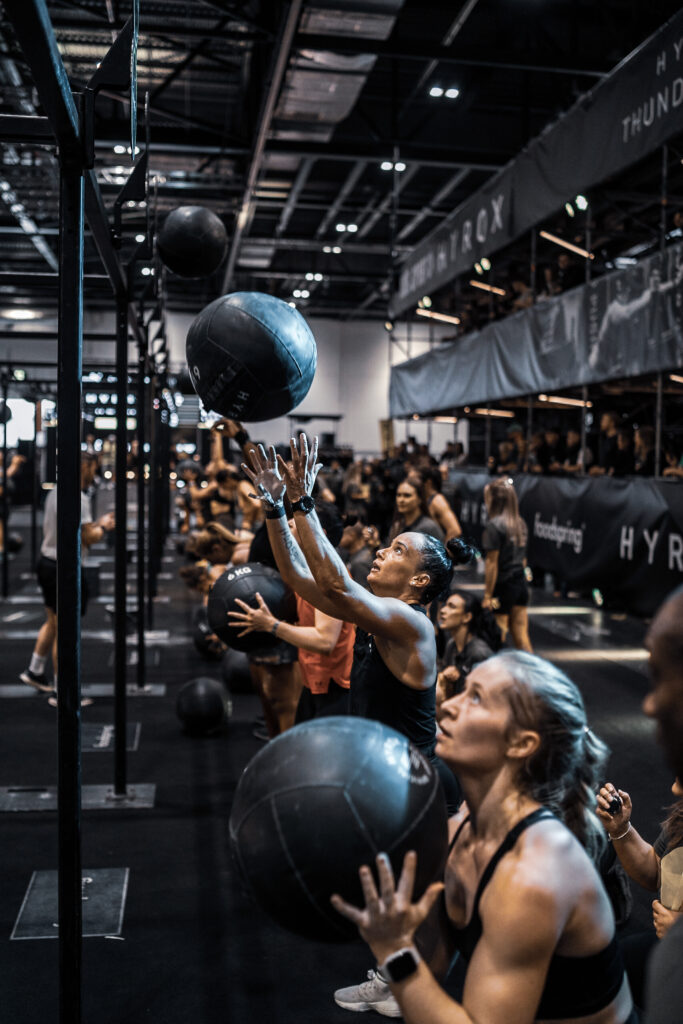
For wall balls, this means allowing a natural forward torso angle rather than forcing an artificially vertical position. The goal is balance, not rigidity.
Knee Tracking and Elastic Energy
Knee valgus, or inward collapse of the knees, is not just an injury risk. It also represents a loss of mechanical efficiency. Research on stretch-shortening cycles shows that aligned joints allow better storage and reuse of elastic energy during repeated movements.
When knees track over the toes, the musculotendinous system can store elastic energy during the descent and release it during the ascent. Poor alignment disrupts this cycle, forcing muscles to generate more active force each rep.
In practical terms, actively pushing the knees out slightly during the squat improves both stability and efficiency.
Tempo: Smooth, Not Fast
Faster is not always more efficient. Studies on movement economy consistently show that overly rapid tempos increase energy expenditure due to higher neuromuscular demands and reduced elastic energy utilization.

An efficient wall ball squat uses a smooth, controlled descent followed by a powerful but relaxed ascent. Think rhythmic rather than aggressive. This allows the stretch-shortening cycle to contribute without excessive braking forces.
Key Takeaway for Tip 1
Efficient squat mechanics reduce energy cost, delay fatigue, and improve consistency under pressure. Meeting the movement standard with no extra depth, allowing natural torso angle, maintaining knee alignment, and using a smooth tempo all contribute to lower physiological stress per repetition.
Tip 2: Use Breathing and Bracing Strategies to Delay Fatigue
Breathing is often overlooked in wall balls, yet it plays a critical role in performance. Poor breathing strategies increase heart rate, elevate perceived exertion, and accelerate fatigue of both respiratory and trunk muscles.
The Link Between Breathing and Performance
Research on respiratory muscle fatigue shows that heavy breathing under load competes for blood flow with working muscles in the limbs. This phenomenon, known as the respiratory muscle metaboreflex, can reduce oxygen delivery to the legs during high-intensity exercise.
In movements like wall balls, where trunk stability and breathing are tightly linked, inefficient breathing increases both cardiovascular strain and loss of postural control.
Avoid Breath Holding Under Fatigue
Many athletes unconsciously hold their breath during wall balls, especially as fatigue sets in. While short breath holds can increase trunk stiffness, prolonged or repeated breath holding elevates blood pressure and accelerates respiratory fatigue.
Studies on resistance training and high-repetition movements show that repeated Valsalva maneuvers significantly increase cardiovascular stress without improving endurance performance.
In HYROX, the goal is sustained output, not maximal force per rep. Therefore, continuous breathing is more efficient than breath holding.
Match Breathing to the Movement Cycle
Biomechanical and physiological research supports synchronizing breathing with repetitive movements to reduce metabolic cost. For wall balls, the most efficient pattern for most athletes is inhaling during the descent and exhaling during the ascent and throw.
This pattern aligns exhalation with force production, which helps maintain trunk stiffness while avoiding excessive pressure buildup. It also promotes a steady rhythm, which lowers perceived exertion.
Importantly, the breath does not need to be deep or exaggerated. The focus is on consistency and timing.
Bracing Without Over-Tension
Core bracing is essential for efficient force transfer, but excessive bracing increases energy cost. Studies using electromyography show that maximal trunk activation during submaximal tasks leads to early fatigue without performance benefit.
Effective bracing for wall balls is moderate and reactive. The trunk should be stable enough to transmit force from the legs to the ball, but relaxed enough to allow continuous breathing.
A useful cue supported by research is “brace, then breathe into the brace.” This maintains stability while reducing unnecessary tension.
Breathing Rhythm and Psychological Fatigue
Beyond physiology, breathing rhythm influences mental fatigue and pacing. Research in endurance sports shows that rhythmic breathing patterns reduce perceived exertion and improve task focus.
In wall balls, especially late in a race, a consistent breathing pattern acts as an anchor. It helps prevent panic, rushing, and breakdown of technique, all of which increase energy expenditure.
Key Takeaway for Tip 2
Efficient breathing and bracing reduce cardiovascular strain, delay respiratory muscle fatigue, and support consistent movement quality. Avoid breath holding, synchronize breathing with the squat and throw, and maintain moderate trunk tension rather than maximal rigidity.
Tip 3: Manage Volume, Sets, and Transitions to Minimize Neuromuscular Fatigue
Wall balls in HYROX are not just about strength or conditioning. They are about fatigue management. Neuromuscular fatigue accumulates rapidly during high-repetition tasks, and how you break up your reps matters.
Understanding Neuromuscular Fatigue
Neuromuscular fatigue refers to a reduction in the nervous system’s ability to activate muscles effectively. Research shows that fatigue is influenced not only by total volume, but also by how that volume is structured.
Continuous sets performed to near failure cause greater central fatigue and longer recovery times than the same volume performed in strategically broken sets.
In a race environment, excessive fatigue during wall balls can negatively affect your final run and overall finish time.
The Cost of Going to Failure
Studies on resistance training and endurance tasks consistently show that performing sets to failure increases muscle damage, disrupts motor unit coordination, and elevates perceived exertion.
While going unbroken may look impressive, it often comes at a high physiological cost. For most HYROX athletes, especially age-group competitors, slightly smaller sets completed more consistently are more efficient overall.
Optimal Set Sizes Based on Research
There is no universal “best” set size, but research on pacing and fatigue suggests stopping sets well before form degradation occurs. This preserves motor control and reduces cumulative fatigue.
For many athletes, this means sets of 10 to 20 reps, depending on strength and conditioning level. The key is consistency. Sets should feel repeatable, not progressively worse.
Rest Duration and Energy Systems
Short, planned rests allow partial recovery of phosphocreatine stores and reduce neural fatigue. Research shows that even brief rests of 5 to 15 seconds can significantly restore force output in repeated tasks.
Importantly, these micro-rests do not meaningfully increase total time if they prevent longer, unplanned breaks later due to fatigue.
Efficient wall ball strategy uses deliberate, short pauses rather than reactive, long rests.
Transition Efficiency Matters
Transitions between reps and sets are often overlooked, but they contribute significantly to total energy cost. Studies on movement economy show that unnecessary steps, ball adjustments, or posture changes increase oxygen consumption.
Efficient transitions mean catching the ball in the same position every rep, minimizing steps, and immediately initiating the next squat. This consistency reduces cognitive load and physical effort.
Training the Strategy, Not Just the Movement
Research on motor learning emphasizes that strategies must be practiced under conditions similar to competition. Practicing wall balls only when fresh does not prepare you for race fatigue.
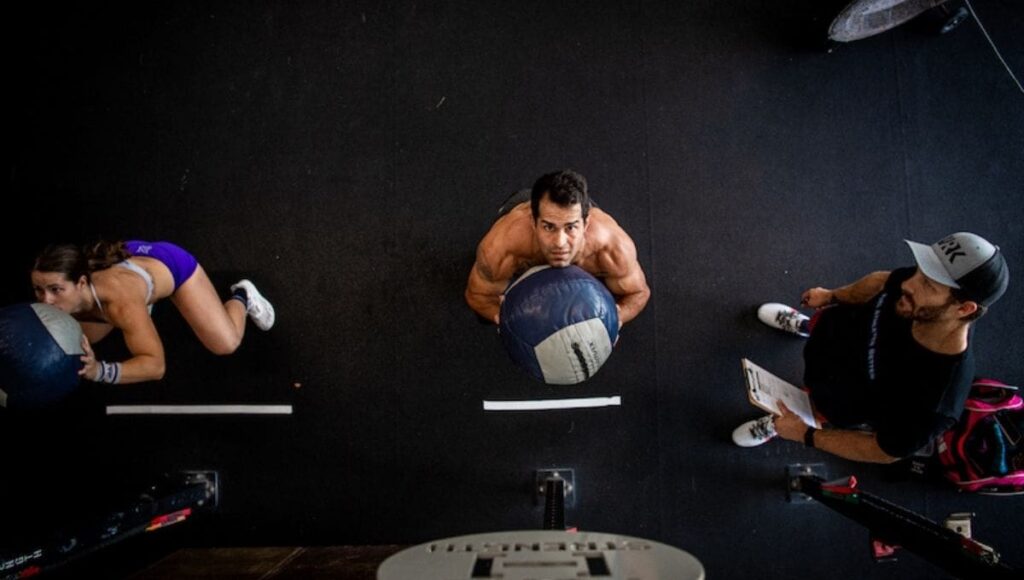
Including wall balls after running or other functional work trains the nervous system to maintain efficiency under stress. This improves movement economy and reduces breakdown on race day.
Key Takeaway for Tip 3
Efficient wall balls are about fatigue management, not hero sets. Avoid going to failure, use repeatable set sizes, take short planned rests, and streamline transitions. Train these strategies under fatigue to make them automatic.
Bringing It All Together
Efficiency in wall balls is not about strength alone. It is the result of optimized mechanics, intelligent breathing, and smart fatigue management. Each of these factors reduces the physiological cost per repetition, allowing you to sustain output when it matters most.
In HYROX, wall balls are rarely won by the strongest athlete in the gym. They are won by the athlete who wastes the least energy.
By applying these three science-backed tips, you can improve not only your wall ball performance, but also your overall race outcome.
Bibliography
- Behm, D.G. and Anderson, K. (2006) ‘The role of instability with resistance training’, Journal of Strength and Conditioning Research, 20(3), pp. 716–722.
- Enoka, R.M. and Duchateau, J. (2008) ‘Muscle fatigue: what, why and how it influences muscle function’, Journal of Physiology, 586(1), pp. 11–23.
- Escamilla, R.F. et al. (2001) ‘Biomechanics of the squat exercise’, Medicine and Science in Sports and Exercise, 33(1), pp. 127–141.
- Gandevia, S.C. (2001) ‘Spinal and supraspinal factors in human muscle fatigue’, Physiological Reviews, 81(4), pp. 1725–1789.
- Haff, G.G. et al. (2008) ‘Effects of set configuration on force and power performance in resistance-trained individuals’, Journal of Strength and Conditioning Research, 22(1), pp. 235–242.