Building muscle isn’t only about what you lift in the gym—it’s also about what you eat throughout the day. And while most people think about breakfast, lunch, and dinner, your snacks can quietly make or break your progress.
The right snack at the right time gives your body the materials it needs to repair muscle fibers, boost recovery, and push you toward steady, noticeable gains.
This article breaks down why snacks matter, the science behind muscle building, and three simple, quick snacks you can use daily. Each one is backed by solid research, easy to put together, and actually tastes good.
Let’s dive in.
Why Snacks Matter for Muscle Growth
Muscle protein synthesis vs. muscle protein breakdown
Muscle growth comes down to a simple equation:
Muscle Protein Synthesis (MPS) > Muscle Protein Breakdown (MPB).
Resistance training increases both processes. You create microscopic damage in your muscles, and your body repairs and strengthens those fibers. What you eat—especially protein—plays a major role in this repair process. Scientific reviews have consistently shown that dietary amino acids, especially essential amino acids, are the main drivers of increases in MPS after resistance exercise.
In simple terms: if you want your muscles to grow, you need to give them enough building material. Snacks are an easy way to do that.
How much protein do you need at once?
Research suggests that there’s a “sweet spot” for protein intake per meal or snack. One analysis found that around 0.3 g/kg of high-quality protein per eating occasion maximizes the body’s ability to build new muscle proteins after training. For many people, that ends up being 20–30 g of protein per snack or meal.
Anything less may not fully switch on muscle-building pathways. More isn’t harmful, but the extra protein won’t necessarily be used for muscle growth at that moment.
Why snack timing matters
While total daily protein intake is still the biggest factor, having protein spread across the day helps keep your body in a more anabolic state (meaning: more building than breakdown). Long gaps without protein can slow muscle recovery and reduce the total amount of muscle you build over time.
Snacks are especially important:
- Right after training, when your muscles are most sensitive to protein
- Between meals, so you don’t go 5–6 hours without amino acids
- Before bed, when overnight recovery kicks in
Carbs and fats also play a role
Carbohydrates help refill muscle glycogen, support recovery, and may help reduce muscle protein breakdown. Fats, especially from nuts and seeds, help with long-lasting energy, hormone production, and keeping you full.
A balanced snack that includes protein + carbs (and sometimes a bit of fat) tends to support recovery best.
What Makes a Snack “Muscle-Building”?
Here’s the simple checklist your snack should hit:
- 20–30 g of high-quality protein
Dairy, poultry, eggs, soy, or a combination of plant proteins all work well. - Some carbs (10–40 g)
Especially after training—your muscles soak them up to restore energy. - Quick and convenient
If it’s not fast, you won’t stick with it. Simple is better. - Contains complete or well-balanced protein
Meaning it has all essential amino acids or combines foods to cover them. - Fits into your day easily
The more convenient the snack, the more consistent you’ll be—and consistency drives muscle growth.
Now let’s get into the three snacks themselves.
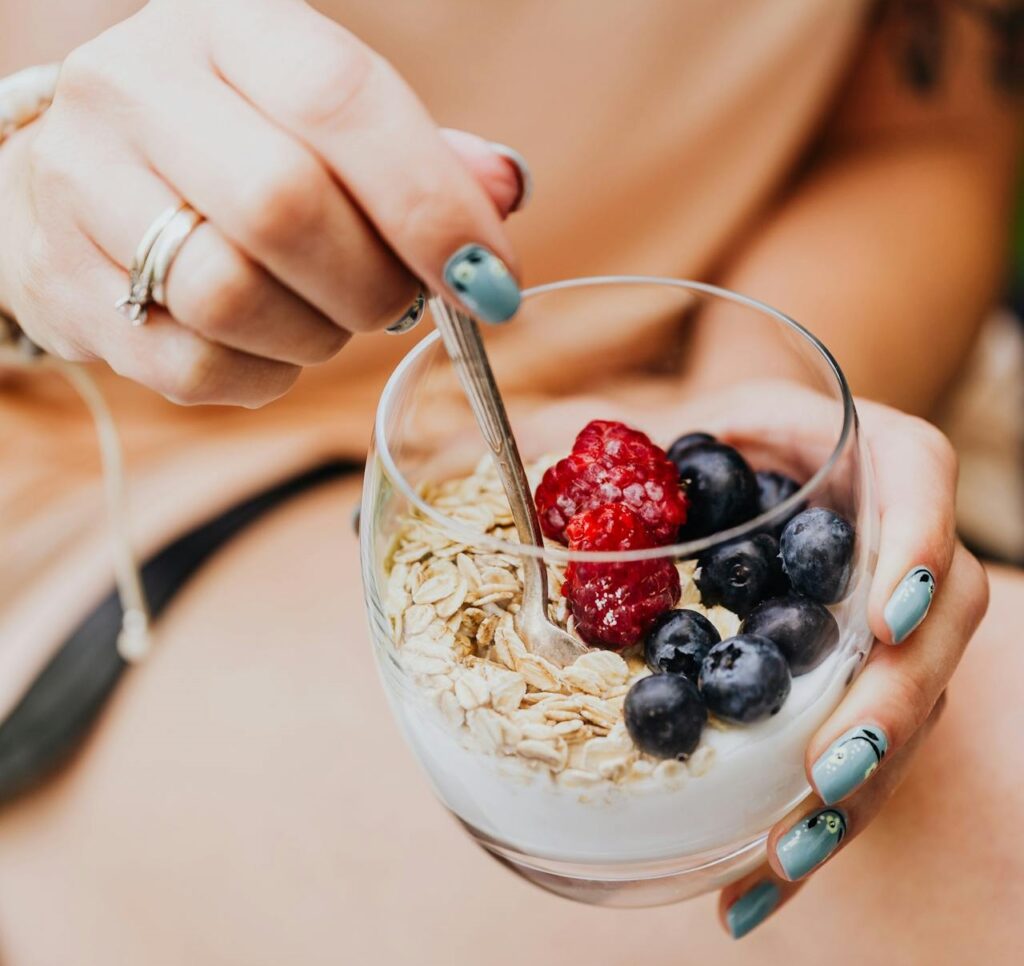
Snack 1: Greek Yogurt + Fruit + Nuts
This snack is the perfect combination of high protein, beneficial carbs, and healthy fats. It’s delicious, it takes less than a minute to prepare, and it gives your muscles everything they need to grow.
Why this snack works
Greek yogurt is naturally high in protein, especially casein and whey—two proteins known to support MPS. Research has shown that dairy proteins are effective at triggering muscle growth because they contain all the essential amino acids and are easy for the body to use.
Fruit adds natural carbohydrates, which help restore muscle energy after a workout. Nuts add healthy fats, extra protein, and extra calories if you’re trying to gain mass.
Quick recipe
- 1 cup Greek yogurt (usually 18–20 g protein)
- ½ cup berries or sliced banana
- 1 oz mixed nuts (6–8 g protein)
- Optional: a small drizzle of honey or cinnamon
You end up with roughly:
- 25–30 g protein
- 15–20 g carbs
- Healthy fats for sustained energy
When to eat it
- As a post-workout snack if you aren’t eating a full meal soon
- As a mid-afternoon snack to spread protein across the day
- As a light breakfast if you’re rushing
Why it supports muscle growth
- Greek yogurt’s protein content hits the ideal amount for MPS
- Carbohydrates from fruit help with recovery and refueling
- Nuts add extra calories—useful if you struggle to eat enough to grow
- It keeps you full without feeling heavy
Snack 2: Turkey & Cheese Roll-Up + Whole Grain Crackers
If you want something savory, high in protein, and ridiculously easy, this is your go-to. No cooking. No prep. Just stack, roll, and eat.
Why this snack works
Turkey is lean, high-quality protein that your body absorbs quickly. Cheese boosts the protein dose while giving you the muscle-building benefits of dairy. Whole grain crackers add carbs for energy and recovery.

Research on dairy proteins such as cheese shows they can significantly increase MPS both at rest and after resistance exercise. That means this snack gives your muscles exactly what they need to repair and grow after hard training.
Quick recipe
- 3 slices lean turkey breast (about 20 g protein)
- 1 slice cheese (7–8 g protein)
- 4–6 whole grain crackers (15–20 g carbs)
- Optional: cherry tomatoes or cucumber slices
Total:
- 27–30 g protein
- 15–20 g carbs
When to eat it
- Ideal right after training, especially if you’re on the go
- Works well as an evening snack if you trained later in the day
- Great midday snack to break up long gaps between meals
Why it supports muscle growth
- A perfect dose of complete protein to stimulate MPS
- Carbs support recovery and glycogen replenishment
- Easy to prep ahead and take anywhere, making consistency effortless
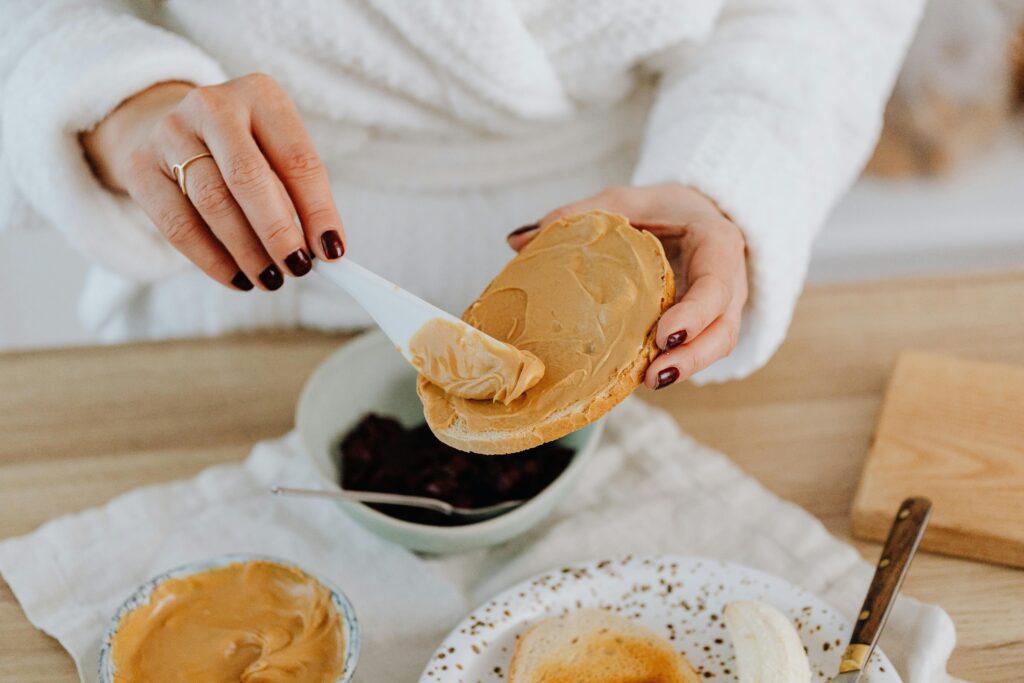
Snack 3: Peanut Butter + Banana on a Rice Cake (or Oats)
This snack is simple, tasty, and perfect when you need fast carbs plus some protein. Alone, it’s lower in protein than the other snacks—but it shines when combined with a small protein shake or plant protein powder.
Why this snack works
Peanut butter delivers some protein and plenty of healthy fats. Banana gives you fast-digesting carbohydrates to restore muscle energy after tough training. Rice cakes are simple, quick carbs, or you can swap them for oats if you want something heartier.
Research shows that plant proteins can support muscle growth just as effectively as animal proteins, as long as you get enough total protein and combine sources when needed. That’s why adding a small scoop of plant protein powder works so well here.
Quick recipe
- 1 medium banana
- 2 tablespoons peanut butter (7–8 g protein)
- 1 large rice cake or ½ cup cooked oats (15–25 g carbs)
- Optional: chia seeds or flaxseed
Total without protein powder:
- 7–8 g protein
- 40–50 g carbs
To hit the muscle-building protein range, simply add:
- 1 scoop plant or whey protein powder (~20 g protein)
Final total:
- 27–28 g protein
- 40–50 g carbs
When to eat it
- Post-workout, especially after high-intensity or high-volume sessions
- Before bed if you want a light but satisfying snack
- Between meals if you’re trying to increase total daily calories
Why it supports muscle growth
- Provides fast energy for recovery
- Protein powder addition brings your snack into the ideal protein range
- Fits plant-based diets easily
- Quick, cheap, and extremely versatile
Putting These Snacks Into Your Day
To build muscle effectively, your body needs a steady supply of protein throughout the day—not just at dinner. Snacks make that easy and realistic.
Sample daily layout
Let’s say you train around 4 PM. Here’s how snacks can fit in:
- Breakfast (7 AM): 25–30 g protein (eggs, oats, or breakfast burrito)
- Mid-morning snack (10 AM): Greek yogurt + fruit + nuts
- Lunch (1 PM): Balanced meal with protein, carbs, and veggies
- Post-workout snack (4:30 PM): Turkey & cheese roll-up + crackers
- Dinner (7 PM): 25–35 g protein
- Optional late snack (9 PM): Peanut butter + banana + rice cake + protein shake
This pattern spreads your protein intake evenly across the day, keeps your muscles fed, and supports recovery after training.
Practical tips for staying consistent
- Prep ahead: Keep yogurt cups, nuts, turkey slices, and rice cakes on hand.
- Carry portable options: Cheese sticks, protein powder packets, single-serve nut butters.
- Pair protein with carbs: Especially after training.
- Avoid huge gaps between meals.
- Prioritize total daily protein: Snacks help you reach a daily target of 1.4–2.0 g/kg of body weight—a range well supported by research for muscle growth.
Final Thoughts
Muscle growth doesn’t only happen in the gym. It happens in your kitchen, during your workday, and even before bed. The smarter you get about fueling your body consistently, the better your results will be.
These three snacks are quick, effective, and backed by solid science. They provide the right combination of protein, carbs, and fats to support muscle repair and growth without requiring complicated recipes or fancy ingredients.
Stick with them consistently, and your training will reward you.
Bibliography
- Frontiers in Nutrition (2019) Dietary protein and muscle protein synthesis: a review of the evidence.
- Nutrition Reviews (2021) A systematic review of protein intake and muscle mass outcomes.
- PLOS ONE (2017) Effects of protein and carbohydrate co-ingestion on mTOR signalling in skeletal muscle.
- Journal of Nutrition (2022) Cheese ingestion increases muscle protein synthesis in young men.
- Nutrients (2023) Yogurt as a protein source and its role in muscle health.
- Sports Medicine (2024) Plant protein and muscle hypertrophy: a comparison of plant vs animal protein sources.
- International Society of Sports Nutrition Review (2017) Protein intake timing and distribution among athletes.