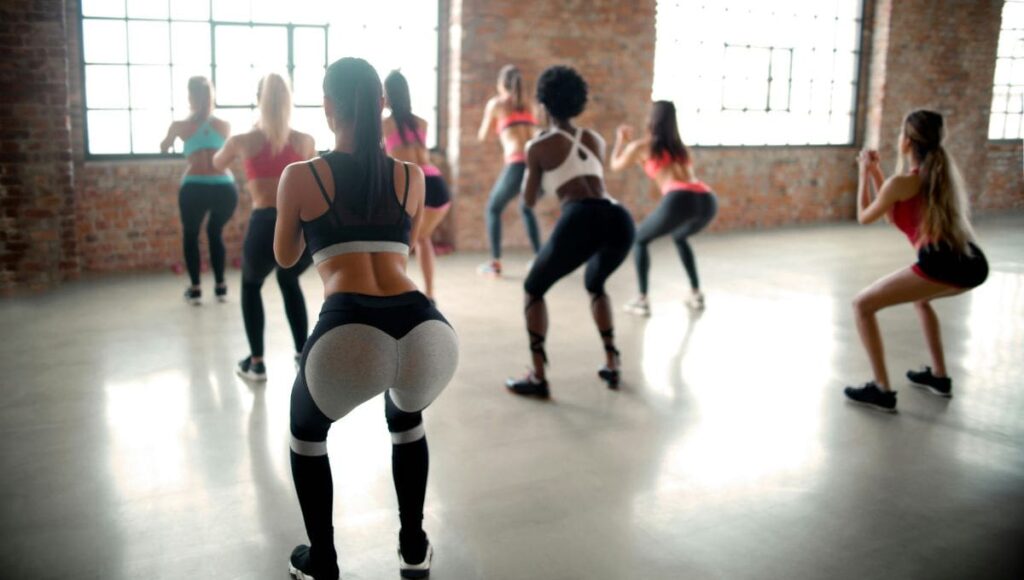
If your goal is to Build Better Glutes in the Gym, you’ll need more than just showing up and doing “some squats.” Developing stronger, fuller gluteal muscles requires a strategic, scientifically-backed approach.
In this article we’ll strip away the fluff, examine the evidence, and present three hard-hitting secrets you can implement now.
Why glute development matters
Before diving into the “secrets,” it’s worth establishing why you should care about building better glutes in the gym:
- The gluteal musculature—including the Gluteus Maximus, Gluteus Medius and Gluteus Minimus—is integral for hip extension, lateral stability, and dynamic movements such as jumping and sprinting.
- Weak or under-activated glutes are associated with movement inefficiencies, compensatory patterns (e.g., over-use of hamstrings or lower-back extensors), and higher injury risk (hip, knee, lumbar)
- For aesthetics or functional performance, the glutes respond well to well-designed resistance training.
Given that foundation, let’s move to the three core secrets to build better glutes in the gym. Each secret covers a principle and practical application grounded in current science.
Secret 1: Prioritize neuromuscular recruitment and activation

Why activation matters
Before you can grow bigger glutes, you must recruit and activate them effectively. The highest muscle-growth gains will only come when the target muscle is properly stimulated. Studies have shown that early-phase “activation drills” can improve subsequent glute recruitment. For example, one study showed targeted glute activation drills over six days increased corticomotor excitability of the gluteus maximus, suggesting improved neural efficiency in recruiting the glute.
Another investigation compared acceleration-specific exercises versus traditional strength exercises and found higher peak gluteus maximus activation for the acceleration-specific drills (half-kneeling glute squeeze and resisted knee split) versus split squat.
In simple terms: if the neural “hook-up” to your glutes is inefficient, your glute training will be sub-optimal.
How to implement activation in your “Build Better Glutes in the Gym” program
- Include a 5-10 minute glute activation warm-up before your heavier glute/leg training session. For example: banded glute bridges, clamshells, side-stepping resisted walks, or half-kneeling glute squeezes. These drills prime glute recruitment and reduce dominance of compensatory muscles.
- Monitor fatigue: Activation drills should not fatigue the glutes to the point you cannot execute your heavy lifts with quality. Their goal is neuromuscular priming, not volume.
- Execute your main glute-dominant exercises with focus on intent and feel—e.g., ensuring full hip-extension, conscious glute contraction, avoiding dominant quads or hamstrings taking over.
- Re-check your activation periodically—especially if you hit a plateau or feel your glutes “not working” during glute-focused lifts.
Why this secret matters for better glute development
By improving recruitment and neural efficiency of the glutes, your subsequent heavy lifts and hypertrophy-work will “hit” the intended muscle more fully. The improved neural input likely enhances mechanical tension on the tissue, which is the primary driver of muscle growth (see Secret 2). Without good recruitment, you might be training the glutes yet not optimally stimulating them.
Secret 2: Maximize mechanical tension and smart exercise selection
The role of mechanical tension
When the goal is to Build Better Glutes in the Gym, one of the most important drivers is mechanical tension — that is, the load placed on the muscle under tension for an adequate duration and through an appropriate range. The hypertrophy literature emphasises that while activation and metabolic stress help, mechanical tension remains the cornerstone of muscle growth.

A systematic review (Krause Neto et al., 2025) examined gluteus maximus hypertrophy in resistance training and found a moderate effect (SMD = 0.71) across studies using hip-extension dynamic exercises. The review also noted that both single-exercise and combined-exercise protocols elicited results.
Smart exercise selection for glutes
To harness mechanical tension effectively for glute growth, exercise selection and programming need to reflect three principal vectors:
- Horizontal hip extension — exercises that emphasise the glutes near full hip extension (shorter muscle lengths) such as the barbell hip thrust or glute bridge.
- Vertical hip extension — exercises that load the glutes when they are in a more stretched position (longer muscle length) such as back squats, deadlifts, lunges.
- Lateral and transverse plane/glute medius focus — exercises dealing with hip abduction, external rotation, and glute medius activation (important for glute development and hip stability).
The NSCA resource “Program Design Considerations for Optimal Strength and Hypertrophy of the Glute Muscles” recommends including a mix of these vectors to comprehensively stimulate glute development.
Evidence-based nuances on exercise selection
- A systematic review of EMG studies found that many exercises—including step-ups, hip thrusts, deadlifts, lunges, squats—elicit very high (>60% of MVIC) gluteus maximus activation.
- The study “Addition of the Barbell Hip Thrust Elicits Greater Increases in Gluteus Maximus Muscle Thickness” (Kassiano et al., 2024) compared a group doing leg press + stiff-leg deadlift vs the same plus barbell hip thrust in untrained women; the hip-thrust-added group achieved an average +9.3% GMax thickness vs +6.0% for the other group (P = 0.016).
- Conversely, a study comparing hip thrust vs squat over 9 weeks (equal volume) found similar glute hypertrophy in untrained participants (Plotkin et al., 2023) despite EMG differences—emphazising that activation does not always equal growth.
Programming for glute growth
- Start your glute-dominant section of the workout with heavier compound hip-extension dominated movements—e.g., hip thrusts (3-6 sets x 6-12 reps) or back squats (3-5 sets x 5-10 reps) depending on your priorities.
- Follow with accessory variations focusing on glute-dominant positions or lesser loaded ranges—e.g., Bulgarian split squats, single-leg Romanian deadlifts, glute bridges, cable hip extensions. These may use higher rep ranges (8-20) and lower loads if needed.
- Include lateral/rotational glute medius work: side-lying hip abductions, lateral band walks, clamshells, etc., especially if stability or hip-roll issues exist.
- Use progressive overload: gradually increase load (weight), volume (sets × reps) or reduce rest, as tolerated, over weeks.
- Vary muscle length stimulus: combine movements emphasising glutes at long muscle lengths (e.g., deep squats, lunges) with those at shorter lengths but high load (e.g., hip thrusts).
- Recovery: glutes are large muscles; ensure adequate rest, nutrition, and manage fatigue to allow growth.
Why this secret is critical for building better glutes
Without sufficient mechanical tension and correct exercise selection, even frequent glute workouts may fail to deliver appreciable growth or strength gains. By selecting movements that leverage hip-extension vectors and lateral stability, you can ensure the glutes are being the primary driver—not just assisting.
Secret 3: Program volume, intensity, progression and variation — the growth framework

Volume, intensity and progression matter
To truly Build Better Glutes in the Gym, you must treat your glute routine like any other hypertrophy project: it must incorporate appropriate volume (sets × reps), intensity (load relative to your max), progression, and variation over time. Mechanical tension and activation (Secrets 1 & 2) are one part; programming is the scaffold.
A 2023 NSCA article states: heavy compound glute-dominant lifts should serve as staples, but adding variations and ensuring progressive overload is key.
There is no “one best” rep-scheme; rather, hypertrophy arises across a range of intensities (6-20 reps) if tension and fatigue are managed. However, volume must be sufficient. The systematic review by Krause Neto et al. (2025) analyzed training protocols and found moderate effects for glute hypertrophy across studies—but many of those were short duration.
Practical programming guidelines
Intensity/Load:
- Use loads that allow you to reach near failure (1-2 reps shy) in 6-12 reps for heavy lifts, and 8-20 reps for accessory lifts.
- Include some sets in the heavier (lower-rep) range to maximise mechanical stress, and some higher-rep sets for volume and metabolic stimulus.
Volume:
- For a glute-dominant session: 3–5 sets of a heavy compound glute move + 2–4 accessory glute moves (each 2–4 sets) is a solid baseline.
- Weekly frequency: 1–3 dedicated glute-sessions per week (depending on recovery, other leg work) can be effective.
Progression:
- Track loads and aim to increase by ~2.5-5% when you can complete all sets/reps with good form.
- If load cannot increase, increase reps (within target range) or sets.
- Occasionally reduce load or volume (deload) to facilitate recovery every 4-8 weeks.
Variation:
- Alternate between primary lifts: e.g., do hip thrusts 4-6 weeks, then switch to back squats (deep or moderate depth) for the next block.
- Within accessory lifts, vary unilateral vs bilateral, machines vs free weights, hip position (e.g., elevated glute bridges vs floor).
- Change rep-range emphasis: e.g., 8-12 for 4-6 weeks, then 12-20 for 2-3 weeks, then a heavy 5-8 rep block.
Recovery & Supporting factors:
- Ensure adequate protein intake (~1.6–2.2 g per kg bodyweight) and calories to support growth (training stimulus must be matched by recovery).
- Maintain sleep and overall recovery hygiene; large glute work creates systemic fatigue.
- Address weak links: if glutes remain under-developed, evaluate hip mobility (flexion/extension), glute activation ability (Secret 1) and over-dominant hamstrings/quads.
Evidence supporting programming for glute hypertrophy
- In the hip thrust addition study (Kassiano et al.), 10 weeks of 3 days per week resulted in ~6–9% increase in GMax thickness in untrained women.
- The general hypertrophy literature shows that volume decisions correlate with gains: more volume (within tolerable limits) tends to yield greater growth. While glute-specific volume studies are fewer, the principle applies.
- Activation studies (Secret 1) show that without neuromuscular recruitment, you may reach the load but fail to engage the glute maximus effectively—even if you are “lifting heavy”.
Why this secret matters for glute development
Even the best exercise selection won’t lead to maximal glute growth if the volume, load and progression are inadequate. This secret ties everything together—it’s the “engineering plan” that ensures the glute stimulus is sufficient, consistent, and progressive.
Putting it all together: A sample weekly plan
Here is a sample weekly structure you could apply (assuming you train glutes 2× per week, with adequate recovery):
Day A (Glute-Focus Heavy Compound)
- Activation warm-up: Band glute bridges (2 × 12), clamshells (2 × 15 each side), lateral band walks (2 × 20 steps each direction)
- Primary lift: Barbell hip thrust 4 × 6-10 reps
- Secondary compound: Bulgarian split squat (rear foot elevated) 3 × 8-12 reps each leg
- Accessory: Cable hip extension (standing) 3 × 12-15 reps each leg
- Lateral/medius work: Side-lying hip abduction 2 × 15 each side
- Finish and stretch: Light glute bridges (bodyweight) + hip flexor stretch
Day B (Glute-Focus Volume & Variation)
- Activation warm-up: Half-kneeling glute squeeze 2 × 10 each side, donkey kicks with band 2 × 15 each leg
- Primary lift: Back squat (or goblet squat if no rack) 3 × 8-12 reps
- Secondary: Single-leg Romanian deadlift 3 × 8-12 reps each leg
- Accessory: Elevated glute bridge (feet on bench/box) 3 × 12-20 reps
- Lateral/medius work: Lateral band walks 2 × 20 steps each direction
- Finish: Glute-medius firewall: Bird-dogs or single-leg glute med hold 2 × 30-45 sec each leg
Progression & planning
- Increase loads when you can complete all prescribed reps with good form.
- After 4–6 weeks, consider switching the primary compound lifts (e.g., hip thrust → deadlift variant, squat → front-loaded squat) to maintain novelty and stimulus.
- Every 8–12 weeks schedule a de-load week: drop volume by ~30–40%, reduce load, focus on quality movement and mobility.
Common mistakes when trying to build better glutes
Mistake 1: Doing glute “light” work only
Doing high-rep bodyweight glute bridges alone won’t suffice if you’re not hitting mechanical tension. Without load or progression, glute growth will be limited. Activation without load is a common pitfall.
Mistake 2: Relying solely on squats and neglecting hip thrust/hip-dominant variants
While squats are excellent, they may not maximise glute emphasis in all lifters. Studies show hip thrusts can provide high activation and unique stimulus. Including hip-dominant variation broadens your stimulus and aids glute-specific development.
Mistake 3: Poor form or glute inhibition (weak mind-muscle link)
If your glutes are “off,” your quads, hamstrings or erectors may take over—reducing glute stimulus. That’s why activation drills matter and why you should consciously feel glute contraction during lifts.
Mistake 4: Lack of progression or variation
Sticking to the same weight/sets/reps for months leads to stagnation. Without progression in load or volume, muscle growth slows. Periodic variations in exercise selection maintain novelty and stimulate growth.
Mistake 5: Recovering poorly or neglecting stability/mobility
Glute-dominant work is demanding. Without adequate recovery, you’ll fail to adapt. Additionally, poor hip mobility or weak glute medius/lateral stabilisers can limit glute recruitment and development.
Evidence recap and how it supports the three secrets
- Neural recruitment: Activation studies show targeted glute drills improve corticomotor excitability, indicating improved neural recruitment capacity. (Secret 1)
- Activation & stimulus: EMG studies demonstrate that many glute-targeting exercises reach very high activation (>60% MVIC) which is favourable for growth.
- Hypertrophy data: The systematic review (Krause Neto et al.) confirms resistance training yields moderate glute hypertrophy; exercise selection matters.
- Hip thrust evidence: The Kassiano study found adding hip thrust improved glute thickness by ~9.3% vs 6.0% in control in untrained women.
- Programming considerations: The NSCA article outlines how programming variables (volume, intensity, variation) influence glute growth.
Together, these support the three secrets: activation/neural recruitment, mechanical tension + exercise choice, and smart programming with progression.
Final thoughts and take-home message
If you want to Build Better Glutes in the Gym, treat it like serious strength/hypertrophy training—not just an “add-on” extra. Use the three secrets as your roadmap:
- Start with activation to ensure your glutes are primed and recruited.
- Select and implement exercises that maximise mechanical tension and comprehensively target the glute muscles (horizontal, vertical, lateral vectors).
- Program intelligently: use appropriate volume, intensity, progression, variation, and support recovery.
With consistent effort, the right stimulus, and strategic programming, you’ll build stronger, fuller glutes—not by accident, but by design. No fluff, just science-backed action.
Key Takeaways
| Secret | Core Principle | Practical Takeaway |
|---|---|---|
| 1 Activation | Optimize neuromuscular recruitment of glutes | Perform a glute activation warm-up (5-10 min) before main lifts. |
| 2 Tension & Selection | Mechanical tension drives growth; choose glute-dominant lifts | Prioritise hip thrusts, back squats, lunges, bridges + lateral work. |
| 3 Programming | Volume, load, progression & variation enable results | Structure 2-3 glute-sessions/week, track load/volume, vary every 4-8 weeks. |
Bibliography
- Krause Neto, W., Vieira Krause, T.L., Gama, E.F. (2025) ‘The impact of resistance training on gluteus maximus hypertrophy: a systematic review and meta-analysis’, Frontiers in Physiology, 16, April.
- Hodge, A. (2023) ‘Program Design Considerations for Optimal Strength and Hypertrophy of the Glute Muscles’, NSCA PTQ, 10(4).
- Krause Neto, W., Soares, E.G., Lima Sampaio, V. et al. (2020) ‘Gluteus maximus activation during common strength and hypertrophy exercises: a systematic review’, Journal of Sports Science and Medicine, 19, pp. 195-203.
- Kassiano, W., Kunevaliki, G., Costa, B. et al. (2024) ‘Addition of the barbell hip thrust elicits greater increases in gluteus maximus muscle thickness in untrained young women’, International Journal of Strength and Conditioning, 4(1).
- Goller, M., Quittmann, O.J., Alt, T. (2024) ‘How to activate the glutes best? Peak muscle activity of acceleration-specific pre-activation and traditional strength training exercises’, European Journal of Applied Physiology, 124, pp. 1757-1769.
- Contreras, B. (2015) ‘New research: Targeted glute activation training makes the CNS more efficient at recruiting the glutes’, Bret Contreras Blog.
- IDEAfit (2025) ‘Glute Activation and Hip Stability for Fitness Professionals’, IDEA Fitness Journal.