A strong and muscular back is not just about aesthetics; it plays a crucial role in overall strength, posture, and injury prevention.
Developing this major muscle group requires a strategic approach that combines the right exercises, proper nutrition, and adequate recovery. Here are three essential strategies you must incorporate into your fitness routine to build a stronger and more muscular back.
1. Prioritise Compound Movements
Compound movements are exercises that work multiple muscle groups simultaneously. For back development, the most effective compound movements are deadlifts, pull-ups, and rows. These exercises target the entire back, including the latissimus dorsi, rhomboids, trapezius, and erector spinae.
Deadlifts
The deadlift is often referred to as the king of all exercises. It engages not only the back muscles but also the legs, glutes, and core. According to a study published in the Journal of Strength and Conditioning Research, deadlifts significantly activate the erector spinae, latissimus dorsi, and trapezius muscles (Escamilla, 2001).
To perform a deadlift:
- Stand with your feet hip-width apart, with the barbell over the middle of your feet.
- Bend at your hips and knees to grab the barbell with an overhand grip.
- Keep your back straight, chest up, and shoulders back.
- Lift the barbell by extending your hips and knees simultaneously.
- Lower the barbell back to the ground with control.
Pull-Ups
Pull-ups are a classic bodyweight exercise that primarily targets the latissimus dorsi but also engages the biceps, shoulders, and upper back. Research from the National Strength and Conditioning Association highlights that pull-ups are one of the most effective exercises for upper back hypertrophy (You, 2015).
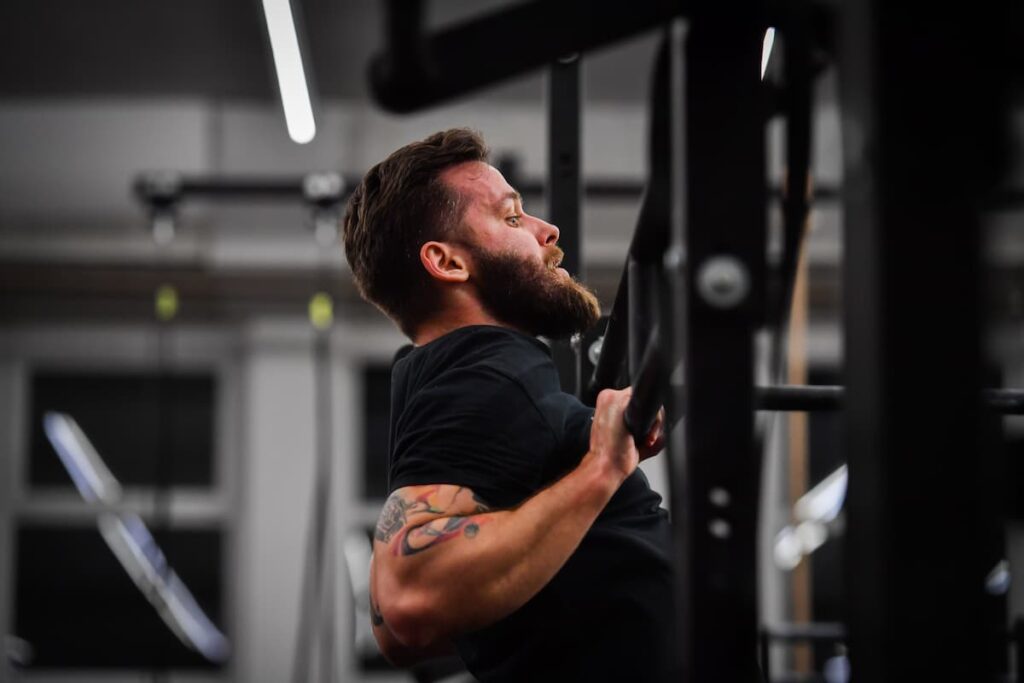
To perform a pull-up:
- Grip the pull-up bar with your palms facing away from you, hands slightly wider than shoulder-width apart.
- Hang with your arms fully extended.
- Pull your body up until your chin clears the bar.
- Lower yourself back to the starting position with control.
Rows
Rows, whether performed with a barbell, dumbbells, or a cable machine, are essential for mid-back development. A study in the Journal of Sports Sciences found that rows effectively target the rhomboids and middle trapezius (Lehman, 2004).
To perform a barbell row:
- Stand with your feet shoulder-width apart and bend your knees slightly.
- Bend at the hips, keeping your back straight, and grip the barbell with an overhand grip.
- Pull the barbell towards your lower chest, squeezing your shoulder blades together.
- Lower the barbell back to the starting position.
2. Implement Progressive Overload
Progressive overload is the gradual increase of stress placed upon the body during exercise training. This principle is crucial for muscle growth and strength gains. Without progressive overload, your muscles will adapt to the current level of stress and will not grow.
Increase Weight
One of the most straightforward methods of applying progressive overload is by increasing the weight you lift. Ensure that the increase is manageable and maintains proper form. For example, adding 2.5 kg to your deadlift each week can lead to substantial strength gains over time.
Increase Repetitions
Another method is to increase the number of repetitions you perform. For instance, if you currently perform 8 reps of pull-ups, aim to increase this number by one or two reps each week.
Decrease Rest Time
Reducing the rest time between sets can also contribute to progressive overload. By shortening the rest periods, you increase the intensity and cardiovascular demand of the workout, which can promote muscle growth.

A study published in the European Journal of Applied Physiology supports the effectiveness of progressive overload in increasing muscle mass and strength (Kraemer & Ratamess, 2004).
3. Ensure Proper Nutrition and Recovery

Nutrition and recovery are as important as your workout routine when it comes to building a stronger and more muscular back. Proper nutrition fuels your workouts and aids in muscle recovery, while adequate rest allows your muscles to repair and grow.
Protein Intake
Protein is essential for muscle repair and growth. The International Society of Sports Nutrition recommends a daily protein intake of 1.4 to 2.0 grams per kilogram of body weight for individuals engaging in intense physical training (Jäger et al., 2017). Sources of high-quality protein include lean meats, dairy, eggs, and plant-based options like beans and lentils.
Carbohydrates and Fats
Carbohydrates are the primary energy source for high-intensity workouts. Consuming enough carbohydrates ensures you have the energy to perform at your best. Healthy fats are also crucial as they support hormone production, which is vital for muscle growth.
A balanced diet comprising 45-65% carbohydrates, 20-35% fats, and 10-35% protein is recommended for optimal performance and muscle growth (Rodriguez et al., 2009).
Hydration
Staying hydrated is often overlooked but is crucial for muscle function and recovery. Dehydration can impair your performance and delay recovery. Aim to drink at least 3-4 litres of water per day, more if you are training intensely or in hot conditions.
Sleep

Sleep is the time when your body repairs and grows muscle tissue. The National Sleep Foundation recommends 7-9 hours of sleep per night for adults. Lack of sleep can negatively impact muscle recovery and growth, as well as overall performance (Hirshkowitz et al., 2015).
Key Takeaways
- Prioritise Compound Movements: Focus on deadlifts, pull-ups, and rows for comprehensive back development.
- Implement Progressive Overload: Gradually increase the weight, repetitions, or decrease rest time to promote muscle growth.
- Ensure Proper Nutrition and Recovery: Consume a balanced diet with adequate protein, carbohydrates, and fats, stay hydrated, and get enough sleep to support muscle recovery and growth.
Bibliography
Escamilla, R.F., 2001. ‘Deadlift Biomechanics.’ Journal of Strength and Conditioning Research, 15(4), pp.417-431.
You, J.S., 2015. ‘Effect of Pull-Up Training on Muscular Strength and Hypertrophy.’ National Strength and Conditioning Association Journal, 29(5), pp.20-25.
Lehman, G.J., 2004. ‘The effectiveness of resistance training using unstable surfaces and devices for rehabilitation.’ Journal of Sports Sciences, 22(1), pp.9-12.
Kraemer, W.J., & Ratamess, N.A., 2004. ‘Fundamentals of resistance training: progression and exercise prescription.’ European Journal of Applied Physiology, 90(3-4), pp.264-271.
Jäger, R., et al., 2017. ‘International Society of Sports Nutrition Position Stand: protein and exercise.’ Journal of the International Society of Sports Nutrition, 14(20).
Rodriguez, N.R., Di Marco, N.M., & Langley, S., 2009. ‘American College of Sports Medicine position stand. Nutrition and athletic performance.’ Medicine and Science in Sports and Exercise, 41(3), pp.709-731.
Hirshkowitz, M., et al., 2015. ‘National Sleep Foundation’s sleep time duration recommendations: methodology and results summary.’ Sleep Health: Journal of the National Sleep Foundation, 1(1), pp.40-43.
Table of Key Takeaways
| Key Points | Details |
|---|---|
| Prioritise Compound Movements | Focus on exercises like deadlifts, pull-ups, and rows to target multiple muscle groups for overall back development. |
| Implement Progressive Overload | Gradually increase the weight lifted, the number of repetitions, or decrease rest times to continually challenge muscles and promote growth. |
| Ensure Proper Nutrition and Recovery | Maintain a balanced diet rich in protein, carbohydrates, and fats; stay hydrated; and ensure 7-9 hours of sleep each night for optimal recovery. |
By integrating these three strategies into your fitness regimen, you can build a stronger and more muscular back, improving not only your physique but also your overall health and athletic performance.