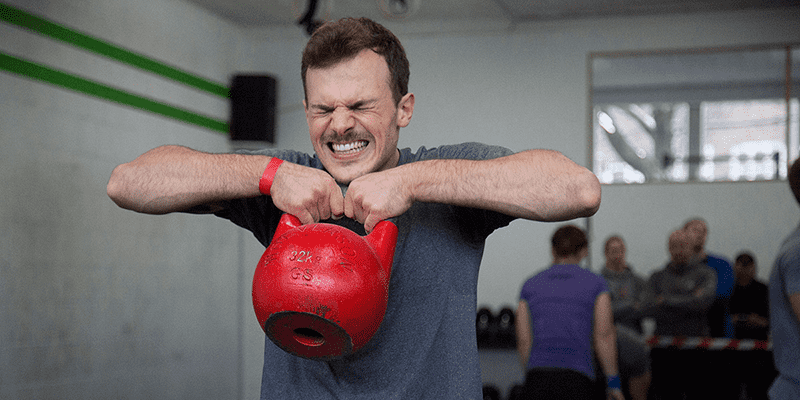
Training to muscular failure is one of the most misunderstood tools in strength and hypertrophy training. Some athletes swear by it, believing that pushing every set until the last possible repetition is the fastest route to muscle growth. Others avoid it completely, warning that it leads to burnout, stalled progress, or injury.
The truth, as usual, sits in the middle.
Training to failure can be effective, efficient, and safe when it is applied with intention and backed by evidence. When it is used carelessly, it can undermine performance, recovery, and long-term progress. This article breaks down the science behind training to failure and gives you three clear, practical tips to use it properly and effectively.
Throughout the article, “training to failure” refers specifically to momentary concentric failure: the point at which you cannot complete another repetition with proper technique despite maximal effort.
Understanding Training to Failure: What the Science Really Says
Before diving into the tips, it is important to clarify what training to failure does and does not do from a physiological perspective.
Motor Unit Recruitment and Muscle Activation
One of the main arguments in favor of training to failure is that it maximizes motor unit recruitment. According to Henneman’s size principle, motor units are recruited from low-threshold to high-threshold as force demands increase. High-threshold motor units innervate fast-twitch muscle fibers, which have the greatest potential for hypertrophy.

As a set progresses and fatigue accumulates, more motor units are recruited to maintain force output. By the final repetitions of a hard set, especially near failure, most available motor units are active. Research using electromyography supports this concept, showing increased muscle activation as sets approach failure (Sundstrup et al., 2012).
However, maximal motor unit recruitment does not require absolute failure in all cases. Studies indicate that lifting to within one to three repetitions of failure can produce similar muscle activation patterns, particularly when loads are moderate to heavy (Schoenfeld et al., 2019).
Hypertrophy Outcomes: Failure vs. Non-Failure Training
Multiple systematic reviews and meta-analyses have compared hypertrophy outcomes between training to failure and stopping short of failure.
A meta-analysis by Schoenfeld et al. (2017) found no significant difference in muscle hypertrophy between failure and non-failure training when total volume was equated. More recent analyses by Grgic et al. (2021) and Vieira et al. (2021) support this finding, suggesting that proximity to failure is more important than failure itself.
This means that training to failure is not inherently superior for muscle growth. It is one way to ensure sufficient effort, but it is not the only way.
Fatigue, Recovery, and Performance
Training to failure increases both peripheral fatigue (within the muscle) and central fatigue (within the nervous system). Research shows that sets taken to failure result in longer recovery times and greater decrements in subsequent performance compared to non-failure sets (Sampson and Groeller, 2016).
This fatigue can accumulate across sessions, particularly when failure is used frequently with multi-joint lifts or heavy loads. Over time, this can impair strength gains and increase the risk of overuse injuries if recovery is insufficient.
Understanding these mechanisms sets the stage for using training to failure strategically rather than indiscriminately.
Tip 1: Use Training to Failure Selectively, Not Universally
The most common mistake athletes make is taking every set of every exercise to failure. The evidence does not support this approach.
Why All-Out Failure on Every Set Is a Problem
Training to failure dramatically increases fatigue without proportionally increasing hypertrophic stimulus. Studies comparing repeated failure sets to non-failure sets show that while muscle activation may be similar, performance in later sets declines significantly when failure is used consistently (Izquierdo et al., 2006).
This decline matters because total effective volume is a key driver of hypertrophy. When fatigue limits the number of quality sets you can perform, overall training stimulus may decrease.
In addition, consistent failure training has been shown to elevate markers of muscle damage and perceived soreness (Davies et al., 2016). While muscle damage is not inherently bad, excessive damage can interfere with training frequency and technique quality.
Which Exercises Are Best Suited for Failure Training?
The research and practical evidence suggest that training to failure is best reserved for exercises that meet the following criteria:
- Low technical complexity
- Low injury risk when fatigue is high
- Limited axial loading
- Easy to safely bail or stop
Isolation exercises such as biceps curls, triceps extensions, leg extensions, leg curls, lateral raises, and machine-based movements fit these criteria well.
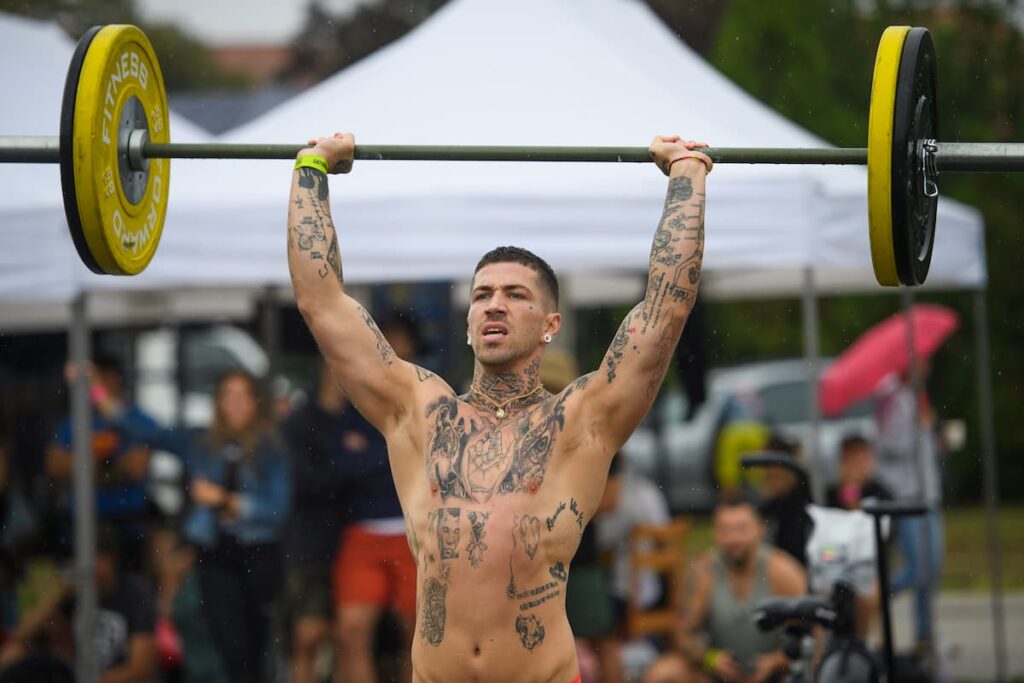
In contrast, multi-joint free-weight lifts like squats, deadlifts, and Olympic lifts demand high levels of coordination and spinal stability. Fatigue-induced technique breakdown in these exercises increases injury risk without offering additional hypertrophic benefits (Schoenfeld and Grgic, 2018).
Evidence-Based Application
A study by Pareja-Blanco et al. (2020) compared training programs where participants performed sets to failure versus stopping with repetitions in reserve. The failure group showed greater neuromuscular fatigue and reduced movement velocity over time, with no clear hypertrophy advantage.
This suggests that selectively applying failure to safer exercises allows athletes to reap the motivational and effort-related benefits without compromising overall training quality.
Practical Takeaway
Use training to failure sparingly and intentionally. Save it for isolation exercises, machine movements, and the final set of an exercise when appropriate. Avoid using it on heavy compound lifts that demand precision and spinal loading.
Tip 2: Train Close to Failure Most of the Time
If training to failure is not necessary for maximal gains, what should you do instead? The answer lies in proximity to failure.
Understanding Reps in Reserve (RIR)
Reps in reserve (RIR) is a scale used to estimate how many repetitions you could perform before reaching failure. For example:
- 0 RIR = failure
- 1 RIR = one rep left in the tank
- 2 RIR = two reps left
- 3 RIR = three reps left
Research consistently shows that sets performed within one to three repetitions of failure produce similar hypertrophy outcomes to sets taken to failure, provided volume is equated (Grgic et al., 2021).
Why Near-Failure Training Works
As you approach failure, high-threshold motor units are recruited due to increasing fatigue. This means that the fibers most responsible for hypertrophy are stimulated even if you stop slightly short of failure.
Schoenfeld et al. (2019) demonstrated that muscle activation levels plateau near the end of a hard set, indicating diminishing returns from pushing beyond that point.
Managing Fatigue While Maximizing Stimulus
Stopping one to two reps short of failure significantly reduces fatigue while preserving training stimulus. Studies have shown faster recovery of strength and power following non-failure training compared to failure training (Sampson and Groeller, 2016).
This allows for:
- Higher training frequency
- Better technique consistency
- Greater total weekly volume
- Improved long-term adherence
All of these factors contribute to better outcomes over time.
Individual Differences in Proximity to Failure
It is important to acknowledge that RIR is subjective and improves with experience. Beginners often underestimate how close they are to failure, while experienced lifters are more accurate (Hackett et al., 2012).
For newer athletes, occasionally training to true failure can be useful as a calibration tool. It teaches what maximal effort feels like, improving future RIR estimates.
Practical Takeaway
Aim to perform most working sets at one to three reps in reserve. This approach balances high-quality stimulus with manageable fatigue and supports consistent progress over weeks and months.
Tip 3: Align Failure Training With Load, Volume, and Recovery
Training to failure does not exist in isolation. Its effectiveness depends on how it interacts with load selection, total volume, and recovery capacity.
Load Matters: Heavy vs. Light Training to Failure
Training to failure with light loads produces different physiological demands than failure with heavy loads.
Research shows that both heavy and light loads can induce similar hypertrophy when sets are taken close to failure (Schoenfeld et al., 2015). However, light-load failure training results in greater metabolic stress and perceived exertion, while heavy-load failure increases mechanical strain and joint stress.
Light-load failure may be appropriate for isolation movements or deload phases, but consistently taking heavy compound lifts to failure is associated with higher injury risk and prolonged recovery (Helms et al., 2018).
Volume and Frequency Considerations
Volume is one of the strongest predictors of hypertrophy. However, failure training limits the amount of volume you can recover from.
A study by González-Badillo et al. (2016) found that moderate effort levels allowed for higher training volumes and better strength adaptations compared to frequent failure training.
If you train to failure frequently, you must reduce volume or frequency to compensate. Failing to do so can lead to non-functional overreaching or stagnation.
Recovery Capacity and Training Age
Advanced athletes often benefit from less frequent failure training than novices. As strength increases, the absolute loads lifted place greater stress on joints, connective tissue, and the nervous system.

Longitudinal studies suggest that experienced lifters respond better to structured fatigue management, using failure strategically rather than habitually (Helms et al., 2018).
Sleep, nutrition, and stress also influence how well an athlete tolerates failure training. Poor recovery amplifies the downsides of excessive fatigue.
Periodization of Failure Training
One evidence-based approach is to periodize failure training. This may include:
- Using failure during short hypertrophy-focused blocks
- Limiting failure to final sets
- Avoiding failure during strength or peaking phases
- Reducing failure use as volume increases
This aligns with research showing that variation in effort and volume supports long-term adaptation (Rhea et al., 2003).
Practical Takeaway
Match failure training to your loads, volume, and recovery capacity. The heavier and more complex the lift, the less often failure should be used. Adjust volume and frequency accordingly.
Common Myths About Training to Failure
Myth 1: Failure Is Required for Muscle Growth
Multiple meta-analyses demonstrate that failure is not required for hypertrophy. Proximity to failure is what matters most when volume is controlled (Schoenfeld et al., 2017; Grgic et al., 2021).
Myth 2: Training to Failure Builds Mental Toughness Better
While pushing hard sets can be mentally challenging, chronic failure training may actually reduce motivation due to excessive fatigue and soreness. Sustainable training habits are more strongly associated with adherence and long-term results (Teixeira et al., 2012).
Myth 3: More Fatigue Equals More Growth
Fatigue is not a proxy for effective stimulus. Excessive fatigue can impair protein synthesis and reduce training quality in subsequent sessions (Damas et al., 2016).
Putting It All Together
Training to failure is a powerful tool, but like all powerful tools, it must be used with care. The evidence consistently shows that:
- Training close to failure is sufficient for hypertrophy
- Frequent failure increases fatigue without proportional benefits
- Selective use of failure can enhance effort and efficiency
By applying the three tips outlined in this article, athletes can use training to failure properly and effectively, maximizing results while minimizing unnecessary wear and tear.
Bibliography
- Damas, F., Phillips, S.M., Lixandrão, M.E., Vechin, F.C., Libardi, C.A., Roschel, H. and Ugrinowitsch, C. (2016). Muscle hypertrophy and strength gains after resistance training with different volume and intensity strategies. Journal of Strength and Conditioning Research, 30(5), pp.1323–1332.
- Davies, T., Orr, R., Halaki, M. and Hackett, D. (2016). Effect of training leading to repetition failure on muscular strength: A systematic review and meta-analysis. Sports Medicine, 46(4), pp.487–502.
- González-Badillo, J.J., Rodríguez-Rosell, D., Sánchez-Medina, L., Gorostiaga, E.M. and Pareja-Blanco, F. (2016). Maximal intended velocity training induces greater gains in bench press performance than deliberately slower half-velocity training. European Journal of Sport Science, 16(7), pp.797–804.
- Grgic, J., Schoenfeld, B.J., Orazem, J. and Sabol, F. (2021). Effects of resistance training performed to repetition failure or non-failure on muscular strength and hypertrophy: A systematic review and meta-analysis. Journal of Sport and Health Science, 10(2), pp.202–213.
- Hackett, D.A., Cobley, S. and Davies, T.B. (2012). Training to failure: A review of the literature. Strength and Conditioning Journal, 34(6), pp.37–47.
- Helms, E.R., Storey, A., Cross, M.R., Brown, S.R., Lenetsky, S., Ramsay, H., Dillen, C. and Zourdos, M.C. (2018). RPE and velocity relationships for the back squat, bench press, and deadlift in powerlifters. Journal of Strength and Conditioning Research, 32(2), pp.636–645.