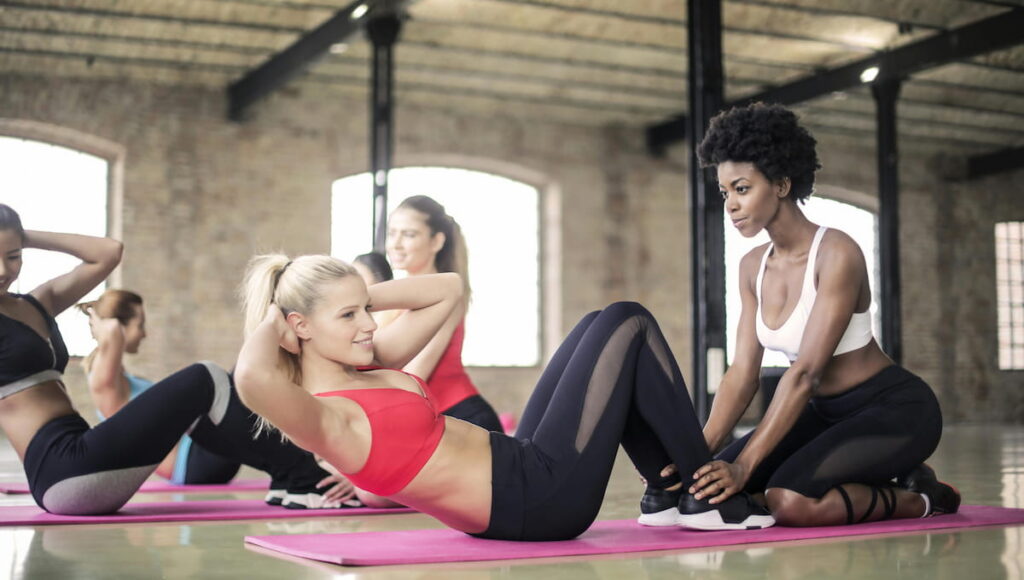
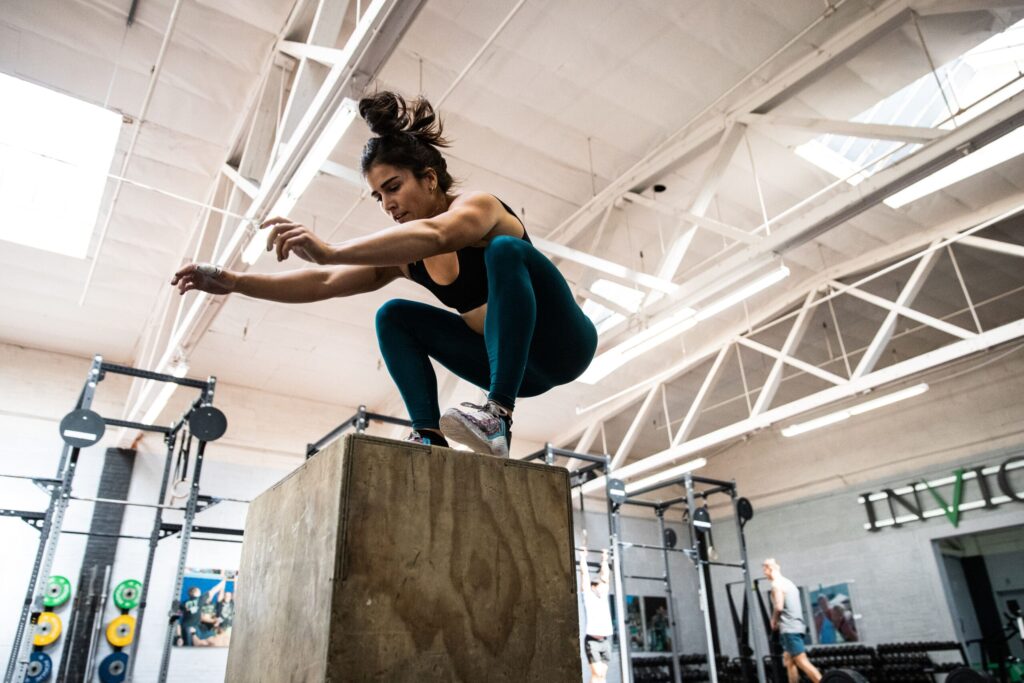
The obliques play a crucial role in core strength, spinal stability and rotational power. These muscles, comprising the internal and external obliques, support movement patterns necessary for athletic performance and injury prevention.
Studies indicate that training the obliques through rotational and anti-rotational exercises enhances core endurance and prevents lower back pain (McGill, 2010). Additionally, a well-developed set of obliques contributes to an aesthetic, V-shaped torso.
1. Russian Twists
Execution and Muscles Targeted
Russian twists are a dynamic rotational exercise that primarily target the obliques and rectus abdominis while engaging the transverse abdominis for stability. To perform Russian twists, sit on the floor with knees bent, lean back slightly and lift your feet off the ground if possible.
Holding a weight or medicine ball, rotate your torso from side to side, ensuring the movement is controlled and led by the core rather than the arms.
Scientific Backing
Research suggests that Russian twists significantly activate the obliques compared to static core exercises (Escamilla et al., 2010). The twisting motion enhances functional rotational strength, benefiting sports such as golf, baseball and combat sports. Additionally, incorporating external resistance increases muscle activation, leading to hypertrophy and strength gains.
Training Recommendations
For maximum effectiveness, perform 3-4 sets of 12-20 controlled reps. Using a moderate weight ensures resistance without compromising form. Adding a tempo variation, such as slowing down the eccentric phase, increases time under tension for muscle growth.
2. Cable Woodchoppers
Execution and Muscles Targeted
Cable woodchoppers mimic the natural rotational movements of daily activities and sports. Set up a cable machine at a high or low position, grab the handle with both hands and rotate across your body in a diagonal motion. Engage the core to drive the movement while maintaining a stable lower body.
Scientific Backing
Studies show that resistance-based rotational movements like woodchoppers enhance core strength and neuromuscular efficiency (Santana et al., 2007). This exercise not only targets the obliques but also engages the deep core stabilisers, improving overall functional strength.
Training Recommendations
Perform 3-4 sets of 10-15 reps per side with controlled form. Adjust the cable height for variation—high-to-low woodchoppers emphasise the lower obliques, whereas low-to-high versions engage the upper obliques and serratus anterior.
3. Hanging Knee Twists
Execution and Muscles Targeted
Hanging knee twists, performed on a pull-up bar, develop core strength by engaging the obliques, hip flexors and lower abdominals. Hang from the bar with an overhand grip, lift your knees towards your chest while twisting them to one side, then alternate sides.
Scientific Backing
Research indicates that hanging core exercises activate the obliques more effectively than traditional floor exercises due to the greater range of motion and stabilisation demands (Clark et al., 2018). The dynamic movement challenges grip strength and upper body endurance, providing additional benefits beyond core development.
Training Recommendations
Perform 3-4 sets of 10-15 reps per side. To increase difficulty, extend the legs instead of bending the knees or add ankle weights for additional resistance.
Additional Tips for Optimal Oblique Training
Incorporate Progressive Overload
Gradually increasing resistance, volume or complexity in oblique training ensures continued muscle adaptation and growth.
Focus on Mind-Muscle Connection
Engaging the obliques deliberately during twisting movements enhances activation and prevents compensatory recruitment of other muscles.
Combine Twisting with Anti-Rotational Movements
Anti-rotational exercises such as Pallof presses complement twisting movements by improving core stability and reducing injury risk.
Conclusion
Oblique development is crucial for core strength, injury prevention and aesthetics. Russian twists, cable woodchoppers and hanging knee twists are scientifically backed exercises that effectively target the obliques when performed with proper form and progression. Implementing these movements into a structured training programme will yield significant improvements in rotational strength and core endurance.
Key Takeaways
| Key Point | Summary |
|---|---|
| Importance of Twisting Movements | Twisting exercises enhance core strength, rotational power and aesthetics. |
| Russian Twists | Improve oblique activation and functional rotation; best performed with moderate resistance. |
| Cable Woodchoppers | Mimic natural rotational movements; resistance training improves neuromuscular efficiency. |
| Hanging Knee Twists | Engage obliques dynamically; superior muscle activation compared to floor-based exercises. |
| Progressive Overload | Essential for continued muscle growth and strength development. |
| Mind-Muscle Connection | Enhances activation and prevents compensatory movement patterns. |
| Anti-Rotational Training | Complements twisting exercises for balanced core strength and injury prevention. |
Bibliography
Clark, D. R., Lambert, M. I., & Hunter, A. M. (2018). Trunk muscle activation in dynamic exercises performed on stable and unstable surfaces. Journal of Strength and Conditioning Research, 32(4), 1025-1032.
Escamilla, R. F., Francisco, A. C., Kayes, A. V., Speer, K. P., & Moorman, C. T. (2010). An electromyographic analysis of core trunk, hip, and thigh muscles during Roman chair exercises. Journal of Orthopaedic & Sports Physical Therapy, 40(12), 771-780.
McGill, S. M. (2010). Core training: Evidence translating to better performance and injury prevention. Strength and Conditioning Journal, 32(3), 33-46.
Santana, J. C., Vera-Garcia, F. J., & McGill, S. M. (2007). A kinetic and electromyographic comparison of stable and unstable pushing exercises. Journal of Strength and Conditioning Research, 21(4), 1300-1306.