


When most people think of home gyms or fitness equipment, they imagine barbells, dumbbells, kettlebells, or even cardio machines like treadmills and exercise bikes. However, there are some excellent yet often overlooked pieces of equipment that can be game-changers in terms of effectiveness, versatility, and affordability. This article will cover three underrated fitness tools you should consider buying: the resistance band, the slam ball, and the suspension trainer.
1. Resistance Bands
Why They’re Underrated
Resistance bands often get overlooked as they’re perceived as too simple compared to dumbbells and barbells. However, their portability, versatility, and ability to target both large muscle groups and smaller stabilisers make them a fantastic tool for various fitness levels. Unlike free weights, bands provide constant tension, increasing muscle engagement during the entire movement. This makes them especially good for building muscle endurance, improving flexibility, and rehabilitation.
Benefits of Resistance Bands
- Portability: Resistance bands can be carried anywhere, making them great for home, gym, or travel workouts.
- Scalable Resistance: Different bands offer varying levels of resistance, allowing for progressive overload.
- Versatile Training: They can be used to perform exercises targeting every muscle group.
- Joint-Friendly: The bands provide smooth resistance, which reduces joint stress, making them perfect for injury prevention or recovery.
Exercises for Different Body Parts
- Upper Body:
- Band Push-Up: By placing a resistance band around your back and holding it in your hands, you can add resistance to standard push-ups.
- Band Rows: Anchor the band to a fixed object and mimic rowing movements to target the back and biceps.
- Band Overhead Press: Stand on the band and press upwards to work the shoulders.
- Lower Body:
- Band Squats: Wrap the band around your thighs to increase tension in the glutes and quadriceps during squats.
- Band Deadlifts: Step on the band and perform a deadlift motion to work the hamstrings and glutes.
- Lateral Band Walks: Place a small loop band above your knees and step side to side to activate the glutes and abductors.
- Core:
- Band Russian Twists: Hold the band in front of you and rotate your torso, working the obliques.
- Band Pallof Press: Anchor the band and stand side-on, pressing it away from your body. This anti-rotation movement targets deep core muscles.
Read Also: How to Use Resistance Bands for Chest Building
Sample Workout with Resistance Bands
Full Body Resistance Band Workout:
| Exercise | Reps | Sets |
|---|---|---|
| Band Push-Up | 12-15 | 3 |
| Band Squats | 15-20 | 3 |
| Band Rows | 12-15 | 3 |
| Lateral Band Walks | 12 steps/side | 3 |
| Band Pallof Press | 10-12/side | 3 |
| Band Deadlifts | 12-15 | 3 |
Rest: 30-60 seconds between sets.
2. Slam Ball
Why It’s Underrated
The slam ball doesn’t get as much recognition as dumbbells or kettlebells because it’s often seen as a “specialty” piece of equipment. But its functionality extends well beyond just slamming it to the ground. Slam balls add a powerful combination of cardio and strength training while being a great outlet for stress relief. Its awkward shape challenges stability and coordination, making it excellent for functional movements.
Benefits of Slam Balls
- Build Explosiveness: Using slam balls in exercises requires generating maximum force in a short period, which helps develop power and explosiveness.
- Core Engagement: Every slam and throw works the core muscles due to the rotation and stabilization needed.
- Cardio and Strength Combination: Performing high-intensity slam ball exercises helps build both cardiovascular endurance and muscle strength.
- Stress Relief: There’s a cathartic element to slamming a ball into the ground, which can also be a healthy way to release pent-up tension.
Exercises for Different Body Parts
- Upper Body:
- Overhead Slams: This classic move strengthens the shoulders, triceps, and core as you bring the ball down with force.
- Chest Passes: Throwing the ball at a wall or partner targets the chest, shoulders, and triceps.
- Slam Ball Push-Ups: Place one hand on the ball and the other on the floor to engage the chest, shoulders, and triceps unevenly, challenging stability.
- Lower Body:
- Squat to Slam: Perform a deep squat while holding the slam ball, then slam it down, working your legs, core, and shoulders simultaneously.
- Reverse Lunge with Slam: Step back into a lunge while slamming the ball to the side, activating the glutes, quads, and core.
- Ball Lifts: Lift the slam ball in a deadlift motion to work your hamstrings and lower back.
- Core:
- Russian Twists: Hold the ball and rotate side to side to engage the obliques.
- Slam Ball Sit-Ups: Perform sit-ups holding the ball at your chest for added resistance.
- Rotational Slams: Pivot your body while slamming the ball diagonally to work the entire core and improve rotational power.

Sample Workout with Slam Balls
Slam Ball Power Circuit:
| Exercise | Reps | Sets |
|---|---|---|
| Overhead Slams | 10-12 | 4 |
| Reverse Lunge with Slam | 8-10/side | 4 |
| Chest Passes (to wall) | 10-15 | 4 |
| Russian Twists | 12-15/side | 4 |
| Ball Lifts (Deadlift style) | 12-15 | 4 |
Rest: 30 seconds between exercises; 1 minute between sets.
3. Suspension Trainer
Why It’s Underrated
The suspension trainer, commonly known by the brand name TRX, is often overshadowed by free weights and machines in gyms. However, it is one of the most versatile pieces of equipment, offering bodyweight resistance training that can target strength, stability, and flexibility all at once. Suspension trainers allow you to modify exercises by adjusting your body angle, making it accessible for beginners and advanced athletes alike.
Benefits of Suspension Trainers
- Bodyweight Mastery: Suspension training uses your body weight for resistance, allowing for effective strength training without external weights.
- Improved Core Stability: Almost every suspension trainer exercise engages the core because of the need to stabilise your body while in suspension.
- Functional Movements: Exercises mimic real-life movements, improving overall coordination, balance, and stability.
- Adjustable Intensity: By changing the angle of your body relative to the anchor point, you can make exercises easier or more difficult.
Suspension Training: The Ultimate Guide for Beginners, Intermediate and Experienced Athletes
Exercises for Different Body Parts
- Upper Body:
- Suspension Rows: A highly effective exercise for the back and biceps, similar to a traditional rowing movement but using body weight.
- Suspension Push-Ups: Elevated push-ups that engage the chest, shoulders, and core.
- Suspension Triceps Extensions: Facing away from the anchor, extend your arms and use the suspension straps to target the triceps.
- Lower Body:
- Suspension Lunges: Place one foot in the suspension straps while lunging forward on the other leg to work the quads, glutes, and hamstrings.
- Suspension Squats: Hold the straps and use them to guide yourself into deep squats, engaging the lower body and core.
- Suspension Hamstring Curls: Lying on your back with your heels in the straps, curl your legs toward your body to work the hamstrings.
- Core:
- Suspension Planks: Place your feet in the straps and hold a plank position, significantly increasing core engagement.
- Suspension Mountain Climbers: With your feet in the straps, bring your knees toward your chest in a fast-paced movement to work your core and cardiovascular system.
- Suspension Pikes: Start in a plank with feet in the straps, then use your core to lift your hips toward the ceiling, forming an inverted “V” shape.
Sample Workout with Suspension Trainer
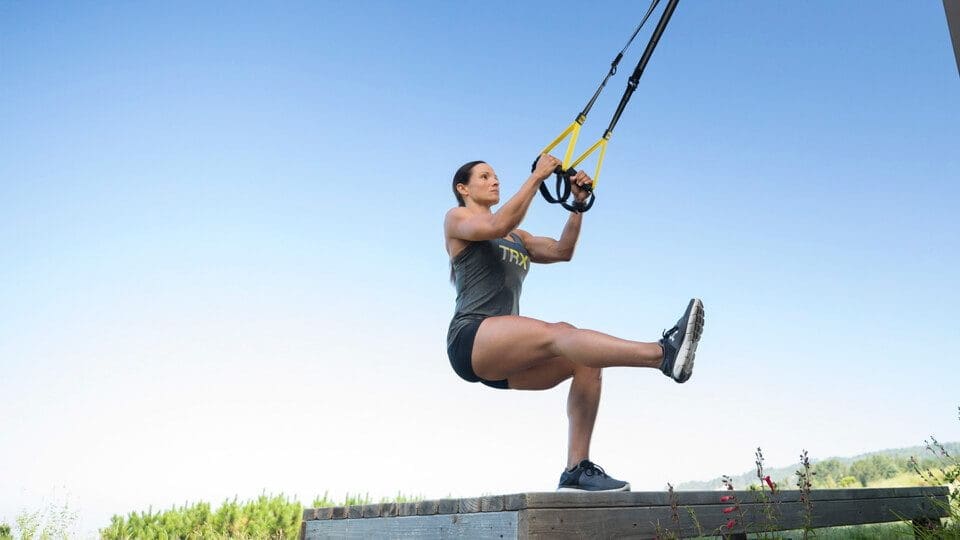
Suspension Trainer Functional Workout:
| Exercise | Reps | Sets |
|---|---|---|
| Suspension Rows | 12-15 | 3 |
| Suspension Push-Ups | 12-15 | 3 |
| Suspension Lunges | 10/side | 3 |
| Suspension Hamstring Curls | 12-15 | 3 |
| Suspension Planks | 30-45 seconds | 3 |
| Suspension Pikes | 10-12 | 3 |
Rest: 45 seconds between exercises; 1 minute between sets.
Related: 15 MUST-DO Abs Exercises with TRX (Suspension Training)
Conclusion
These three underrated pieces of fitness equipment—resistance bands, slam balls, and suspension trainers—offer incredible versatility and benefits for a wide range of fitness levels. Resistance bands provide joint-friendly tension and scalability, making them ideal for both beginners and advanced users. Slam balls deliver a powerful mix of cardio and strength training, helping you develop explosiveness and core strength while also offering an effective way to de-stress. Suspension trainers challenge your bodyweight control, improving strength, stability, and core engagement, all in one piece of equipment.
Each tool allows for full-body workouts and can be used at home or at the gym. Whether you’re looking to build muscle, improve your athleticism, or enhance your core strength, these pieces of equipment can be a valuable addition to your fitness arsenal. Consider incorporating them into your workout routine to break through plateaus and keep your training fresh and exciting.
Key Takeaways
| Equipment | Benefits | Best Exercises | Targeted Muscles |
|---|---|---|---|
| Resistance Bands | Portable, scalable resistance, joint-friendly | Band Rows, Lateral Band Walks, Band Push-Ups | Full body |
| Slam Balls | Builds power, combines cardio and strength, stress relief | Overhead Slams, Reverse Lunge with Slam | Full body, Core |
| Suspension Trainer | Bodyweight resistance, improves stability, core engagement | Suspension Rows, Lunges, Suspension Planks | Full body, Core |


