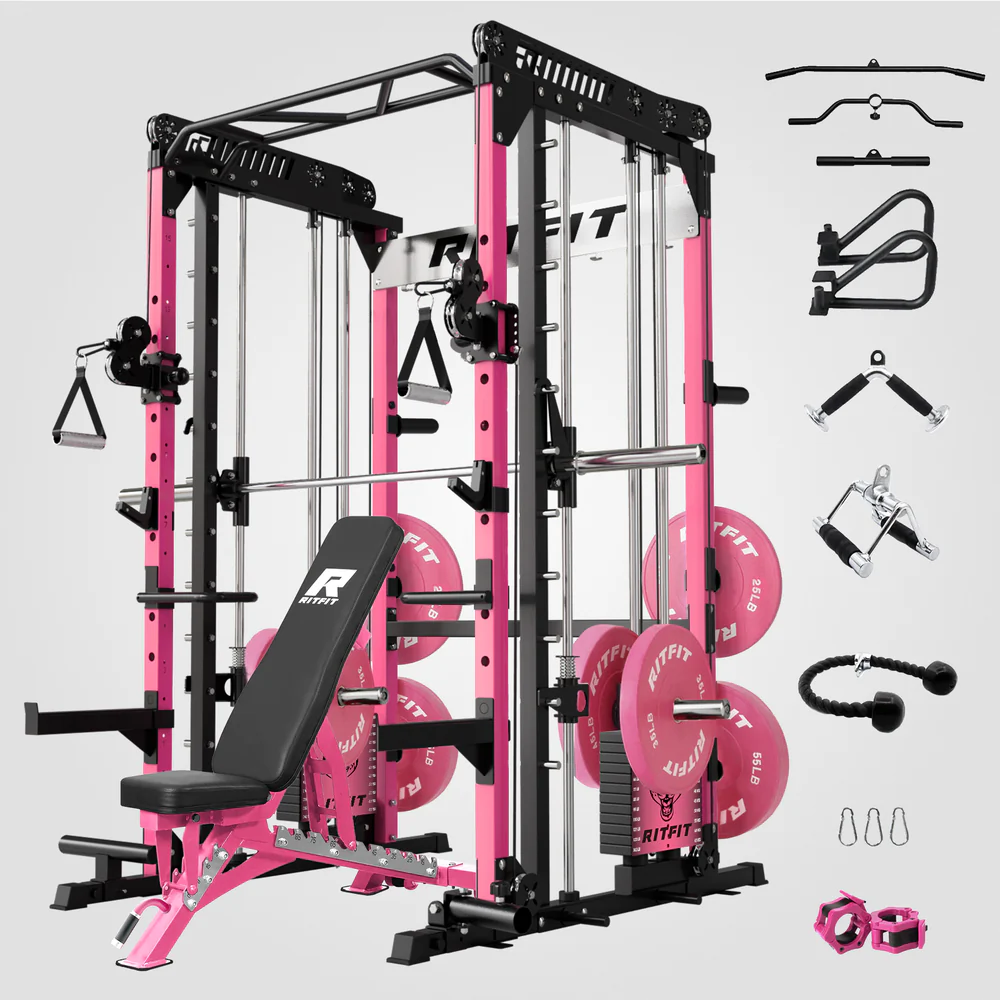
Building defined abdominal muscles requires more than just high-rep bodyweight exercises. Resistance training is essential to stimulate muscle hypertrophy, and adding weight to your ab exercises can significantly enhance muscle growth and definition.
Weighted ab exercises increase the time under tension, muscle activation, and progressive overload, all of which contribute to greater core strength and a more sculpted midsection. Below are three of the most effective weighted ab exercises for muscle definition, supported by scientific research.
1. Weighted Cable Crunch
The weighted cable crunch is one of the best exercises for targeting the rectus abdominis, the primary muscle responsible for the “six-pack” appearance. Unlike bodyweight crunches, which rely on endurance, the weighted cable crunch allows for progressive overload, a crucial factor for muscle growth (Schoenfeld, 2010).
How to Perform
- Attach a rope handle to a high pulley on a cable machine.
- Kneel in front of the machine and grasp the rope with both hands, positioning it near your forehead.
- Engage your core and contract your abs to pull your torso downward towards the floor, keeping your elbows close to your body.
- Pause at the bottom and slowly return to the starting position.
- Perform 3-4 sets of 10-15 reps.
Why It Works
Research indicates that cable crunches create high electromyographic (EMG) activation in the rectus abdominis, particularly when performed with moderate to heavy resistance (Clark et al., 2018). The controlled range of motion and resistance ensure that the abs experience maximum tension throughout the movement, leading to increased muscle hypertrophy over time.
2. Weighted Decline Sit-Up
The weighted decline sit-up is another highly effective exercise for building abdominal muscle definition. It increases core activation by incorporating a greater range of motion and resistance, both of which stimulate hypertrophy (Willardson, 2014).
How to Perform
- Secure your feet under the pads of a decline bench and hold a weight plate or dumbbell against your chest.
- Lie back until your torso is almost parallel to the ground.
- Engage your core and sit up explosively while keeping the weight close to your chest.
- Slowly lower yourself back to the starting position under control.
- Perform 3-4 sets of 10-12 reps.
Why It Works
Studies show that decline sit-ups generate significantly greater activation of the rectus abdominis compared to traditional sit-ups due to the increased range of motion and gravitational resistance (Escamilla et al., 2006). By adding weight, you further enhance muscle engagement, which leads to improved strength and definition.
3. Weighted Hanging Leg Raises
Hanging leg raises are already an advanced core exercise, and adding weight further enhances their effectiveness for building muscle definition. This movement targets both the rectus abdominis and the lower abdominal region, which can be difficult to develop with standard ab exercises.

How to Perform
- Hang from a pull-up bar with an overhand grip and attach ankle weights or hold a small dumbbell between your feet.
- Keep your legs straight and engage your core to lift them to a 90-degree angle.
- Pause at the top and slowly lower your legs back to the starting position.
- Perform 3-4 sets of 8-12 reps.
Why It Works
Research suggests that hanging leg raises activate the lower rectus abdominis more than standard floor-based exercises, making them an essential movement for those seeking complete abdominal development (Boeckh-Behrens & Buskies, 2000). Adding resistance increases the intensity and ensures progressive overload, a fundamental principle of muscle growth.
Conclusion
Weighted ab exercises provide a superior stimulus for muscle hypertrophy compared to bodyweight movements alone. The weighted cable crunch, weighted decline sit-up, and weighted hanging leg raise each offer unique benefits in targeting different regions of the rectus abdominis. Incorporating these exercises into your routine with proper form, progressive overload, and adequate recovery will significantly improve abdominal muscle definition.
Key Takeaways
| Exercise | Primary Muscles Targeted | Why It Works |
|---|---|---|
| Weighted Cable Crunch | Rectus Abdominis | High EMG activation and progressive overload for hypertrophy |
| Weighted Decline Sit-Up | Rectus Abdominis | Increased range of motion and core engagement |
| Weighted Hanging Leg Raises | Lower Rectus Abdominis | Enhanced activation of the lower abs with added resistance |
Bibliography
- Boeckh-Behrens, W. & Buskies, W. (2000). Biomechanical analysis of abdominal exercises. Journal of Strength and Conditioning Research, 14(3), 315-323.
- Clark, D.R., Lambert, M.I., & Hunter, A.M. (2018). Muscle activation in different abdominal exercises. Journal of Sports Sciences, 36(4), 431-438.
- Escamilla, R.F., Babb, E., DeWitt, R., Jew, P., Kelleher, P., Burnham, T., Busch, J., & D’Anna, K. (2006). Electromyographic analysis of traditional and nontraditional abdominal exercises: Implications for improving abdominal muscular performance. Journal of Orthopaedic & Sports Physical Therapy, 36(1), 45-57.
- Schoenfeld, B.J. (2010). The mechanisms of muscle hypertrophy and their application to resistance training. Journal of Strength and Conditioning Research, 24(10), 2857-2872.
- Willardson, J.M. (2014). Core stability training: Applications to sports conditioning programs. Journal of Strength and Conditioning Research, 28(2), 556-561.