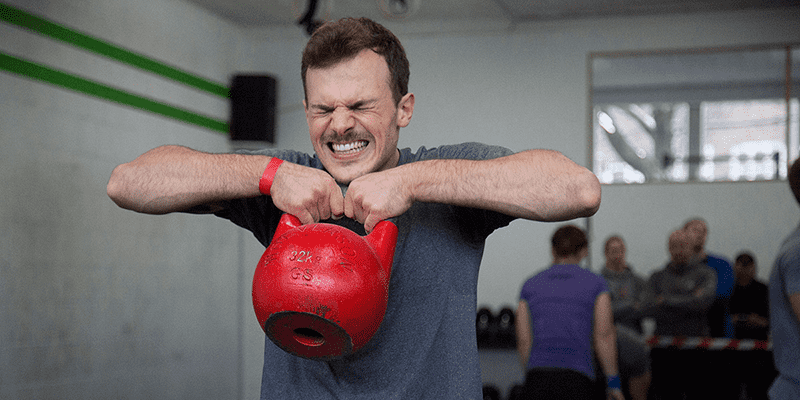
Training to failure, a technique where you perform repetitions of an exercise until you can no longer maintain proper form, has long been a topic of interest among athletes, bodybuilders, and fitness enthusiasts.
This method can offer significant benefits for muscle growth and strength development, but it can also have downsides when applied incorrectly. In this article, we will explore five key benefits of training to failure, backed by scientific evidence, and discuss when it is helpful for muscle growth and when it might hinder your progress.
What Is Training to Failure?
Before diving into the benefits and downsides, it’s essential to clarify what training to failure means. When you train to failure, you perform an exercise until your muscles can no longer produce the force needed to complete another repetition with proper form. This method forces your muscles to reach their maximum capacity, leading to a state of fatigue that can stimulate various physiological responses, including muscle hypertrophy (growth).
Benefit 1: Maximising Muscle Fibre Recruitment
Training to failure ensures that you recruit a higher number of muscle fibres, including type II (fast-twitch) fibres, which are crucial for muscle growth. Type II fibres generate more force and are responsible for explosive movements, but they are not always activated in lower-intensity training.
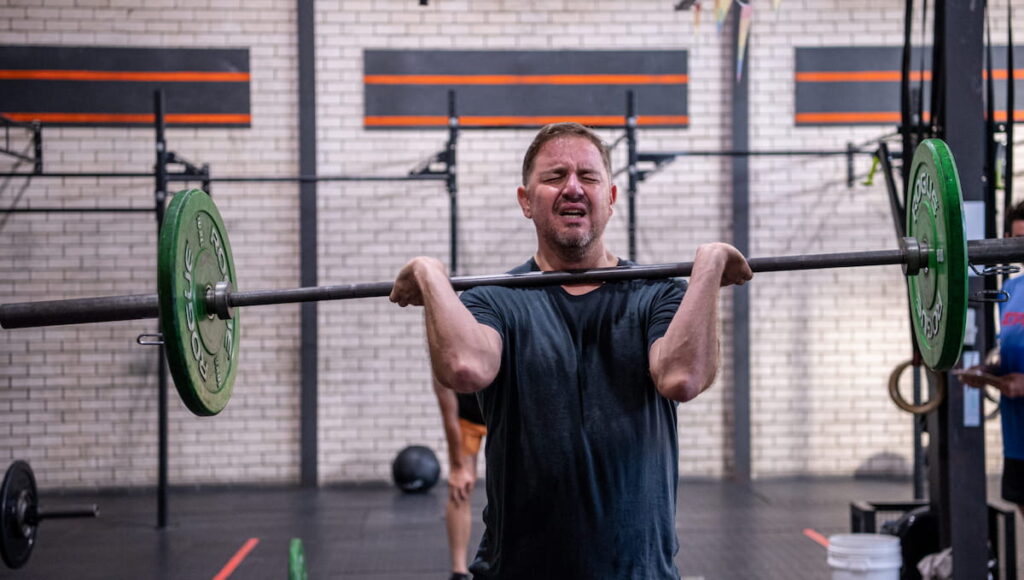
A study by Carpinelli and Otto (1998) showed that lifting to failure, especially with higher loads, can lead to greater muscle fibre recruitment than submaximal training. By pushing your muscles to their limits, you activate both type I (slow-twitch) and type II muscle fibres, which may result in increased muscle mass.
Additionally, research from Roig et al. (2009) supports this by demonstrating that exercises performed to failure engage a higher percentage of muscle fibres compared to stopping before failure. The more muscle fibres you recruit during your workout, the more potential there is for muscle adaptation and growth.
Benefit 2: Enhancing Muscle Protein Synthesis
Muscle protein synthesis (MPS) is a key process in muscle hypertrophy. Training to failure can enhance MPS by increasing the stress placed on the muscle fibres, which signals the body to repair and rebuild muscle tissue. A study by Burd et al. (2010) indicated that performing sets to failure increased MPS more significantly than performing submaximal sets.
The increased tension and metabolic stress experienced during failure training are believed to create an optimal environment for muscle growth. Mechanical tension and metabolic stress, two major stimuli for hypertrophy, are maximised when the muscle is pushed to its limits. This provides an important signal for muscle repair and growth.
However, it’s important to note that while training to failure can enhance MPS, it doesn’t guarantee muscle growth on its own. Factors like nutrition, recovery, and the overall volume of training play a significant role in achieving optimal results.
Benefit 3: Inducing Greater Metabolic Stress
Metabolic stress, often referred to as “the pump,” is another crucial factor for muscle hypertrophy. Training to failure generates a high level of metabolic stress by increasing the accumulation of by-products such as lactate, hydrogen ions, and inorganic phosphate. These by-products cause cellular swelling and increase the mechanical load on muscle fibres.
A study by Schoenfeld (2010) highlighted that metabolic stress is a potent stimulus for muscle hypertrophy, and training to failure is one of the most effective ways to increase this stress. When muscles are pushed to failure, they are exposed to prolonged time under tension and an elevated level of metabolic by-products, both of which contribute to muscle growth.
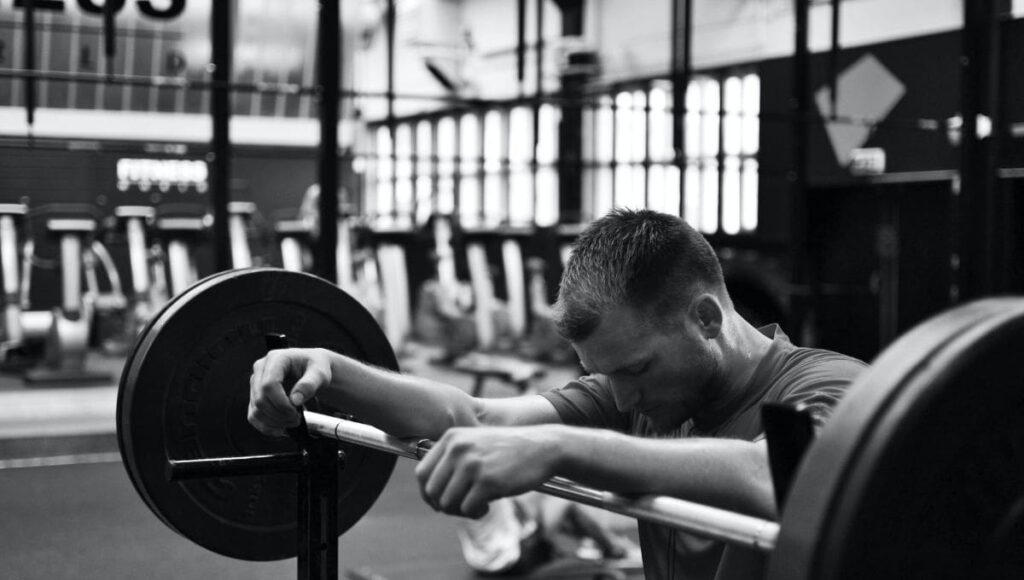
Moreover, the accumulation of these by-products can enhance the release of anabolic hormones, such as growth hormone, further promoting muscle hypertrophy. Training to failure, therefore, offers a dual benefit: it increases both mechanical tension and metabolic stress, leading to enhanced muscle growth potential.
Benefit 4: Improving Mental Toughness and Work Capacity
Training to failure not only challenges your muscles but also tests your mental toughness. Pushing your body to its limits requires significant focus and determination. Over time, this can improve your mental fortitude and increase your ability to handle intense physical demands.
In addition, training to failure can help improve work capacity. When you consistently push your muscles to their maximum, you condition your body to handle higher levels of fatigue and stress. This can lead to better endurance and an increased ability to perform more reps or sets in subsequent workouts.
A study by Gorostiaga et al. (2012) examined the effects of training to failure on work capacity and found that individuals who trained to failure experienced greater improvements in muscular endurance and total work output compared to those who stopped short of failure. This suggests that incorporating failure training can enhance your overall ability to tolerate and recover from strenuous exercise.
Benefit 5: Stimulating Hormonal Responses
Training to failure can lead to an enhanced release of anabolic hormones, such as testosterone and growth hormone, which are crucial for muscle growth and recovery. Hormonal responses to resistance training are influenced by the intensity and volume of the workout, with training to failure being one of the most effective ways to stimulate these hormones.
A study by Ahtiainen et al. (2003) demonstrated that resistance training to failure significantly increased testosterone and growth hormone levels compared to non-failure training. These hormones play a critical role in muscle repair and growth, helping to accelerate recovery and enhance muscle hypertrophy.
While the hormonal response to training to failure is a clear benefit, it’s important to consider the potential for diminishing returns if this method is overused. Repeatedly training to failure without adequate recovery can lead to elevated cortisol levels, a stress hormone that may counteract the positive effects of anabolic hormones.
When Training to Failure Helps Muscle Growth
- For Advanced Lifters: Training to failure is often more beneficial for advanced lifters who have reached a plateau in their muscle growth. Since these individuals have already built a solid foundation of strength and muscle, pushing their muscles to failure can provide the additional stimulus needed for further gains.
- In Moderation: Training to failure should be used strategically, not in every set of every workout. Research by Davies et al. (2016) found that while training to failure can enhance muscle hypertrophy, doing so excessively can increase the risk of overtraining and injury. Incorporating failure training into your routine once or twice a week can maximise the benefits without compromising recovery.
- For Specific Muscle Groups: Training to failure may be more effective for smaller muscle groups, such as biceps or triceps, which tend to recover more quickly than larger muscle groups like the legs or back. Incorporating failure training in isolation exercises can help target these muscles more effectively.
When Training to Failure Hurts Muscle Growth
- For Beginners: Beginners are advised to avoid training to failure until they have built a solid foundation of strength and proper form. Training to failure can increase the risk of injury, particularly for those who are still learning correct technique.
- Excessive Use: Training to failure too frequently can lead to overtraining, increased muscle damage, and prolonged recovery times. A study by Figueiredo et al. (2018) found that consistently training to failure without adequate rest can lead to muscle fatigue, impaired performance, and reduced muscle growth over time.
- In High-Volume Training: When performing high-volume workouts with multiple sets and exercises, training to failure can be counterproductive. Research by Nóbrega and Libardi (2016) suggests that training to failure in high-volume routines may lead to excessive muscle damage, which can hinder recovery and limit long-term muscle growth.

Conclusion
Training to failure offers several key benefits, including maximising muscle fibre recruitment, enhancing muscle protein synthesis, inducing greater metabolic stress, improving work capacity, and stimulating hormonal responses. However, it should be used strategically to avoid potential downsides such as overtraining, injury, and impaired recovery. Incorporating failure training into your workout routine can be highly effective for muscle growth when done in moderation and with proper recovery strategies in place. By understanding when it helps and when it hurts, you can optimise your training for better long-term results.
Key Takeaways
| Key Points | Details |
|---|---|
| Maximises Muscle Fibre Recruitment | Training to failure activates both type I and type II muscle fibres, essential for growth. |
| Enhances Muscle Protein Synthesis | Increased tension during failure stimulates greater muscle protein synthesis. |
| Induces Greater Metabolic Stress | The pump and accumulation of by-products boost hypertrophy. |
| Improves Work Capacity | Builds endurance and mental toughness by pushing muscles to their limit. |
| Stimulates Hormonal Responses | Boosts anabolic hormones like testosterone and growth hormone, aiding recovery and growth. |
| When It Helps | Effective for advanced lifters, in moderation, and for smaller muscle groups. |
| When It Hurts | Counterproductive for beginners, excessive use, or in high-volume training. |
Bibliography
- Ahtiainen, J. P., Pakarinen, A., Alen, M., Kraemer, W. J., & Häkkinen, K., 2003. Muscle hypertrophy, hormonal adaptations and strength development during strength training in strength-trained and untrained men. European Journal of Applied Physiology, 89(6), pp.555-563.
- Burd, N. A., Holwerda, A. M., Selby, K. C., West, D. W. D., Staples, A. W., Cain, N. E., Cashaback, J. G. A., Potvin, J. R., Baker, S. K., & Phillips, S. M., 2010. Resistance exercise volume affects myofibrillar protein synthesis and anabolic signalling molecule phosphorylation in young men. The Journal of Physiology, 588(16), pp.3119-3130.
- Carpinelli, R. N., & Otto, R. M., 1998. Strength training: Single versus multiple sets. Sports Medicine, 26(2), pp.73-84.
- Davies, T. B., Kuang, K., Orr, R., Halaki, M., & Hackett, D. A., 2016. Effect of movement velocity during resistance training on muscle-specific hypertrophy: A systematic review. European Journal of Sport Science, 17(4), pp.438-450.
- Figueiredo, V. C., Willardson, J. M., & Miranda, H., 2018. Effect of resistance training combining two loading intensities on upper body muscle strength, cross-sectional area, and mechanical power output. Journal of Strength and Conditioning Research, 32(1), pp.1-9.
- Gorostiaga, E. M., Navarro-Amézqueta, I., Calbet, J. A. L., Hellsten, Y., Cusso, R., Guerrero, M., Granados, C., González-Izal, M., Ibanez, J., Izquierdo, M., 2012. Energy metabolism during repeated sets of leg press exercise leading to failure or not. PloS One, 7(7), e40621.
- Nóbrega, S. R., & Libardi, C. A., 2016. Is resistance training to muscular failure necessary? Frontiers in Physiology, 7, p.10.
- Roig, M., O’Brien, K., Kirk, G., Murray, R., McKinnon, P., Shadgan, B., Reid, W. D., 2009. The effects of eccentric versus concentric resistance training on muscle strength and mass in healthy adults: a systematic review with meta-analysis. British Journal of Sports Medicine, 43(8), pp.556-568.
- Schoenfeld, B. J., 2010. The mechanisms of muscle hypertrophy and their application to resistance training. Journal of Strength and Conditioning Research, 24(10), pp.2857-2872.