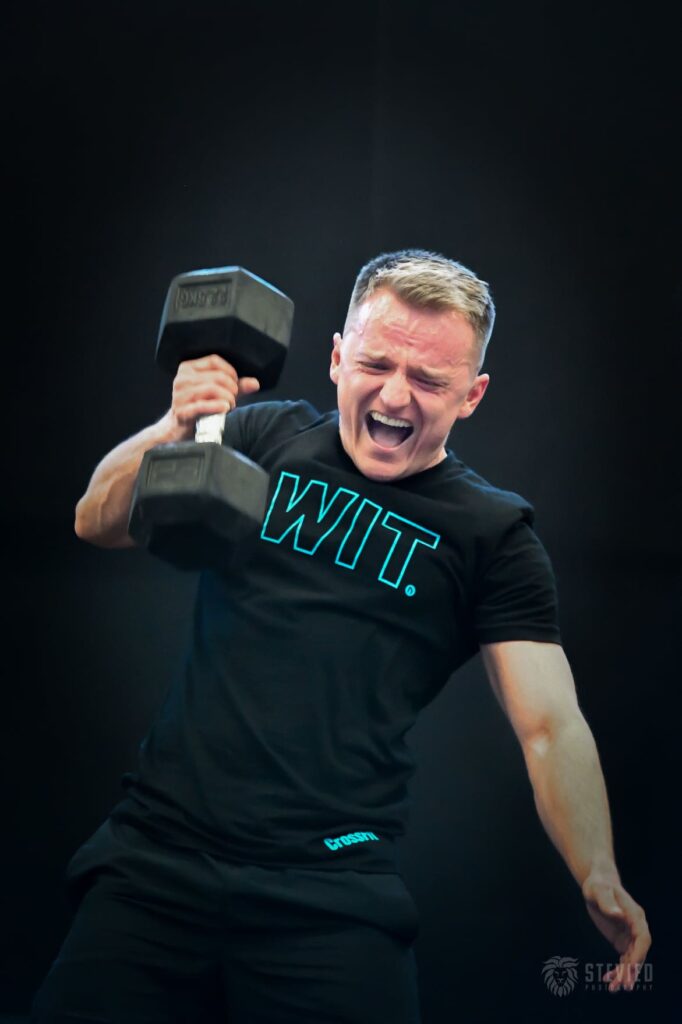
Embarking on a fitness journey often involves a desire to sculpt and strengthen specific areas of the body, and the upper body is a focal point for many individuals seeking a well-rounded physique.
A robust upper body not only enhances aesthetics but also contributes to functional strength and overall well-being. One of the most versatile and accessible tools for achieving this goal is the humble dumbbell.

As we celebrate the one-year anniversary of your commitment to a healthier lifestyle, it’s the perfect time to delve into the world of dumbbell exercises designed to carve out a sculpted and strong upper body. Whether you’re a seasoned fitness enthusiast or a newcomer to the realm of weight training, incorporating these exercises into your routine can yield remarkable results.
In this guide, we’ll explore not only the top five dumbbell exercises for upper body development but also the importance of upper body strength, the significance of choosing the right dumbbells, and the fundamentals of maintaining proper form and technique. Get ready to elevate your fitness journey and witness the transformative power of targeted dumbbell workouts on your upper body.
The Importance of Upper Body Strength:
A well-rounded fitness regimen encompasses various elements, and one crucial aspect often emphasized is the development of upper body strength.
While many individuals initially focus on lower body exercises, neglecting the upper body can lead to an imbalance that hinders overall physical performance and aesthetic goals. Understanding the importance of upper body strength provides the motivation and foundation for incorporating targeted exercises into your workout routine.
Enhanced Functional Abilities
Upper body strength plays a pivotal role in everyday activities, from lifting groceries to carrying children or even performing tasks at work. A robust upper body contributes to improved functionality, making daily life more manageable and less prone to physical strain.
Posture and Stability
The muscles of the upper back, shoulders, and chest are integral in maintaining proper posture. Strengthening these muscles not only enhances your appearance but also supports spinal alignment, reducing the risk of musculoskeletal issues and promoting long-term spinal health.
Increased Metabolism
Engaging large muscle groups in the upper body, such as the chest and back, during resistance training can boost your metabolism. As these muscles develop, they require more energy for maintenance, contributing to a higher resting metabolic rate and facilitating weight management.

Aesthetic Benefits
Building a sculpted upper body not only instills confidence but also contributes to a balanced physique. Well-defined shoulders, a strong back, and chiseled arms are aesthetic markers of fitness and dedication to a comprehensive training program.
Injury Prevention
Strengthening the muscles around the shoulders, including the rotator cuff, can help prevent injuries and improve joint stability. This is particularly crucial for individuals engaged in sports or activities that involve repetitive arm movements.
Versatility in Training
Developing upper body strength opens the door to a wide range of exercise modalities. Whether you’re interested in bodyweight exercises, resistance training, or incorporating cardiovascular activities, a strong upper body forms the foundation for diverse and dynamic workouts.
Understanding the multifaceted benefits of upper body strength underscores its importance in achieving holistic fitness. As we explore the best dumbbell exercises for sculpting and strengthening the upper body, keep in mind the transformative impact these workouts can have on your overall health and well-being.
Proper Form and Technique
Achieving a sculpted and strong upper body isn’t solely about the amount of weight lifted but, more importantly, about executing exercises with precision and maintaining proper form.
Neglecting proper form can not only hinder your progress but also increase the risk of injury. Whether you’re a novice or a seasoned fitness enthusiast, mastering the fundamentals of form and technique is essential for optimizing the effectiveness of your dumbbell workouts.
Start with a Stable Base
Before lifting any weight, establish a stable foundation. Stand with your feet shoulder-width apart and maintain a slight bend in your knees. This foundation provides stability and balance throughout the exercise.
Engage Your Core
Activate your core muscles by pulling your navel toward your spine. A strong core not only supports your spine but also ensures that the energy generated during the exercise is effectively transferred to the targeted muscle groups.
Controlled Movements
Avoid using momentum to lift or lower the dumbbells. Instead, focus on controlled, deliberate movements. This not only maximizes muscle engagement but also minimizes the risk of joint stress and injury.
Proper Grip
Hold the dumbbells with a firm yet comfortable grip. For most exercises, the grip should be neutral, with your palms facing each other. Ensure that the weight is distributed evenly across your fingers and palms to avoid unnecessary strain.

Maintain Joint Alignment
Throughout each exercise, pay attention to the alignment of your joints. For example, in shoulder exercises, keep your shoulders down and away from your ears to prevent unnecessary tension. Proper joint alignment contributes to a safer and more effective workout.
Full Range of Motion
Aim for a full range of motion in each repetition. This means lowering the weights until your muscles are stretched and extending them until they are fully contracted. Performing exercises through their complete range of motion promotes muscle flexibility and strength across the entire range.
Breathe Mindfully
Coordinate your breath with your movements. Inhale during the less strenuous phase of the exercise and exhale during the more challenging phase. Proper breathing not only supports oxygen delivery to muscles but also helps stabilize your core.
Mirror Check
Utilize mirrors when available to monitor your form. Observing yourself in real-time allows you to make necessary adjustments and ensures that you’re maintaining proper alignment and posture.
Remember, quality always trumps quantity in resistance training. Prioritize proper form and technique over lifting heavier weights, especially when starting a new exercise or increasing intensity. By mastering these foundational principles, you set the stage for a safer, more effective, and ultimately more rewarding upper body workout with dumbbells.
Dumbbell Bench Press
The dumbbell bench press is a cornerstone exercise that targets the chest, shoulders, and triceps while also engaging the stabilizing muscles throughout the core.
This compound movement is a versatile and effective way to build upper body strength and muscle mass. Whether you’re a beginner or an experienced lifter, mastering the form for the dumbbell bench press is key to reaping its full benefits.
Execution:
Set-Up:
- Begin by sitting on a flat bench with a dumbbell in each hand, resting on your thighs.
- Carefully lie back on the bench, positioning the dumbbells at shoulder level with palms facing forward.
Grip:
- Hold the dumbbells with a firm grip, ensuring your wrists are straight and aligned with your forearms.
- Your grip width can vary based on personal comfort, but a shoulder-width grip is commonly used.
Lowering Phase:
- Inhale and slowly lower the dumbbells to the sides of your chest. Keep your elbows at a 90-degree angle, forming a right angle with your torso.
- Aim for a controlled descent, feeling a stretch in your chest muscles.
Pressing Phase:
- Exhale and press the dumbbells back up to the starting position, fully extending your arms without locking your elbows.
- Focus on driving through your heels, engaging your chest and triceps.
Repeat:
- Complete the desired number of repetitions, maintaining a smooth and controlled motion throughout.
Tips for Success:
- Stability and Control:
- Maintain a stable base by keeping your feet flat on the ground.
- Engage your core to stabilize your spine throughout the movement.
Elbow Position:
- Ensure that your elbows are not flaring out too wide. A slight tuck is generally recommended to protect the shoulder joints.
Full Range of Motion:
- Aim for a full range of motion, allowing the dumbbells to descend until your upper arms are parallel to the ground or slightly below.
Progressive Overload:
- Gradually increase the weight used for the dumbbell bench press as your strength improves. However, prioritize maintaining proper form over lifting heavier weights.
Spotter (Optional):
- If possible, have a spotter present, especially when lifting heavy weights. A spotter can assist you if needed and enhance safety.
Incorporating the dumbbell bench press into your upper body workout routine provides a comprehensive and effective way to target key muscle groups.
As with any exercise, start with a weight that allows you to maintain proper form, and gradually progress as your strength and confidence grow.
Whether your goal is increased muscle mass, improved strength, or enhanced chest definition, the dumbbell bench press is a valuable addition to your fitness arsenal.
Bent Over Rows
The bent over row is a compound exercise that primarily targets the muscles of the upper back, including the latissimus dorsi, rhomboids, and traps.
This powerful movement not only contributes to a well-defined and sculpted back but also engages the biceps, rear delts, and core for a comprehensive upper body workout. Mastering the form for bent over rows is essential to maximize muscle engagement and prevent potential strain.
Execution:
Set-Up:
- Begin by standing with your feet shoulder-width apart, holding a dumbbell in each hand.
- Hinge at your hips, maintaining a slight bend in your knees. Lower your torso until it’s almost parallel to the ground. Keep your back straight, and let the dumbbells hang directly beneath your shoulders.
Grip:
- Grasp the dumbbells with a neutral grip, palms facing each other. Your hands should be slightly wider than shoulder-width apart.
Rowing Motion:
- Initiate the movement by pulling the dumbbells toward your hips, keeping your elbows close to your body.
- Squeeze your shoulder blades together at the top of the movement, ensuring a full contraction of the upper back muscles.
- The dumbbells should travel along the sides of your torso as you lift them.
Lowering Phase:
- Control the descent of the dumbbells back to the starting position, fully extending your arms without locking your elbows.
- Maintain tension in your back muscles throughout the entire range of motion.
Repeat:
- Perform the desired number of repetitions, focusing on the quality of each movement.
Tips for Success:
- Maintain a Neutral Spine
- Keep your back flat and your neck in a neutral position throughout the exercise to protect your spine.
- Engage Your Core:
- Activate your core muscles to stabilize your spine and maintain balance during the bent over row.
Elbow Position:
- Ensure that your elbows move close to your body during the rowing motion. Avoid excessive flaring, which can put strain on the shoulder joints.
Full Range of Motion:
- Lower the dumbbells until your arms are fully extended, and raise them until your upper arms are parallel to the ground or slightly higher.
Appropriate Weight:
- Start with a weight that allows you to maintain proper form. As your strength improves, you can gradually increase the resistance.
Rest Between Sets:
- Allow adequate rest between sets to optimize performance and recovery.
Incorporating bent over rows into your upper body workout routine provides a dynamic and effective way to target the muscles of the back and arms.
As with any exercise, prioritize form and control over lifting heavier weights. The bent over row is not only beneficial for aesthetics but also contributes to improved posture and overall upper body strength.
Shoulder Press
The shoulder press, also known as the overhead press, is a fundamental compound exercise that primarily targets the deltoid muscles while engaging the trapezius, triceps, and various stabilizing muscles in the core.
This versatile movement is crucial for developing strong and well-defined shoulders, contributing to overall upper body strength and aesthetics. To maximize the benefits of the shoulder press and ensure safety, mastering proper form and technique is paramount.
Execution:
Starting Position:
- Begin by sitting or standing with a dumbbell in each hand, positioned at shoulder height. Ensure your feet are hip-width apart for stability.
- Palms can face forward, or if using a barbell, hands should be slightly wider than shoulder-width apart.
Lift:
- Inhale and press the weights overhead by fully extending your arms. Keep your core engaged and maintain a neutral spine throughout the movement.
- If sitting, ensure your back is straight, and if standing, avoid excessive arching of the lower back.
Top Position:
- At the top of the movement, your arms should be fully extended without locking the elbows. The dumbbells or barbell should be directly above your head.
Lowering Phase:
- Exhale as you slowly lower the weights back to the starting position, maintaining control. Allow your elbows to bend naturally, forming about a 90-degree angle at the bottom.
Repeat:
- Perform the exercise for the desired number of repetitions, focusing on a smooth and controlled motion.
Tips for Success:
Stability:
- If standing, ensure a stable base by planting your feet firmly on the ground. If sitting, keep your feet flat on the floor.
- Engage your core to provide stability and prevent excessive arching of the back.
Elbow Position:
- Avoid flaring your elbows outward; instead, keep them slightly in front of your body to reduce stress on the shoulder joints.
Full Range of Motion:
- Lower the weights until your elbows are at a 90-degree angle or slightly below, allowing for a full range of motion.
- Aim to lift the weights directly overhead without leaning forward or backward.
Breathing:
- Inhale during the lowering phase and exhale as you press the weights overhead. Coordinate your breath with the movement for better control.
Appropriate Weight:
- Begin with a weight that allows you to maintain proper form. As you gain strength, gradually increase the resistance.
Rest Between Sets:
- Allow adequate rest between sets to maintain performance and prevent fatigue-related compromises in form.
Incorporating the shoulder press into your upper body workout routine provides a comprehensive stimulus for shoulder development and upper body strength.
Whether your goal is to build muscle mass or enhance shoulder definition, the shoulder press is a key exercise in achieving a well-rounded and sculpted upper body.
Bicep Curls
Bicep curls are a classic and effective exercise for targeting the muscles of the upper arm, specifically the biceps brachii.
This isolation movement is a staple in many strength training routines and is essential for building well-defined and strong biceps. Whether you’re a beginner or a seasoned lifter, understanding the proper form and technique for bicep curls is crucial for maximizing muscle engagement and minimizing the risk of injury.
Execution:
Starting Position:
- Begin by standing with a dumbbell in each hand, arms fully extended, and palms facing forward.
- Maintain a neutral spine, with your feet shoulder-width apart for stability.
Curling Motion:
- Inhale and, keeping your upper arms stationary, curl the weights towards your shoulders by contracting your biceps.
- Focus on a controlled and deliberate motion, ensuring that your wrists remain straight throughout the movement.
Top Position:
- At the top of the curl, your forearms should be perpendicular to the ground, and the dumbbells should be close to your shoulders.
- Squeeze your biceps at the peak of the contraction to maximize muscle engagement.
Lowering Phase:
- Exhale as you slowly lower the weights back to the starting position, resisting the urge to let the weights drop quickly.
- Maintain tension in your biceps throughout the entire range of motion.
Repeat:
- Perform the desired number of repetitions, emphasizing a smooth and controlled lifting and lowering phase.
Tips for Success:
Full Range of Motion:
- Allow your arms to fully extend at the bottom of the movement, getting a complete stretch in your biceps.
- Curl the weights upward until your biceps are fully contracted at the top.
Stability and Posture:
- Keep your core engaged to stabilize your spine and prevent excessive swinging or arching of the back.
- Avoid using momentum to lift the weights; the movement should be driven by the strength of your biceps.
Elbow Position:
- Keep your elbows close to your body throughout the movement to isolate the biceps and reduce strain on the shoulder joints.
Breathing:
- Inhale during the lowering phase and exhale as you lift the weights. Coordinating your breath with the movement helps maintain control.
Appropriate Weight:
- Choose a weight that allows you to complete the desired number of repetitions with proper form. Avoid using excessively heavy weights that compromise your technique.
Variations:
- Experiment with different grip variations, such as hammer curls or concentration curls, to target the biceps from various angles.
Incorporating bicep curls into your workout routine provides a focused and effective way to build and define the muscles of the upper arm.
Whether your goal is to add size to your biceps or enhance their shape, consistently incorporating proper bicep curl technique into your training program is key to achieving optimal results.
Tricep Kickbacks
Tricep kickbacks are a targeted isolation exercise that focuses on the triceps, the muscles on the back of the upper arm.
This exercise is particularly effective for sculpting and strengthening the triceps, contributing to both arm aesthetics and functional upper body strength.
Proper form and technique are crucial for maximizing the benefits of tricep kickbacks while minimizing the risk of injury.
Execution
Starting Position:
- Begin by holding a dumbbell in each hand, and stand with your feet shoulder-width apart.
- Hinge at your hips to bring your torso parallel to the ground, maintaining a slight bend in your knees.
- Keep your back straight and your core engaged.
Arm Position:
- Start with the dumbbells in your hands, elbows bent at a 90-degree angle, and your upper arms parallel to the ground.
- Palms should be facing each other, and your upper arms should remain close to your torso throughout the exercise.
Extension:
- Inhale and extend your arms straight back, fully straightening your elbows.
- Focus on contracting your triceps at the top of the movement to maximize muscle engagement.
Top Position:
- At the top of the kickback, your arms should be fully extended, and the dumbbells should be in line with your torso.
Lowering Phase:
- Exhale as you slowly lower the dumbbells back to the starting position, maintaining control throughout the movement.
- Keep a slight bend in your elbows even at the bottom to keep tension on the triceps.
Repeat:
- Perform the desired number of repetitions, emphasizing a smooth and controlled motion.
Tips for Success
Stability and Posture:
- Maintain a stable base by keeping your feet firmly planted on the ground.
- Ensure your back is straight and your core is engaged throughout the exercise.
Elbow Position:
- Keep your upper arms stationary throughout the movement. Avoid swinging or using momentum to lift the weights.
Breathing:
- Inhale during the lowering phase and exhale as you extend your arms. Coordinating your breath helps with control and stability.
Full Range of Motion:
- Fully extend your arms during the kickback to maximize the contraction of the triceps.
- Maintain tension in the triceps by not allowing the dumbbells to touch your torso at the bottom of the movement.
Appropriate Weight:
- Choose a weight that challenges your triceps without compromising your form. It’s essential to prioritize proper technique over using excessively heavy weights.
Variations:
- Experiment with different hand grips, such as a neutral grip or palms facing down, to target the triceps from various angles.
Incorporating tricep kickbacks into your workout routine provides a targeted and effective means of isolating the triceps.
Whether your goal is to enhance arm definition or strengthen your triceps for improved functional fitness, consistently incorporating proper form into your tricep kickbacks will yield optimal results.
Creating an Effective Upper Body Workout Routine
Building a strong and sculpted upper body requires a well-structured workout routine that targets key muscle groups while ensuring overall balance and functionality.
Whether you’re a fitness enthusiast looking to enhance your physique or someone starting their fitness journey, a thoughtfully designed upper body workout routine can be the cornerstone of your strength training program.
1. Set Clear Goals
Before crafting your workout routine, define your specific goals. Whether it’s building muscle mass, improving strength, or enhancing overall upper body aesthetics, having clear objectives will guide your exercise selection and training intensity.
2. Include Compound and Isolation Exercises
Integrate a mix of compound and isolation exercises. Compound movements, such as bench press and rows, engage multiple muscle groups simultaneously, while isolation exercises like bicep curls and tricep kickbacks target specific muscles. This combination ensures comprehensive development.
3. Prioritize Major Muscle Groups
Structure your routine to target major muscle groups, including the chest, back, shoulders, and arms. Distribute your focus evenly to promote overall symmetry and prevent muscle imbalances.
4. Dumbbell Exercises
Incorporate a variety of dumbbell exercises for versatility and accessibility. Dumbbells allow for a full range of motion and engage stabilizing muscles, contributing to functional strength.
5. Balance Push and Pull Movements
Maintain balance between pushing and pulling movements. Include exercises like bench press and shoulder press for pushing, and rows and pull-ups for pulling. This balance promotes a well-rounded physique and reduces the risk of overtraining certain muscle groups.
6. Progressive Overload
Implement the principle of progressive overload by gradually increasing the resistance or intensity of your workouts. This can involve adding weight, increasing repetitions, or adjusting rest intervals. Progression is key to continued strength and muscle gains.
7. Vary Repetition Ranges
Include a mix of rep ranges in your workouts. Higher rep ranges (8-12) are effective for hypertrophy, while lower rep ranges (4-6) focus on strength. Alternating between these ranges ensures comprehensive muscle development.
8. Plan Rest Days
Allow sufficient rest days to facilitate recovery. Muscles need time to repair and grow stronger, and adequate rest reduces the risk of overtraining and burnout.
9. Warm-Up and Cool Down
Prioritize warm-up exercises to increase blood flow and prepare your muscles and joints for the workout. Incorporate dynamic stretches and mobility exercises. Similarly, cool down with static stretches to enhance flexibility and reduce muscle stiffness.
10. Listen to Your Body
Pay attention to your body’s signals. If you experience pain beyond normal muscle soreness, adjust your routine or seek professional guidance. Consistent, injury-free training is crucial for long-term success.
Sample Upper Body Workout
- Bench Press (Chest)
- Bent Over Rows (Back)
- Shoulder Press (Shoulders)
- Bicep Curls (Biceps)
- Tricep Kickbacks (Triceps)
- Pull-Ups (Back/Arms)
- Plank (Core)
Sample Routine Schedule:
- Monday: Upper Body Strength
- Wednesday: Active Recovery or Cardio
- Friday: Upper Body Hypertrophy
- Sunday: Rest or Light Activity
Adapting this framework to your specific needs, fitness level, and preferences ensures a well-rounded upper body workout routine that aligns with your fitness goals.
Adjustments can be made over time as your strength and conditioning progress. Consult with a fitness professional if you’re unsure about the suitability of certain exercises or if you need personalized guidance for your training journey.
Tips for Progression and Variation in Your Workout Routine
Continued progress in your fitness journey relies on a combination of effective progression and thoughtful variation in your workout routine.
Whether your goal is to build strength, increase muscle mass, or enhance overall fitness, incorporating these tips will help keep your workouts challenging, enjoyable, and conducive to long-term success.
Gradual Progression
Progression should be gradual to allow your muscles and connective tissues to adapt. Aim to increase weights, repetitions, or intensity by small increments over time. This approach fosters sustainable growth and reduces the risk of overtraining.
Keep a Workout Log
Maintain a workout log to track your exercises, weights, and repetitions. This helps you monitor your progress, identify areas for improvement, and stay motivated. Consistent documentation allows for informed adjustments to your training plan.
Periodization
Implement a periodization strategy in your training plan. Periodization involves organizing your workouts into distinct phases with varying intensities and focuses. This approach helps prevent plateaus and keeps your body responding positively to different stimuli.

Mix Up Rep Ranges
Vary your repetition ranges regularly. While focusing on lower rep ranges (4-6) enhances strength, incorporating higher rep ranges (8-12) promotes muscle hypertrophy. This variation stimulates different energy systems and prevents monotony.
Experiment with Training Splits
Explore different training splits to distribute your workout focus across the week. Common splits include full-body workouts, upper/lower splits, and muscle group-specific splits. Choose a structure that aligns with your goals and preferences.
Introduce New Exercises
Introduce new exercises periodically to challenge your muscles in different ways. This not only prevents adaptation but also ensures balanced development across all muscle groups. Diversifying your routine can also enhance overall athleticism.
Focus on Weaknesses
Identify and prioritize weaker areas of your physique. Directing attention to muscle groups or movements that lag behind fosters balanced development and reduces the risk of injury due to muscular imbalances.
Incorporate Functional Movements
Include functional movements that mimic real-life activities. Exercises such as squats, deadlifts, and overhead presses engage multiple muscle groups simultaneously, promoting functional strength and coordination.
Challenge Your Cardiovascular System
Incorporate cardiovascular exercises into your routine. High-intensity interval training (HIIT) or steady-state cardio not only aids in fat loss but also improves overall cardiovascular health, enhancing your endurance and recovery capacity.
Recovery Emphasis
Prioritize recovery as a crucial component of progression. Ensure adequate sleep, manage stress, and incorporate rest days into your routine. Recovery allows your body to repair and adapt, preventing burnout and supporting long-term consistency.
Consult with Professionals
Seek guidance from fitness professionals, such as personal trainers or physical therapists, to ensure proper form and programming. Professional advice can help you navigate plateaus, avoid injuries, and optimize your training approach.
By integrating these tips into your workout routine, you’ll create a dynamic and effective training plan that promotes continuous progress. Embrace the journey, stay committed to your goals, and enjoy the process of discovering what works best for your body and fitness aspirations.
Common Mistakes to Avoid in Your Upper Body Workout
While consistency and dedication are crucial for achieving your fitness goals, it’s equally important to perform exercises with proper form and technique. Avoiding common mistakes ensures not only effective workouts but also helps prevent injuries. Here are some prevalent errors to watch out for in your upper body workout routine:
Poor Warm-Up
Skipping or insufficient warm-up can lead to muscle strain and injury. Prioritize dynamic stretches, light cardio, and mobility exercises to prepare your muscles and joints for the workout ahead.
Ignoring Form for Heavier Weights
Sacrificing proper form to lift heavier weights increases the risk of injury and diminishes the effectiveness of the exercise. Focus on maintaining good form throughout the entire range of motion, even if it means using lighter weights.
Overtraining
Excessive training without adequate rest can lead to fatigue, burnout, and increased risk of injury. Allow your muscles time to recover and grow stronger by incorporating rest days into your routine.
Lack of Variation
Performing the same exercises repeatedly can lead to plateaus and boredom. Introduce variation in your routine to stimulate different muscle fibers and prevent adaptation.
Neglecting Warm-Up Sets
Rushing into working sets without proper warm-up sets increases the risk of injury and reduces the effectiveness of your workout. Gradually increase the weight with warm-up sets to prepare your muscles for the workload.
Incorrect Breathing
Failing to coordinate your breathing with your movements can compromise stability and hinder performance. Focus on controlled breathing, typically exhaling during the exertion phase and inhaling during the relaxation phase.
Using Excessive Momentum
Swinging or using momentum to lift weights diminishes the effectiveness of the exercise and places stress on joints. Ensure controlled movements and engage the target muscles throughout each repetition.
Poor Core Engagement
Neglecting to engage your core during upper body exercises can lead to instability and lower back strain. Activate your core muscles to provide a stable base and protect your spine.
Neglecting Mobility Work
Inadequate mobility work can limit your range of motion, compromising exercise effectiveness and increasing the risk of injury. Include dynamic stretches and mobility exercises in your warm-up routine.
Incorrect Weight Selection
Using weights that are too heavy can compromise your form, while weights that are too light may not provide sufficient stimulus for growth. Choose weights that challenge you within the prescribed rep range while allowing for proper form.
Skipping Cool Down
Neglecting a proper cool-down can result in muscle stiffness and delayed onset muscle soreness (DOMS). Incorporate static stretches to improve flexibility and promote recovery.
Lack of Mind-Muscle Connection
Going through the motions without focusing on muscle engagement reduces the effectiveness of your workout. Cultivate a mind-muscle connection by consciously contracting and feeling the targeted muscles during each repetition.
By steering clear of these common mistakes, you’ll not only enhance the effectiveness of your upper body workouts but also promote a safer and more sustainable fitness journey. Prioritize form, listen to your body, and seek guidance from fitness professionals if needed to ensure you’re getting the most out of your training sessions.
Incorporating Cardio for Overall Fitness
While strength training is essential for building muscle and strength, incorporating cardiovascular exercise into your fitness routine is crucial for achieving comprehensive health and overall fitness.
Cardiovascular workouts offer a myriad of benefits, including improved heart health, increased endurance, and calorie burning. Here’s how to effectively integrate cardio into your fitness regimen:
Choose Cardio Activities You Enjoy
Opt for activities that you genuinely enjoy to make cardio workouts more sustainable and enjoyable. Whether it’s running, cycling, swimming, dancing, or hiking, find an activity that aligns with your preferences.
Set Realistic Goals
Establish realistic cardio goals based on your fitness level and overall objectives. Gradually increase the duration, intensity, or frequency of your cardio sessions to challenge your cardiovascular system and promote progress.
Mix High-Intensity and Low-Intensity Workouts
Incorporate both high-intensity interval training (HIIT) and low-intensity steady-state (LISS) cardio into your routine. HIIT boosts calorie burn and enhances cardiovascular health, while LISS provides a more sustained, lower-impact option for recovery days.

Interval Training
Integrate intervals into your cardio sessions by alternating between periods of higher intensity and active recovery. This approach not only boosts calorie expenditure but also improves cardiovascular conditioning.
Cardiovascular Frequency
Aim for at least 150 minutes of moderate-intensity cardio or 75 minutes of vigorous-intensity cardio per week, as recommended by health guidelines. This can be spread throughout the week in sessions of varying lengths.
Combine Cardio and Strength Training
Structure your workout routine to include both strength training and cardio. Alternating between these modalities not only provides a balanced approach but also supports overall fitness.
Include Cardio in Warm-Ups and Cool Downs
Use cardio exercises as part of your warm-up routine to increase blood flow and prepare your body for more intense physical activity. Additionally, incorporating light cardio during cool-downs helps with recovery and gradually lowers your heart rate.
Utilize Cross-Training
Embrace cross-training by incorporating various cardio activities into your routine. This not only prevents boredom but also ensures a well-rounded cardiovascular fitness profile by engaging different muscle groups.
Outdoor Activities
Take advantage of outdoor activities for your cardio workouts. Running or cycling outdoors not only provides a change of scenery but also introduces variability in terrain and elevation, challenging your body in different ways.
Listen to Your Body
– Pay attention to how your body responds to cardio workouts. If you experience excessive fatigue, pain, or discomfort, adjust the intensity or duration as needed. Rest and recovery are crucial components of a well-rounded fitness plan.
Stay Consistent
– Consistency is key to reaping the benefits of cardio exercise. Schedule regular sessions into your weekly routine and view them as non-negotiable appointments for your overall health.
Monitor Progress
– Track your cardio progress by monitoring metrics such as distance covered, time spent, or heart rate. Regular assessments can help you set new goals and ensure that you’re continuously challenging yourself.
Incorporating cardio into your fitness routine not only enhances your cardiovascular health but also complements your strength training efforts, resulting in a more comprehensive and balanced approach to overall fitness. Whether your goal is weight management, improved endurance, or enhanced well-being, a well-structured cardio program is a vital component of a healthy lifestyle.
Conclusion: Achieving a Sculpted and Strong Upper Body
Embarking on the journey to attain a sculpted and strong upper body is a rewarding endeavor that requires dedication, consistency, and a well-designed workout plan. By incorporating a combination of resistance training, proper form, and cardiovascular exercise, you can build not only a visually appealing upper body but also enhance your overall strength and fitness.
Throughout this guide, we’ve explored various aspects of upper body training, from the importance of upper body strength to specific exercises targeting key muscle groups. Here are some key takeaways to guide you on your quest for a sculpted and strong upper body:
Balance is Key
Strive for a balanced approach in your upper body workout routine. Target major muscle groups, including the chest, back, shoulders, and arms, to ensure proportional development and functional strength.
Form and Technique Matter
Prioritize proper form and technique in all your exercises. This not only maximizes the effectiveness of your workouts but also reduces the risk of injury. Quality repetitions are more valuable than quantity.
Gradual Progression
Embrace the principle of gradual progression. Increase weights, intensity, or repetitions over time to challenge your muscles and promote continuous improvement. However, always prioritize safety and listen to your body.
Cardiovascular Health is Integral
Integrate cardiovascular exercise into your routine for comprehensive fitness. Whether through running, cycling, or other activities, cardio enhances endurance, supports weight management, and contributes to overall heart health.
Consistency is the Key to Success
Consistency is the linchpin of any successful fitness journey. Make a commitment to regular, purposeful workouts, and view each session as a step toward your desired upper body goals.
Listen to Your Body
Pay attention to the signals your body sends. If you experience pain beyond normal muscle soreness or signs of overtraining, be open to adjusting your routine or incorporating more rest days.
Enjoy the Process
Celebrate the journey toward a sculpted and strong upper body. Find joy in the process, whether it’s hitting a new personal record, feeling the burn in your muscles, or experiencing increased energy and well-being.
Remember, the path to a sculpted and strong upper body is not about quick fixes but rather a commitment to a holistic approach to fitness. It’s a journey that involves continuous learning, adaptation, and, most importantly, self-discovery.
What Happens to Your Body if You Stop Eating Sugar for 2 Weeks?
10 Bad Morning Habits that Stop You Losing Fat
10 Biceps Exercises Better than Traditional Curls
As you progress, set new goals, overcome challenges, and revel in the achievements that come with your efforts.
May your pursuit of a sculpted and strong upper body be both fulfilling and transformative, contributing not only to your physical well-being but also to a deeper sense of confidence and vitality in your everyday life.
Here’s to your continued success and a future of strength and resilience!