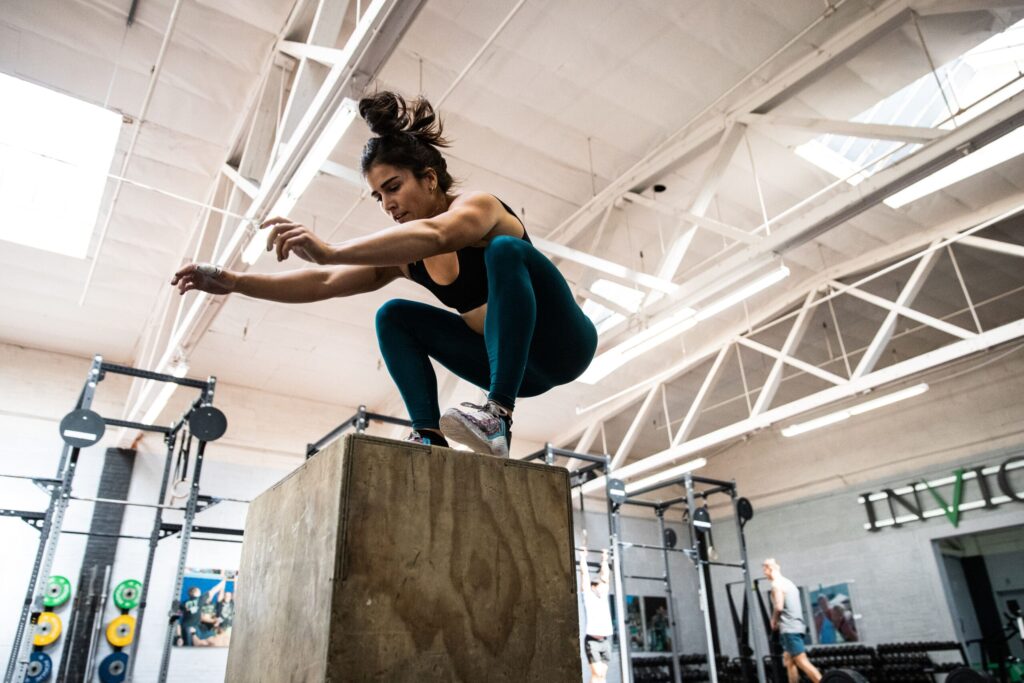
Developing visible abs requires more than aesthetic ambition—it demands measurable, functional core strength.
True core performance isn’t about how your midsection looks under the mirror lights, but how effectively your muscles stabilize, resist force, and transfer power across the body. These core strength challenges are science-backed assessments designed to quantify your progress beyond appearance.
This article will walk you through five evidence-based core challenges that target strength endurance, anti-extension capacity, rotational stability, and intermuscular coordination—all critical components for six-pack development and athletic performance.

Each challenge is supported by peer-reviewed research in biomechanics, exercise physiology, and sports science.
Understanding the Core: More Than Just the Six-Pack
The “core” encompasses more than the rectus abdominis (the visible six-pack). Anatomically, it includes the transverse abdominis, internal and external obliques, multifidus, erector spinae, diaphragm, and pelvic floor. These muscles collectively stabilize the spine and pelvis, allowing efficient force transfer during dynamic movement.
According to Kibler et al. (2006), the core acts as a kinetic link between the upper and lower body, providing a foundation for nearly all athletic and daily activities. Without sufficient core stability, performance declines and injury risk rises.
Core strength challenges help you quantify improvements in:
- Spinal stability
- Load transfer efficiency
- Endurance and anti-extension capacity
- Rotational control and proprioception
Core Strength Challenges – Why Test Core Strength?
Evidence-Based Progress Tracking
Objective assessments allow you to monitor genuine muscular adaptation. Studies show that perceived exertion often overestimates actual core strength improvement (Escamilla et al., 2010). Testing provides measurable data for programming progression.
Injury Prevention
Research by Willson et al. (2005) demonstrates that weak core muscles impair neuromuscular control of the lower extremities, increasing susceptibility to injuries such as ACL tears or lower back strain.
Performance Optimization
A strong core enhances biomechanical efficiency. According to Nesser et al. (2008), collegiate athletes with higher core endurance scores performed significantly better in sprint and jump tests, confirming the link between core capacity and athletic output.
1. The McGill Curl-Up Challenge
Core Strength Challenges – Purpose
The McGill Curl-Up, developed by Dr. Stuart McGill, isolates the rectus abdominis without imposing excessive spinal flexion. It tests anti-extension strength while maintaining lumbar neutrality—a safer and more functional alternative to traditional sit-ups.
Core Strength Challenges – Execution
- Lie supine with one knee bent and one leg straight.
- Place your hands beneath your lower back to maintain a neutral spine.
- Brace your core and raise your head and shoulders slightly off the ground without flexing your spine.
- Hold for 10 seconds, lower, and repeat.
Challenge Protocol
Perform 3 sets of 10-second holds with a 5-second rest between each repetition. Gradually increase the duration up to 30-second holds to test endurance.
Scientific Backing
McGill et al. (2009) found this method maximizes abdominal activation while minimizing spinal load, crucial for long-term spinal health and sustainable strength development.
Performance Benchmark
- Beginner: 3 sets of 10 seconds
- Intermediate: 3 sets of 20 seconds
- Advanced: 3 sets of 30 seconds with a 5-second transition hold
2. The Side Plank Endurance Test
Core Strength Challenges – Purpose
This challenge evaluates lateral core endurance and spinal stability under asymmetrical loading. It measures the strength of the obliques, quadratus lumborum, and transverse abdominis.
Core Strength Challenges – Execution
- Lie on your side with elbow under your shoulder, legs stacked.
- Lift hips until your body forms a straight line.
- Maintain a neutral neck and spine.
- Hold as long as possible without hip drop or rotation.
Core Strength Challenges – Challenge Protocol
Record the maximum duration you can maintain a proper side plank. Repeat on both sides and note any asymmetry.
Core Strength Challenges – Scientific Backing
McGill et al. (1999) introduced this test as a core endurance assessment standard. Normative data show a right-to-left endurance ratio below 0.95 indicates lateral imbalance, which correlates with back pain incidence.
Performance Benchmark
- Average Male: 85 seconds
- Average Female: 70 seconds
- Elite Standard: Over 120 seconds per side
3. The Plank Shoulder Tap Challenge
Purpose
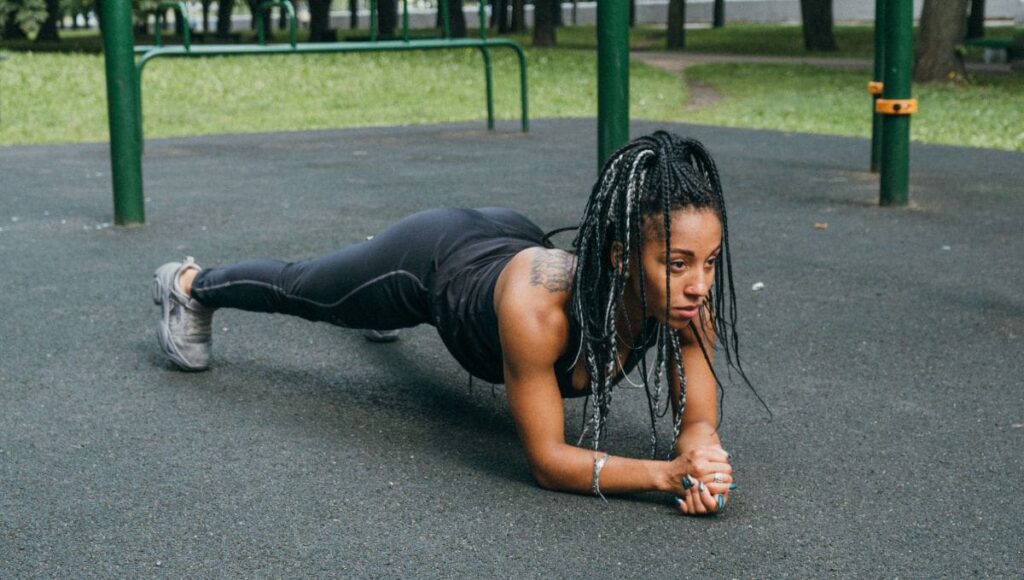
Dynamic core stability under limb movement is critical for real-world performance. The plank shoulder tap challenge tests anti-rotation and anti-extension stability while under unilateral load.
Execution
- Begin in a high plank position.
- Feet shoulder-width apart, spine neutral, core braced.
- Tap the opposite shoulder slowly while minimizing trunk rotation.
- Alternate sides continuously.
Challenge Protocol
Perform as many taps as possible in 60 seconds without visible hip rotation or shoulder sway. For an advanced version, elevate the feet on a 30-cm platform.
Scientific Backing
Behm et al. (2010) demonstrated that unstable, unilateral load conditions enhance deep core muscle activation, improving functional stability and proprioceptive response.
Performance Benchmark
- Beginner: 20 controlled taps
- Intermediate: 35 taps
- Advanced: 50+ taps with minimal sway
4. The Dead Bug Challenge
Purpose
The dead bug is a key anti-extension exercise testing the coordination between the rectus abdominis and deep stabilizers. It evaluates your ability to maintain lumbar stability under alternating limb motion.
Execution
- Lie supine with arms extended toward the ceiling and knees at 90 degrees.
- Brace your core to flatten the lower back into the floor.
- Slowly extend opposite arm and leg without arching the back.
- Return to the start and alternate sides.
Challenge Protocol
Perform 3 sets of 10 reps per side, maintaining spinal neutrality throughout. To test endurance, use a continuous 90-second set while maintaining lumbar contact.
Scientific Backing
Escamilla et al. (2010) found the dead bug effectively activates the transverse abdominis while minimizing spinal compression. It’s an essential exercise for functional motor control development.
Performance Benchmark
- Beginner: 10 reps per side
- Intermediate: 20 reps
- Advanced: 30 reps per side without lumbar lift
5. The Hanging Leg Raise Challenge
Purpose
The hanging leg raise measures dynamic core strength and control through hip flexion under gravitational resistance. It primarily targets the rectus abdominis, hip flexors, and lower stabilizers.
Execution
- Hang from a pull-up bar with arms fully extended.
- Engage your lats and brace your core.
- Lift your legs until they reach parallel or higher.
- Lower under control, avoiding swing or momentum.
Challenge Protocol
Perform as many strict, controlled reps as possible without kipping. For increased difficulty, progress to toes-to-bar or weighted versions.
Scientific Backing
Anders et al. (2008) demonstrated that hanging leg raises produce greater lower abdominal activation than standard crunches, supporting their inclusion in advanced testing protocols.
Performance Benchmark
- Beginner: 5–10 reps
- Intermediate: 15–20 reps
- Advanced: 25+ reps or weighted variation (2.5–5 kg)
How to Use These Challenges in Your Training Plan
Step 1: Establish a Baseline
Record your scores for each challenge and note imbalances between left and right sides. Use video feedback to ensure form accuracy.
Step 2: Prioritize Weak Links
If one test score falls below standard (e.g., poor side plank endurance), address that component first. Targeted strengthening improves efficiency and reduces compensatory strain.
Step 3: Retest Every 6–8 Weeks
According to ACSM guidelines (2018), progressive overload and retesting intervals of 6–8 weeks are ideal for observing neuromuscular adaptation.
Step 4: Integrate Functional Variability
Add variations like stability ball planks, cable rotations, and unilateral load carries to enhance motor control diversity.
Common Mistakes That Undermine Core Challenge Performance
Overreliance on Aesthetic Training
Traditional ab workouts emphasizing crunches often neglect deeper stabilizers. Research by Akuthota & Nadler (2004) confirms that superficial rectus training alone leads to functional imbalances.
Poor Bracing Technique
Bracing incorrectly or holding your breath excessively increases intra-abdominal pressure, potentially stressing the lumbar spine (Cholewicki et al., 1999). Use diaphragmatic breathing for safe, efficient stabilization.
Ignoring Fatigue Thresholds
Performing challenges in a fatigued state skews results. Core endurance relies heavily on sustained neural drive—train fresh to ensure validity.
The Science of Core Strength and Six Pack Development
Visible abdominal definition is influenced by both muscular hypertrophy and subcutaneous fat levels. However, strength improvements often precede visual changes.
Neural Adaptation
Initial gains stem from improved neural recruitment and coordination. According to Behm et al. (2002), neuromuscular activation efficiency can increase core output by 20–30% before any measurable hypertrophy occurs.
Muscle Fiber Composition
Core muscles predominantly consist of type I (slow-twitch) fibers, emphasizing endurance training. Endurance-based challenges like planks and side holds align with this physiology for optimal results.
Metabolic Influence
While spot reduction is a myth, improved core activation correlates with greater energy expenditure and postural efficiency (Schoenfeld, 2010).
Progress Beyond the Challenges
Once you consistently exceed advanced benchmarks, progress by incorporating:
- Loaded carries (Farmer’s walks, suitcase carries)
- Rotational power drills (medicine ball throws)
- Anti-lateral flexion exercises (single-arm planks, offset squats)
These integrate strength into real-world movement patterns, closing the gap between aesthetic and functional performance.
Safety Considerations
Always warm up with light dynamic movements before testing (e.g., bird dogs, glute bridges). Avoid maximal testing if recovering from spinal or abdominal injury. Maintain strict form—core strength testing should measure control, not exhaustion.
Conclusion
Core strength defines not only your six-pack appearance but your body’s overall capacity for athletic performance, injury resistance, and postural integrity. By using these five core strength challenges, you move beyond subjective progress and gain quantifiable, evidence-based data on your functional capacity. Retest consistently, correct imbalances, and watch your true strength—and six-pack—emerge.
Bibliography
- Akuthota, V. & Nadler, S.F., 2004. Core strengthening. Archives of Physical Medicine and Rehabilitation, 85(3 Suppl 1), pp.S86–S92.
- Anders, C. et al., 2008. Activation of trunk muscles during exercises performed on and off a Swiss ball. Journal of Electromyography and Kinesiology, 18(2), pp.209–216.
- Behm, D.G. et al., 2002. Neuromuscular adaptations in response to resistance training. Sports Medicine, 32(4), pp.211–229.
- Behm, D.G. et al., 2010. Instability resistance training across the exercise continuum. Sports Health, 2(3), pp.223–233.
- Cholewicki, J. et al., 1999. Intra-abdominal pressure and trunk muscle activity during lifting. Clinical Biomechanics, 14(10), pp.625–635.
- Escamilla, R.F. et al., 2010. Core muscle activation during Swiss ball and traditional abdominal exercises. Journal of Orthopaedic & Sports Physical Therapy, 40(5), pp.265–276.
- Kibler, W.B. et al., 2006. The role of core stability in athletic function. Sports Medicine, 36(3), pp.189–198.
- McGill, S.M. et al., 1999. Endurance times for the trunk muscles: implications for low back injury. Clinical Biomechanics, 14(10), pp.698–701.
- McGill, S.M. et al., 2009. Exercises for spine stabilization: biomechanical analysis. Journal of Strength and Conditioning Research, 23(6), pp.174–181.
- Nesser, T.W. et al., 2008. Relationship between core stability and performance in division I football players. Journal of Strength and Conditioning Research, 22(6), pp.1750–1754.
- Schoenfeld, B.J., 2010. The mechanisms of muscle hypertrophy and their application to resistance training. Journal of Strength and Conditioning Research, 24(10), pp.2857–2872.
- Willson, J.D. et al., 2005. Core stability and its relationship to lower extremity function and injury. Journal of the American Academy of Orthopaedic Surgeons, 13(5), pp.316–325.
- American College of Sports Medicine (ACSM), 2018. ACSM’s Guidelines for Exercise Testing and Prescription. 10th ed. Philadelphia: Wolters Kluwer.
Key Takeaways
| Challenge | Focus Area | Performance Benchmark | Key Benefit |
|---|---|---|---|
| McGill Curl-Up | Anti-extension strength | 3 x 30-sec holds | Safe spinal stability training |
| Side Plank | Lateral endurance | 120+ sec per side | Reduces imbalance and back pain risk |
| Plank Shoulder Tap | Anti-rotation stability | 50+ controlled taps | Enhances unilateral coordination |
| Dead Bug | Motor control & endurance | 30 reps per side | Strengthens deep stabilizers |
| Hanging Leg Raise | Dynamic control | 25+ strict reps | Maximizes lower ab activation |