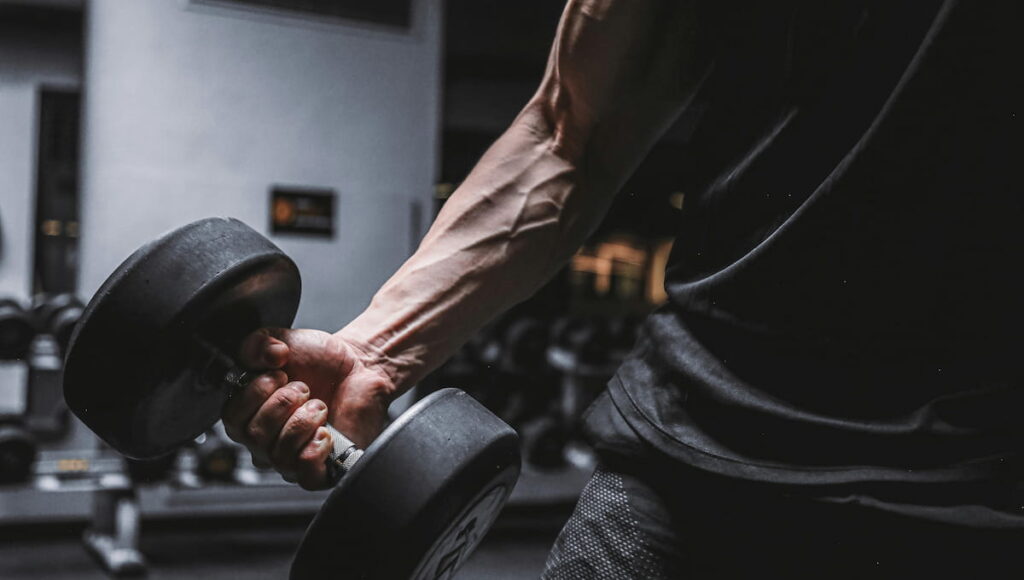
Defining your chest muscles involves a combination of targeted exercises, optimised training techniques, and proper nutrition. Scientific research supports a systematic approach to enhancing muscle definition by balancing hypertrophy, fat loss, and recovery.
This article explores five scientifically-backed strategies to help you achieve a chiselled chest more effectively.
1. Focus on Compound Movements for Maximum Engagement
Compound movements like the bench press, incline bench press, and dips are foundational for developing chest muscles. These exercises recruit multiple muscle groups, including the pectoralis major and minor, triceps, and deltoids, leading to enhanced muscle activation and growth. Research published in the Journal of Strength and Conditioning Research demonstrated that compound lifts generate significantly higher levels of muscle fibre recruitment compared to isolation exercises (Schoenfeld, 2010).

For optimal results, focus on progressive overload by gradually increasing weight, repetitions, or intensity. Incorporate both flat and incline bench presses into your routine to target the upper and lower chest effectively.
2. Utilise Progressive Overload and Volume Manipulation
Progressive overload is the cornerstone of muscle hypertrophy and definition. A study by Morton et al. (2016) in the Medicine & Science in Sports & Exercise journal concluded that training volume is a critical factor in muscle growth.
Ensure your chest workout includes a mix of heavy lifting (4-6 reps) and moderate hypertrophy-focused sets (8-12 reps). Split your training week to allow for chest-specific sessions twice per week, ensuring ample recovery between sessions. This approach maximises growth and prevents overtraining.
3. Incorporate Isolation Exercises to Enhance Definition
While compound movements build mass, isolation exercises like cable flyes, pec deck, and dumbbell pullovers refine muscle shape and definition. According to a study in the Journal of Sports Science and Medicine, incorporating isolation exercises improves neuromuscular activation in specific muscle groups (Gentil et al., 2013).
Perform these exercises at the end of your workout with a focus on controlled, slow repetitions to maintain constant tension on the chest. Aim for 3-4 sets of 12-15 reps to stimulate metabolic stress, which enhances muscle growth and definition.
4. Adopt High-Intensity Interval Training (HIIT) for Fat Loss
Chest definition is as much about reducing body fat as it is about building muscle. High-Intensity Interval Training (HIIT) is an effective method for accelerating fat loss while preserving lean muscle mass.
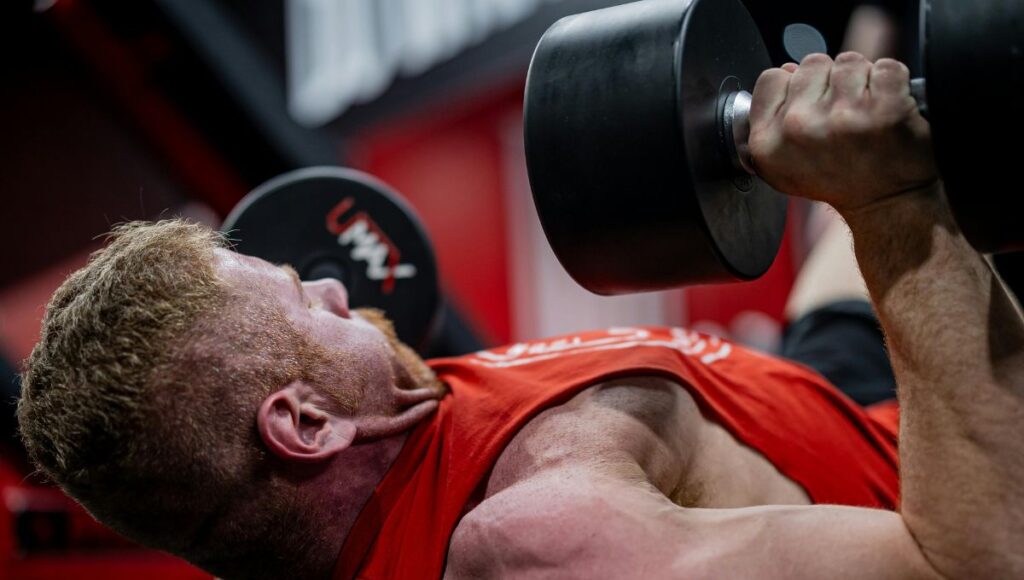
A meta-analysis by Keating et al. (2017) in Sports Medicine revealed that HIIT leads to significantly greater fat reduction compared to steady-state cardio. Incorporate HIIT sessions 2-3 times per week, utilising exercises like push-up variations, burpees, and medicine ball slams to maintain a chest focus while burning calories.
5. Optimise Your Nutrition for Muscle Definition
Nutrition plays a pivotal role in defining chest muscles. Aim for a high-protein diet to support muscle repair and growth. A study by Phillips and Van Loon (2011) in Sports Medicine recommended consuming 1.6-2.2 grams of protein per kilogram of body weight daily for optimal muscle protein synthesis.
Combine this with a moderate calorie deficit to reduce fat. Focus on whole foods, including lean meats, eggs, legumes, and low-fat dairy, while minimising processed foods and added sugars. Supplement with branched-chain amino acids (BCAAs) if needed to prevent muscle breakdown during calorie restriction.
Key Considerations
To accelerate chest muscle definition, consistency is key. Prioritise rest and recovery by incorporating at least 7-9 hours of sleep per night and managing stress, which can negatively impact hormonal balance. Incorporate mobility exercises to prevent injuries and maintain long-term progress.
| Key Takeaways | |
|---|---|
| Strategy | Details |
| Compound Movements | Perform bench press, incline press, and dips for maximum muscle activation. |
| Progressive Overload | Gradually increase weights or intensity to stimulate growth. |
| Isolation Exercises | Include cable flyes and dumbbell pullovers to refine chest definition. |
| HIIT for Fat Loss | Combine chest-focused HIIT with a calorie deficit to reduce fat. |
| Optimised Nutrition | Consume 1.6-2.2g of protein per kg of body weight daily and focus on whole foods. |
References
Gentil, P., Oliveira, E., & Araújo, D. (2013). Resistance training practices in recreationally trained individuals. Journal of Sports Science and Medicine, 12(2), 242-251.
Keating, S. E., Johnson, N. A., Mielke, G. I., & Coombes, J. S. (2017). A systematic review and meta-analysis of HIIT vs. MICT on body adiposity. Sports Medicine, 47(9), 1689-1701.
Morton, R. W., et al. (2016). A systematic review and meta-analysis of protein intake and resistance training. Medicine & Science in Sports & Exercise, 48(9), 1875-1883.
Phillips, S. M., & Van Loon, L. J. C. (2011). Dietary protein for athletes: from requirements to optimum adaptation. Sports Medicine, 41(7), 547-567.
Schoenfeld, B. J. (2010). The mechanisms of muscle hypertrophy and their application to resistance training. Journal of Strength and Conditioning Research, 24(10), 2857-2872.