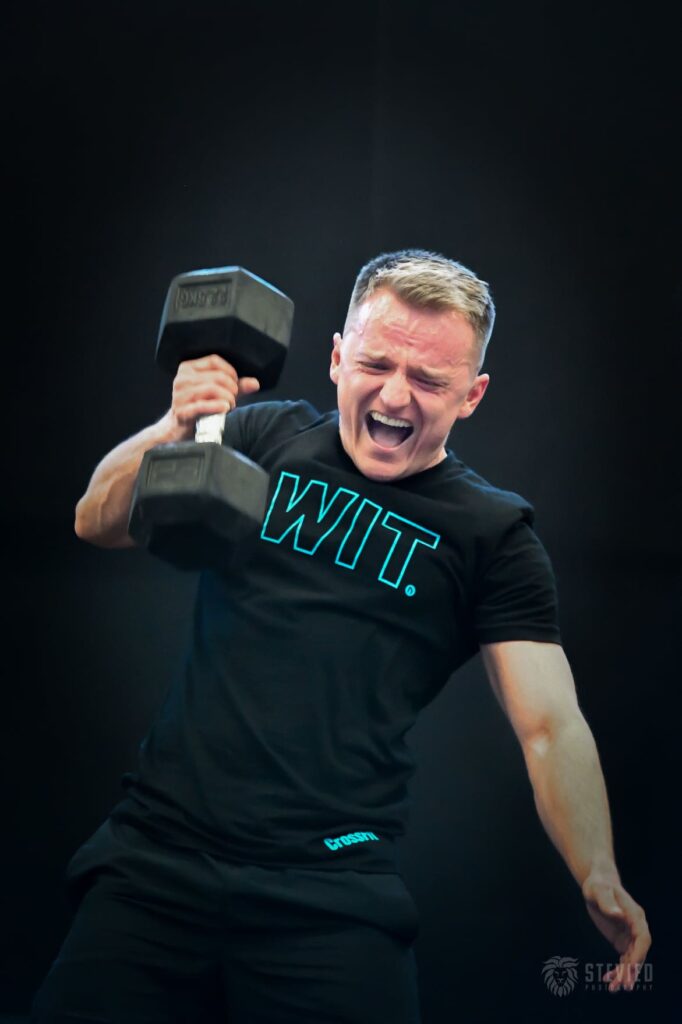
Dumbbells are a staple in any gym setting, revered for their versatility and effectiveness. However, while exercises like the dumbbell bench press and bicep curl are popular mainstays, many equally potent movements have fallen into obscurity. These forgotten dumbbell exercises not only bring variety to your routine but also stimulate muscle growth through unique angles and loading patterns often missed by conventional lifts.
[wpcode id=”229888″]In this article, we’ll delve into five overlooked dumbbell movements that deserve a spot in your training program. These exercises are backed by scientific reasoning and biomechanical advantages, helping you maximize hypertrophy, stability, and strength. If you’re serious about building muscle and busting plateaus, it’s time to revisit these powerful lifts.
The Case for Rediscovering Forgotten Dumbbell Movements
Modern training programs often overemphasize barbell and machine-based exercises, sidelining many dumbbell movements that challenge muscles in more functional and joint-friendly ways. Studies have shown that exercises incorporating unilateral loading and instability—hallmarks of dumbbell training—recruit more stabilizing musculature and promote better neuromuscular coordination compared to their barbell counterparts (Saeterbakken & Fimland, 2013). Dumbbells also allow a more natural range of motion, accommodating individual biomechanics and reducing joint stress.

Reviving lesser-known dumbbell exercises offers more than novelty; it provides a stimulus variation essential for progressive overload and continued adaptation. When intelligently programmed, these movements can reignite hypertrophic responses and add depth to your regimen.
Let’s explore five of the most effective and underutilized dumbbell moves.
1. Dumbbell Z Press
Why It Works
The dumbbell Z press involves performing an overhead press while seated on the floor with legs extended straight. This position completely removes the ability to use the lower body for momentum, forcing the shoulders, triceps, and core to work overtime. It also places a premium on thoracic mobility and upright posture.
A study by Behm & Anderson (2006) emphasized the increased core activation during seated and unstable pressing movements due to the need for spinal stabilization. The Z press embodies this by eliminating back support, thereby making it a demanding full-body lift.
Muscles Worked
- Anterior and medial deltoids
- Triceps brachii
- Upper trapezius
- Spinal erectors and rectus abdominis (as stabilizers)
How to Perform
- Sit on the floor with your legs extended in front and torso upright.
- Hold a dumbbell in each hand at shoulder height with elbows below wrists.
- Press the dumbbells overhead while maintaining an upright spine.
- Lower under control and repeat.
Avoid leaning back or bending the knees. If mobility is a limiting factor, elevate the hips slightly with a mat.

2. Dumbbell Pullover
Why It Works
Though often relegated to chest day as a finishing movement, the dumbbell pullover is a compound lift that bridges chest and back development. Its versatility allows it to target the pectoralis major or latissimus dorsi depending on arm position and execution.
EMG research by Boeckh-Behrens & Buskies (2000) showed that the pullover activates both the lats and the sternal fibers of the pec major, making it one of the few exercises with dual-utility. Moreover, it creates an intense stretch under load—an often underrated driver of muscle growth (Schoenfeld, 2010).
Muscles Worked
- Latissimus dorsi
- Pectoralis major (sternal head)
- Triceps (long head)
- Serratus anterior
How to Perform
- Lie across a bench with only the upper back supported, feet flat on the floor.
- Hold one dumbbell with both hands above the chest, arms extended.
- Slowly lower the weight behind your head until you feel a deep stretch.
- Pull it back to the starting position by engaging your lats and chest.
Control the eccentric phase to enhance muscle tension and growth stimulus.
3. Dumbbell Reverse Lunge to Curl
Why It Works
While the standard reverse lunge is a powerful unilateral lower-body movement, combining it with a curl enhances time under tension and introduces metabolic stress—both key hypertrophy mechanisms (Schoenfeld, 2016). This compound movement also trains coordination and balance, adding a neurological challenge to your workout.
This move taps into the benefits of contrast training, as combining lower and upper-body movements increases neuromuscular efficiency and conditioning (Haff & Nimphius, 2012).
Muscles Worked
- Quadriceps
- Gluteus maximus
- Hamstrings
- Biceps brachii
- Core stabilizers
How to Perform
- Hold a dumbbell in each hand with arms at your sides.
- Step back into a reverse lunge.
- As you return to standing, perform a dumbbell curl.
- Alternate legs and repeat.
Focus on clean movement mechanics; do not swing the weights during the curl phase.
4. Dumbbell Incline Front Raise
Why It Works
The dumbbell front raise is common for anterior deltoid isolation, but performing it on an incline bench changes the stimulus entirely. It eliminates momentum and ensures continuous tension through the entire range of motion.
A study by McAllister et al. (2013) indicated that incline variations of dumbbell lifts increase muscle fiber recruitment due to enhanced range and isolated contraction. This variation puts the delts under tension even at the start of the lift, where traditional front raises offer little load.
Muscles Worked
- Anterior deltoids
- Serratus anterior
- Upper pectorals (to a minor extent)
How to Perform
- Set a bench to a 45-degree incline.
- Lie prone with a dumbbell in each hand, arms hanging down.
- Raise the weights in front of you to shoulder level with palms facing down.
- Lower under control and repeat.
Use lighter weights and strict form to prevent swinging or lower back compensation.
5. Dumbbell Floor Press with Neutral Grip
Why It Works
The floor press is a lesser-used cousin of the bench press, offering a reduced range of motion that protects the shoulders while still hitting the chest and triceps effectively. The neutral grip enhances this effect by placing the shoulder joint in a more natural position, minimizing internal rotation.
Research by Lehman et al. (2005) found that using dumbbells with a neutral grip decreases anterior deltoid strain and allows for higher triceps activation. This makes the floor press a safer and more joint-friendly pressing alternative.
Muscles Worked
- Pectoralis major
- Triceps brachii
- Anterior deltoids
How to Perform
- Lie on your back with knees bent and feet flat on the floor.
- Hold dumbbells with a neutral grip (palms facing each other) at chest level.
- Press the weights straight up, then lower until your triceps touch the floor.
- Pause briefly before pressing again.
The floor limits the range of motion, emphasizing the top-end of the press and forcing strict form.
Programming Considerations for Muscle Growth
Load and Intensity
For hypertrophy, dumbbell movements should be performed with moderate to high volume—typically 3–5 sets of 8–15 reps. Use a load that brings you close to failure within the rep range, ideally within 1–3 reps in reserve (RIR).
Tempo and Time Under Tension
Slower eccentrics and controlled concentrics enhance mechanical tension. Aim for a 3:1:1 tempo (3 seconds lowering, 1 second pause, 1 second lifting) especially on movements like the pullover and Z press.
Frequency and Recovery
Dumbbell exercises can be trained 2–3 times per week per muscle group, provided recovery is managed. Their joint-friendly nature allows higher frequency than barbell lifts.
Supersets and Finishers
Movements like the reverse lunge to curl or incline front raise are ideal for supersets or metabolic finishers due to their isolation and compound nature.
Why These Exercises Are Often Forgotten
Despite their efficacy, these movements have faded from mainstream programming due to several reasons:
- Lack of visibility: Many are rarely demonstrated in fitness media or influencer content.
- Technical demand: Exercises like the Z press or incline raise require more control and awareness than simpler alternatives.
- Limited loadability: Unlike barbell lifts, some of these movements cap out at moderate weights, which may be perceived as less effective despite their hypertrophic potential.
However, with the rise of functional and minimalist training, these dumbbell movements are poised for a renaissance.
Conclusion
If your current training feels stagnant or you’re not seeing the muscle growth you expect, the answer may lie in revisiting these forgotten dumbbell movements. Each offers unique benefits—from joint-friendly mechanics and increased stability demands to novel muscle activation pathways. Grounded in biomechanics and supported by scientific research, these lifts can inject new intensity and results into your routine. Rather than chasing complexity or new equipment, sometimes the best gains come from old tools used in new ways.
References
Behm, D.G. and Anderson, K.G., 2006. The role of instability with resistance training. Journal of Strength and Conditioning Research, 20(3), pp.716-722.
Boeckh-Behrens, W. and Buskies, W., 2000. Muskeltraining. München: BLV Verlagsgesellschaft.
Haff, G.G. and Nimphius, S., 2012. Training principles for power. Strength and Conditioning Journal, 34(6), pp.2-12.
Lehman, G.J., 2005. The influence of grip width and forearm pronation/supination on upper-body muscle activity during the flat bench press. Journal of Strength and Conditioning Research, 19(3), pp.587-591.
McAllister, M.J., Hammond, K.G., Schilling, B.K., Ferreria, L.C., Reed, J.P. and Weiss, L.W., 2013. Muscle activation during various dumbbell pressing exercises. Journal of Strength and Conditioning Research, 27(6), pp.1598–1605.
Saeterbakken, A.H. and Fimland, M.S., 2013. Muscle activity of the core during bilateral, unilateral, seated and standing resistance exercise. European Journal of Applied Physiology, 113(7), pp.1671–1678.
Schoenfeld, B.J., 2010. The mechanisms of muscle hypertrophy and their application to resistance training. Journal of Strength and Conditioning Research, 24(10), pp.2857-2872.
Schoenfeld, B.J., 2016. Science and Development of Muscle Hypertrophy. Champaign, IL: Human Kinetics.