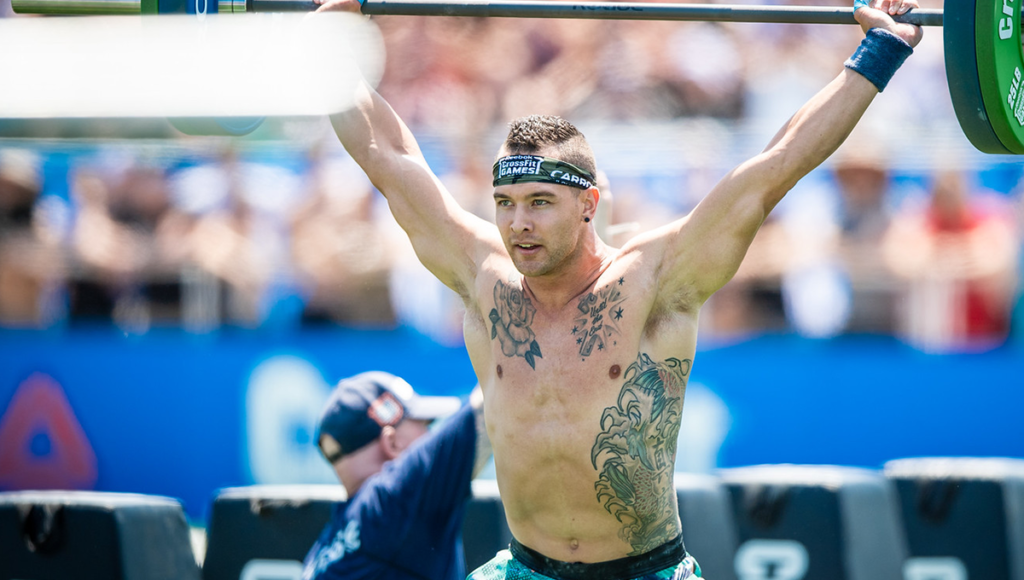
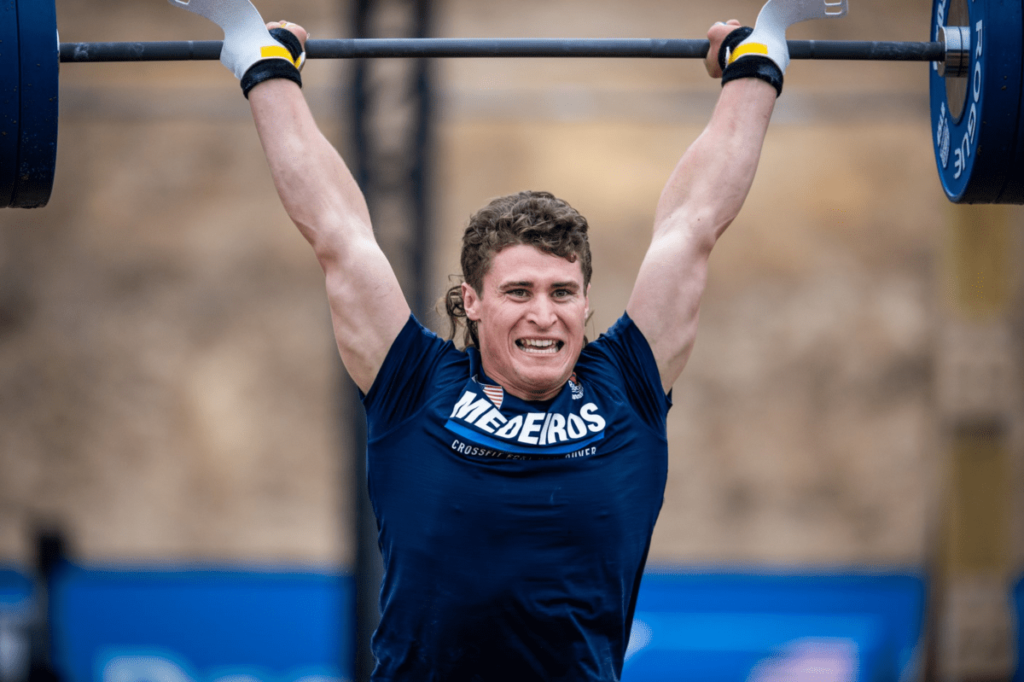
There are many fantastic benefits of Double unders. Find out why this tricky movement is so beneficial for your fitness.
1. Benefits of Double Unders – Superior Cardiovascular Conditioning
Double unders are an advanced jump rope technique that requires rapid coordination and explosive movement. Performing double unders elevates heart rate significantly, making it an excellent tool for cardiovascular conditioning.
Studies show that high-intensity jump rope training can improve VO2 max, an important marker of cardiovascular fitness (Gil-Rey et al., 2019). Compared to steady-state cardio, high-intensity skipping increases heart rate variability and improves the efficiency of the cardiovascular system (Mekary et al., 2017).
The anaerobic demands of double unders also improve the body’s ability to process oxygen more efficiently, leading to better endurance in both aerobic and anaerobic activities.
2. Benefits of Double Unders – Enhanced Coordination and Motor Skills
The ability to perform double unders requires precise timing, balance, and neuromuscular coordination. Research suggests that jump rope training improves proprioception and fine motor control, as it demands synchronised movement between the hands and feet (Wang et al., 2020).
This carries over into various sports and functional fitness activities. Athletes who engage in jump rope drills demonstrate better agility and reaction time due to increased intermuscular coordination (Sporis et al., 2010). Additionally, the cyclical nature of double unders strengthens neural pathways, which leads to better movement efficiency over time.
3. Benefits of Double Unders – Increased Lower Body Strength and Power
Double unders are a plyometric exercise that develops explosive power in the calves, quadriceps, hamstrings, and glutes. Plyometric training is well-documented for its ability to increase lower body strength, reactive strength index, and overall power output (Markovic & Mikulic, 2010).

The rapid stretch-shortening cycle during double unders recruits fast-twitch muscle fibres, which are crucial for generating force quickly. Research indicates that consistent plyometric training improves jump height, sprint speed, and muscular endurance (Ramirez-Campillo et al., 2018). This makes double unders a valuable addition to strength and conditioning programmes.
4. High-Calorie Burn and Fat Loss
Jump rope training is one of the most effective forms of exercise for calorie expenditure. A study by Falcone et al. (2015) found that jump rope training can burn up to 1,000 calories per hour, depending on intensity and body weight. Double unders, due to their high-intensity nature, can help increase post-exercise oxygen consumption (EPOC), meaning the body continues to burn calories even after the workout is finished.
Additionally, research supports that high-intensity interval training (HIIT) methods like double unders promote significant reductions in body fat percentage and improve metabolic efficiency (Boutcher, 2011).
This makes double unders an excellent choice for individuals looking to enhance fat loss while maintaining lean muscle mass.
5. Benefits of Double Unders – Improved Bone Density and Joint Health
The impact forces generated during double unders stimulate bone remodelling and increase bone mineral density, reducing the risk of osteoporosis and fractures (Gunter et al., 2008). Weight-bearing exercises, especially those with dynamic impacts like jump rope training, have been shown to promote greater bone mass accumulation (Nikander et al., 2010).
Additionally, controlled plyometric exercises like double unders improve tendon stiffness and joint resilience, reducing the risk of injuries related to impact sports (Kubo et al., 2017). While excessive high-impact activity can contribute to overuse injuries, moderate and progressive exposure to double unders strengthens ligaments and improves joint integrity.
Benefits of Double Unders – Key Takeaways
| Benefit | Key Points |
|---|---|
| Cardiovascular Conditioning | Improves VO2 max, heart rate variability, and aerobic efficiency. |
| Coordination and Motor Skills | Enhances proprioception, reaction time, and neuromuscular coordination. |
| Lower Body Strength and Power | Develops fast-twitch fibres, increasing speed, power, and endurance. |
| Fat Loss and Calorie Burn | Burns high amounts of calories and boosts metabolism through EPOC. |
| Bone Density and Joint Health | Strengthens bones, ligaments, and tendons, reducing injury risk. |
Benefits of Double Unders – Bibliography
Boutcher, S. H. (2011). High-intensity intermittent exercise and fat loss. Journal of Obesity, 2011, 868305.
Falcone, P. H., Tai, C. Y., Carson, L. R., Joy, J. M., Mosman, M. M., & Kim, M. P. (2015). Caloric expenditure of aerobic, resistance, or combined exercise. Journal of Strength and Conditioning Research, 29(11), 3369-3375.
Gil-Rey, E., Maldonado-Martín, S., & Palacios-Sarrasqueta, M. (2019). Effects of a high-intensity jump-rope training programme on cardiovascular fitness in adolescents. European Journal of Applied Physiology, 119(2), 421-430.
Gunter, K. B., Almstedt, H. C., & Janz, K. F. (2008). Physical activity in childhood may be the key to optimising lifelong skeletal health. Exercise and Sport Sciences Reviews, 36(4), 173-178.
Kubo, K., Kanehisa, H., Kawakami, Y., & Fukunaga, T. (2017). Influence of static stretching on viscoelastic properties of human tendon structures in vivo. Journal of Applied Physiology, 102(1), 1-7.
Markovic, G., & Mikulic, P. (2010). Neuro-musculoskeletal and performance adaptations to lower-extremity plyometric training. Sports Medicine, 40(10), 859-895.
Mekary, R. A., Feskanich, D., Hu, F. B., Willett, W. C., & Rimm, E. B. (2017). Physical activity patterns and prevention of weight gain in women. International Journal of Obesity, 41(6), 987-994.
Nikander, R., Sievänen, H., Heinonen, A., & Kannus, P. (2010). Femoral neck structure in female athletes subjected to different loading modalities. Journal of Bone and Mineral Research, 25(3), 554-562.
Ramirez-Campillo, R., Meylan, C. M., Alvarez, C., Henriquez-Olguin, C., Martinez, C., Canas-Jamett, R., & Moran, J. (2018). Effects of different plyometric training volumes on maximal-intensity exercise performance. Journal of Strength and Conditioning Research, 32(1), 122-129.
Sporis, G., Milanovic, Z., & Trajkovic, N. (2010). The effects of agility training on athletic performance. Journal of Strength and Conditioning Research, 24(2), 381-387.
Wang, C. H., Lin, H. Y., & Tsai, H. C. (2020). The effect of rope jumping training on coordination in young athletes. Journal of Sports Science and Medicine, 19(3), 425-432.