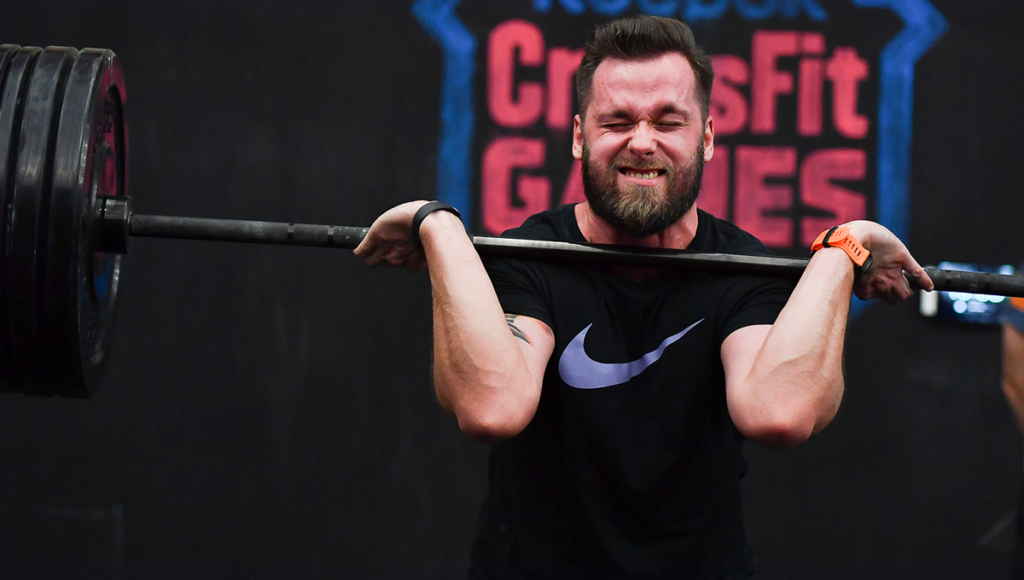
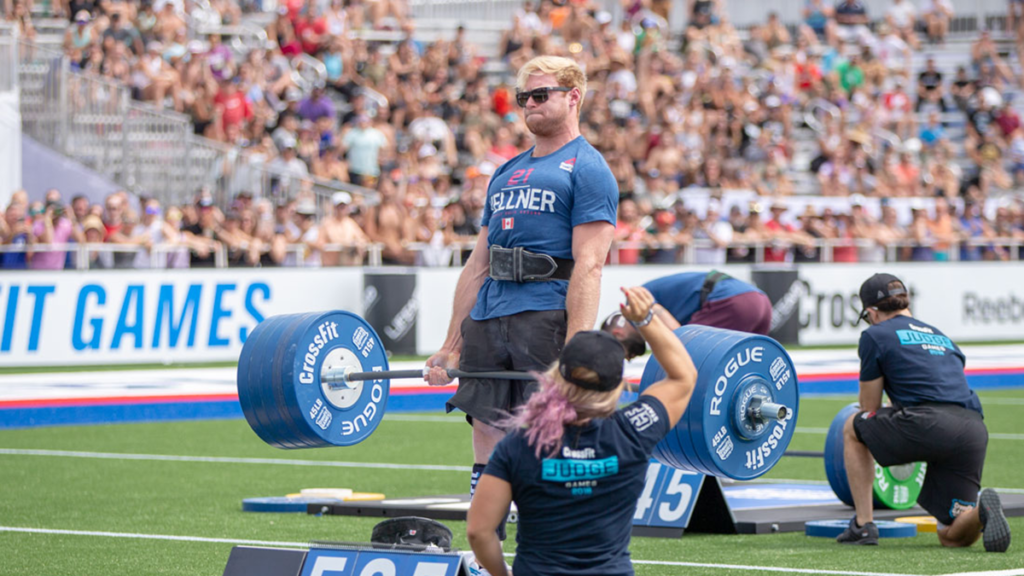
The barbell jerk is one of the most explosive and technically demanding lifts in weightlifting. Often overshadowed by the snatch and clean, the jerk deserves its own recognition as a standalone movement.
It requires a unique blend of strength, speed, coordination and precision. In this article, we break down five scientifically-supported benefits of incorporating the barbell jerk into your training regimen.
1. Enhances Maximal Power Output
The barbell jerk is a power-based movement that recruits a significant portion of the body’s musculature in a short, explosive burst. During the drive phase, force is generated predominantly by the quadriceps, gluteals and calves, while the catch and lockout demand strong engagement from the shoulders, triceps and upper back.
According to Hori et al. (2007), Olympic lifts and their derivatives produce among the highest power outputs of any resistance exercise. In particular, the jerk involves a rapid transition from a dip to a violent extension of the hips, knees and ankles, known as triple extension, which is critical for developing peak power.

Research by Lake et al. (2014) compared the power output of the jerk with other explosive exercises such as the push press and squat jump. The findings demonstrated that the jerk generated significantly greater peak power due to its ballistic nature and mechanical demands. This makes it an ideal choice for athletes in sports that require rapid force development, such as rugby, sprinting and American football. The neural adaptations from repeated jerk training also improve the rate of force development (RFD), which is a key indicator of athletic performance (Cormie et al., 2011).
2. Improves Overhead Stability and Mobility
Unlike traditional overhead presses, the barbell jerk requires dynamic stability in the overhead position. Upon completion of the drive phase, the lifter must stabilise the load overhead by quickly dropping underneath the bar and locking the arms. This position places a premium on scapular control, thoracic extension and shoulder mobility. It also demands co-contraction of stabilising muscles, including the rotator cuff and trapezius, to secure the bar in a safe and efficient overhead position.
A study by Muyor et al. (2013) highlighted the role of thoracic spine mobility in achieving safe overhead positions. Lifters with poor thoracic extension are more likely to compensate with lumbar hyperextension, which can increase the risk of lower back injury. The jerk, by reinforcing proper mechanics and requiring consistent overhead alignment, trains lifters to develop both mobility and strength in the thoracic spine and shoulders.
Moreover, the jerk’s split or squat receiving position adds another dimension by requiring balance, proprioception and core engagement. Athletes who consistently train the jerk often report improvements in shoulder health and overhead performance due to the enhanced motor control developed in the lift.
3. Builds Full-Body Coordination and Timing
The barbell jerk is not just a test of raw strength—it is a demonstration of coordinated effort. Each phase of the lift—from the dip, drive and catch—must be timed with precision to ensure successful execution. The dip must be controlled and vertical to avoid horizontal displacement of the bar. The drive requires maximal force production in a very short timeframe. The transition to the catch demands lightning-fast footwork and timing to fix the bar overhead before gravity takes control.
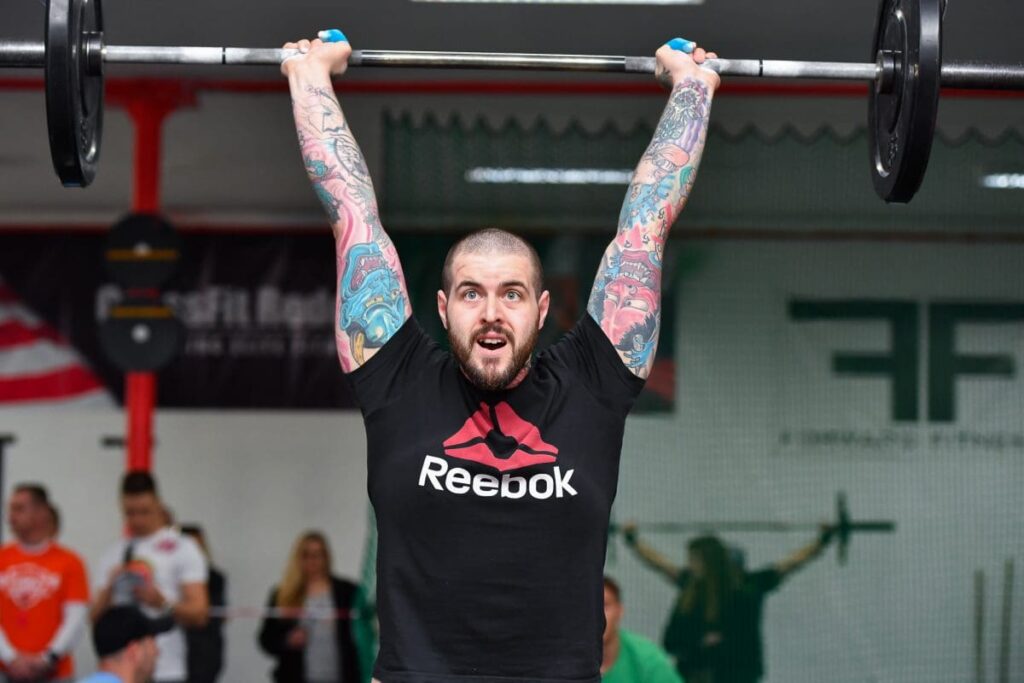
Enoka (1979) described coordination as the temporal and spatial sequencing of body segments to produce smooth and efficient movement. The barbell jerk is an excellent training tool for developing this skill, especially when performed at submaximal and maximal intensities. Practising the jerk consistently improves intermuscular coordination between the lower and upper body, leading to more effective force transfer.
Furthermore, research by Gourgoulis et al. (2000) shows that Olympic lifting movements require fine motor control and neuromuscular synchronisation, making them highly beneficial for athletic development. The high level of motor learning involved in the jerk enhances not only sport-specific skills but also general movement competency.
4. Transfers to Other Athletic Movements
The movement pattern and neuromuscular demands of the barbell jerk transfer effectively to many athletic tasks. As a vertical force movement, it reinforces the ability to produce power in an upward trajectory—an essential component in jumping, throwing and sprinting. The principle of specificity suggests that training modalities which mimic the biomechanical and neurological characteristics of sport movements are more likely to enhance performance (Behm & Sale, 1993).
Numerous studies support this carryover effect. A 2015 investigation by Suchomel et al. found that Olympic weightlifting derivatives, including the jerk, significantly improved vertical jump performance in collegiate athletes. The jerk’s emphasis on triple extension and rapid ground reaction forces is particularly relevant for sports that require explosive lower-body actions.
Additionally, the overhead receiving position develops stability in the shoulder complex under high load, which is essential for contact sports and overhead athletes such as volleyball players and swimmers. It also improves dynamic trunk control, which contributes to injury prevention and more effective energy transfer during movement.
5. Develops Mental Toughness and Technical Mastery
Executing a heavy barbell jerk under fatigue or in high-pressure situations requires significant mental fortitude. The movement’s technical complexity demands full concentration, self-awareness and confidence. Unlike grinding lifts like the squat or deadlift, the jerk must be executed quickly and decisively—there is little room for hesitation.
Psychological research into skill acquisition and motor learning highlights the importance of deliberate practice for technical mastery (Ericsson et al., 1993). The jerk, due to its steep learning curve, provides ample opportunity for deliberate technical refinement. Every rep challenges the lifter to improve bar path, timing, stability and footwork. This encourages a growth mindset and builds resilience as athletes learn to overcome failed attempts and persist through technical plateaus.

Moreover, lifters often report that success in the jerk carries over into improved confidence in other lifts and sports. The satisfaction of nailing a technically perfect jerk—especially at maximal load—can have a powerful reinforcing effect on training motivation and mental toughness.
Conclusion
The barbell jerk is an elite-level movement with far-reaching benefits for strength, power, coordination and athletic performance. Backed by scientific research, the jerk stands as more than just a component of the clean and jerk—it is a full-body movement that trains the mind and muscles to work in synchrony. Incorporating it into a training programme offers measurable benefits for athletes and general fitness enthusiasts alike.
Key Takeaways
References
Behm, D. G. and Sale, D. G. (1993) ‘Velocity specificity of resistance training’, Sports Medicine, 15(6), pp. 374–388.
Cormie, P., McGuigan, M. R. and Newton, R. U. (2011) ‘Developing maximal neuromuscular power: Part 2—Training considerations for improving maximal power production’, Sports Medicine, 41(2), pp. 125–146.
Enoka, R. M. (1979) ‘The pull in Olympic weightlifting’, Medicine and Science in Sports, 11(2), pp. 131–137.
Ericsson, K. A., Krampe, R. T. and Tesch-Römer, C. (1993) ‘The role of deliberate practice in the acquisition of expert performance’, Psychological Review, 100(3), pp. 363–406.
Gourgoulis, V., Aggeloussis, N., Mavromatis, G. and Garas, A. (2000) ‘Three-dimensional kinematic analysis of the snatch of elite Greek weightlifters’, Journal of Sports Sciences, 18(8), pp. 643–652.
Hori, N., Newton, R. U., Andrews, W. A., Kawamori, N., McGuigan, M. R. and Nosaka, K. (2007) ‘Comparison of four different methods to measure power output during the hang power clean and the weighted jump squat’, Journal of Strength and Conditioning Research, 21(2), pp. 314–320.
Lake, J. P., Mundy, P. D. and Comfort, P. (2014) ‘Power output during the upper-body push press exercise: A comparison of different loads’, Journal of Strength and Conditioning Research, 28(11), pp. 3209–3214.
Muyor, J. M., Zemková, E. and Rodríguez-Ridao, D. (2013) ‘Functionality and mobility of the thoracic spine in relation to shoulder overhead movement’, European Journal of Human Movement, 30, pp. 103–117.
Suchomel, T. J., Beckham, G. K. and Wright, G. A. (2015) ‘The impact of load on lower body performance variables during the hang power clean’, Sports Biomechanics, 14(3), pp. 303–315.