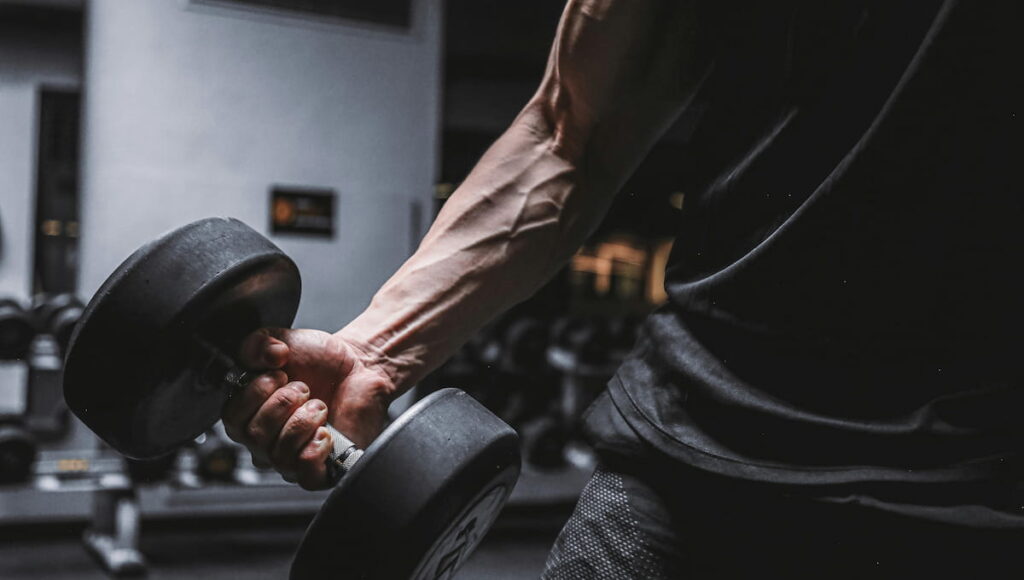
When it comes to building impressive, well-defined arms, the biceps brachii is often the primary focus. While compound movements like chin-ups and rows do activate the biceps, isolation exercises provide a more direct stimulus, helping maximize hypertrophy by eliminating assistance from secondary muscles.
This article explores five scientifically-supported biceps isolation exercises that effectively target and activate the muscle group. Each movement is analyzed based on biomechanical principles and electromyography (EMG) studies to provide you with actionable, evidence-backed strategies to enhance your arm training.
1. Concentration Curls
Biomechanical Advantage
Concentration curls isolate the biceps by minimizing shoulder movement and eliminating momentum. Performed while seated with the elbow resting against the inner thigh, this position restricts body sway and focuses tension on the elbow joint and the biceps muscle. The fixed position limits the involvement of the anterior deltoid and other stabilizers, making it an ideal isolation tool.
EMG Evidence and Muscle Activation
A landmark study by Boeckh-Behrens and Buskies (2000) found that concentration curls produced the highest biceps activation among various curling movements, as measured by EMG. The tight setup reduces neural drive to surrounding musculature and maximizes intramuscular coordination within the biceps itself.
Execution Tips for Maximum Efficiency
Ensure the upper arm remains stationary throughout the movement. Avoid rotating the torso or using momentum at the bottom of the curl. A full range of motion with controlled eccentric and concentric phases enhances time under tension, a key variable for hypertrophy.
2. Preacher Curls
Supportive Positioning for Isolation
The preacher bench supports the upper arm, preventing shoulder and torso movement. This setup makes cheating nearly impossible, forcing the biceps to perform the majority of the work. Preacher curls primarily target the short head of the biceps, particularly when using a close grip.
Research on Biceps Brachii Engagement
Oliveira et al. (2009) compared preacher curls with standing curls and found that preacher curls elicited significantly higher EMG activity in the short head of the biceps. Additionally, the study emphasized the importance of elbow positioning in maximizing isolated activation.
Common Mistakes and How to Fix Them
Many lifters allow the elbows to slide forward off the pad, reducing tension on the biceps. Another error is bouncing the weight at the bottom to initiate the lift. To correct this, maintain consistent arm placement and apply a controlled tempo to each repetition.
3. Incline Dumbbell Curls
Leveraging Shoulder Extension
Incline dumbbell curls place the shoulder into a position of extension, stretching the long head of the biceps at the start of each rep. This pre-stretch leads to greater mechanical tension and potentially enhanced muscle activation due to the length-tension relationship.
Study-Based Justification
According to a study by Pinto et al. (2012), exercises performed in a lengthened muscle position lead to greater muscle hypertrophy compared to those performed in a shortened position. Incline curls offer a unique advantage by targeting the long head more effectively, helping create the appearance of a fuller arm.
Proper Technique Considerations
Use a bench set between 45 to 60 degrees. Keep the elbows pointed downward and behind the body. Avoid letting the shoulders roll forward, which would reduce the stretch. Focus on a slow eccentric contraction to increase muscle damage and stimulate growth.
4. Spider Curls
Vertical Arm Position and Isolation
Spider curls are performed prone on an incline bench with the arms hanging vertically. This unique setup requires strict form and prevents momentum or body sway. The vertical positioning shifts the resistance curve, maximizing tension in the mid and peak contraction range of the movement.
Scientific Insights on Angle Variation
The vertical arm position resembles the final phase of a traditional curl, which studies show is critical for peak contraction. Ainsworth et al. (2011) noted that curling exercises emphasizing the mid-to-top range of motion resulted in superior muscle fiber recruitment during the contraction phase.
Performance Tips
Set the bench to around 45 degrees. Begin each rep with arms fully extended and curl directly upward, keeping elbows fixed. Use a lighter weight to avoid form breakdown. Holding the peak contraction for a second or two can increase motor unit recruitment.
5. Cable Curls with Arm Blaster
Constant Tension and Controlled Path
Using cables instead of free weights provides continuous resistance throughout the range of motion. Incorporating an arm blaster further isolates the biceps by locking the elbows into position and preventing shoulder drift. This combination maximizes tension while minimizing compensatory movement.
Comparison with Free Weights in Literature
A study by Signorile et al. (2002) compared cable curls with barbell and dumbbell variations, showing that cables maintained higher EMG readings throughout both eccentric and concentric phases. The arm blaster restricts shoulder movement, increasing biceps isolation further.
Optimal Setups and Execution Advice
Attach a straight bar or EZ-bar to a low cable pulley. Strap on the arm blaster so it rests just below the chest, ensuring the elbows stay in a fixed forward position. Keep reps slow and deliberate, especially during the lowering phase to maximize eccentric loading.
Conclusion
Isolation exercises are essential tools for targeting the biceps with precision. Each of the five movements outlined above emphasizes unique aspects of biceps anatomy and physiology, offering superior muscle activation and reduced reliance on assisting muscle groups. Integrating these exercises into your program with proper form and control can significantly enhance your arm development.
Use the scientific rationale behind each to better structure your training and prioritize efficiency in muscle targeting.