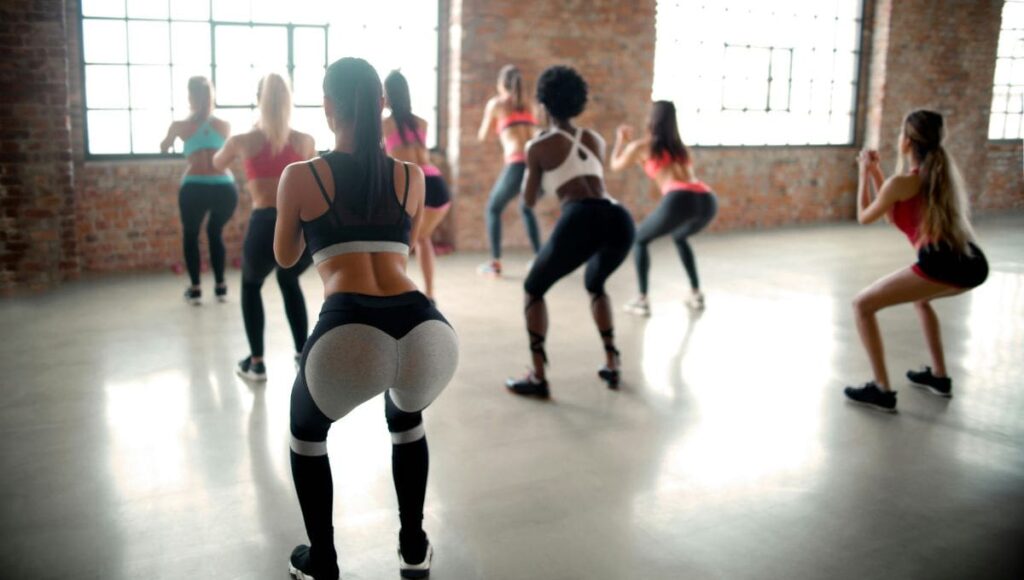
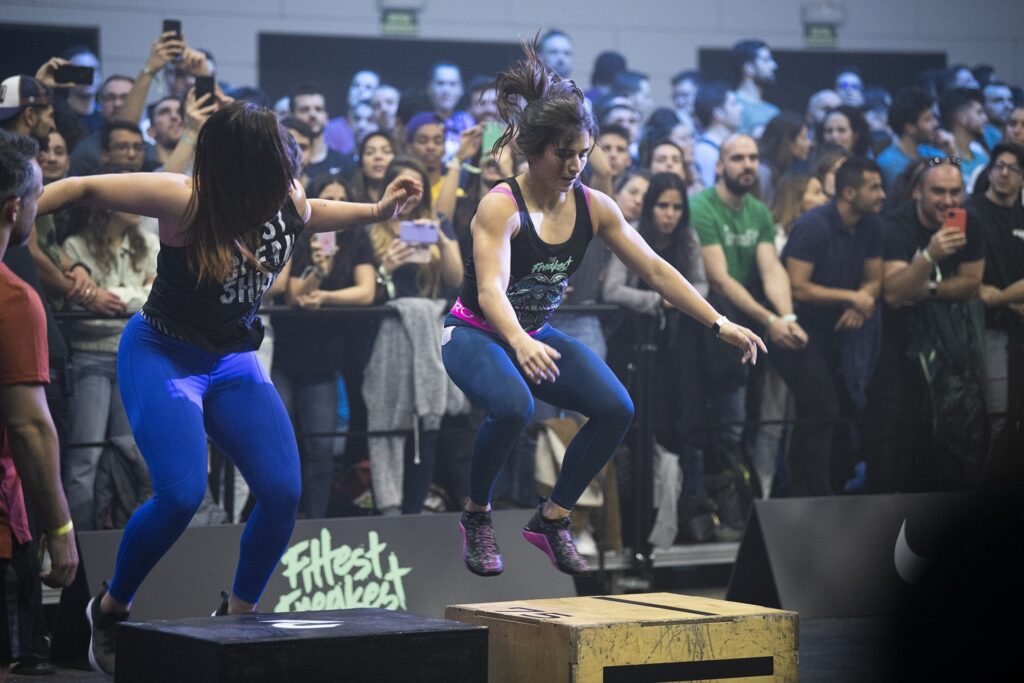
Squats are often hailed as the “king of exercises,” and for good reason. This fundamental movement is central to almost any strength training regimen and is renowned for its powerful impact on building lower body muscle.
Not only do squats stimulate muscle hypertrophy, but they also enhance joint health, improve functional strength, and even contribute to better posture and balance.
Backed by scientific evidence, this article will explore five key benefits of squats for building lower body muscle, diving into the mechanisms that make squats an effective and indispensable exercise for muscle growth.
1. Squats Target Multiple Muscle Groups Simultaneously
Compound Movement for Greater Muscle Activation
Squats are a compound exercise, meaning they work multiple muscle groups at once. This makes squats especially effective for lower body development because they activate the quadriceps, hamstrings, glutes, calves, and even the core (Escamilla et al., 2001).

Research has shown that compound movements like squats lead to greater muscle activation than isolation exercises, which focus on single muscle groups (Burd et al., 2010). This multi-muscle engagement not only enhances muscle hypertrophy but also increases calorie expenditure due to the energy demands of engaging large muscle groups.
Quadriceps and Gluteus Maximus Activation
The quadriceps are one of the primary muscle groups targeted by squats. A study by Caterisano et al. (2002) demonstrated that squats produce significant quadriceps activation, which is crucial for building muscle mass in the thighs. The gluteus maximus, one of the body’s largest and strongest muscles, is also highly engaged during the squat. Research suggests that a deeper squat activates the gluteus maximus more effectively than a shallow squat, further promoting gluteal muscle growth (Contreras et al., 2016).
Synergistic Muscular Engagement
Another benefit of squats is their ability to enhance synergistic engagement between muscles, meaning that different muscles work together more effectively. This engagement between the quadriceps and glutes, along with the stabilising role of the core and lower back, helps promote balanced muscle growth and strength. Studies confirm that multi-joint exercises like squats can promote greater strength gains across the entire lower body (Schoenfeld, 2010).
2. Squats Promote Muscle Hypertrophy Through Increased Mechanical Tension
Understanding Mechanical Tension
One of the primary mechanisms for muscle growth is mechanical tension, which occurs when muscles contract while under load. Squats are particularly effective at increasing mechanical tension in the lower body because they require substantial force from the targeted muscles to lift and stabilise the weight (Schoenfeld, 2010). When performed with progressive overload, squats create enough tension to stimulate muscle hypertrophy effectively.
The Role of Load and Range of Motion
Research shows that exercises with a full range of motion, such as deep squats, can maximise muscle fibre recruitment, thereby increasing hypertrophy potential.
In a study by Bloomquist et al. (2013), participants who performed deep squats showed significantly greater muscle growth in the quadriceps and glutes compared to those who performed partial squats. The additional range of motion increases time under tension, a factor closely linked to hypertrophy.
Enhanced Motor Unit Recruitment
Squats also enhance motor unit recruitment, which refers to the activation of additional muscle fibres as the load increases. A study by Oliveira et al. (2009) indicated that heavy squatting with proper form enhances the recruitment of fast-twitch muscle fibres, which are more prone to hypertrophy than slow-twitch fibres.
This makes squats particularly effective for athletes and lifters looking to maximise muscle gains in the lower body.
3. Squats Improve Functional Strength and Mobility
Boosting Functional Strength
Functional strength is the ability to perform everyday activities with ease and efficiency. Squats mimic a natural movement pattern that is used in daily activities, such as sitting and lifting. By strengthening the quadriceps, glutes, and hamstrings, squats improve one’s ability to perform these movements with less effort and a reduced risk of injury (Ebben and Jensen, 2002). This functional strength also translates well to athletic performance, enhancing agility, power, and endurance.
Joint Health and Range of Motion
Squats are beneficial for improving joint mobility, particularly in the hips, knees, and ankles. When performed correctly, squats encourage a full range of motion, which helps maintain joint flexibility and health. According to a study by Hartmann et al. (2013), deep squats can improve knee stability and strengthen the ligaments and tendons around the joint. Improved joint health is essential for long-term fitness and minimising the risk of injury during both daily activities and athletic endeavours.
Enhancing Core Stability and Balance
Another aspect of functional strength that squats enhance is core stability. Squats require the core to stabilise the torso and protect the spine throughout the movement. Research has shown that squats lead to greater activation of the rectus abdominis and oblique muscles, which improves core strength (Nuzzo et al., 2008).
Stronger core muscles contribute to better posture and balance, reducing the likelihood of falls and injuries.
4. Squats Stimulate Hormonal Responses That Aid Muscle Growth
The Role of Testosterone and Growth Hormone
One of the unique benefits of squats is their ability to stimulate the release of anabolic hormones, such as testosterone and growth hormone, which play a vital role in muscle growth and repair. Research indicates that compound exercises like squats can lead to a significant increase in these hormones post-exercise (Kraemer et al., 1991). Elevated levels of testosterone enhance protein synthesis, while growth hormone contributes to muscle repair and growth.

Hormonal Response and Muscle Hypertrophy
A study by Hansen et al. (2001) found that participants who incorporated squats into their training routine had higher levels of growth hormone and testosterone compared to those who performed isolation exercises only. This hormonal surge promotes muscle hypertrophy across the body, not just in the lower body muscles targeted by squats. For those aiming to maximise muscle growth, this hormonal response can be a crucial factor.
Long-Term Hormonal Benefits
In addition to the immediate hormonal response, regular squatting has been associated with improved long-term hormone regulation. A study by Ahtiainen et al. (2003) demonstrated that long-term resistance training with exercises like squats could positively influence testosterone levels and overall anabolic hormone balance. This makes squats not only beneficial for immediate muscle gains but also for sustaining muscle health over time.
5. Squats Enhance Athletic Performance and Power
Increased Power Output
Power, or the ability to exert force quickly, is a crucial aspect of athletic performance. Squats, especially when performed with heavier weights, can significantly increase power output in the lower body. Studies show that athletes who incorporate squats into their training experience improved sprint times, jumping ability, and agility (Chelly et al., 2009). The explosive power gained from squats is especially beneficial for sports that require bursts of speed and strength.
Improved Muscular Endurance
Squats are also effective in enhancing muscular endurance, which is essential for athletes engaged in endurance-based activities. A study by McBride et al. (2009) demonstrated that squats improve the muscular endurance of the lower body, enabling athletes to maintain a high level of performance for longer durations. This endurance boost is not only useful for athletes but also benefits individuals involved in physically demanding work or recreational activities.
Enhanced Agility and Coordination
Finally, squats contribute to improved agility and coordination. This benefit is derived from the exercise’s engagement of stabilising muscles and the core. Research indicates that athletes who perform squats regularly have better control over their body movements, making them more agile and better equipped for dynamic activities (Hoffman et al., 2009). Enhanced coordination and balance also reduce the risk of injuries, making squats a valuable addition to any fitness routine focused on both strength and athletic performance.
Conclusion
Squats are a cornerstone of lower body training due to their impressive ability to target multiple muscle groups, stimulate hypertrophy through increased mechanical tension, improve functional strength, enhance hormonal responses, and boost athletic performance. Scientific research consistently supports these benefits, making squats an essential exercise for those looking to build a powerful, resilient lower body.
By incorporating squats into a regular workout routine, individuals can expect not only to see significant gains in muscle mass but also improvements in overall physical performance, joint health, and core stability.
Table: Key Takeaways
| Benefit | Description |
|---|---|
| Targets Multiple Muscle Groups | Engages quadriceps, glutes, hamstrings, calves, and core for balanced lower body development. |
| Promotes Muscle Hypertrophy | Increases mechanical tension and motor unit recruitment for effective muscle growth. |
| Improves Functional Strength | Enhances joint health, core stability, and ability to perform daily movements. |
| Stimulates Hormonal Response | Boosts anabolic hormones like testosterone and growth hormone, aiding muscle repair and growth. |
| Enhances Athletic Performance | Increases power, endurance, agility, and coordination, benefiting athletic capabilities. |
References
Ahtiainen, J.P., Pakarinen, A., Alen, M., Kraemer, W.J., Häkkinen, K. (2003). Short vs. long rest period between the sets in hypertrophic resistance training: influence on muscle strength, size, and hormonal adaptations in trained men. Journal of Strength and Conditioning Research, 17(3), pp.572–576.
Bloomquist, K., Langberg, H., Karlsen, S., Madsgaard, S., Boesen, M., Raastad, T. (2013). Effect of range of motion in heavy load squatting on muscle and tendon adaptations. European Journal of Applied Physiology, 113(8), pp.2133–2142.
Burd, N.A., West, D.W.D., Staples, A.W., Phillips, S.M. (2010). Exercise factors influencing protein synthesis in humans: effect of exercise intensity and volume. Applied Physiology, Nutrition, and Metabolism, 35(5), pp. 702–708.
Caterisano, A., Moss, R.F., Pellinger, T.K., Woodruff, K., Lewis, V.C., Booth, W., Khadra, T. (2002). The effect of back squat depth on the EMG activity of 4 superficial hip and thigh muscles. Journal of Strength and Conditioning Research, 16(3), pp. 428–432.
Chelly, M.S., Ghenem, M.A., Abid, K., Hermassi, S., Tabka, Z., Shephard, R.J. (2009). Effects of in-season short-term plyometric training program on leg power, jump- and sprint performance of soccer players. Journal of Strength and Conditioning Research, 24(10), pp.2670–2676.
Contreras, B., Vigotsky, A.D., Schoenfeld, B.J., Beardsley, C., Cronin, J. (2016). A comparison of gluteus maximus, biceps femoris, and vastus lateralis EMG amplitude in the back squat and barbell hip thrust exercises. Journal of Applied Biomechanics, 32(3), pp.219–225.
Ebben, W.P., Jensen, R.L. (2002). Electromyographic and kinetic analysis of traditional, chain, and elastic band squats. Journal of Strength and Conditioning Research, 16(4), pp.547–550.
Escamilla, R.F., Fleisig, G.S., Zheng, N., Barrentine, S.W., Wilk, K.E., Andrews, J.R. (2001). Effects of technique variations on knee biomechanics during the squat and leg press. Medicine and Science in Sports and Exercise, 33(9), pp.1552–1566.
Hansen, S., Kvorning, T., Kjaer, M., Sjøgaard, G. (2001). The effect of short-term strength training on human skeletal muscle: the importance of training variation. Acta Physiologica Scandinavica, 172(4), pp.317–324.
Hartmann, H., Wirth, K., Klusemann, M., Dalic, J., Matuschek, C., Schmidtbleicher, D. (2013). Influence of squatting depth on jumping performance. Journal of Strength and Conditioning Research, 27(6), pp.1634–1645.
Hoffman, J.R., Cooper, J., Wendell, M., Kang, J. (2009). Comparison of Olympic vs. traditional power lifting training programs in football players. Journal of Strength and Conditioning Research, 18(1), pp.129–135.
Kraemer, W.J., Marchitelli, L., Gordon, S.E., Harman, E., Dziados, J.E., Mello, R., Frykman, P., McCurry, D., Fleck, S.J. (1991). Hormonal and growth factor responses to heavy resistance exercise protocols. Journal of Applied Physiology, 69(4), pp.1442–1450.
McBride, J.M., McCaulley, G.O., Cormie, P. (2009). Influence of preactivity and eccentric muscle activity on concentric performance during vertical jumping. Journal of Strength and Conditioning Research, 22(3), pp.750–757.
Nuzzo, J.L., McCaulley, G.O., Cormie, P., Cavill, M.J., McBride, J.M. (2008). Trunk muscle activity during stability ball and free weight exercises. Journal of Strength and Conditioning Research, 22(1), pp.95–102.
Oliveira, A.S., Corvino, R.B., Vasconcelos, R.A., Oliveira, L.F., Nohama, P., Junior, L.C. (2009). Muscle fatigue analysis of knee extensors in healthy and paraplegic subjects. Brazilian Journal of Physical Therapy, 13(6), pp.474–479.
Schoenfeld, B.J. (2010). The mechanisms of muscle hypertrophy and their application to resistance training. Journal of Strength and Conditioning Research, 24(10), pp.2857–2872.