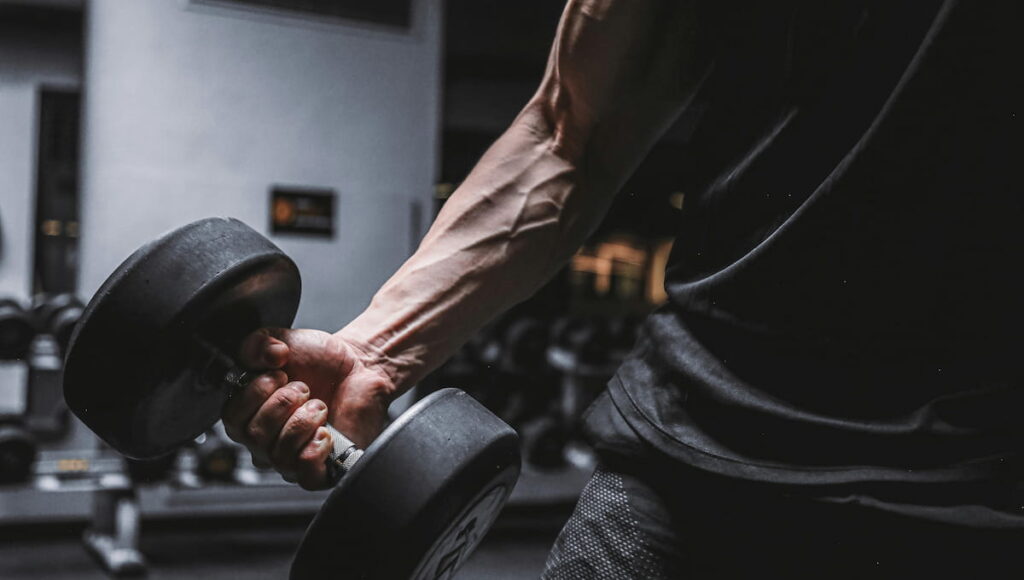
Building a truly muscular upper body often requires more than bench presses, pull-ups, and dumbbell curls. Variation is the engine of hypertrophy, and introducing niche movements can stimulate untapped muscle fibers, break plateaus, and improve joint health.
In this article, we detail 5 lesser used exercises that deserve a place in serious upper-body programs. Each is backed by science (where possible) or strong biomechanical rationale. Use these as assistance lifts, specialty work, or even primary movers in a focused training block.
Why “Lesser used” Matters for Upper-body Development
Most lifters repeatedly perform the standard six or eight upper body moves: bench press, overhead press, rows, pull-downs, dips, curls, and triceps extensions. These are effective, but overuse can lead to diminishing returns: stagnating growth, overuse injuries, and underdevelopment of stabilizer muscles.

From a physiological standpoint, muscles adapt best when you vary the mechanical tension, muscle length, and motor recruitment patterns (especially of under-stimulated fibers). The titin-based mechanosensing model suggests that variations in load and strain patterns are sensed at the molecular level, which then trigger growth signals beyond simply “lifting heavy” (Ibata & Terentjev, 2021).
Introducing less common exercises helps impose novel stress patterns, engaging fibers or stabilizers that are under-recruited in conventional lifts.
Also, smaller or “accessory” muscles (scapular stabilizers, serratus, deep rotators, finger flexors) are often undertrained in mainstream routines. Fatigue or weakness in these can become bottlenecks in pressing, pulling, and stabilization movements. Using specialized exercises can strengthen these weak links and improve performance in big lifts.
Below are five such exercises, with execution cues, rationale, and programming suggestions.
1. One-Arm Landmine Press
Description and execution
The one-arm landmine press is a unilateral (single-arm) pressing variation using a barbell anchored in a landmine setup (or wedged into a corner). You press the free end of the bar upward and slightly outward from your shoulder. This slanted trajectory places unique demands on shoulder, scapular, and core stability.
How to perform:
- Anchor one end of a barbell in a landmine base or corner.
- Stand facing the free end, grip it near the sleeve, and bring it up to your shoulder (resting on deltoid).
- Press it upward and slightly away — extending the elbow and pushing the bar upward.
- Control the descent back to shoulder position.
- Repeat, then switch sides.
You can do this standing, or half-kneeling to reduce lower body involvement and force more upper body isolation.
Muscles targeted and benefits
- Deltoids (especially anterior and medial heads)
- Triceps (via elbow extension)
- Upper chest / clavicular pectoralis (due to the outward component)
- Core / anti-rotation muscles (to resist torso twist)
- Scapular stabilizers and rotator cuff (for control)
Because the load travels on a diagonal path rather than straight overhead, it can be more joint-friendly for the shoulder (less pure vertical shear). Coaches describe it as a mix between vertical and horizontal pressing. (BarBend, “How to Do the Landmine Press”)
In practice, the one-arm landmine press is well suited for addressing pressing asymmetries, improving scapular control, and working overhead strength without stressing the classic vertical press. It also enhances core stability because your axis of rotation is challenged — the loaded side wants to pull you into rotation.
Supporting rationale
While direct EMG research is limited for this variation, landmine pressing in general is recognized for its scapular and core engagement and its ability to allow more natural shoulder mechanics (especially for lifters with mobility constraints) (Lift Vault, “The Landmine Press”). The unilateral demand forces your core to resist rotation, engaging deeper muscles often neglected.
Some coaches report that using this variation can relieve stress on the shoulder joint compared to rigid overhead presses, making it a useful auxiliary lift in hypertrophy or rehab phases.
Programming suggestions
- Use it as an assistance press after your main overhead or bench press work.
- 3–4 sets of 6–12 reps per side is reasonable starting range.
- Optionally, load lighter and perform slow eccentrics or tempo control to maximize time under tension.
- Because it’s unilateral, you can rest one side while working the other (minimizing rest in superset fashion).
- In a specialization block, you might make it a main press and cycle out vertical pressing temporarily.

2. Serratus Punch (Protraction Punch)
Description and execution
The serratus punch (or scapular protraction punch) is a subtle but powerful scapular movement where you “punch” forward (moving the scapula outward) using extension of the shoulder girdle, emphasizing the serratus anterior and ancillary stabilizers.
How to perform:
- Use a cable, resistance band, or dumbbell held at shoulder height.
- Extend your arm forward (in a horizontal or slight upward angle) without bending the elbow— the motion is driven by scapular protraction (shoulder blade pushes forward).
- Focus on pushing the scapula forward, not swinging the arm.
- Pause in full protraction, then retract scapula and bring arm back.
You can do both sides at once, or one arm at a time, and add slight rotation or elevation angles for variety.
Muscles targeted and benefits
- Serratus anterior (primary mover)
- Muscles of scapular stabilization (traps, rhomboids, pectoralis minor)
- Secondary involvement of the pectoralis minor and anterior shoulder girdle
Proper serratus functioning ensures the scapula glides forward and upward along the ribcage, which is critical for overhead movement, shoulder health, and pressing efficiency. Strengthening it helps avoid scapular winging, improves overhead stability, and reduces risk of impingement.
One study on scapular mechanics showed that performing protraction (punch) exercises activates serratus without exacerbating shoulder pain, making it safe in many populations (Decker et al., 1999; Castelein et al., 2016). The serratus punch is often prescribed in rehabilitation protocols of rotator cuff or impingement patients because of its capacity to strengthen scapular protractors. (American Journal of Sports Medicine / Manual Therapy)
Supporting rationale
Because the serratus anterior is often under-trained in typical upper body routines, this exercise fills a gap. A strong serratus ensures better scapular motion when pressing or pulling, which can help lifters push heavier without scapular collapse or compensatory patterns. Over time, better scapular stability may promote more consistent muscle activation in pressing and pulling movements.
Programming suggestions
- Use it as a warm-up activation or prehab exercise before pressing or pulling.
- 2–3 sets of 12–20 controlled repetitions (with slow tempo) works well.
- You can vary the angle (horizontal, upward, downward) to target different fibers.
- It is lightweight in terms of systemic fatigue; you can program it frequently (even daily in rehab phases).
3. Inverted (Australian) Row with Elevated Feet & Variable Grip
Description and execution
While inverted rows (body rows) are not rare in the training world, the less common variant with elevated feet and variable grip (neutral, supinated, wide) makes it more challenging and shifts the loading dynamics. The elevated feet move your body into a more horizontal plane, increasing the relative difficulty and muscle recruitment.
How to perform:
- Set a bar (in a rack or Smith) or TRX/swivel strap at waist height.
- Lie beneath it, grasp the bar with a chosen grip (neutral/supinated/pronated).
- Elevate your feet on a bench or platform (15–24 in elevated).
- Keep body straight (plank alignment) and pull your chest to the bar, retracting scapula and flexing elbows.
- Control the descent.
By altering grip angle (e.g. transitioning mid set), you further stress different musculature (biceps, upper lats, teres, mid traps).
Muscles targeted and benefits
- Latissimus dorsi
- Rhomboids, traps, middle/low traps
- Biceps, brachialis (secondary)
- Erector spinae and posterior chain (to maintain rigid body)
- Core and glutes for body alignment
One study comparing inverted rows to bent-over rowing found that the inverted row activated the latissimus and upper back with less stress on the lumbar spine, making it an effective back builder for those with lower back sensitivity.
Due to its nature as a bodyweight row, you can maintain high volume without excessive joint stress, and the elevated feet position increases difficulty meaningfully.
Supporting rationale
Using an inverted row with feet elevated and grip variation shifts the loading vector and muscle recruitment pattern, hitting fibers differently than conventional rows or pull-downs. Because fewer trainees use aggressive variations of rowing movements, this can stimulate growth in less-trained regions. It also helps improve scapular retraction control under load, which benefits pressing stability.
Because it is less loading on the spine, you can use it as a workhorse pulling movement even during fatiguing phases.
Programming suggestions
- Use it as a main horizontal pull in your session on pulling days (especially when your lower back is taxed).
- 3–4 sets of 8–15 reps, with grip variation across sets (e.g. pronated one set, neutral next).
- You may add extra resistance (e.g. weighted vest or chains) once bodyweight becomes easy.
- Alternate with standard bent-over or chest-supported rows to mix stress patterns across weeks.

4. Plate Pinch / Finger Grip Holds
Description and execution
The plate pinch is a grip and forearm isolation holds exercise: pinch one or more smooth weight plates between thumb and fingers (without handles) and hold. You can also combine with short walks (pinch carry) or timed static holds.
How to perform:
- Select two flat plates (e.g. 10 lb each), smooth surfaces outward.
- Pinch them between thumb (one side) and fingers (other side) — no wraparound grips.
- Lift them off a bench or floor, hold for a set duration.
- Switch hands.
- Optionally, walk for distance (pinch carry variation).
The challenge arises from the fact your grip is forced to pinch, maximizing finger flexor involvement.
Muscles targeted and benefits
- Forearm flexors (flexor digitorum profundus, flexor digitorum superficialis)
- Brachioradialis, extensor carpi radialis/ulnaris (for stability)
- Intrinsic hand muscles (for gripping)
- Secondary stabilization in the wrist, finger extensors
This exercise doesn’t directly build large chest or back muscles, but it strengthens the grip and forearm complex, which often limits performance in heavy pulling or holding-based exercises (deadlifts, heavy rows, thick bar pulls). Stronger grip allows you to exert more force before grip failure is reached.
The plate pinch has become a staple in serious grip training routines. StrengthLog notes that the plate pinch specifically trains the muscles enabling pinching grip and that the plate surface type affects the loads you can handle.
Jeff Nippard’s forearm hypertrophy programming includes plate pinch holds as a foundational grip exercise to build forearm strength that transfers to larger lifts.
Supporting rationale
Grip strength is often a limiting factor in heavy pulling. If your forearms fatigue early in rows, your back stimulus is curtailed. By isolating grip demand with an exercise like plate pinch, you improve the strength floor for your pulling lifts.
Additionally, forearms are composed of many small muscles and tendons; they respond well to high tension and long-duration stimuli (i.e. isometric holds).
Moreover, the plate pinch is rarely performed in most upper body routines, providing untapped stimulus.
Programming suggestions
- Integrate plate pinch holds at the end of pulling or arm days, or during rest intervals.
- Start with 10–20 second max holds per hand, 2–4 sets.
- Progress either by increasing hold time or plate weight.
- In pinch carry variation, walk 20–40 feet per hold.
- Because grip training is less systemically fatiguing, you can perform it frequently (e.g. 2–3 times per week).
5. Decline Dumbbell Squeeze Press / Compression Press
Description and execution
The decline dumbbell squeeze press, sometimes called compression press or “Svend press” variant, involves pressing two dumbbells (or plates) together (thumb pressing inward) throughout a press motion, typically on a slight decline bench. The act of squeezing the dumbbells together adds an isometric adduction (inner-pec) component while pressing.
How to perform:
- Set a bench to a moderate decline (e.g. 10–20°).
- Lie back and hold a dumbbell in each hand, shoulders neutral.
- Bring dumbbells together (touching) and press them upward while constantly squeezing them together.
- Maintain inward force (adducting) while extending elbows to full lockout.
- Lower under control while maintaining squeeze tension.
You can also do the variant with plates (Svend press) or combos (press + adduction).
Muscles targeted and benefits
- Pectoralis major (especially sternal head)
- Inner pec fibers (via squeezing force)
- Triceps (as usual in pressing)
- Anterior deltoids, stabilizers
This variation increases intramuscular tension via compression, recruiting additional motor units in pec fibers that might not be fully activated in pure pressing. The continuous adduction demand (squeeze) adds a constant tension stimulus across the chest pattern.
One article on BOXROX mentions that the Svend press and other external compression exercises increase intramuscular tension and lead to greater activation of type II fibers, which are important for hypertrophy (Calatayud et al., 2015, as referenced on BOXROX). That is the same principle behind compression press techniques.
Supporting rationale
Because many pressing movements emphasize only extension and vertical force, the addition of a horizontal “pinch” or compression force recruits motor units that might otherwise remain dormant. Over time, that can lead to a fuller chest development (especially inner pec) and improved pressing stability as adductors assist overall force output.
In the context of KEYWORD training, this variation is rarely used, meaning it introduces new stimulus with minimal carryover interference on major lifts.
Programming suggestions
- Use it as a finisher after regular pressing work.
- 2–3 sets of 8–15 reps, with moderate weight (not maximal presses).
- Use slow tempo and maintain a continuous squeeze — don’t let the dumbbells drift apart.
- You can vary decline angle or use plates instead of dumbbells for variation.
Integration into a program
Balancing volume and interference
Because these are accessory or intermediate exercises, they should not overwhelm your main lifts. The goal is to supplement the major movements, not replace them. A general approach:
- Prioritize your primary compound presses and pulls early (bench, overhead, rows, pulls).
- Insert one of these lesser used movements as the “top set” or assistance move.
- 8–12 total sets (or 6–8 in specialized blocks) across all accessory work is reasonable.
- Rotate which of these five you use across training cycles (e.g. 4-6 week blocks).
- Monitor recovery — grip and forearm work tends to recover quickly, but scapular or pressing variations may accumulate fatigue.
Sample upper body session (push / pull split)
Push day
- Bench press 4×5–8
- Overhead press 3×6–10
- One-arm landmine press 3×8 per side
- Decline squeeze press 2×10
- Serratus punch 2×15
Pull day
- Pull up or lat pull 4×6–10
- Bent-over row or chest-supported row 3×8–12
- Elevated inverted row variable grip 3×10
- Plate pinch holds 3×max hold
Adjust order depending on fatigue. On lighter or deload weeks, reduce sets or omit one of the accessory lifts.
Safety, technique, and progression considerations
- Always warm up joints and scapular systems before performing these variations.
- Use moderate weight initially; technique and form integrity are more important than load in these less familiar movements.
- For unilateral presses and squeezes, start with the weaker side to prevent dominance carryover.
- Grip exercises (plate pinch) require sufficient rest between sets to ensure maximal tension per hold.
- Progress either by increasing load, time under tension, or volume (sets) gradually (5–10% per week at most).
- Watch for overuse in elbow, wrist, or shoulder joints; deload or substitute lighter variations (e.g. band versions) as needed.
Expected adaptation timeline
When using these movements alongside a well-designed hypertrophy program, you may expect:
- Improved scapular stability within 3–4 weeks
- Noticeable grip strength gains within 2–3 weeks
- Better pressing control and improved strength in weak ranges within 4–8 weeks
- Potential improvements in muscle fullness (especially inner pec and forearm definition) over 8–12 weeks
Because these movements stimulate undertrained pathways, you may see disproportionate returns early on; however, always maintain the foundation of progressive overload and recovery.
Monitoring, variation, and progression
- Track performance metrics (reps, hold times, symmetry) for each variation.
- Rotate grips, bench angles, or stances to avoid accommodation.
- Cycle a “specialization block” every few months focusing on one or two of these (e.g. 4 weeks of landmine press emphasis).
- Use periodization: heavier phases, moderate phases, and lighter technique/mastery phases.
- Adjust accessory volume when you elevate main lift volume or during fatigue weeks.
Summary
Integrating lesser used exercises like the one-arm landmine press, serratus punch, elevated inverted row, plate pinch holds, and decline squeeze press can meaningfully expand the stimulus for a jacked upper body. These movements recruit stabilizers, accessory muscles, and underutilized motor units, helping you break plateaus and reinforce joint health.
Use them intelligently — not excessively — and build them around your core lifts to retain strength and recovery. Over time, the accumulation of niche stimulus can elevate your upper body development beyond what conventional programming alone allows.
| Exercise | Primary Target / Purpose | Suggested Sets × Reps / Hold | Key Benefit / Unique Stimulus | Integration Tip |
|---|---|---|---|---|
| One-Arm Landmine Press | Shoulders, core, pressing asymmetries | 3×6–12 per side | Diagonal pressing, anti-rotation demand | Use after main overhead work |
| Serratus Punch | Serratus anterior, scapular protraction | 2–3×12–20 | Strengthens scapular stabilization and shoulder health | Do as warm-up or activation |
| Elevated Inverted Row (varied grip) | Back, scapular retraction | 3×8–15 | Horizontal pulling with low spinal stress | Alternate grips across sets |
| Plate Pinch / Grip Holds | Forearms, grip | 2–4×10–30s holds | Isolates pinching grip strength | Add during pull/arm days |
| Decline Dumbbell Squeeze Press | Chest (inner fibers, compression) | 2–3×8–15 | Combined pressing + adduction tension | Use as a finisher after chest pressing |
Incorporating these into your programming enhances your muscular balance, stability, and overall upper body potential — all while avoiding the stagnation that comes with relying solely on standard lifts.