


The peg board is one of the most deceptively simple yet brutally effective tools in functional fitness. It’s a staple in CrossFit gyms, climbing centers, and elite athletic facilities.
Despite its minimalist design—a vertical board with evenly spaced holes and two wooden pegs—the peg board challenges almost every major muscle group, your coordination, and your mental endurance.
This article explores five scientifically grounded reasons why you should incorporate the peg board into your training routine. We’ll break down the biomechanics, the physiological benefits, and the performance carryover, all supported by peer-reviewed research.

By the end, you’ll understand why the peg board deserves a place in your weekly workout program.
1. Superior Upper Body Strength Development

Targeted Muscular Engagement
The peg board primarily challenges the muscles of the upper body—especially the lats, biceps, forearms, shoulders, and scapular stabilizers. The act of pulling your body upward while simultaneously stabilizing and transitioning each peg demands high levels of isometric and concentric strength.
Electromyography (EMG) analyses show that vertical pulling movements produce maximal activation in the latissimus dorsi and biceps brachii compared to other pulling exercises like seated rows or pulldowns (Signorile et al., 2002). The peg board amplifies this by forcing unilateral engagement—each arm must alternately pull and stabilize the full body load.
Grip and Forearm Conditioning
Every ascent on the peg board is a grip endurance test. Maintaining a secure hold on the narrow wooden pegs recruits the finger flexors, wrist stabilizers, and intrinsic hand muscles far beyond typical barbell or dumbbell work. Research indicates that grip strength is strongly correlated with overall upper-body performance and even long-term health outcomes (Bohannon, 2019).
Peg board training increases both maximal grip strength and endurance grip capacity. The continuous gripping and repositioning challenge not only the flexor digitorum profundus but also improve tendon integrity and neuromuscular coordination in the forearms.
Real-World Functional Strength
Unlike many machine-based movements, the peg board integrates multiple planes of motion and requires body control against gravity. This is particularly beneficial for athletes and CrossFit competitors who rely on pulling mechanics for movements like rope climbs, muscle-ups, and pull-ups.
The dynamic, bodyweight-based resistance also promotes intermuscular coordination—the ability of muscles to work together efficiently. According to Behm and Sale (1993), such multi-joint movements enhance both motor learning and strength transfer to other athletic activities.
2. Enhanced Core Stability and Control
The Peg Board as a Core Challenge
While the peg board is often perceived as an upper-body tool, it’s equally a test of core stability. Maintaining body tension and alignment while climbing prevents excessive swinging, which could lead to loss of balance or inefficient movement patterns.
A 2014 study on climbing performance (Vigouroux et al., 2014) found that abdominal and spinal stabilizers are highly active during ascent, especially under dynamic movement patterns. The peg board replicates this by requiring constant engagement of the rectus abdominis, obliques, and erector spinae to keep the torso rigid.

Anti-Rotation and Anti-Extension Demands
Each time you move one peg, your body resists rotational torque. This anti-rotation demand recruits deep core muscles such as the transverse abdominis and multifidus—essential for spinal health and athletic posture (McGill, 2010). Furthermore, holding the hollow-body position necessary to climb effectively makes the peg board a real-world test of anti-extension strength, a key factor in preventing lower back injuries.
Carryover to Other Movements
Strong, stable core control translates to improved efficiency in almost every CrossFit and gymnastics movement—pull-ups, toes-to-bar, muscle-ups, and even Olympic lifts. By teaching you to move your limbs while maintaining trunk stiffness, the peg board reinforces the kinetic linkage required for power transfer across the body (Kibler et al., 2006).
3. Boosted Neuromuscular Coordination and Motor Control
A High-Skill Movement Pattern
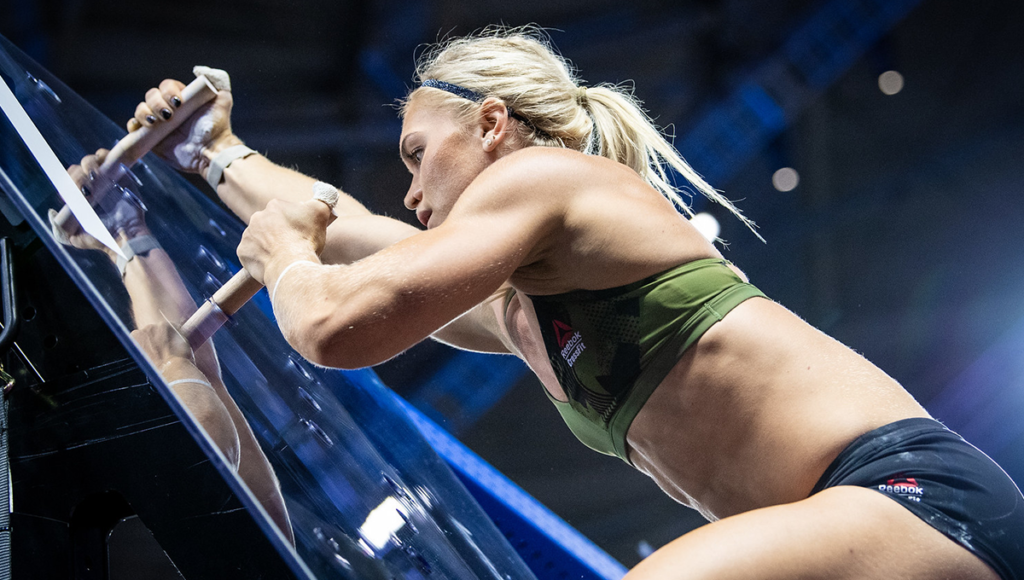
The peg board is not just about brute strength—it’s about precision. Each movement must be carefully coordinated to maintain balance, timing, and tension. The requirement to plan the next peg placement enhances motor control, forcing your nervous system to refine movement sequencing.
According to Schmidt and Lee (2011), complex motor skills that require proprioceptive feedback and coordination improve neuromotor efficiency, leading to faster reaction times and improved muscular synchronization.
Development of Proprioception
Proprioception—the sense of body position in space—is critical for athletic performance and injury prevention. Because the peg board lacks external stability, your body must constantly adjust to maintain equilibrium. These micro-adjustments train your proprioceptive sensors in muscles and joints, particularly in the shoulders and elbows (Han et al., 2015).
Bilateral and Unilateral Coordination
Every ascent demands independent yet synchronized arm movements, making the peg board an exceptional unilateral coordination tool. Research shows that unilateral upper-body training enhances bilateral strength through cross-education effects, improving neural drive even to the contralateral limb (Carroll et al., 2006). In practical terms, even working one arm harder improves coordination and strength in the other.
4. Exceptional Grip Endurance and Injury Resilience
The Physiology of Grip Fatigue
Grip fatigue often limits pulling performance before larger muscle groups fail. The peg board uniquely addresses this limitation by imposing sustained, repetitive gripping under bodyweight load. As you climb, your flexor muscles experience occlusive stress—reduced blood flow from continuous contraction. Over time, this stimulates vascular and metabolic adaptations that delay fatigue onset (Hunter, 2014).
Tendon and Joint Adaptations
Peg board training also improves tendon stiffness and load tolerance, particularly in the elbow and wrist joints. Tendon stiffness is a key predictor of power transmission and injury resilience (Kubo et al., 2001). Regular climbing-type exercises, like those performed on a peg board, promote collagen synthesis and tendon remodeling (Magnusson et al., 2008).
Reduced Risk of Overuse Injuries
By strengthening the smaller stabilizers of the shoulder—especially the rotator cuff and scapular retractors—the peg board helps balance shoulder mechanics. Studies have shown that weak stabilizing muscles are a major factor in shoulder impingement and overuse injuries (Ludewig and Reynolds, 2009). The peg board reinforces these muscles dynamically, creating a more resilient joint structure.
5. Mental Toughness and Cognitive Resilience
Psychological Demands of the Peg Board
The peg board isn’t just physically challenging—it’s mentally demanding. Few exercises expose weaknesses in endurance, focus, and pain tolerance as quickly. Climbing it requires deliberate pacing, self-regulation, and resilience under fatigue.
Research on self-efficacy in sports shows that tasks requiring sustained concentration and repeated effort—like peg board climbs—enhance both mental endurance and perceived competence (Bandura, 1997). This psychological resilience directly impacts athletic performance across disciplines.
Cognitive Load and Focused Attention
Maintaining consistent performance on the peg board involves complex decision-making: where to place the next peg, how to distribute weight, when to rest, and how to conserve energy. This dynamic problem-solving trains focused attention and cognitive flexibility (Diamond, 2013). Over time, such tasks improve executive function—skills that help athletes maintain composure under pressure.
Flow and Confidence Building
Finally, the peg board’s steep learning curve fosters a sense of progression. Completing a climb for the first time can generate what psychologists call a “flow state”—a feeling of deep focus and satisfaction that reinforces intrinsic motivation (Csikszentmihalyi, 1990). For many athletes, this mental payoff becomes as valuable as the physical gains.
How to Integrate Peg Board Training Into Your Routine
Frequency and Volume
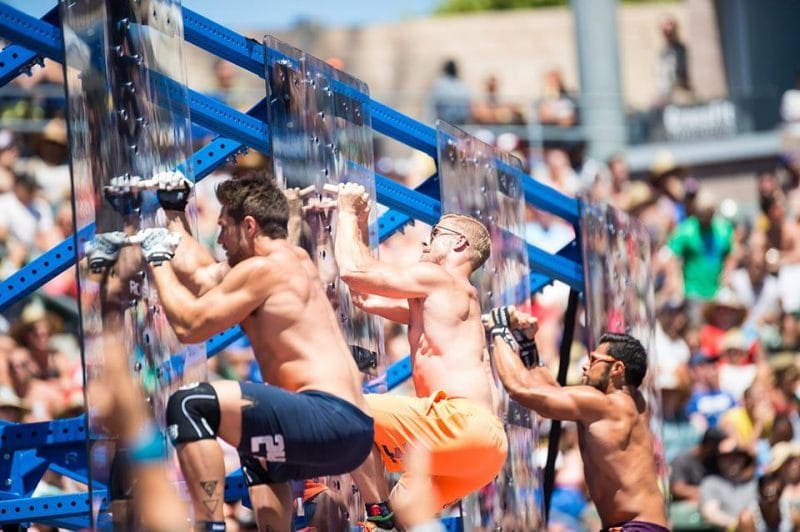
For beginners, one to two peg board sessions per week is sufficient. Focus on quality over volume, emphasizing controlled, full-range movements. As your endurance and coordination improve, you can incorporate peg board climbs as part of conditioning circuits or skill work.
Progressions and Alternatives
If you can’t yet complete a full climb, there are effective regressions:
- Partial climbs: Move halfway up, then descend under control.
- Static holds: Maintain isometric tension on the pegs for time.
- Band assistance: Use resistance bands for partial support.
- Horizontal peg traverses: Perform lateral movements across the board.
These progressions build foundational strength and grip endurance safely while reducing injury risk.
Pairing With Other Training Modalities
Peg board work pairs well with complementary pulling exercises—such as rope climbs, towel pull-ups, or ring rows—to build comprehensive pulling strength. Integrating lower-body and core-focused sessions on alternate days ensures balanced development and adequate recovery.
Conclusion
The peg board is one of the most effective yet underused tools for building real-world athleticism. It strengthens the upper body, reinforces core stability, enhances coordination, builds grip endurance, and fosters mental toughness—all supported by robust scientific evidence.
Training with a peg board forces you out of your comfort zone and into a zone of total-body control, strength, and focus. Whether you’re a CrossFit athlete, climber, or simply someone who values functional fitness, mastering the peg board will elevate your physical and mental performance to new heights.
Bibliography
- Bandura, A. (1997). Self-efficacy: The exercise of control. New York: W.H. Freeman.
- Behm, D. G., & Sale, D. G. (1993). Intended rather than actual movement velocity determines velocity-specific training response. Journal of Applied Physiology, 74(1), 359–368.
- Bohannon, R. W. (2019). Grip strength: an indispensable biomarker for older adults. Clinical Interventions in Aging, 14, 1681–1691.
- Carroll, T. J., Herbert, R. D., Munn, J., Lee, M., & Gandevia, S. C. (2006). Contralateral effects of unilateral strength training: evidence and possible mechanisms. Journal of Applied Physiology, 101(5), 1514–1522.
About the Author

Robbie Wild Hudson is the Editor-in-Chief of BOXROX. He grew up in the lake district of Northern England, on a steady diet of weightlifting, trail running and wild swimming. Him and his two brothers hold 4x open water swimming world records, including a 142km swim of the River Eden and a couple of whirlpool crossings inside the Arctic Circle.
He currently trains at Falcon 1 CrossFit and the Roger Gracie Academy in Bratislava.


