Building a stronger, more defined upper body isn’t only about how hard you train — it’s equally about how well you recover. Scientific research consistently shows that muscle recovery is the essential phase where strength and hypertrophy actually occur.
Without proper recovery, progress slows, performance suffers, and the risk of injury increases.
This article outlines five evidence-based recovery strategies proven to accelerate upper body muscle growth by optimizing physiological repair, hormonal balance, and neuromuscular adaptation. Each tip is backed by peer-reviewed research and provides practical, science-driven guidance for athletes, CrossFitters, and strength enthusiasts.
1. Prioritize Optimal Protein Intake for Muscle Repair
Upper Body Muscle Growth – Why Protein Matters
Muscle hypertrophy — the enlargement of muscle fibers — occurs when muscle protein synthesis (MPS) exceeds muscle protein breakdown (MPB). Intense upper body training, such as bench presses, pull-ups, or push presses, damages muscle fibers, triggering a repair response that requires amino acids. Protein supplies those amino acids, making it indispensable for recovery and growth.

A landmark study by Phillips et al. (2016) demonstrated that protein ingestion after resistance exercise increases MPS by over 50% compared to baseline, directly contributing to muscle hypertrophy. Failing to meet post-training protein requirements can significantly blunt recovery and reduce training efficiency.
How Much Protein You Need
The International Society of Sports Nutrition (ISSN) recommends 1.6–2.2 g of protein per kilogram of body weight daily for individuals aiming to maximize muscle growth (Jäger et al., 2017). For athletes engaged in upper body strength programs, spreading this intake across 3–5 meals per day enhances muscle protein synthesis throughout the day.
A dose of 20–40 g of high-quality protein (such as whey, casein, or soy isolate) within 30–60 minutes after training is optimal. Leucine, an essential branched-chain amino acid, plays a critical role in activating the mTOR pathway — the molecular “switch” for muscle building. Foods rich in leucine (e.g., whey, eggs, lean meats) are especially beneficial.
Upper Body Muscle Growth – Practical Tip
- Consume 25–30 g of complete protein after upper body workouts.
- Incorporate protein in every meal (chicken, tofu, eggs, Greek yogurt, or legumes).
- Before bed, a slow-digesting protein like casein can maintain MPS overnight.
2. Optimize Sleep for Hormonal Recovery and Muscle Growth
The Role of Sleep in Recovery
Sleep is the most powerful natural recovery tool available. It regulates hormones that directly impact upper body muscle growth, including testosterone, growth hormone (GH), and cortisol.
During deep sleep (slow-wave stages), GH secretion peaks, stimulating tissue repair, protein synthesis, and fat metabolism (Van Cauter et al., 2000). Conversely, sleep deprivation reduces GH and testosterone levels while elevating cortisol — a catabolic hormone that breaks down muscle tissue.
In a controlled trial, Dattilo et al. (2011) found that sleep restriction leads to decreased anabolic hormone production and impaired muscle recovery, even when caloric intake is maintained. Chronic sleep deficits blunt hypertrophy despite adequate nutrition and training.
How Much Sleep Is Enough?
Athletes should aim for 7–9 hours of quality sleep per night, with consistent sleep and wake times. Sleep quality — not just quantity — matters. Fragmented or restless sleep diminishes recovery efficiency.
Upper Body Muscle Growth – Strategies to Improve Sleep

- Maintain a dark, cool sleeping environment (16–19°C).
- Avoid screens and blue light 60 minutes before bed.
- Establish a pre-sleep routine with relaxation techniques (stretching, deep breathing, or reading).
- Avoid caffeine within 8 hours of bedtime.
Upper Body Muscle Growth – Practical Tip
For athletes training early or late, short 20–30 minute naps can improve neuromuscular recovery and cognitive focus, helping sustain performance across sessions.
3. Manage Inflammation with Active Recovery and Nutrition
Understanding Inflammation
Post-exercise inflammation is a double-edged sword. Acute inflammation is necessary to trigger adaptation, but chronic or excessive inflammation can slow recovery and reduce muscle gains. The goal is to modulate, not eliminate, inflammation.
Exercise-induced muscle damage (EIMD) leads to localized inflammation, increased oxidative stress, and delayed onset muscle soreness (DOMS). According to Peake et al. (2017), this response initiates satellite cell activation — essential for muscle repair and hypertrophy — but excessive inflammation can prolong soreness and impair force production.
Active Recovery
Active recovery — low-intensity activity following intense training — enhances circulation, promotes nutrient delivery, and accelerates lactate clearance. Studies by Ahmaidi et al. (1996) and Dupont et al. (2004) show that active recovery increases blood flow and decreases lactate accumulation, leading to faster performance restoration.
Examples:
- 15–20 minutes of cycling, brisk walking, or light swimming the day after upper body training.
- Gentle mobility or resistance band work targeting the shoulders, chest, and back.
Anti-Inflammatory Nutrition
A diet rich in omega-3 fatty acids, polyphenols, and antioxidants reduces chronic inflammation and supports cellular recovery.
Key nutrients include:
- Omega-3s (EPA/DHA): Found in fatty fish and flaxseeds, they enhance MPS and reduce muscle soreness (Smith et al., 2011).
- Curcumin and Polyphenols: Turmeric, tart cherries, and blueberries have shown to reduce markers of muscle damage (Trombold et al., 2010).
- Vitamin D: Supports immune and muscle function; deficiency can impair recovery (Owens et al., 2018).
Upper Body Muscle Growth – Practical Tip
- Add salmon or chia seeds 3–4 times per week.
- Consider curcumin or omega-3 supplements if diet alone is insufficient.
- Include dark-colored fruits and vegetables daily to combat oxidative stress.
4. Incorporate Periodized Rest and Deload Weeks

Why Strategic Rest Boosts Upper Body Muscle Growth
Many athletes underestimate the power of periodized rest — structured recovery integrated into long-term training cycles. Over time, continuous heavy lifting without adequate rest leads to accumulated fatigue, elevated cortisol, and decreased neuromuscular efficiency.
Research by Fry et al. (1998) demonstrated that chronic overreaching without rest decreases strength and muscle cross-sectional area. Conversely, strategic deloading allows the nervous system and muscle fibers to supercompensate, resulting in greater long-term gains.
How to Implement Deloading
A deload week typically reduces training volume (sets/reps) or intensity (load) by 30–50% every 4–6 weeks. This approach restores glycogen levels, reduces systemic stress, and primes the body for the next progressive overload phase.
For upper body hypertrophy, consider:
- Reducing volume in pressing and pulling movements.
- Incorporating lighter accessory work (cable crossovers, face pulls).
- Maintaining movement patterns but lowering resistance.
Active Recovery During Deloads
Instead of full rest, maintain movement quality and mobility:
- Include yoga, stretching, or low-load resistance exercises.
- Focus on technique refinement and prehab (scapular stability, rotator cuff strength).
Practical Tip
Track performance markers such as bar velocity, mood, and recovery perception. A consistent decline signals the need for a deload week.
5. Utilize Cold, Heat, and Compression Therapies Strategically
The Science Behind Recovery Modalities
Modern recovery science offers tools that complement traditional rest and nutrition. Among these, cryotherapy (cold exposure), heat therapy, and compression garments are widely studied for their effects on muscle repair and soreness reduction.
Cold Therapy
Cold water immersion (CWI) or localized ice therapy reduces inflammation and muscle soreness by constricting blood vessels and limiting secondary tissue damage. A meta-analysis by Leeder et al. (2012) found that CWI significantly reduces perceived soreness within 24–96 hours post-exercise.
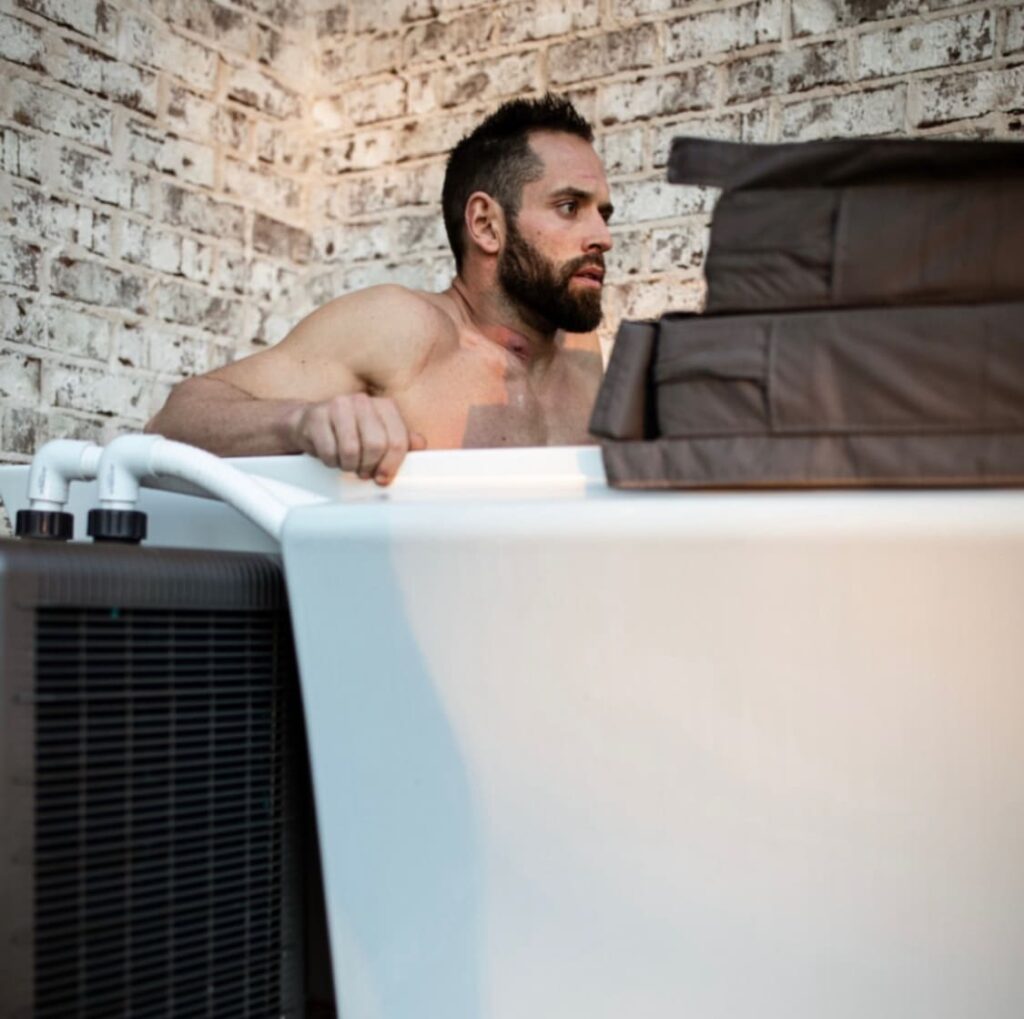
However, excessive or chronic cold exposure can blunt anabolic signaling (mTOR activation) and potentially impair long-term muscle growth (Roberts et al., 2015). Therefore, CWI should be used acutely — after competitions or high-volume sessions — rather than after every training session.
Heat Therapy
Heat therapy increases muscle temperature, improving blood flow, oxygen delivery, and tissue elasticity. Hot baths, saunas, or localized heating pads enhance recovery by accelerating nutrient delivery and metabolic clearance.
Research by Kami et al. (2018) indicates that post-exercise heat application enhances MPS and satellite cell proliferation, supporting muscle hypertrophy.
Compression Garments
Compression wear improves venous return, reduces muscle oscillation, and enhances proprioception. Studies show that compression garments can modestly reduce DOMS and improve recovery markers, although results vary (Hill et al., 2014).
Practical Tip
- Use cold therapy after intense or competitive upper body sessions.
- Apply heat 12–24 hours post-training to enhance blood flow.
- Combine compression garments with mobility routines for added benefit.
Integrating the 5 Recovery Tips into Your Training
Each of the five tips — nutrition, sleep, inflammation management, rest periodization, and recovery modalities — work synergistically. Optimizing one factor improves the others, creating a feedback loop that accelerates upper body muscle growth.
A sample weekly recovery integration plan might look like this:
- Day 1: Upper push (chest/triceps) + post-training protein + contrast shower
- Day 2: Active recovery (light cardio) + omega-3-rich meals
- Day 3: Upper pull (back/biceps) + quality sleep focus
- Day 4: Deload or mobility training
- Day 5: Upper body hypertrophy accessory work + sauna or heat therapy
By applying these evidence-based recovery principles, you maximize the time between sessions — the period when your muscles truly grow.
Conclusion
Recovery isn’t passive; it’s a strategic and scientifically grounded process that determines how effectively you adapt to training stimuli. Proper protein intake, high-quality sleep, controlled inflammation, structured rest, and smart use of recovery modalities form the foundation for consistent, long-term upper body muscle growth.
Prioritize recovery with the same intensity you apply to training, and you’ll see measurable improvements not just in strength and muscle size, but in performance longevity and overall health.
Key Takeaways
| Tip | Mechanism | Key Action | Evidence Level |
|---|---|---|---|
| 1. Protein Intake | Stimulates muscle protein synthesis | 25–40 g high-quality protein post-workout | Strong |
| 2. Sleep Optimization | Regulates anabolic hormones | 7–9 hours nightly, consistent sleep schedule | Strong |
| 3. Inflammation Management | Balances recovery and adaptation | Use omega-3s, curcumin, and active recovery | Moderate–Strong |
| 4. Periodized Rest | Prevents overtraining, promotes supercompensation | Deload every 4–6 weeks | Strong |
| 5. Recovery Modalities | Reduces soreness, enhances circulation | Use cold/heat strategically | Moderate |
References
- Ahmaidi, S., Granier, P., Taoutaou, Z., Mercier, J., Dubouchaud, H. and Prefaut, C. (1996) ‘Effects of active recovery on plasma lactate and anaerobic power following repeated intensive exercise’, European Journal of Applied Physiology, 74(5), pp. 540–545.
- Dattilo, M., Antunes, H.K.M., Medeiros, A., Monico-Neto, M., Souza, H.S. and de Mello, M.T. (2011) ‘Sleep and muscle recovery: Endocrinological and molecular basis for a new and promising hypothesis’, Medical Hypotheses, 77(2), pp. 220–222.
- Dupont, G., Moalla, W., Guinhouya, C., Ahmaidi, S. and Berthoin, S. (2004) ‘Passive versus active recovery during high-intensity intermittent exercises’, Medicine & Science in Sports & Exercise, 36(2), pp. 302–308.
- Fry, A.C., Kraemer, W.J. and Ramsey, L.T. (1998) ‘Pitfalls of overtraining: Implications for athletic performance’, Sports Medicine, 26(1), pp. 1–16.
- Hill, J., Howatson, G., van Someren, K.A., Leeder, J. and Pedlar, C. (2014) ‘Compression garments and recovery from exercise-induced muscle damage: A meta-analysis’, British Journal of Sports Medicine, 48(18), pp. 1340–1346.
- Jäger, R., Kerksick, C.M., Campbell, B.I., Cribb, P.J., Wells, S.D., Skwiat, T.M. et al. (2017) ‘International Society of Sports Nutrition Position Stand: Protein and exercise’, Journal of the International Society of Sports Nutrition, 14(20).
- Kami, K., Senba, E., and Uehara, K. (2018) ‘Heat stress promotes skeletal muscle regeneration after injury by increasing satellite cell proliferation’, American Journal of Physiology – Cell Physiology, 315(5), pp. C776–C785.
- Leeder, J., Gissane, C., van Someren, K.A., Gregson, W. and Howatson, G. (2012) ‘Cold water immersion and recovery from strenuous exercise: A meta-analysis’, British Journal of Sports Medicine, 46(4), pp. 233–240.
- Owens, D.J., Allison, R. and Close, G.L. (2018) ‘Vitamin D and the athlete: Current perspectives and new challenges’, Sports Medicine, 48(S1), pp. 3–16.
- Peake, J.M., Neubauer, O., Della Gatta, P.A. and Nosaka, K. (2017) ‘Muscle damage and inflammation during recovery from exercise’, Journal of Applied Physiology, 122(3), pp. 559–570.
- Phillips, S.M., Tang, J.E. and Moore, D.R. (2016) ‘The role of milk- and soy-based protein in support of muscle protein synthesis’, Applied Physiology, Nutrition, and Metabolism, 41(5), pp. 395–401.
- Roberts, L.A., Raastad, T., Markworth, J.F., Figueiredo, V.C., Egner, I.M., Shield, A. et al. (2015) ‘Post-exercise cold water immersion attenuates acute anabolic signalling and long-term adaptations in muscle to strength training’, Journal of Physiology, 593(18), pp. 4285–4301.
- Smith, G.I., Atherton, P., Reeds, D.N., Mohammed, B.S., Rankin, D. and Mittendorfer, B. (2011) ‘Dietary omega-3 fatty acid supplementation increases the rate of muscle protein synthesis in older adults: A randomized controlled trial’, American Journal of Clinical Nutrition, 93(2), pp. 402–412.
- Trombold, J.R., Reinfeld, A.S., Casler, J.R. and Coyle, E.F. (2010) ‘The effect of pomegranate juice supplementation on strength and soreness after eccentric exercise’, Journal of Strength and Conditioning Research, 24(7), pp. 1938–1945.
- Van Cauter, E., Leproult, R. and Plat, L. (2000) ‘Age-related changes in slow wave sleep and REM sleep and relationship with growth hormone and cortisol levels in healthy men’, JAMA, 284(7), pp. 861–868.