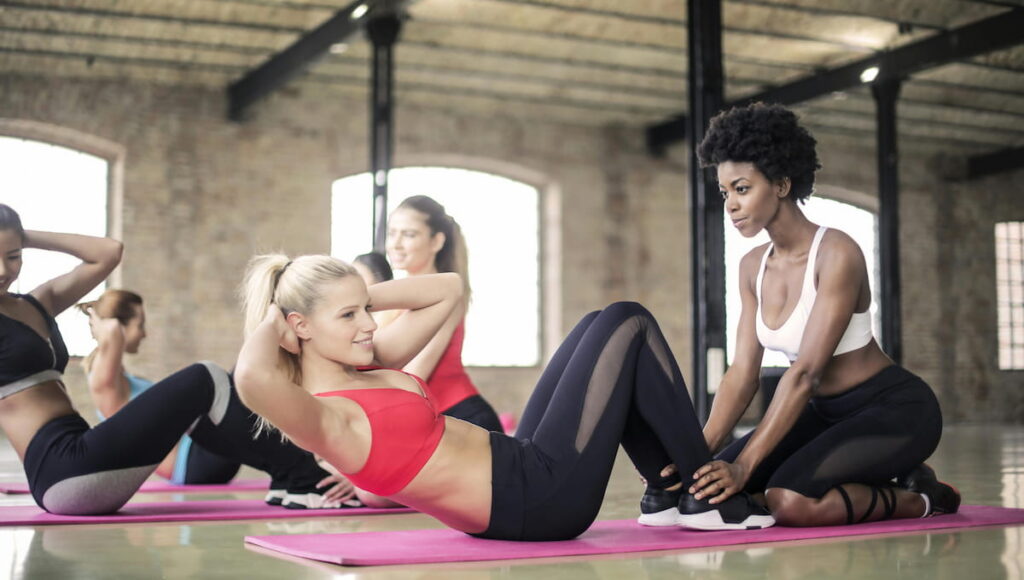
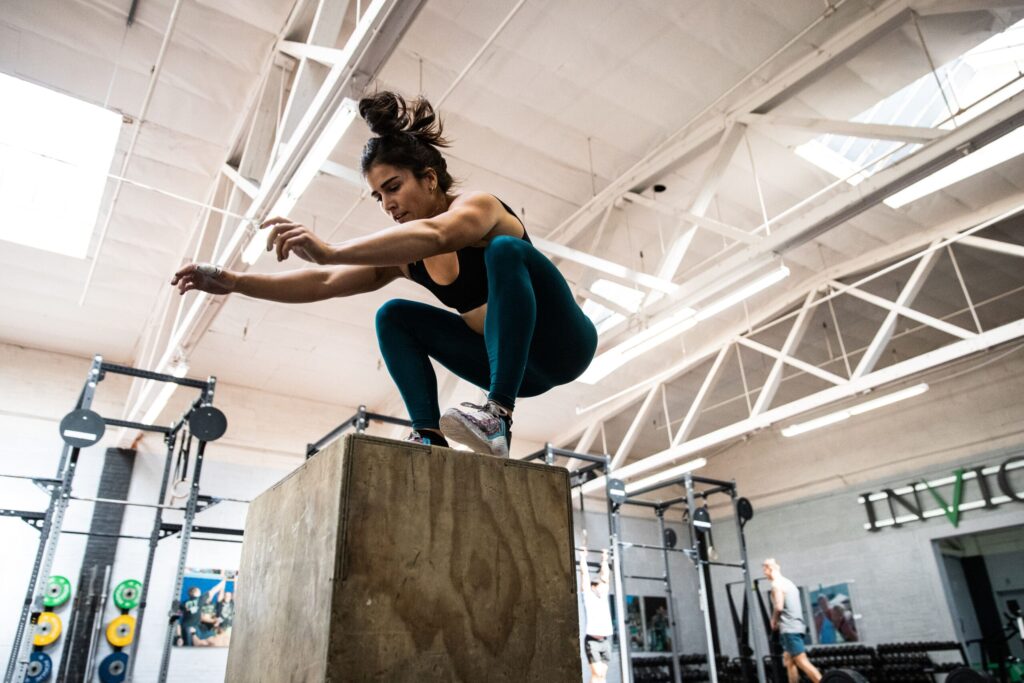
A strong core isn’t just about aesthetics. It’s about performance, stability, and longevity in training. The obliques—those powerful muscles running along the sides of your abdomen—are essential for rotational power, spinal protection, and balanced movement. Whether you’re an athlete or a recreational lifter, rotational core exercises are key for building a complete, functional midsection.
This article dives deep into five scientifically supported rotational core movements that target your obliques and abdominal wall. We’ll also explore the underlying physiology, biomechanics, and research behind why these exercises work—and how to maximize their results safely and effectively.
Understanding Rotational Core Function

The Obliques: Anatomy and Function
Your obliques consist of two layers: the external and internal obliques. The external obliques run diagonally downward from the ribs to the pelvis, while the internal obliques run in the opposite direction beneath them. Together, these muscles perform trunk rotation, lateral flexion, and play a stabilizing role in maintaining posture and protecting the spine.
The obliques are critical for movements such as swinging a bat, throwing a punch, or even maintaining posture under heavy loads. Research shows that rotational strength correlates strongly with athletic performance metrics, including bat speed, punching power, and sprint mechanics (Saeterbakken et al., 2019).
Why Rotational Training Matters
Most gym-goers emphasize crunches or planks, but rotational strength is equally essential. A balanced core training program must include anti-extension, anti-lateral flexion, and rotational patterns. Neglecting rotational strength can create imbalances between your anterior and lateral core muscles, leading to decreased stability and higher injury risk (Behm et al., 2010).
In sports science, the ability to generate and resist rotation is known as “transverse plane power.” Training this function enhances movement efficiency and injury resilience across multiple sports and activities.
Exercise 1: Cable Woodchopper
Execution
- Attach a handle to a high pulley cable station.
- Stand sideways to the machine with feet shoulder-width apart.
- Grasp the handle with both hands and pull diagonally downward across your body, rotating your torso.
- Control the movement back to the start.
Muscles Targeted
- External obliques
- Internal obliques
- Rectus abdominis
- Hip rotators and stabilizers
Science Behind It
The cable woodchopper is a closed-chain rotational exercise that emphasizes concentric and eccentric control. EMG (electromyography) studies show high activation levels in the external obliques and transverse abdominis during this exercise (Escamilla et al., 2016). The diagonal movement path recruits both trunk flexion and rotation, closely mimicking real-world athletic motions like swinging or throwing.
Coaching Tips
- Maintain a neutral spine; rotate through the thoracic spine, not the lower back.
- Use moderate resistance to maintain control throughout the range.
- Perform 3–4 sets of 10–12 reps per side.
Exercise 2: Landmine Rotation
Execution
- Secure one end of a barbell into a landmine base or corner.
- Stand holding the free end with both hands at chest level.
- Pivot your feet and rotate your torso to one side, then the other, in a smooth arc.
- Keep your arms extended but not locked.
Muscles Targeted
- Internal and external obliques
- Rectus abdominis
- Erector spinae
- Shoulders and hips (secondary stabilizers)
Science Behind It
The landmine rotation integrates the kinetic chain—linking lower-body drive with upper-body control. A 2017 study found that exercises involving the rotational kinetic chain improve trunk stiffness and power transfer more effectively than isolated core movements (Abdelraouf & Abdel-aziem, 2017). This makes the landmine rotation ideal for athletes and power-focused trainees.
Coaching Tips
- Keep hips and shoulders moving together to prevent lumbar strain.
- Pivot on the balls of your feet to engage hip rotation.
- Perform 3 sets of 8–10 reps per side using controlled speed.
Exercise 3: Medicine Ball Rotational Throw
Execution
- Stand perpendicular to a wall about one meter away.
- Hold a medicine ball at hip height.
- Rotate your torso away, then explosively twist toward the wall, releasing the ball.
- Catch or retrieve and repeat.
Muscles Targeted
- Obliques
- Rectus abdominis
- Serratus anterior
- Hips and shoulders
Science Behind It
Medicine ball throws train rotational power—a blend of speed and force production. Research indicates that plyometric rotational training significantly improves trunk rotational velocity and total-body coordination (Szymanski et al., 2007). This exercise develops the ability to generate power through the transverse plane, crucial for athletes in baseball, golf, and combat sports.
Coaching Tips
- Focus on explosiveness, not just strength.
- Ensure proper deceleration mechanics to protect the spine.
- Perform 4–6 sets of 5–8 throws per side.
Exercise 4: Hanging Oblique Knee Raise with Twist

Execution
- Hang from a pull-up bar with an overhand grip.
- Brace your core and lift your knees toward one side of your torso.
- Lower under control and repeat to the opposite side.
Muscles Targeted
- Lower abdominals
- External and internal obliques
- Hip flexors
Science Behind It
This exercise combines flexion and rotation, heavily engaging the lower obliques and rectus abdominis. Studies using EMG analysis have shown that hanging leg raises elicit greater lower abdominal activation compared to floor-based exercises (Lehman et al., 2001). Adding rotation enhances activation of the internal obliques and deep stabilizers.
Coaching Tips
- Avoid swinging; control both upward and downward motion.
- Keep shoulder blades active for stability.
- Perform 3–4 sets of 10–12 reps per side.
Exercise 5: Pallof Press with Rotation
Execution
- Attach a handle to a cable at chest height.
- Stand perpendicular to the machine, holding the handle close to your chest.
- Press the handle forward while resisting the rotational pull.
- After a full extension, rotate the torso slowly toward the cable, then back to center.
Muscles Targeted
- Transverse abdominis
- Internal and external obliques
- Rectus abdominis
- Gluteus medius (stabilizer)
Science Behind It
The Pallof press is traditionally an anti-rotation exercise, but adding controlled rotation increases dynamic trunk control. According to studies on trunk stability and anti-rotation movements, this form of isometric resistance training enhances neuromuscular coordination and spinal stiffness (Saeterbakken & Fimland, 2013).
The addition of controlled rotation challenges both the prime movers and stabilizers, improving functional strength across the core complex.
Coaching Tips
- Keep ribs down and glutes engaged.
- Don’t over-rotate—control is more important than range.
- Perform 3 sets of 12 reps per side with slow tempo.
Programming and Integration
How Often to Train Rotational Core Movements
Research suggests that training the core 2–3 times per week yields optimal improvements in strength and stability without overtraining (Willardson, 2007). Rotate between different planes of motion each session—one day emphasizing anti-rotation (e.g., Pallof press), another emphasizing dynamic rotation (e.g., medicine ball throws).
Volume and Intensity Guidelines
- Beginners: 2–3 sets per exercise, 10–15 reps, moderate load
- Intermediate: 3–4 sets, 8–12 reps, moderate to heavy resistance
- Advanced/Athletes: 4–6 sets, 5–10 reps, high intensity or speed
Common Mistakes
- Overusing the lower back: Rotation should occur through the thoracic spine, not the lumbar spine.
- Neglecting anti-rotation work: Core stability under load is as important as dynamic movement.
- Training only one direction: Always balance both sides to avoid asymmetries.
Scientific Basis for Rotational Training
Multiple studies have examined how rotational core training influences performance and injury prevention:
- Enhanced trunk stiffness contributes to reduced lumbar stress and improved spinal load distribution (Granata & Orishimo, 2001).
- Core-specific rotational strength training enhances the transfer of force between the upper and lower body (Behm et al., 2010).
- Rotational power development correlates with improved sprinting, striking, and change-of-direction ability (Lockie et al., 2018).
From a biomechanical standpoint, the obliques operate in synergy with the transverse abdominis and multifidus to control trunk rotation and resist unwanted motion. This synergy stabilizes the spine during high-velocity tasks—whether that’s Olympic lifting or a tennis serve.
Practical Applications and Safety
Injury Prevention
Rotational exercises, when done properly, strengthen the muscles supporting the lumbar spine. This decreases the risk of low back pain—a condition affecting up to 80% of adults (Airaksinen et al., 2006). However, excessive twisting under heavy load can increase shear forces on the spine. Controlled tempo and proper cueing are essential.
Functional Performance
Rotational training enhances kinetic chain integration—the ability of multiple muscle groups to coordinate movement efficiently. This not only improves athletic power but also transfers to daily activities requiring twisting, lifting, or reaching.
Aesthetic Benefits
While the main goal should be function, well-developed obliques contribute to the “carved” abdominal look many athletes seek. Combined with proper nutrition and overall resistance training, these movements build thick, visible side musculature.
Conclusion
Building jacked obliques and abs requires more than endless crunches. Incorporating scientifically validated rotational exercises enhances both performance and physique. By integrating controlled, powerful rotational movements like the cable woodchopper, landmine rotation, and Pallof press with rotation, you’ll develop a resilient, balanced, and functionally strong core.
Train with intention, respect your biomechanics, and let your obliques do the rotational heavy lifting.
Key Takeaways
| Exercise | Primary Muscles | Type | Best For | Recommended Sets/Reps |
|---|---|---|---|---|
| Cable Woodchopper | External/Internal Obliques | Dynamic Rotation | Strength & Control | 3–4 × 10–12 |
| Landmine Rotation | Obliques, Hips, Shoulders | Power Rotation | Athletic Performance | 3 × 8–10 |
| Medicine Ball Rotational Throw | Obliques, Rectus Abdominis | Explosive | Power Development | 4–6 × 5–8 |
| Hanging Oblique Knee Raise | Lower Abs, Obliques | Bodyweight Rotation | Core Hypertrophy | 3–4 × 10–12 |
| Pallof Press with Rotation | Transverse Abdominis, Obliques | Anti-Rotation with Movement | Stability & Control | 3 × 12 |
Bibliography
- Abdelraouf, O.R. & Abdel-aziem, A.A. (2017). The relationship between core stability and performance in dynamic balance and trunk strength in athletes. Journal of Human Kinetics, 60(1), pp.31–38.
- Airaksinen, O. et al. (2006). Chapter 4: European guidelines for the management of chronic nonspecific low back pain. European Spine Journal, 15(Suppl 2), pp.192–300.
- Behm, D.G., Drinkwater, E.J., Willardson, J.M., & Cowley, P.M. (2010). Canadian Society for Exercise Physiology position stand: The use of instability to train the core in athletic and nonathletic conditioning. Applied Physiology, Nutrition, and Metabolism, 35(1), pp.109–112.
- Escamilla, R.F. et al. (2016). Core muscle activation during Swiss ball and traditional abdominal exercises. Journal of Orthopaedic & Sports Physical Therapy, 46(5), pp.353–364.
- Granata, K.P. & Orishimo, K.F. (2001). Response of trunk muscle coactivation to changes in spinal stability. Journal of Biomechanics, 34(9), pp.1117–1123.
- Lehman, G.J. et al. (2001). Muscle activation during various abdominal exercises. Dynamic Medicine, 1(1), pp.1–8.
- Lockie, R.G. et al. (2018). Relationships between core strength and athletic performance measures in collegiate athletes. Journal of Strength and Conditioning Research, 32(6), pp.1583–1592.
- Saeterbakken, A.H. & Fimland, M.S. (2013). Muscle force output and electromyographic activity in squats with various unstable surfaces. Journal of Strength and Conditioning Research, 27(1), pp.130–136.
- Saeterbakken, A.H. et al. (2019). Effects of core stability training on throwing velocity in female handball players. Journal of Strength and Conditioning Research, 33(2), pp.497–503.
- Szymanski, D.J. et al. (2007). Effect of twelve weeks of medicine ball training on high school baseball players. Journal of Strength and Conditioning Research, 21(3), pp.894–901.
- Willardson, J.M. (2007). Core stability training: Applications to sports conditioning programs. Journal of Strength and Conditioning Research, 21(3), pp.979–985.