Let’s face it, when it comes to working out and getting results in the gym, your arms are the shining stars. Uncovering the top 5 secrets to perfecting your bicep curl technique for muscle growth can help your arms be the stars you desire with definite emphasis on your biceps.
The biceps uniquely can be worked in many ways so long as the elbow is being bent. Hand grip placement is paramount for developing full arms and changing the angles can help to affect the intensity of the exercise.
When it comes to working your biceps, it’s important to hone in on your technique so that you can improve efficiency and see the results you desire. Let’s take a deeper look into the biceps and how nailing down a sound technique can help your workouts and your arms.
Anatomy of the Biceps
The biceps brachii are the anterior muscles in the upper arm, also known as the humerus. There are two attachment heads that comprise the upper portion of the arm and these heads connect at different sites at the shoulder. Let’s look at each part of the biceps in more detail.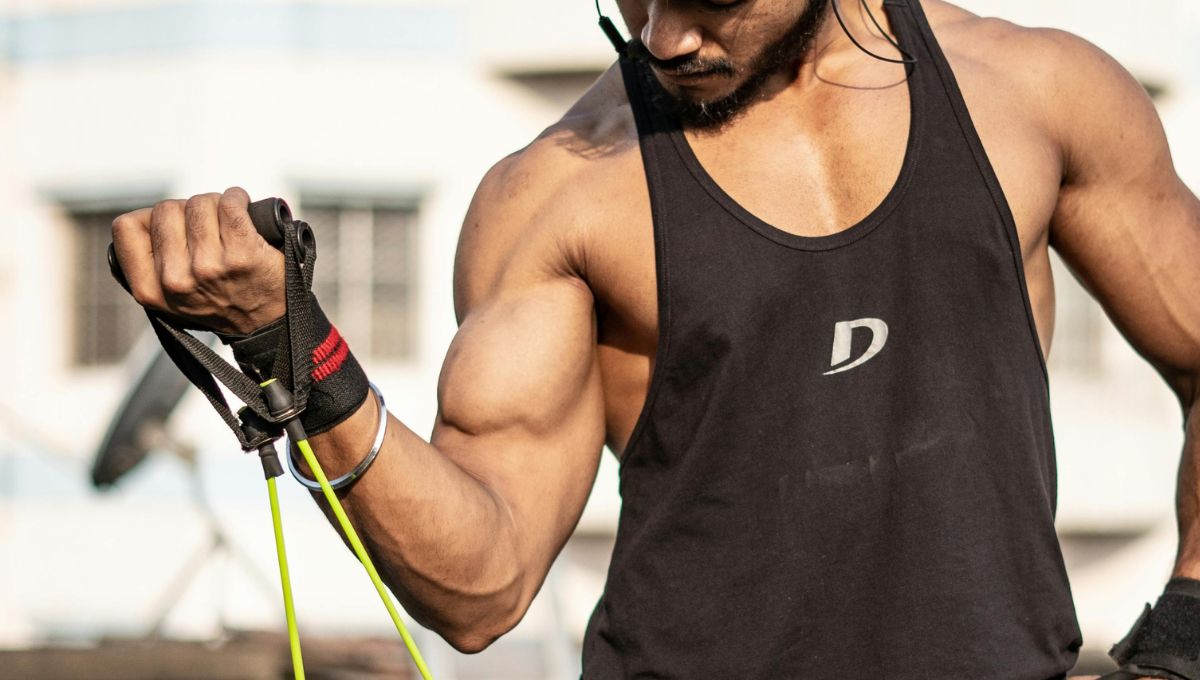
- Biceps Long Head – The biceps long head is the lateral aspect of the two heads and it attaches to a site at the scapula called the supraglenoid tubercle. At this attachment site, the long head fiber runs through the shoulder and travels along the outer part of the arm and to the elbow.
- Biceps Short Head – Like the long head, the short head attaches at the shoulder joint. The short head attaches to the scapula at a site called the coracoid process and from here it travels through the shoulder more medially before finally attaching at the elbow.
Function of the Biceps
The function of the biceps is what will help you to hone in on the 5 secrets to perfecting your bicep curl technique for muscle growth below. While the biceps are famously known to flex the arm, there are other ways the biceps can be worked for growth.
- Flexion of the Elbow Joint – The primary involvement of the biceps (both heads) is to bend the elbow and decrease the angle. Since the long and short heads attach at different parts of the elbow, this muscle creates a powerful pull on the lower arm to cause primarily flexion.
- Flexion of the Shoulder – The biceps also play a secondary role at the shoulder joint and assist in flexion. This motion involves raising a straight arm in front of the body until it reaches the height of the shoulders. While it is considered a secondary lift at the shoulders, shoulder flexion can aid in the upper portion of the biceps.
- Supination of the Forearm – This action is quite unique in that we perform forearm supination often throughout the day, it’s just we don’t notice what specific muscles are used. Think of tightening a screw with your right hand (or loosening it with your left). This motion is supinating the forearms and it can secondarily work the biceps. If you want bigger biceps, don’t forget this motion because this will help to shape the lower part of your arms near the elbows.
Different Hand Placement is Essential for Growth
Hand placement also plays a role in how you grow bigger biceps. There are many ways to grip weights to work each part of your biceps, with some examples listed below.
- Palms Forward and Standard Grip – This is the standard hand placement and works the long and short heads evenly.
- Palms Face Inward, Neutral Grip – Also known as a hammer curl, this grip is essential for growing bigger biceps, brachialis, and brachioradialis muscles.
- Palms Face Downward – Since the palms face down here, there is little to no biceps involvement, but it is still valuable for growing bigger arms. Perform the reverse curl to work the radialis and brachioradialis muscles.
- Wide Grip Curls – A wide grip changes the angle of the exercise and places more demand on the biceps short head. A wide grip is necessary for growing the meat of the biceps.
- Close Grip Curls – Moving your hand placement Inward and closer towards the body places more demand on the outer part of the arm where the biceps long head is located.


Barbells, Dumbbells, and Cables- Which Equipment is Best?
Nailing down a sound technique for your bicep curls means exploring all kinds of equipment. There is no one size fits all piece of equipment so explore and find out what works best for your body. Here are some pieces of equipment to try when working your biceps to ensure the best efficiency.
- Curl Bar – The preacher curl bar is one of the best pieces of equipment to use for perfecting your curl technique. Preacher curls add a neutral grip that works the bulk of the biceps and should be added to your routine.
- Dumbbells – Dumbbells allow for individual arm work and can take away any assistance from the other arm. To master your curls technique, focus on lighter weights to establish a form that is social media worthy.
- Cables – The use of cables should be reserved for when you are wanting a more advanced technique, as this type of exercise allows for isometric training. Cables can shred and build bigger arms while allowing for some of the best grip angles you can find.
- Resistance Bands – Very similar to cables, resistance bands offer resistance throughout the lift. Bands are versatile and can be a perfect piece of equipment for on-the-go. Utilize all grips and techniques to help get the most from resistance bands.
- TRX Straps – The use of straps can help to establish eccentric muscle movements and can work your arms differently than the rest. Utilize TRX straps or similar if they are at your gym for a surprisingly challenging exercise for muscle growth.
Top 5 Secrets to Perfecting Your Bicep Curl Technique for Muscle Growth
The foundation of a good technique takes time and practice and finding a grip that works is crucial. Here are 5 secrets to performing your bicep curl technique for muscle growth.
- Start With Light Weight. It cannot be stressed enough, but your form is critical for all your lifts, biceps included. Start light and really hone in on an impeccable form. Rocking the body to lift more weight might assist your lift, but really it places you at risk of injury and slows any of your progress. When in doubt, if your form is compromised, drop your weight a bit.
- Progression, Progression, Progression. After you master your technique and form, you’ll want to overload your bicep curls with weight that is challenging and aim to progress by 5-10% every other week. If growth is your goal, you’ll want heavy weight and fewer reps. Aim for three sets of:
- 1st set: 8 reps at 85% 1RM
- 2nd set: 6 reps at 90% 1RM
- 3rd set: 4 reps at 95% 1RM
- Have a Strong Foundation. Your posture during your bicep curls can help to establish a sound technique. Aim for relaxed shoulders, stable elbows, and a straight back so you can utilize more biceps during your curls.
- Get a Mirror. Mirrors aren’t just for admiring your looks; they give live feedback to what your bicep curls look like. Perfecting your bicep curl technique can be as easy as watching your lifts closely in a mirror.
- Don’t Forget HIIT Movements. HIIT workouts involving the biceps can be paramount progression. Best mindful of your form, but this technique can be vital to your gains.
Taking it All In
Following the information above can help to guide you through crushing your bicep curls. Rather than traversing through the motions, the next time you do your curls try to hone in on your technique. In addition, change up your grip to add new angles to add new stress to your arms.