Are any of these signs affecting you?
1. You’re Not Progressing in Strength or Muscle Growth
If you’ve been lifting for months without noticeable strength gains or muscle growth, it’s a clear sign that your training intensity might be lacking.
Progressive overload, the principle of gradually increasing stress on the muscles, is essential for hypertrophy and strength gains (Schoenfeld, 2010). If your lifts have stagnated for an extended period, it indicates that your muscles aren’t being challenged enough to adapt.
A study published in the Journal of Strength and Conditioning Research found that individuals who consistently increased resistance experienced significantly greater muscle growth compared to those who maintained the same intensity (Kraemer & Ratamess, 2004). To break through plateaus, you need to increase weights, adjust rep ranges, or modify exercise selection.
2. Your Workouts Feel Too Easy
If you’re completing every workout without breaking a sweat or feeling fatigued, you’re likely not pushing yourself hard enough. Training intensity is crucial for muscle stimulation and endurance improvements. The Rating of Perceived Exertion (RPE) scale is commonly used to measure workout intensity, with higher ratings correlating with greater physiological stress (Helms et al., 2016).
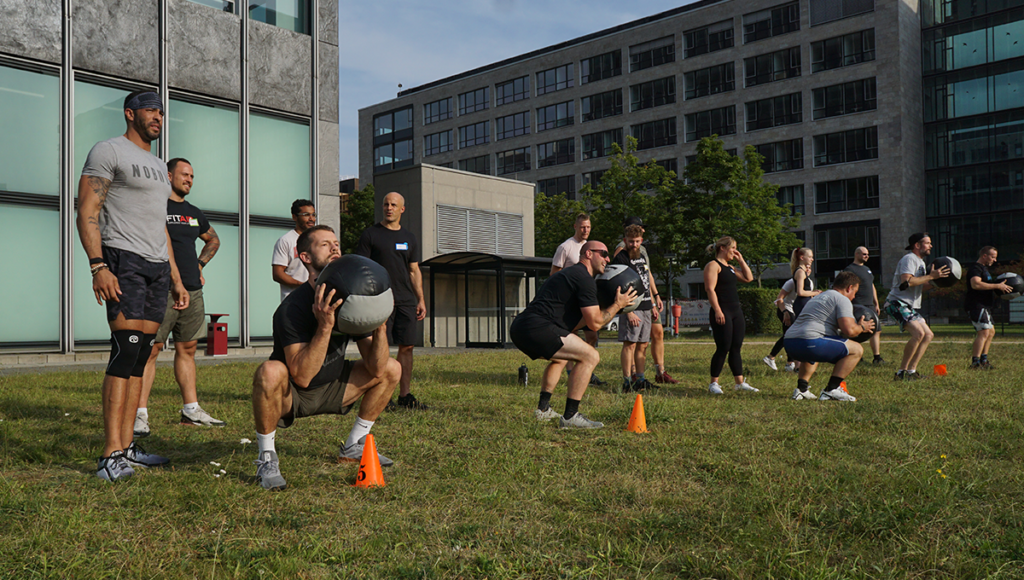
A study in Sports Medicine highlighted that training close to failure (around an RPE of 8-10) produces significantly better strength and hypertrophy outcomes compared to lower-intensity training (Davies et al., 2017). If you’re finishing workouts feeling fresh, it’s time to increase intensity through heavier weights, shorter rest periods, or higher volume.
3. You’re Not Experiencing Muscle Fatigue or Soreness
While extreme soreness isn’t necessary for muscle growth, a complete absence of muscle fatigue suggests insufficient effort. Delayed-onset muscle soreness (DOMS) occurs due to microtrauma in muscle fibres, which is necessary for adaptation and growth (Cheung et al., 2003).
A study in The Journal of Physiology found that moderate soreness is a sign of effective muscle engagement and adaptation (Proske & Morgan, 2001). If you never feel any muscle fatigue post-workout, it’s a sign you need to increase intensity or vary your exercises to create new stimulus.
4. Your Heart Rate Isn’t Elevated During Training
Cardiovascular response is a good indicator of workout intensity. If your heart rate remains low during resistance or cardiovascular training, you may not be training hard enough. Research in The American Journal of Physiology suggests that exercising at 70-85% of maximum heart rate is necessary for substantial improvements in fitness and endurance (Swain & Franklin, 2006).
A lack of heart rate elevation indicates that either the weight is too light or rest periods are too long. Implementing supersets, circuits, or high-intensity interval training (HIIT) can elevate heart rate and increase workout effectiveness.
5. You’re Not Burning Many Calories or Losing Fat
If fat loss is a goal but you’re not seeing progress despite working out regularly, your training may lack intensity. Research published in Obesity Reviews found that high-intensity resistance training burns more calories both during and after exercise compared to lower-intensity workouts due to the excess post-exercise oxygen consumption (EPOC) effect (Paoli et al., 2012).
Another study in Metabolism concluded that high-intensity interval training results in greater fat loss than moderate steady-state cardio due to its metabolic impact (Tremblay et al., 1994). To optimise calorie expenditure, incorporate compound movements, reduce rest periods, and increase training volume.
Key Takeaways
| Sign | Explanation |
|---|---|
| Lack of strength or muscle growth | Indicates insufficient progressive overload |
| Workouts feel too easy | Suggests low intensity and minimal exertion |
| No muscle fatigue or soreness | Means inadequate muscle engagement or variation |
| Low heart rate during training | Shows training isn’t pushing cardiovascular limits |
| No significant calorie burn or fat loss | Highlights a lack of metabolic challenge and intensity |
References
Cheung, K., Hume, P., & Maxwell, L. (2003). Delayed onset muscle soreness. Sports Medicine, 33(2), 145-164.
Davies, T., Orr, R., Halaki, M., & Hackett, D. (2017). Effect of training leading to repetition failure on muscular strength: A systematic review and meta-analysis. Sports Medicine, 46(4), 487-502.
Helms, E. R., Cronin, J., Storey, A., & Zourdos, M. C. (2016). Application of the repetitions in reserve-based rating of perceived exertion scale for resistance training. Strength & Conditioning Journal, 38(4), 42-49.
Kraemer, W. J., & Ratamess, N. A. (2004). Fundamentals of resistance training: Progression and exercise prescription. Medicine and Science in Sports and Exercise, 36(4), 674-688.
Paoli, A., Moro, T., & Bianco, A. (2012). High-intensity interval resistance training (HIRT) influences resting energy expenditure and respiratory ratio in non-dieting individuals. Obesity Reviews, 13(7), 638-643.
Proske, U., & Morgan, D. L. (2001). Muscle damage from eccentric exercise: Mechanism, mechanical signs, adaptation and clinical applications. The Journal of Physiology, 537(2), 333-345.
Schoenfeld, B. J. (2010). The mechanisms of muscle hypertrophy and their application to resistance training. Journal of Strength and Conditioning Research, 24(10), 2857-2872.
Swain, D. P., & Franklin, B. A. (2006). VO2 reserve and the minimal intensity for improving cardiorespiratory fitness. The American Journal of Physiology, 91(2), 90-95.
Tremblay, A., Simoneau, J. A., & Bouchard, C. (1994). Impact of exercise intensity on body fatness and skeletal muscle metabolism. Metabolism, 43(7), 814-818.