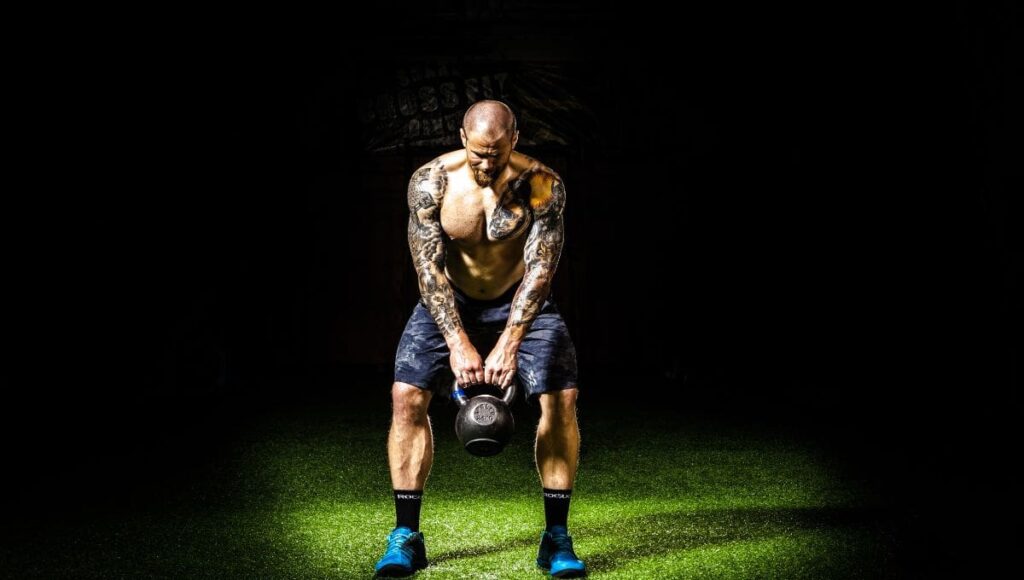
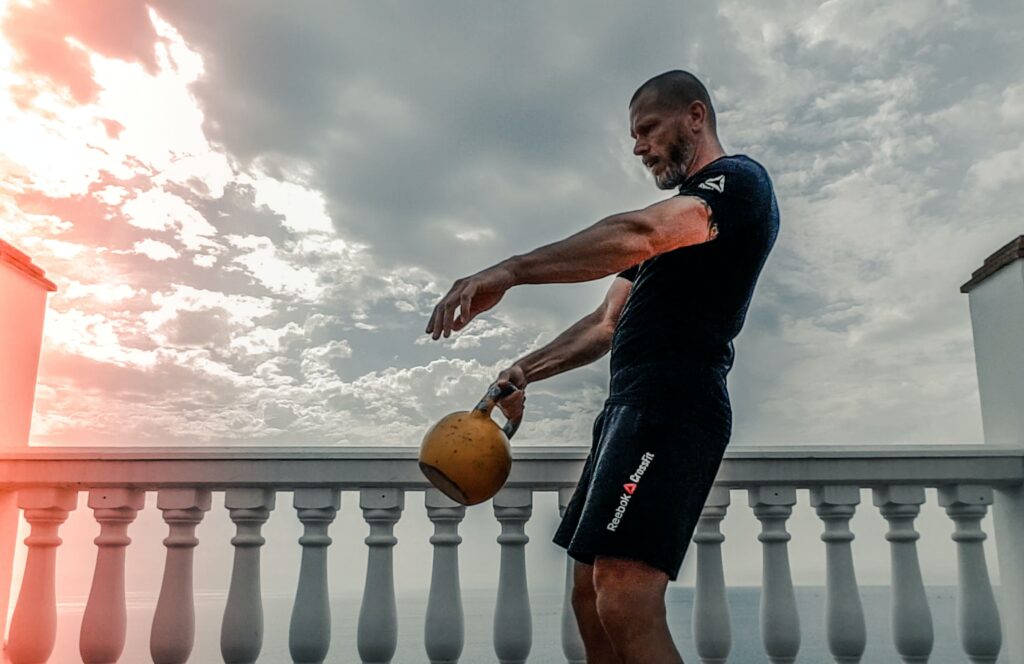
The kettlebell swing is a foundational movement in strength and conditioning that enhances posterior chain development, cardiovascular fitness and overall athleticism. However, poor technique can undermine these benefits and increase the risk of injury. This article outlines five evidence-based tips to improve your kettlebell swing technique, ensuring maximal efficiency and safety.
Tip 1: Master the Hip Hinge, Not the Squat
Understanding the Difference
The kettlebell swing is a ballistic hip hinge movement, not a squat. In a hip hinge, the movement originates from the hips while the knees bend minimally to accommodate the posterior shift. A study by McGill and Marshall (2012) demonstrated that effective hip hinge movements preferentially activate the gluteus maximus and hamstrings, which are essential for powerful hip extension.
Common Errors and Fixes
One common mistake is squatting the kettlebell swing, resulting in excessive knee flexion and diminished posterior chain recruitment. This shifts the load to the quadriceps and increases anterior knee stress. To correct this, practitioners should practise the Romanian deadlift (RDL) to reinforce the hip hinge pattern. Furthermore, placing a dowel along the spine during hinging drills can enhance proprioception and promote neutral spinal alignment (Contreras et al., 2013).
Tip 2: Generate Force Through Explosive Hip Extension
The Role of the Posterior Chain
Explosive hip extension is the driving force behind an effective kettlebell swing. According to Lake and Lauder (2012), the kettlebell swing produces significant power output, rivaling traditional Olympic lifts when performed correctly. This power is largely generated by the posterior chain, especially the glutes and hamstrings.
Application and Drills
To improve this aspect, incorporate glute bridges, hip thrusts and kettlebell deadlifts into your warm-up or strength training. Cueing is also critical. Instead of focusing on lifting the kettlebell with the arms, visualise snapping the hips forward as if trying to crack a whip with your pelvis. This cue encourages proper sequencing and helps eliminate upper body dominance.
Timing and Rhythm
Efficient swings rely on the proper timing of hip extension. Overly early or late hip thrusts compromise power transfer. Using metronomic timing, such as 40 swings per minute (as shown in studies by Tsatsouline and colleagues, 2013), can help ingrain a consistent rhythm.
Tip 3: Maintain a Neutral Spine and Packed Shoulders

Spinal Positioning and Injury Prevention
Maintaining a neutral spine throughout the swing is critical for reducing spinal shear forces and preventing lower back injury. McGill (2010) reported that excessive lumbar flexion during kettlebell swings significantly increases intervertebral disc stress, particularly at L4-L5.
Technique Cues
Begin by setting a strong lumbar position at the start. The chest should be proud, the ribs down and the neck in a neutral alignment. Avoid cervical hyperextension by gazing at a point two to three metres ahead on the floor. Additionally, shoulders should remain packed—slightly retracted and depressed—to engage the lats and stabilise the shoulder girdle (Andersen et al., 2016).
Feedback and Corrections
Use video feedback or coaching apps to assess spinal alignment during the swing. Wall drills, where athletes swing close to a wall and avoid contact, can help reinforce proper hip hinge depth while maintaining neutral posture.
Tip 4: Use the Right Kettlebell Weight
Load Selection for Skill Development and Strength
Kettlebell weight selection is not arbitrary. Too light, and the swing becomes a shoulder raise; too heavy, and form deteriorates. Lake and Lauder (2012) found that kettlebell swings performed at 30% to 50% of an athlete’s bodyweight maximised power output while maintaining control.
Progressive Overload and Adaptation
Beginners should start with weights ranging from 12 to 16 kg for women and 16 to 24 kg for men, depending on strength and proficiency. Progressively increase load as technique solidifies. However, do not sacrifice speed and fluidity for heavier weights, as ballistic efficiency is central to swing performance (Manocchia et al., 2013).
Movement Quality Before Quantity
Prioritise movement quality over load or volume. Poor movement patterns under load increase injury risk and reinforce bad habits. According to research by Jay et al. (2011), progressive loading with attention to technique improved trunk endurance and reduced back pain in novice kettlebell users.
Tip 5: Optimise the Swing Path and Range of Motion
Avoiding Vertical Lifts
A common misconception is that the kettlebell should be lifted vertically. In reality, the swing follows an arc created by the hips’ horizontal drive. A vertical swing path often results from excessive arm involvement and reduced hip engagement.
Arc Mechanics and Energy Transfer
According to research by Rajala and Jensen (2015), optimal energy transfer in kettlebell swings is achieved when the kettlebell reaches chest height via a pendulum-like arc. This technique reduces strain on the shoulders and ensures posterior chain dominance.
Cueing for Correct Arc
To establish the correct swing path, cue the kettlebell to “float” at the apex of the swing. This float indicates efficient power transfer and minimal upper body interference. If the bell continues rising after hip extension, it likely means the arms are overactive.
Avoiding Overextension
Excessive lumbar extension at the top of the swing should also be corrected. Cue a strong glute contraction and ribcage-down posture at lockout to stabilise the spine and prevent anterior pelvic tilt (McGill, 2010).
Conclusion
Improving your kettlebell swing technique is not only about increasing strength but about refining movement patterns that deliver long-term performance and resilience. By mastering the hip hinge, generating force through the posterior chain, maintaining spinal integrity, selecting appropriate loads and refining the swing arc, practitioners can maximise the efficiency of this powerful exercise. Correct technique grounded in biomechanics and evidence-based principles ensures safer, more effective training and enhanced athletic output.
Key Takeaways Table
Bibliography
Andersen, V., Fimland, M.S., Brennset, O., Haslestad, L.R., Lundteigen, M.S., Skalleberg, K. and Saeterbakken, A.H., 2016. Muscle activation and kinematics in squat and Bulgarian squat on stable and unstable surface. International Journal of Sports Medicine, 37(04), pp.307-313.
Contreras, B., Cronin, J., Schoenfeld, B., Nates, R. and Sonmez, G.T., 2013. Are all hip extension exercises created equal? Strength and Conditioning Journal, 35(4), pp.26-31.
Jay, K., Frisch, D., Hansen, K., Zebis, M.K., Andersen, C.H., Mortensen, O.S. and Andersen, L.L., 2011. Kettlebell training for musculoskeletal and cardiovascular health: a randomized controlled trial. Scandinavian Journal of Work, Environment & Health, 37(3), pp.196-203.
Lake, J.P. and Lauder, M.A., 2012. Kettlebell swing training improves maximal and explosive strength. Journal of Strength and Conditioning Research, 26(8), pp.2228-2233.
Manocchia, P., Spierer, D.K., Lufkin, A.K., Minichiello, J. and Castro, J., 2013. Transference of kettlebell training to strength, power, and endurance. Journal of Strength and Conditioning Research, 27(2), pp.477-484.
McGill, S.M., 2010. Ultimate back fitness and performance. 4th ed. Waterloo: Backfitpro Inc.
McGill, S.M. and Marshall, L.W., 2012. Kettlebell swing, snatch, and bottoms-up carry: back and hip muscle activation, motion, and low back loads. Journal of Strength and Conditioning Research, 26(1), pp.16-27.
Rajala, B.A. and Jensen, R.L., 2015. EMG of lower limb muscles during kettlebell exercises. International Journal of Exercise Science, 8(3), p.5.
Tsatsouline, P., 2013. Kettlebell simple & sinister. St. Paul: Dragon Door Publications.