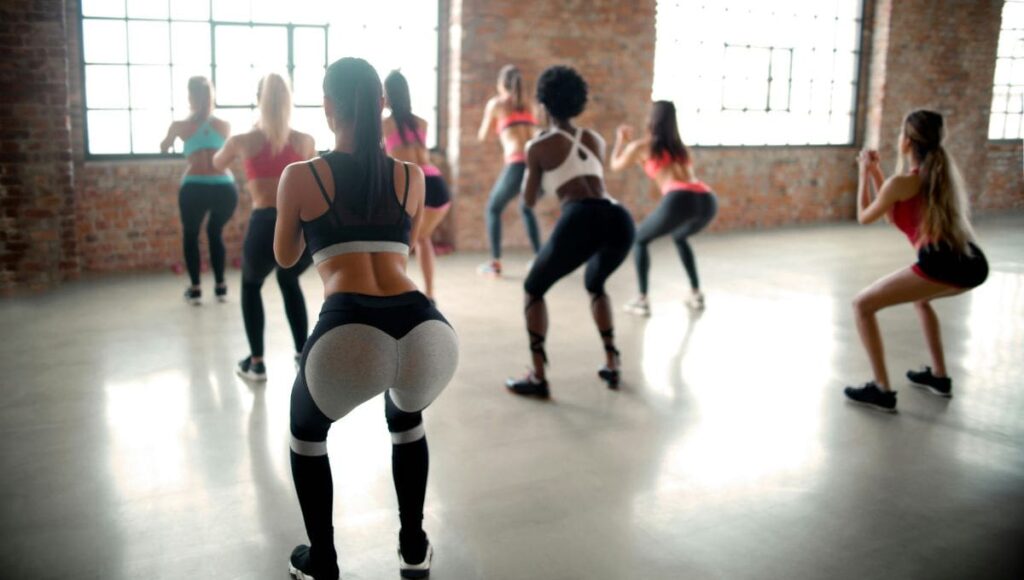
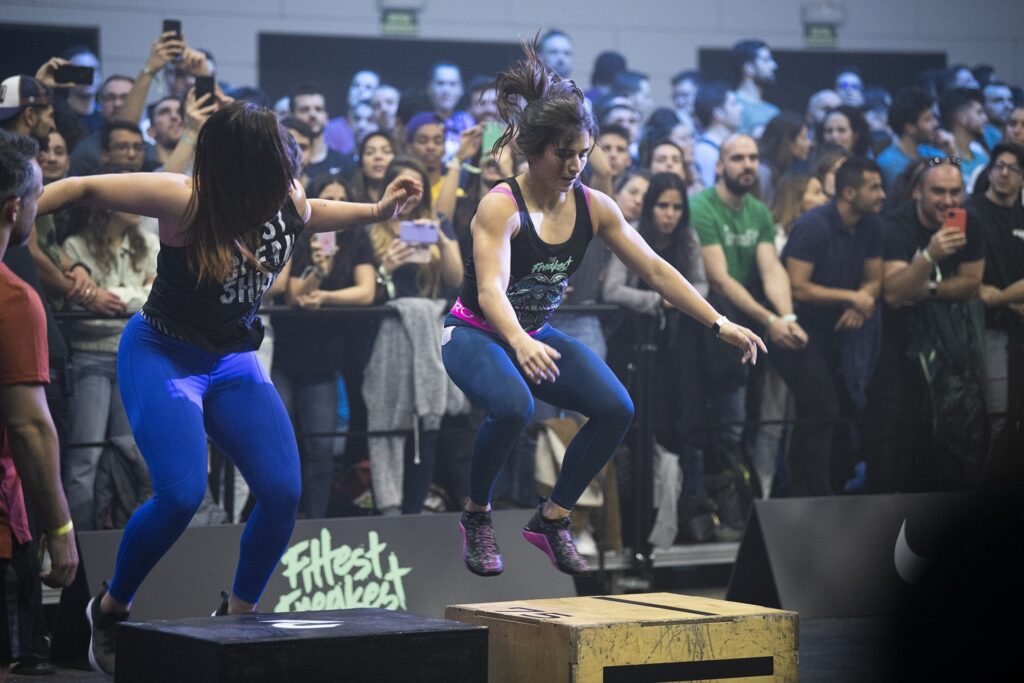
Strong gluteal musculature is not just about aesthetics—it plays a critical role in lower-body strength, hip stability, injury prevention, and athletic performance. The three primary gluteal muscles—Gluteus Maximus, Gluteus Medius, and Gluteus Minimus—work in concert to extend the hip, abduct and internally/external-rotate the femur, and stabilize the pelvis during dynamic and unilateral tasks.
Research shows that many trainees rely excessively on traditional compound movements (squats, lunges) and neglect less common planes of motion or isolated loading strategies, which may limit glute recruitment and full functional development.
This article outlines five unusual but evidence-supported glute movements that engage overlooked muscle patterns, challenge stability, and promote robust lower-body strength. Each movement is followed by scientific explanation, activation evidence, technique guidelines, and programming tips.
Why Targeting Glutes Beyond Squats And Deadlifts Matters

Anatomy & Functional Roles Of The Glutes
The gluteus maximus is the largest muscle of the hip region; it primarily drives hip extension and external rotation. The gluteus medius and minimus lie lateral and posterior to the hip and are major contributors to hip abduction, internal rotation control, and pelvic stabilization during single-leg stance. When these muscles remain under-trained or recruited inefficiently, secondary muscles (hamstrings, lumbar extensors, hip flexors) may compensate, leading to performance limitations and elevated injury risk.
Evidence For Superior Activation In Non-Traditional Movements
Studies indicate that exercises emphasizing hip extension and abduction in non-sagittal planes (for example, single-leg hip thrusts, lateral band walks) result in higher glute recruitment compared to bilateral squats or leg presses. Exercises emphasizing hip extension and abduction with minimal pelvic compensation have shown the greatest muscle recruitment. Additionally, EMG-informed muscle-force modeling ranks single-leg Romanian deadlifts and split squats among the highest for gluteal force generation.
Training Implications
To build a stronger, more resilient lower body you must:
- Incorporate movements in multiple planes (sagittal, frontal, transverse)
- Use unilateral or offset loading to stimulate stability and control
- Employ positions and angles that lengthen the glute fibers and increase moment arms
- Prioritize mind-muscle connection and neuromuscular activation before heavy loading
Movement 1: Single-Leg Banded Glute Bridge (Rear Footprint)
Rationale & Evidence
The single-leg banded glute bridge variant forces one hip into extension while the other leg remains unsupported or just lightly touching. The addition of a resistance band above the knees accentuates hip abduction tension and gluteus medius/minimus recruitment. A study comparing a single-leg banded glute bridge against a turn-out bent-knee pulse found significantly higher EMG amplitude in the gluteus maximus and medius (~90% MVIC vs ~70% MVIC).
Execution
- Lie supine with one foot planted, the other foot off floor or lightly resting.
- Place a mini-loop band just above your knees.
- Drive the heel into the floor, extend the hip upward until your torso is aligned with the support leg’s thigh, squeeze the glute maximus maximally.
- At the top, maintain slight knee abduction against the band for 1–2 seconds.
- Lower in controlled fashion; repeat for 8–12 reps per leg, 2–4 sets.
- Cue: “Push the floor away, keep ribs down, glute contracted, hip ↑.”
Programming & Progression
Use this as a glute-specific pre-lift activation exercise or as a finisher in a lower-body session. As progressions:
- Elevate the support foot (bench or step) to increase hip extension range.
- Add a light dumbbell or plate on the lap for extra load.
- Increase band tension or switch to an extra-heavy loop.
Movement 2: B-Stance Romanian Deadlift (Hip Hinge Offset)

Rationale & Evidence
The B-stance RDL (one foot forward as the primary support and the other slightly behind and off load) introduces unilateral emphasis while maintaining bilateral contact. This offset stance increases hip extensor demand on the dominant leg and requires enhanced control over the gluteus maximus and hamstrings. Single-leg RDLs are among the highest in gluteal force production according to EMG and modeling research.
Execution
- Stand with feet hip-width; shift ~60–70% of weight onto one leg (forward). The rear leg’s heel remains lightly on the floor for balance.
- Hold a dumbbell or kettlebell in the same-side hand as the forward leg (or both hands if comfortable).
- Hinge at the hips: push the hips backward, maintain a neutral spine, slight bend in the support leg.
- Lower until you feel a stretch in the glute/hamstring of the support leg (typically just past mid-shin).
- Drive through the heel of the support leg, extend the hip forward, squeeze the glute at the top.
- Perform 6–10 reps per leg, 3–4 sets.
- Cue: “Hips go back, sit into the bridge of that support glute, steady with rear foot as balance.”
Programming & Progression
Use this as a primary or supplemental hip-hinge variant when glute emphasis is desired. For progression:
- Increase the load gradually while maintaining form.
- Reduce the rear foot contact (tap vs toe-touch vs full contact) to escalate instability and activation.
- Pause 2 seconds at the bottom to increase time under tension.
Movement 3: Offset Lateral Band Walk – Tall Stance To Crouch
Rationale & Evidence
Lateral band walks are often used for gluteus medius/minimus activation. Research indicates that lateral band walks with hip rotation variations can influence activation levels of the gluteus medius, gluteus maximus, and tensor fasciae latae. While EMG values for gluteus maximus may be lower (~20–30% MVIC) during band walks, the frontal-plane activation of the gluteus medius is particularly meaningful for hip stability and injury prevention.
By using an “offset” stance (one foot leading, the other trailing) and incorporating a squat or tall-stance variation, we increase the activation stimulus and challenge lateral control.
Execution
- Place a mini loop band above knees (or above ankles for more resistance).
- Adopt a semi-crouched tall stance: hips back slightly, knees bent ~20–30°. Feet shoulder width.
- Step laterally (lead with one foot) ~0.5–1 ft then bring trailing foot to maintain band tension (do not let band go slack). Maintain slight hip abduction tension continually.
- After 8 steps per direction, transition into a deeper lateral squat walk: hips lowered ~45°, same band tension, lead/trail steps as above for 6–8 steps.
- Alternate lead leg each set. Perform 2–3 rounds with 10–12 total steps each direction.
- Cue: “Stay low, knees push out, band fights you, glute med fires, pelvis stays level.”
Programming & Progression
Use as a pre-workout activation, warm-up, or as part of a stability circuit. Progress by:
- Using a heavier band.
- Increasing depth of the squat walk portion.
- Adding a time limit (e.g., 30 seconds continuous) to build endurance.
Movement 4: Fire-Hydrant + Kickback On Hands & Knees With Band
Rationale & Evidence
This movement combines hip abduction (fire hydrant) and hip extension (kickback) in a quadruped position. It recruits gluteus medius in the abduction phase and gluteus maximus in the extension phase. Combining these two often-ignored planes (frontal and sagittal) in one exercise increases neuromuscular stimulus and emphasizes controlled hip movement rather than defaulting to lumbar extension or hamstring dominance.
Execution
- Begin in a hands-and-knees position, hands under shoulders, knees under hips.
- Place a light resistance band around thighs just above knees.
- Perform the “fire hydrant”: keep the knee bent (~90°) and lift the thigh laterally (hip abduction) until it is parallel to the ground, hold for ~1 sec, then without lowering, extend the hip (heel toward ceiling) into a kickback motion. At top position, squeeze the glute of the working leg for ~1 second.
- Lower the leg back to start (reverse the kickback then the abduction).
- Repeat 10–12 reps per leg, 2–3 sets.
- Cue: “Lift to the side, open the hip, drive heel up, squeeze glute, return slow, stay controlled from core.”
Programming & Progression
This is best used as a supplemental glute-finisher or controlled activation tool. Progress by:
- Elevating the supporting knee on a small pad or bench to increase range of motion.
- Using ankle weights or a heavier loop band.
- Slowing tempo (e.g., 3 sec up, hold 1 sec, 3 sec down) for increased time under tension.
Movement 5: Cossack Squat To Single-Leg Banded Hip Thrust

Rationale & Evidence
Combining a Cossack squat (deep lateral/unilateral squat variation) with a single-leg banded hip thrust blends frontal-plane loading, deep hip flexion/abduction, and maximal hip extension. The deep Cossack position challenges gluteus medius control, adductor engagement, hip internal/external rotation, and stability through the descent. The follow-up single-leg banded hip thrust maximizes gluteus maximus activation in hip extension while maintaining abduction tension via band. Each individual movement has robust evidence: single-leg hip thrusts produce very high glute activation; lateral deep squats engage stabilizer glutes effectively.
Execution
Phase A – Cossack squat
- Stand with feet wide (2–2.5× shoulder width). Toes slightly outward.
- Shift weight to right leg, keep left leg straight (or slightly bent) and toes pointing up or out. Sink hips down toward right side, right knee tracks over toes, left leg remains extended to the side. Maintain upright torso, core engaged.
- Drive through right heel, extend to upright. Perform 6–8 reps per side.
Transition
- Immediately set up for Phase B: Place upper back on a bench/box, loop a miniloop band just above knees, and position feet wide such that one foot is fully loaded (the other lightly touched).
Phase B – Single-leg banded hip thrust
- With loaded foot on floor, the other foot slightly elevated or off floor.
- Drive through heel, extend the hips until torso and loaded–leg thigh form a straight line, knees push outward against band. Squeeze glute for ~1–2 seconds. Perform 8–12 reps.
Cycle 3 sets: one set Cossack one leg, immediate hip thrust on same leg, then switch legs next round.
Programming & Progression
This superset is demanding and best used as a glute-focused session or as part of a hypertrophy block. Progress by:
- Adding tempo (e.g., 2 sec descent on Cossack, pause 1 sec, drive up).
- Increasing band resistance for the hip thrust.
- Adding dumbbell/kettlebell or barbell across hips for the hip thrust.
- Reducing non-loaded foot contact progressively to full single-leg support.
Putting It All Together: Program Design & Guidelines
Frequency & Load
To maximize glute strength and hypertrophy, train glutes 2–3 times per week, with at least 48 hours recovery between sessions. Mix heavy compound lifts (e.g., deadlifts, barbell hip thrusts) with these unusual variations to cover activation, unilateral strength, and multi-plane control. Activate glutes early before heavy lifts to ensure proper recruitment.
Warm-Up & Activation
Begin each session with a 5–10 minute dynamic warm-up that includes hip circles, leg swings, and one short activation set of a banded glute walk or quadruped fire hydrant. This primes the glutes for subsequent work and helps avoid early dominance of quads or hamstrings.
Progressive Overload & Variation
While activation and stability are critical, apply progressive overload for strength/hypertrophy (increase load, reps, sets, volume) and vary angles/planes of motion regularly to stimulate adaptation. Research confirms that exercises producing higher muscle forces are more effective for strength/hypertrophy.
Form Emphasis & Movement Quality
Focus on form over load. Common errors include letting the lumbar spine arch during hip thrusts, knees collapsing during Cossack squats, or pelvis dropping in lateral movements. Monitor for quality of glute contraction (squeeze at top) and ensure hips, knees, feet remain aligned.
Programming Example (One-Week Schedule)
- Day 1 (main lower body): Heavy compound (e.g., back squat, Romanian deadlift); activation movement = Single-leg banded glute bridge (2 sets of 10).
- Day 2 (glute-focused): B-stance Romanian deadlift (3 × 8 each leg); Offset lateral band walk (2 rounds of 12 steps each direction); Fire-hydrant + kickback (2 × 12 each leg).
- Day 3 (active recovery): Mobility work + light glute activation (band walks).
- Day 4 (glute-hypertrophy superset): Cossack squat (3 × 6 each leg) immediately supersetted with single-leg banded hip thrust (3 × 10 each leg).
Safety & Contraindications
Most of these movements are safe when performed with proper technique and body control. However:
- Ensure no acute hip, knee or lumbar spine pain is present; modify accordingly.
- Progress band resistance and single-leg loading gradually to avoid over-stress.
- If you have hip surgery or severe imbalance, consult a qualified practitioner before introducing complex unilateral loading.
Summary
Engaging the glutes fully requires more than standard squats or lunges. By utilizing movements that incorporate unilateral loading, lateral motion, deep hip flexion, and varying planes of motion, you can recruit the entirety of the gluteal complex more effectively.
The five unusual movements described above—Single-leg banded glute bridge, B-stance Romanian deadlift, Offset lateral band walk, Fire-hydrant + kickback, and Cossack squat to single-leg banded hip thrust—offer distinctive loading patterns backed by scientific activation and force-production evidence.
Incorporate them consistently, emphasize technique and contraction, and you’ll build a stronger, more stable, and higher-performing lower body.
Key Takeaways
| Movement | Primary focus | Why it’s unusual | Programming tip |
|---|---|---|---|
| Single-leg banded glute bridge | Gluteus maximus + hip abduction | Single-leg hip thrust with band-abduction | 8-12 reps, 2–4 sets, use band above knees |
| B-stance Romanian deadlift | Unilateral hip hinge, glute/hamstring | Offset stance increases glute demand | 6–10 reps/leg, 3–4 sets, rear heel light |
| Offset lateral band walk | Gluteus medius/minimus, hip stability | Lateral walk with offset stance + squat | 10–12 steps each direction, 2–3 rounds |
| Fire-hydrant + kickback on hands & knees | Hip abduction + extension | Combined plane movement in stable position | 10–12 reps/leg, 2–3 sets, tempo control |
| Cossack squat → single-leg banded hip thrust | Deep lateral clean + hip extension | Superset merging frontal and sagittal work | 3 sets: 6–8 Cossack + 8–12 hip thrust |
Bibliography
- French, H.P., Dunleavy, M. & Cusack, T. (2010) Activation levels of gluteus medius during therapeutic exercise as measured with electromyography: a structured review. Physical Therapy Reviews, 15(4), pp. 226-240.
- Moore, D., Pizzari, T., McClelland, J. & Semciw, A.I. (2019) Rehabilitation Exercises for the Gluteus Medius Muscle Segments: An Electromyography Study. Journal of Sport Rehabilitation, 28(8), pp. 802-810.
- O’Sullivan, K., Smith, S.M. & Sainsbury, D. (2010) Electromyographic analysis of the three subdivisions of gluteus medius during weight-bearing exercises. Sports Medicine, Arthroscopy, Rehabilitation, Therapy & Technology, 2:17.
- Collings et al. (2023) Gluteal muscle forces during hip-focused injury prevention and rehabilitation exercises. ChelmsfordPhysio Blog (unpublished modeling summary).
- French, S., et al. (2009) Gluteal muscle activation during common therapeutic exercises. Journal of Orthopaedic & Sports Physical Therapy, 39(7), pp. 537-545.
- Sullivan, F., et al. (2025) 16 Best Glute Exercises: Science-Backed & Trainer Approved for Strength, Shape, and Growth. WellFitInsider.
- Evidence-Based Activation Exercises for Glutes (2025) TheNoteNinjas Blog.
- Strength Training the Glutes: An Evidence-Based Approach (2024) ACE Fitness Professional Article.