Building lower body strength and muscle size often goes beyond traditional squats and deadlifts. For those looking to optimise gains, incorporating unconventional methods can accelerate muscle hypertrophy.
The following techniques, rooted in scientific evidence, provide effective ways to stimulate lower body muscle growth by engaging the muscles differently and creating new growth stimuli. Each method discussed here has research backing it up, showing its potential to improve muscle mass, strength, and overall performance.
1. Blood Flow Restriction (BFR) Training
Blood Flow Restriction (BFR) training involves wrapping a device such as a tourniquet around the upper part of the legs, restricting blood flow to the working muscles. This technique creates an environment where the muscles experience metabolic stress, a key driver of hypertrophy, with the benefit of using significantly lighter weights than traditional training methods.
BFR works by trapping blood in the muscles, creating a hypoxic environment that leads to an increase in metabolites such as lactate, which can stimulate muscle growth factors and hormonal responses conducive to hypertrophy (Loenneke et al., 2012).
A study by Yasuda et al. (2010) showed that BFR training could induce muscle hypertrophy and increase strength gains in the lower body when combined with low-intensity exercises. The participants in this study achieved similar muscle growth to high-intensity training by using just 20-30% of their one-repetition maximum (1RM). This makes BFR especially useful for those who cannot lift heavy weights due to injury or other limitations.
Key BFR Techniques for Lower Body Growth:
- Leg Extensions and Curls: Perform 3-4 sets with a 20-30% 1RM for optimal hypertrophy effects.
- Walking or Biking with BFR Bands: Lower intensity movements like brisk walking or cycling, combined with BFR, can stimulate muscle growth without heavy lifting.
- Short Rest Intervals: Aim for rest intervals of 30 seconds between sets to maximise metabolic build-up and muscle fatigue.
2. Eccentric Overload Training
Eccentric overload training focuses on the lengthening phase of a movement. During this phase, the muscle absorbs greater force, causing more muscle fibre damage, which is necessary for growth. Studies indicate that eccentric training can lead to increased muscle mass and strength more effectively than traditional concentric or isometric movements (Hortobágyi et al., 2000).
A meta-analysis by Roig et al. (2009) found that eccentric exercises are more effective for muscle hypertrophy and strength gains than traditional lifting, as they create greater mechanical tension and micro-damage to the muscle fibres, which leads to better muscle adaptation. Eccentric training can be done with exercises like slow squats or controlled lunges, where the emphasis is on the lowering phase.
Implementation Tips for Eccentric Overload:
- Tempo Squats: Use a 4-6 second descent to fully engage the quadriceps, glutes, and hamstrings.
- Negative Leg Press: Start with a weight heavier than your typical 1RM for the concentric phase. Use both legs to press the weight up, then lower it with one leg.
- Single-Leg Deadlift (Eccentric Focus): Use a slower descent to create more mechanical tension in the hamstrings.
3. Contrast Training
Contrast training involves pairing a heavy lift with an explosive movement targeting the same muscle group. This technique leverages post-activation potentiation (PAP), where a heavy lift primes the nervous system, allowing for a more powerful explosive movement immediately after (Tillin & Bishop, 2009). For instance, pairing a heavy back squat with a set of jump squats activates fast-twitch muscle fibres, enhancing power output and stimulating muscle growth.
A study by Dobbs et al. (2018) found that athletes who incorporated contrast training improved their lower body power and muscle hypertrophy, as the heavy lift activates neural pathways that make the subsequent explosive movement more effective. This technique is beneficial for sports that require a combination of strength and speed, such as rugby or football, but it is also highly effective for those simply aiming to build muscle.
Examples of Contrast Training for Lower Body:
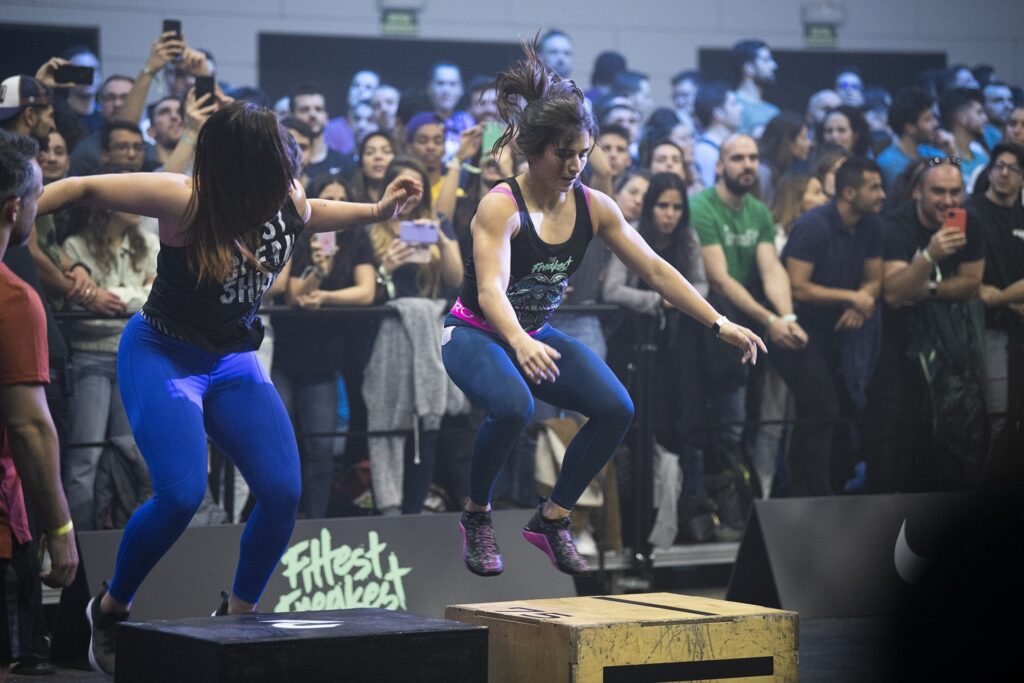
- Squat + Box Jump: Perform a set of heavy squats followed by high box jumps to stimulate the quads, glutes, and hamstrings.
- Deadlift + Broad Jump: After a heavy deadlift, perform broad jumps to engage the posterior chain and develop explosive power.
- Bulgarian Split Squat + Jump Lunge: This pairing targets the quads and glutes intensely while improving overall balance and coordination.
4. Variable Resistance Training (VRT) with Bands or Chains
Variable resistance training uses tools like bands or chains to change the resistance curve of an exercise. As the lifter progresses through the movement and leverage improves, resistance increases, challenging the muscles more at the top of the lift where strength is highest. Studies have shown that VRT, especially when combined with free weights, improves strength and muscle hypertrophy (Schoenfeld et al., 2016).
A study by Anderson et al. (2008) demonstrated that using chains in squats increased the activation of fast-twitch muscle fibres, which are more prone to hypertrophy. Bands and chains are especially effective for movements like squats and deadlifts, where the top of the movement becomes progressively harder, resulting in greater muscle engagement and strength adaptation.
VRT Techniques for Lower Body:
- Band-Assisted Squats: Attach bands to the squat rack to add resistance at the top range, enhancing quadriceps and glute activation.
- Chain Deadlifts: Chains add weight as they lift off the ground, intensifying the top half of the movement where leverage is greatest.
- Band-Resisted Leg Press: Attach bands to the leg press machine to increase resistance as you extend your legs, forcing more activation at peak extension.
5. Occlusion Stretching for Hypertrophy
Occlusion stretching combines stretching with occlusion (blood flow restriction), keeping the muscle under stretch while restricting blood flow. This technique has been shown to increase muscle cell swelling and metabolic stress, two key factors in muscle hypertrophy (Sato et al., 2005). By stretching a muscle with occlusion, you enhance cellular swelling and intramuscular metabolic build-up, which can act as growth signals for muscle repair and hypertrophy.
A study by Wernbom et al. (2008) demonstrated that occlusion stretching could lead to increases in muscle size comparable to traditional high-load training. This technique is particularly effective for muscle groups like the hamstrings and quadriceps, where static stretching combined with BFR can maximise muscle size.
Techniques for Effective Occlusion Stretching:
- Hamstring Stretch with Occlusion: Apply occlusion bands around the upper thigh and perform seated hamstring stretches for 1-2 minutes, repeating for 2-3 sets.
- Quad Stretch with Occlusion: Using occlusion bands, stretch the quadriceps in a standing or lunge position, holding for 1-2 minutes to induce cellular swelling.
- Glute Stretch with Occlusion: Using BFR bands, perform glute stretches to activate a hypertrophic response in the muscle.
Conclusion
While traditional training methods remain essential for building lower body strength and muscle size, these unconventional techniques provide effective strategies for those looking to break plateaus and accelerate hypertrophy.
Each technique works by targeting muscle growth through different physiological mechanisms, from metabolic stress in BFR and occlusion stretching to the neural benefits of contrast training and eccentric overload. Incorporating one or more of these methods into your routine can help stimulate muscle growth in new ways, leading to improved lower body development.
Key Takeaways
| Technique | Description |
|---|---|
| Blood Flow Restriction (BFR) | Uses restricted blood flow during exercise to stimulate growth with lighter weights. |
| Eccentric Overload | Emphasises the lowering phase to increase muscle fibre damage and hypertrophy. |
| Contrast Training | Combines heavy lifting with explosive movements to utilise post-activation potentiation for growth. |
| Variable Resistance Training (VRT) | Adds bands or chains to change resistance curve, challenging muscles more as leverage improves. |
| Occlusion Stretching | Combines blood flow restriction with stretching to enhance metabolic stress and muscle swelling. |
Bibliography
- Anderson, C.E., et al. (2008). Effects of variable resistance training on maximal strength and power in elite athletes. Journal of Strength and Conditioning Research, 22(1), 137-144.
- Dobbs, W.C., et al. (2018). The effects of contrast training on lower-body performance in trained athletes. Journal of Strength and Conditioning Research, 32(9), 2597-2607.
- Hortobágyi, T., et al. (2000). Eccentric muscle damage increases metabolic cost, but enhances mechanical efficiency in stretch-shortening cycles. Journal of Applied Physiology, 89(4), 1536-1542.
- Loenneke, J.P., et al. (2012). Blood flow restriction: The metabolite/volume threshold theory. Medical Hypotheses, 78(2), 151-154.
- Roig, M., et al. (2009). The effects of eccentric versus concentric resistance training on muscle strength and mass in healthy adults: a systematic review with meta-analysis. British Journal of Sports Medicine, 43(8), 556-568.
- Sato, Y., et al. (2005). Effects of blood flow restricted low-load resistance training on muscle size and strength. Japanese Journal of Physical Fitness and Sports Medicine, 54(3), 105-110.
- Schoenfeld, B.J., et al. (2016). Resistance training volume enhances muscle hypertrophy but not strength in trained men. Medicine & Science in Sports & Exercise, 48(3), 499-508.
- Tillin, N.A., Bishop, D. (2009). Factors modulating post-activation potentiation and its effect on performance of subsequent explosive activities. Sports Medicine, 39(2), 147-166.
- Wernbom, M., et al. (2008). The influence of frequency, intensity, volume and mode of strength training on whole muscle cross-sectional area in humans. Sports Medicine, 38(4), 307-332.
- Yasuda, T., et al. (2010). Effects of low-intensity blood flow restricted exercise on muscle size and strength in untrained men. European Journal of Applied Physiology, 111(10), 2325-2333.