Check out 6 kettlebell moves for total body fitness that you should add to your training routine.
Kettlebell training stands out in the fitness world for its unique blend of strength, flexibility, and endurance benefits. Unlike traditional barbell and dumbbell workouts that focus on linear movements, kettlebells challenge your body in all planes of motion, offering a comprehensive workout that builds toughness and work capacity. This guide dives into the world of kettlebell training, presenting a selection of exercises that provide a total body workout, emphasizing the unique benefits of kettlebell exercises.
The information in this article is based on video shared by Adam Sinicki. Adam Sinicki is known online as “The Bioneer.” He is a health and fitness writer, a personal trainer and has gathered almost one million subscribers on his YouTube Channel.
Why Kettlebell Training?
Kettlebell exercises are renowned for their efficiency in building strength endurance and enhancing your body’s ability to perform under pressure. By engaging in kettlebell training, you’re not just lifting weight; you’re conditioning your body to handle real-world physical demands with ease. Kettlebells are particularly effective for training the “in-between” movements, those dynamic actions that traditional weight training often overlooks. This holistic approach to fitness ensures that you’re not just strong but also versatile and resilient.
6 Kettlebell Moves for Total Body Fitness
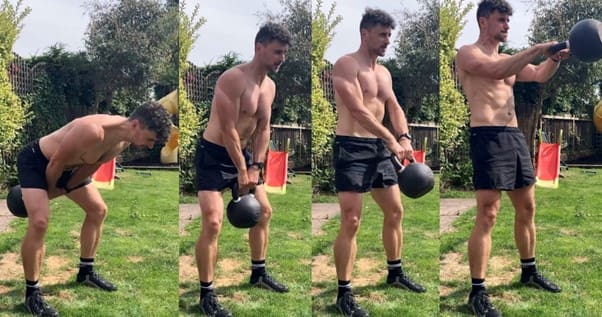
The Kettlebell Swing
The kettlebell swing is often hailed as the cornerstone of kettlebell training. This powerful exercise targets your posterior chain, including your glutes, hamstrings, and lower back, improving your overall lifting mechanics. The swing is a hip hinge movement that mirrors the explosiveness required in sprinting, jumping, and squatting, making it an invaluable exercise for athletes and fitness enthusiasts alike.
When performing the swing, focus on driving the movement with your hips, allowing the kettlebell to follow a natural arc. Proper technique ensures that you’re maximizing the benefits of the swing while minimizing the risk of injury.
The Racked Squat
The racked squat introduces a unique challenge by positioning kettlebells in a way that simulates the load distribution of a back squat but with added safety and versatility. This variation is particularly beneficial for those without access to a barbell, offering a high-rep alternative that can significantly improve conditioning and mobility. By squatting with kettlebells, you’re also reducing compressive force on the spine, making it a safer option for those concerned about back health.
The Cossack Squat
The Cossack squat is a testament to the versatility of kettlebell training, targeting hip mobility and strength in a way few exercises can. This movement, performed in the frontal plane, not only aids in developing powerful legs but also contributes to a reduction in back pain and an improvement in athletic performance.
The Cossack squat is a prime example of how kettlebell exercises can serve as both strength training and a form of dynamic stretching, enhancing your body’s ability to move freely and efficiently.
Kettlebell Halos for Shoulder Mobility
The kettlebell halo is an underappreciated gem in the kettlebell repertoire. This exercise enhances shoulder mobility and stability by engaging a wide range of muscles in the upper body, including the triceps, lats, and core.
The key to a successful halo is to ensure a wide range of motion, moving the kettlebell around the head in a controlled manner. This not only strengthens the shoulders but also improves overhead range of motion, crucial for athletes and anyone looking to maintain healthy shoulder joints.
The Kettlebell Chest Press and Bent Over Row
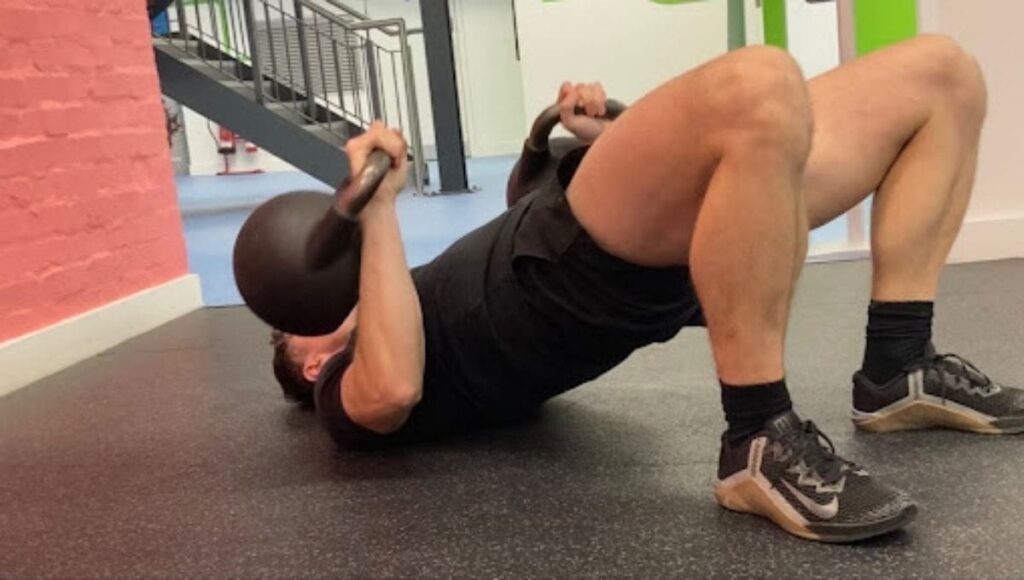
While kettlebells might not be the first choice for chest exercises, the kettlebell chest press offers an interesting variation to the traditional bench press. By performing this exercise with a glute bridge, you increase the range of motion and add a core stability component. However, for those seeking a more traditional approach to chest training, modifications and alternatives, such as diamond push-ups using kettlebells, can provide both a challenge and a novelty to your workout routine.
The bent-over row, on the other hand, is a staple in kettlebell training for developing back strength and stability. This exercise can be performed in various ways to target different aspects of fitness, from anti-rotational strength to enhanced core engagement. Whether you’re looking for muscle hypertrophy or functional strength, the kettlebell bent-over row adapts to meet your needs.
Kettlebell Workout Sample
Creating a comprehensive kettlebell workout from the exercises outlined requires a balanced approach, focusing on both strength and endurance while ensuring enough variety to target the entire body. Below is a structured kettlebell workout that incorporates the discussed exercises, designed to offer a full-body challenge. This workout is suitable for intermediate to advanced fitness enthusiasts, but beginners can adjust the weights and reduce the sets or reps as necessary.
Kettlebell Workout Plan
Warm-Up
- 5 minutes of dynamic stretching focusing on the legs, arms, and core.
- 2 sets of 10 kettlebell deadlifts with a light kettlebell to prepare the posterior chain.
Main Workout
- Kettlebell Swings
- Sets/Reps: 4 sets of 15-20 reps
Focus on explosive power from the hips, ensuring a strong glute activation. Rest for 1 minute between sets.
- Racked Squats
- Sets/Reps: 3 sets of 12-15 reps per side
Hold a kettlebell in the racked position at shoulder height. Ensure depth and proper form for maximal leg and core engagement. Rest for 90 seconds between sets.
- Cossack Squats
- Sets/Reps: 3 sets of 8-10 reps per side
This exercise tests mobility and leg strength. Take it slow, focusing on form and depth. Rest for 1 minute between sets.
- Kettlebell Halos
- Sets/Reps: 3 sets of 10 reps (clockwise and anti-clockwise)
Keep the core engaged and move through the full range of motion. Rest for 45 seconds between sets.
- Kettlebell Chest Press (with Glute Bridge)
- Sets/Reps: 4 sets of 8-12 reps
Perform this exercise with a glute bridge to increase range of motion and core activation. Rest for 1 minute between sets. If this movement is uncomfortable, substitute with diamond push-ups using a kettlebell for 3 sets of 8-10 reps.
- Bent Over Rows
- Sets/Reps: 3 sets of 12-15 reps per side
Choose a stance that challenges you, focusing on keeping the elbow close to the body and engaging the lats. Rest for 1 minute between sets.
Cool Down
- 5 minutes of static stretching focusing on full-body relaxation and flexibility.
- Pay special attention to the hamstrings, quads, back, and shoulders.
Notes for Success:
- Progression: To progress, increase the kettlebell weight or the number of reps/sets as you become more comfortable with the exercises.
- Rest: Listen to your body. If you need more rest between sets, take it. The goal is to maintain form and safety throughout the workout.
- Hydration: Stay hydrated throughout the workout, especially if you’re training in a hot or humid environment.
- Footwear: Consider wearing minimal shoes or training barefoot to enhance your connection to the ground, especially for exercises like the racked squat and Cossack squat.
This workout plan offers a balanced approach to kettlebell training, engaging multiple muscle groups and enhancing overall fitness. Remember, consistency and proper form are key to seeing progress and avoiding injury. Adjust the workout to your current fitness level and goals, and don’t hesitate to modify exercises as needed to suit your needs.
Conclusion
Kettlebell training offers a unique blend of strength, flexibility, and endurance training that is hard to match with any other single piece of equipment. From the dynamic kettlebell swing to the mobility-enhancing Cossack squat, each exercise in this guide is designed to provide a comprehensive workout that challenges your body in new and exciting ways. By incorporating these kettlebell exercises into your routine, you’re not just working towards a stronger physique but also a more resilient and versatile body capable of handling the complexities of everyday movement and athletic performance. Embrace the power of kettlebell training and unlock your body’s full potential.
For a better understanding of the 6 kettlebell moves for total body fitness, you can watch the video below. In it, Adam Sinicki explains in deeper details why each exercise is great for improving your overall fitness, how to perform the exercises and how to get that incredible mind-muscle connection.
Happy training everyone.
Check out more content from BOXROX we think you are going to love:
5 Methods of Progressive Overload to Force Muscle Growth
How to Burn Fat Without Losing Muscle
10 Terrible Things To Do Before A Workout
14 Exercise Myths Debunked by Physical Therapists
How Stress Can Impact Muscle Growth
How To Train Slow Twitch Fibre for More Muscle Growth
How to Shed Fat, Get Lean and Stay Lean Using Science-Based Tips