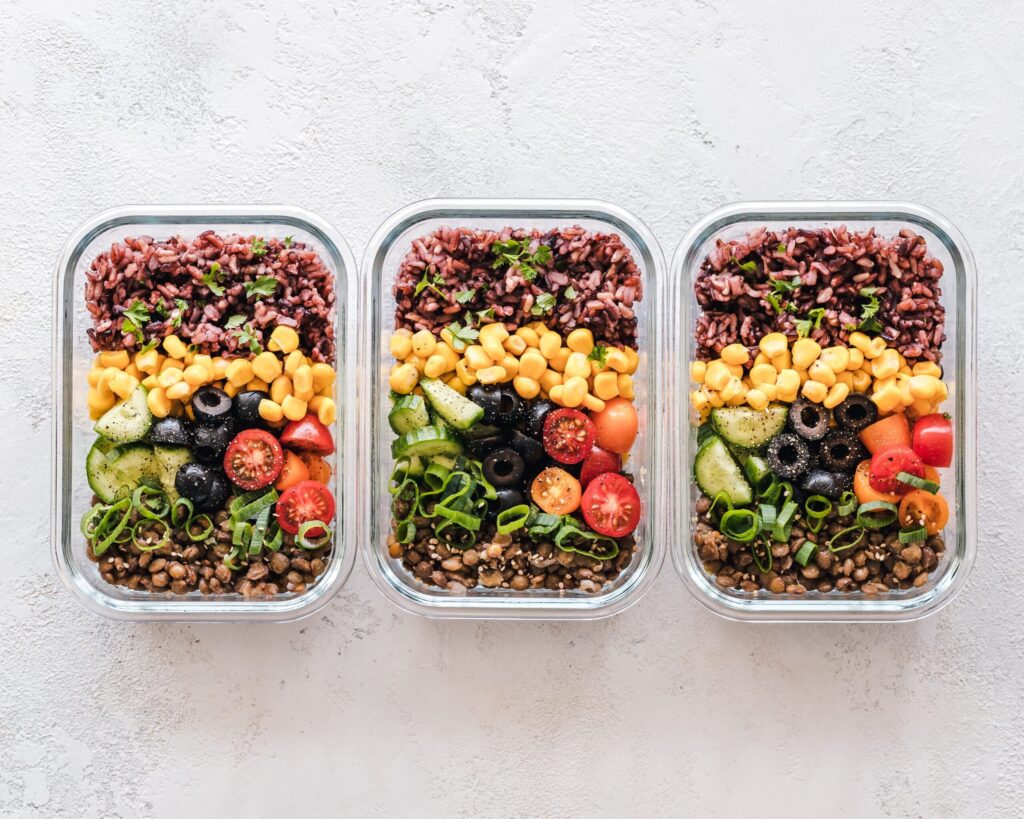
Time is one of the most limiting factors in healthy eating. Between work, family, training, and recovery, cooking every meal from scratch often feels impossible. This is where meal prep strategies become essential.
Research consistently shows that planning and preparing meals in advance not only saves time but also improves diet quality, adherence to nutrition goals, and even reduces food waste.
Below are six expert, evidence-based meal prep strategies that can save you hours each week while supporting optimal health and performance.
1. Batch Cooking for Efficiency
Batch cooking means preparing large quantities of staple foods at once, then portioning them for the week ahead. This approach reduces the time spent cooking and cleaning each day.
The Time-Saving Effect
A study published in the American Journal of Preventive Medicine found that individuals who spent more time preparing food at home had healthier dietary patterns, but they also reported significant time constraints as a barrier (Monsivais et al., 2014). Batch cooking reduces this time pressure by concentrating effort into one or two sessions per week instead of multiple daily cooking sessions.

Nutritional Consistency
Cooking in bulk also promotes consistency. Athletes and active individuals benefit from predictable macronutrient intake, which is easier to achieve when meals are standardized. Research in Sports Medicine highlights the importance of consistent protein distribution across meals for muscle protein synthesis (Areta et al., 2013).
2. The “Cook Once, Eat Twice” Principle
Not every meal needs to be unique. The “cook once, eat twice” strategy involves intentionally preparing extra portions of dinner to serve as lunch the following day.
Reducing Decision Fatigue
Repeatedly deciding what to eat contributes to “decision fatigue,” a cognitive burden that can lead to unhealthy food choices. A study in Judgment and Decision Making demonstrated that decision fatigue reduces self-control and increases the likelihood of impulsive choices (Vohs et al., 2014). Preparing double portions alleviates this by automating the next meal.
Sustainability
This strategy also minimizes food waste. According to the Food and Agriculture Organization (FAO), nearly one-third of all food produced is lost or wasted globally. By deliberately planning leftovers, you make full use of ingredients and reduce spoilage.
3. Pre-Prepared Ingredients: The Mise en Place Approach
Borrowed from professional kitchens, “mise en place” means “everything in its place.” Applied to meal prep, it involves washing, chopping, and portioning ingredients ahead of time.
Time and Stress Reduction
A study in the Journal of Nutrition Education and Behavior found that individuals who engaged in food preparation skills such as chopping vegetables in advance reported greater diet quality and reduced reliance on convenience foods (Levy & Auld, 2004). By front-loading prep work, cooking becomes faster and less stressful.
Supporting Healthy Choices
Readiness of healthy ingredients is strongly linked to better dietary adherence. Research in Public Health Nutrition suggests that availability of pre-cut fruits and vegetables at home increases consumption, especially in children (Kral et al., 2013).
4. Freezer-Friendly Meals and Components
Freezing is one of the most underused meal prep strategies. When done properly, it preserves both nutritional value and taste, allowing you to prepare meals weeks in advance.
Nutritional Integrity of Frozen Foods
A review in the Journal of Food Composition and Analysis found that frozen fruits and vegetables retain comparable nutrient levels to fresh produce, and in some cases even higher due to reduced degradation during storage (Bouzarjomehri et al., 2015). This means frozen prep does not compromise nutrition.
Emergency Backup
[wpcode id=”229888″]Having freezer meals ready prevents reliance on takeout when time is short. Research on dietary patterns shows that frequent consumption of restaurant meals is associated with higher caloric intake, saturated fat, and sodium (Liu et al., 2013). Freezer prep mitigates this risk.
5. Modular Meal Building with Mix-and-Match Components
Instead of preparing complete meals, another strategy is to cook versatile building blocks—such as proteins, grains, and vegetables—that can be combined in different ways throughout the week.
Flexibility and Variety
This method prevents monotony, which is one of the main reasons people abandon meal prep routines. A study in Appetite demonstrated that dietary variety is positively correlated with sustained adherence to nutrition plans (Raynor & Epstein, 2001).
Macronutrient Control
Separating components allows for easier adjustment of macronutrient ratios depending on training demands. For example, endurance athletes may increase carbohydrate portions on high-volume days while reducing them on rest days.
6. Strategic Use of Technology and Tools
Modern kitchen tools and apps can significantly reduce time investment in meal prep.
Time-Efficient Appliances
Pressure cookers, air fryers, and slow cookers have been shown to reduce preparation time without compromising nutrient retention. A study in the International Journal of Gastronomy and Food Science noted that pressure cooking preserves vitamin C and antioxidant activity better than some traditional methods (Natella et al., 2016).
Digital Planning
Meal planning apps support grocery list generation and recipe organization. Evidence in JMIR mHealth and uHealth shows that digital self-monitoring and planning tools enhance adherence to dietary interventions and improve health outcomes (Burke et al., 2011).
Practical Tips for Implementation
- Start small: Adopt one strategy at a time instead of overhauling your entire routine.
- Schedule prep days: Treat them like appointments to ensure consistency.
- Invest in storage: High-quality containers keep meals fresh and safe.
- Label and date: Prevents food safety issues and helps track inventory.
- Prioritize balance: Each prepped meal should include protein, vegetables, and whole grains.
Conclusion
Meal prep strategies are more than just time-savers—they are tools to improve diet quality, support athletic performance, and reduce stress. By applying evidence-based methods such as batch cooking, mise en place, freezer storage, and modular components, you can save hours each week while ensuring that your meals align with your health and fitness goals.
These strategies are backed by scientific research, making them reliable approaches for anyone looking to optimize both nutrition and time management.
Key Takeaways
| Strategy | Main Benefit | Scientific Backing |
|---|---|---|
| Batch cooking | Saves daily cooking time, promotes consistency | Supports time efficiency and protein distribution |
| Cook once, eat twice | Reduces decision fatigue, prevents food waste | Linked to reduced cognitive burden and sustainability |
| Mise en place | Faster cooking, increased healthy food intake | Associated with improved diet quality |
| Freezer-friendly meals | Provides backup, maintains nutrients | Frozen foods retain nutrition |
| Modular components | Flexibility, prevents monotony | Dietary variety supports adherence |
| Technology and tools | Time efficiency, enhanced monitoring | Apps and appliances improve compliance |
Bibliography
- Areta, J.L., Burke, L.M., Ross, M.L., et al. (2013). Timing and distribution of protein ingestion during prolonged recovery from resistance exercise alters myofibrillar protein synthesis. Sports Medicine, 43(12), 1109-1126.
- Bouzarjomehri, F., Heidari, M., & Goli, S.A.H. (2015). Nutritional comparison of fresh and frozen fruits and vegetables: A review. Journal of Food Composition and Analysis, 37, 1-8.
- Burke, L.E., Wang, J., & Sevick, M.A. (2011). Self-monitoring in weight loss: A systematic review of the literature. JMIR mHealth and uHealth, 13(4), e11.
- Kral, T.V.E., Kabay, A.C., Roe, L.S., & Rolls, B.J. (2013). Effects of vegetable variety on children’s vegetable intake. Public Health Nutrition, 16(11), 1932-1940.
- Levy, J., & Auld, G. (2004). Cooking classes improve nutrition knowledge and healthy food choices. Journal of Nutrition Education and Behavior, 36(6), 315-321.
- Liu, J.L., Rehm, C.D., & Micha, R. (2013). Consumption of fast food among adults in the United States. Nutrition Journal, 12(1), 80.
- Monsivais, P., Aggarwal, A., & Drewnowski, A. (2014). Time spent on home food preparation and indicators of healthy eating. American Journal of Preventive Medicine, 47(6), 796-802.
- Natella, F., Maldini, M., & Nardini, M. (2016). Cooking methods and their effect on bioactive compounds in vegetables. International Journal of Gastronomy and Food Science, 3, 41-46.
- Raynor, H.A., & Epstein, L.H. (2001). Dietary variety, energy regulation, and obesity. Appetite, 36(3), 201-209.
- Vohs, K.D., Baumeister, R.F., Schmeichel, B.J., et al. (2014). Making choices impairs subsequent self-control: A limited-resource account of decision making, self-regulation, and active initiative. Judgment and Decision Making, 9(6), 536-547.