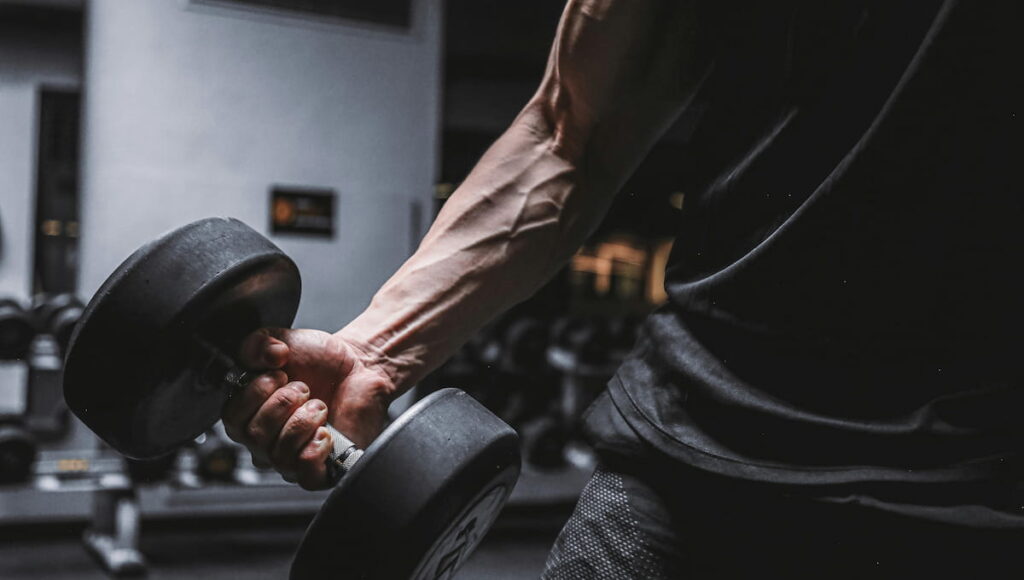
Bigger shoulders create an entire look that sculpts the upper body and delivers an athletic appearance. The deltoids are the muscles that rest on top of the clavicle and glenohumeral joint and are functionally crucial for many lifts. The content ahead looks deeper into 6 shoulder isolation exercises to build bigger delts and how these exercises can be added to your workout.
The deltoids generate an athletic physique and without broad and big muscles, the look would be missing. Building bigger shoulders can be a slow process, but when done correctly they can lead to injury-free results. 
Muscle Anatomy and Function of the Deltoids
The deltoids consist of a trio of muscle fibers that are designed to abduct, internally and externally rotate, and horizontally abduct the arm. In addition, these muscle fibers support the shoulder joint and provide a layer of protection for the shoulders and rotator cuffs. Here are some specifics about the deltoids and the fibers that make up this muscle.
- Anterior head: This part of the deltoid allows for flexion of the arm at the shoulder joint. With that said, the anterior deltoid fiber plays a role in flexing the upper arm, so if you move your elbow upwards during a biceps curl, you will also allow for this part of the deltoid to assist.
- Medial head: The medial deltoid head makes the bulk of the shoulder and it the most notorious for the athletic appearance that is on display when shirtless. Known for giving the round look on the shoulders, the medial deltoid fiber performs arm abduction and allows for shoulder stability.
- Posterior head: Also known as the rear deltoid, the posterior delt performs horizontal abduction, external rotation, and extension of the shoulders joint. The posterior deltoid is important for supporting the posterior rotator cuff muscles, which are small muscles that are prone to injury among regular lifters, and can help to stabilize this delicate part of the body.
Benefits of Isolation vs Compound Exercises
In the world of calorie burning programs, it is common to see endless compound exercises. Compound exercises are ideal for burning calories, as they work at more than one joint at a time.
However, isolation exercises work one muscle at a time. In comparison to compound exercises, isolation workouts focus on a specific muscle to build hypertrophy, correct imbalances, and sculpt.
Whatever your motivation or training program goals, it is important to perform isolation exercises so you can keep up on each part of the body. Let’s look into the 6 shoulder isolation exercises to build bigger delts and how they can be a part of your workout. 
The Top 6 Shoulder Isolation Exercises to Build Bigger Delts
Here are the top 6 shoulder isolation exercises to build bigger delts and tips on how to be successful with each.
- Y-Raise with Cables. The Y-raise is an excellent option for targeting the medial and posterior heads. With the grips criss-crossed, lift and pull the handles on each side of the head, creating a Y with each arm. The pulley should be set low for these to create optimal motion that follows the deltoids.
- Dumbbell Lateral Raise. The standard of the delts, dumbbell Lateral raises isolate and target the medial head. Performed with a medium-level weight, the lateral raise should follow a long arc or movement, raising up to shoulder level before lowering slowly down. The palms always face down on this exercise for best results.
- Reverse Fly. One of the best isolating exercises for the delts, the reverse fly to target the posterior head should be performed high. The concentric phase is where the posterior deltoid shines and if you set up your reverse fly on the pec deck at the level of your shoulders, just under the chin, then this will be ideal.
- Cable Face Pulls. Cables can be a great way to work the delts and the ease of changing angles can make the difference. The cable face pull is a high horizontal pull that isolates the posterior deltoid head and can be great for hypertrophy programs. Add weight slowly with your progression, but make sure to focus on your form to truly isolate this part of the deltoids.
- Arnold Press. This highly respected exercise was coined by Arnold Schwarzenegger and is a compound exercise that actually isolates the deltoids. Starting out with the weights right in front of the face and the palms facing in, the press up and arm rotation hits all three heads of the deltoids while also adding upper arm flexion. Adding this exercise is a must for anyone who is targeting the deltoids.
- Front Raise with Cables. The front raise targets the anterior head of the delts. When performed with cables, the deltoids can be worked with concentric and eccentric moves. This type of training can add definition to the anterior deltoid and can quickly lead to gains.
Professional Tips for Training the Delts
Isolating the deltoids can be a big step in creating an athletic physique. To maximize your results, try not to swing the arms or weights as this can take away from the isolating motion.
In addition, targeting weak areas can help to correct any imbalances that may be present, especially when using dumbbells. Weaknesses tend to hide themselves when performing bilateral movements and correcting this issue can help you to maximize your results.
Lastly, do not be afraid to change your angles with height adjustments. Especially when working with cables, the versatility can help you to work the body in different ways so that your muscles work more freely. This can help to work functional strength and add strength through a wider range of motion as a result.
Conclusion
Following along with the 6 shoulder isolation exercises to build bigger delts can help you to hit your workout goals. Progressions with the deltoids tend to be slower, as this area is not designed for large resistance like some other muscle groups. Be mindful of the tips to help promote your success as you progress into bigger delts.
Resources
https://my.clevelandclinic.org/health/body/21875-deltoid-muscles