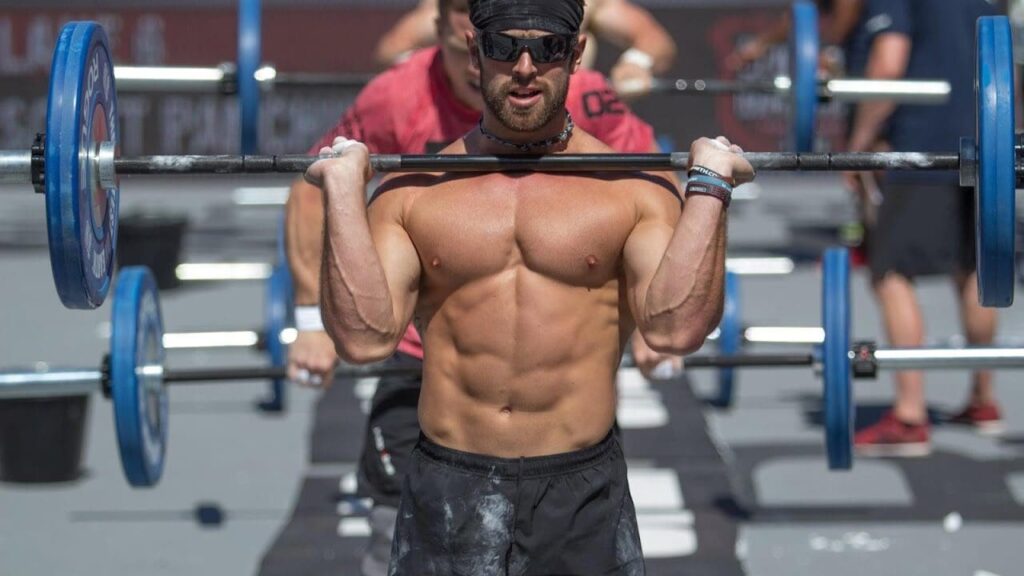
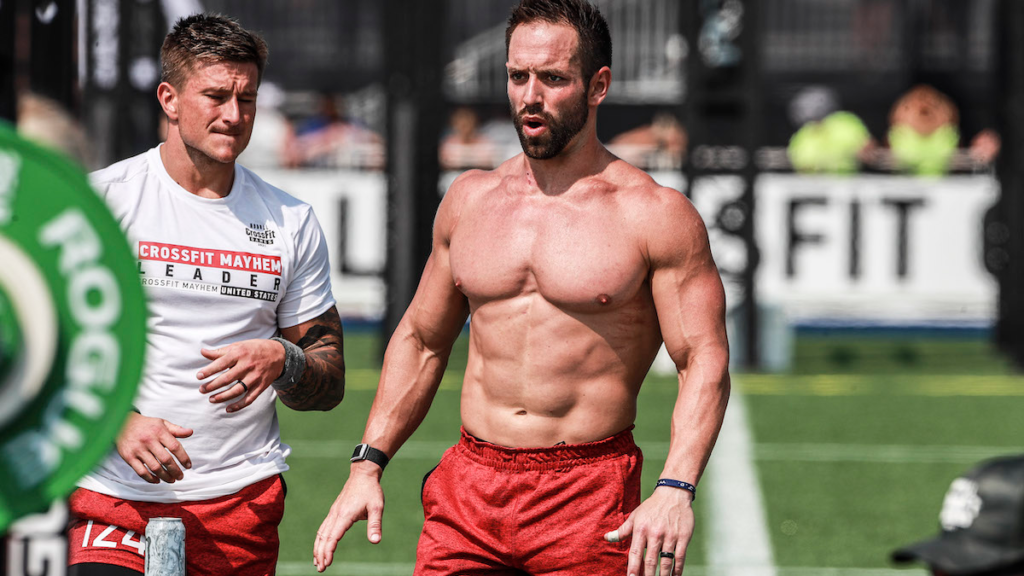
Strength challenges serve as a benchmark for assessing functional strength, endurance, and mental resilience. Unlike standard weightlifting routines, these tests push athletes to their limits, demanding power, coordination, and cardiovascular efficiency.
Engaging in such challenges improves muscle recruitment, neuromuscular coordination, and overall performance, as supported by multiple studies on progressive overload and training adaptations (Schoenfeld, 2010).
1. The 100-Rep Deadlift Challenge
How It Works
Select a weight equivalent to 50% of your one-rep max (1RM) and complete 100 reps in the shortest time possible. This challenge tests muscular endurance, grip strength, and cardiovascular efficiency.
Scientific Backing
High-rep resistance training enhances muscular endurance and metabolic stress, stimulating hypertrophy through the accumulation of lactate and growth hormone secretion (Kraemer & Ratamess, 2004). Furthermore, deadlifts activate multiple muscle groups, improving posterior chain strength and functional fitness (Escamilla et al., 2000).
Benefits
- Improves muscular endurance and hypertrophy.
- Enhances grip strength, a key indicator of longevity (Bohannon, 2008).
- Builds mental toughness by pushing through fatigue.
2. The Farmer’s Walk Bodyweight Challenge
How It Works
Carry weights equivalent to your bodyweight (split between two dumbbells or kettlebells) for a distance of 400 metres without setting them down.
Scientific Backing
Loaded carries activate stabilising muscles, improve core endurance, and strengthen the grip. Research shows that strong grip strength correlates with increased upper-body strength and reduced risk of cardiovascular disease (Dodds et al., 2019). Additionally, unilateral load-bearing enhances neuromuscular control and posture (Andersen et al., 2006).
Benefits
- Enhances grip and forearm endurance.
- Improves core stability and posture.
- Strengthens the cardiovascular system through sustained exertion.
3. The One-Arm Pull-Up Challenge
How It Works
Perform a single strict one-arm pull-up using a neutral or supinated grip without assistance.
Scientific Backing
One-arm pull-ups demand extreme upper-body strength and coordination. Studies indicate that bodyweight strength training activates motor units more effectively than isolated resistance exercises (Calatayud et al., 2015). Furthermore, eccentric training, a key component of this challenge, maximises muscle fibre recruitment and promotes hypertrophy (Suchomel et al., 2018).
Benefits
- Develops exceptional upper-body pulling strength.
- Enhances scapular control and shoulder joint stability.
- Strengthens tendons and reduces injury risk through eccentric loading.
4. The Barbell Back Squat Bodyweight Challenge
How It Works
Squat your bodyweight for 50 reps in a single set. Rest only as necessary while maintaining strict form.
Scientific Backing
High-rep squatting recruits slow-twitch and fast-twitch muscle fibres, promoting muscular endurance and hypertrophy (Campos et al., 2002). Additionally, squats improve bone mineral density, reducing the risk of osteoporosis (Gunter et al., 2000).
Benefits
- Enhances lower-body endurance and hypertrophy.
- Improves hip and knee joint resilience.
- Increases bone mineral density, particularly in weight-bearing areas.
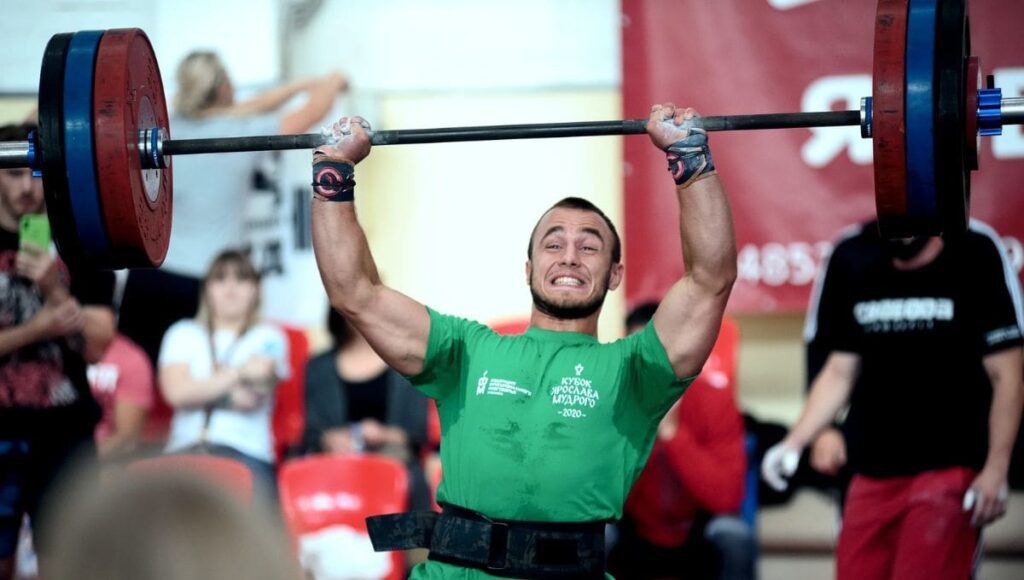
5. The Overhead Barbell Hold for Time
How It Works
Hold a barbell overhead at 75% of your bodyweight for as long as possible, maintaining strict lockout form.
Scientific Backing
Static overhead holds reinforce shoulder stability, core strength, and upper-trapezius endurance. Research suggests that isometric contractions build muscular endurance and improve joint health by increasing tendon stiffness (Kubo et al., 2001). Additionally, overhead stability is crucial for athletes in Olympic weightlifting, CrossFit, and combat sports (Comfort et al., 2011).
Benefits
- Develops shoulder stability and strength.
- Enhances core engagement and postural control.
- Strengthens tendons, reducing the risk of shoulder injuries.
6. The Sandbag Carry for Distance
How It Works
Carry a sandbag weighing 1.5 times your bodyweight for 50 metres. The carry can be done in a front-loaded, shouldered, or Zercher hold position.
Scientific Backing
Sandbag training increases functional strength by challenging stabilising muscles in an unstable environment. Studies show that unconventional resistance training, such as sandbag carries, enhances neuromuscular coordination and grip strength more effectively than traditional free weights (Beardsley & Contreras, 2014).
Additionally, loaded carries mimic real-world strength applications, benefiting athletes in combat and contact sports (Haff et al., 2008).
Benefits
- Improves full-body strength and functional fitness.
- Enhances grip endurance and cardiovascular capacity.
- Develops stabilising muscles through an unpredictable load distribution.
Conclusion
Strength challenges provide an effective way to test physical limits while improving endurance, neuromuscular coordination, and overall functional strength. Incorporating these challenges into training can build resilience, enhance performance, and identify weak points for targeted improvement.
Key Takeaways Table
| Strength Challenge | Primary Benefit |
|---|---|
| 100-Rep Deadlift Challenge | Improves muscular endurance and grip strength. |
| Farmer’s Walk Bodyweight Challenge | Enhances core stability and cardiovascular endurance. |
| One-Arm Pull-Up Challenge | Develops extreme upper-body pulling strength. |
| Barbell Back Squat Bodyweight Challenge | Increases lower-body endurance and hypertrophy. |
| Overhead Barbell Hold for Time | Strengthens shoulder stability and core engagement. |
| Sandbag Carry for Distance | Improves full-body strength and grip endurance. |
Bibliography
- Andersen, J.L., Aagaard, P., & Magnusson, S.P. (2006). Neural adaptation and muscle strength changes during heavy resistance training. Scandinavian Journal of Medicine & Science in Sports, 16(1), 16-24.
- Beardsley, C., & Contreras, B. (2014). The functional movement screen: A review. Strength and Conditioning Journal, 36(5), 72-80.
- Bohannon, R.W. (2008). Hand-grip dynamometry predicts future outcomes in aging adults. Journal of Geriatric Physical Therapy, 31(1), 3-10.
- Calatayud, J., Borreani, S., Colado, J.C., Martin, F., Rogers, M.E., & Behm, D.G. (2015). Neuromuscular effects of eccentric overload training: A systematic review. Scandinavian Journal of Medicine & Science in Sports, 25(6), e682-e692.
- Campos, G.E.R., Luecke, T.J., Wendeln, H.K., Toma, K., Hagerman, F.C., Murray, T.F., Ragg, K.E., Ratamess, N.A., Kraemer, W.J., & Staron, R.S. (2002). Muscular adaptations in response to three different resistance-training regimens: Specificity of repetition maximum training zones. European Journal of Applied Physiology, 88(1-2), 50-60.
- Comfort, P., Allen, M., & Graham-Smith, P. (2011). Comparisons of peak ground reaction force and rate of force development during variations of the power clean. Journal of Strength and Conditioning Research, 25(5), 1235-1239.
- Dodds, R.M., Syddall, H.E., Cooper, R., Benzeval, M., Deary, I.J., Dennison, E.M., Der, G., Gale, C.R., Inskip, H.M., Jagger, C., Kirkwood, T.B., Lawlor, D.A., Robinson, S.M., Starr, J.M., Steptoe, A., & Cooper, C. (2019). Grip strength across the life course: Normative data from twelve British studies. PLoS ONE, 14(12), e0229504.
- Escamilla, R.F., Francisco, A.C., Kayes, A.V., Speer, K.P., & Moorman, C.T. (2000). An electromyographic analysis of sumo and conventional style deadlifts. Medicine and Science in Sports and Exercise, 32(7), 1265-1275.