Arguably the hardest bodyweight exercise to perfect, pull-ups can be a struggle if you’re new to CrossFit. We have designed a straight-forward training plan for pull-ups that will help get you there.
This will also help you on your journey towards more complicated and difficult movements like muscle-ups and butterfly pull-ups.
Let’s Talk Pull-Ups: Why Are They So Hard?
Pull-ups are hard because you are lifting your entire bodyweight off the ground with muscles that are generally under-developed and gravity in your way.
If you weigh 80kg, you’ll need a lot of strength in your upper body to comfortably pull yourself up, and most of us don’t naturally develop that kind of pulling strength without a little training!
Pull-ups involve intense engagement of your upper back, in particular your latimus dorsi. You will also engage your biceps, serratus anterior, rhomboids, infraspinatus, erector spinae, and obliques. So to get your upper body in the best space for pull-ups, these are the muscles you should be working on.
Because you utilize so many important muscle groups during a pull-up, they are a highly effective functional exercise, and the journey towards the pull-up is just as important — if not more so — than the pull-up itself.
Training Program For Pull-Ups: Exercises to Assist Your Pull-Up Strength
Before launching into the 6-week pull-up training program, we need to establish the kinds of exercises that will help you reach your goal.
Inverted Row
Great for: lats, traps, rear deltoids & grip strength.
Equipment: Stable barbell at waist height / bar at waist height / Smith machine.
- Place the bar at waist height and make sure it’s stable; ie. it won’t move when you put ay weight on it.
- Crawl under the bar and hold it at a shoulder width grip
- With your feet flat on the floor, pull your upper body towards the bar.
- Keep your back straight and core tight.
- Return back to your starting position and repeat.
Dumbbell Row
Great for: lats, rhomboids, traps, biceps and triceps.
Equipment: One dumbbell / bench.
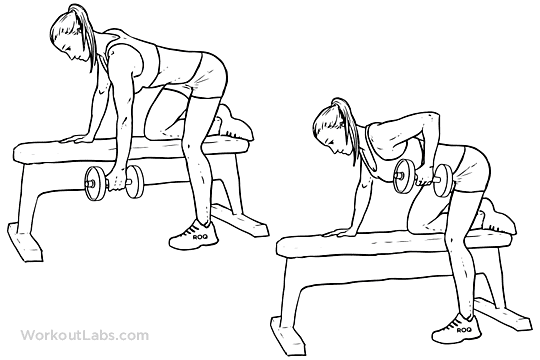
- Place one hand and one knee on the bench, with the other foot firmly the ground for stability.
- You should be bent forward, with your back straight to engage your core and protect your spine.
- Pick up the dumbbell with your other available hand, with your palm facing towards the bench.
- Pull the dumbbell the dumbbell to your side by pulling your elbows back towards the hips and upwards. The elbow should barely pass your torso line.
- Keeping your back still. Do not curl as you lift the weight. If the dumbbell is too heavy, opt for a lighter one.
- Slowly return the dumbbell back to the starting position for one rep.
Pull-Up Machine
Great for: Lats, traps, all the muscles used in a pull-up.
Equipment: Pull-up machine
The pull-up machine is a great tool for building strength in your upper body, as it helps mitigate some of your bodyweight; meaning you can slowly increase the weight you’re pulling comfortably as you train the muscles in your upper body.
Seated Back Row
Good for: Lats, shoulders.
Equipment: Seated back row machine
Another excellent piece of gym equipment to utilise in your pull-up quest is the seated back row. Using the machine, you pull your shoulder blades back as you pull the the weight, engaging the shouders, lats, biceps and triceps.
Lat-Pull Down
Good for: Lats, shoulders
Equipment: Pulldown machine
Once again, lat pull downs are exceptional for building strength in your lats and shoulder. With a straight back and feet firmly planted on the floor, pull the bar down towards you, activating your upper body.
Different grips on the bar also activate different muscle groups, but for building muscle in your upper body for pull-ups, you’ll want to keep a wide grip.
Dead Hangs
Good for: Upper back, shoulders, core, forearms, hand and wrist flexors.
Equipment: Pull-up bar / stable bar.
While building muscle in your lats, biceps, and traps is highly important for developing the strength to do a set of pull-ups, without decent grip strength it could all be for nothing.
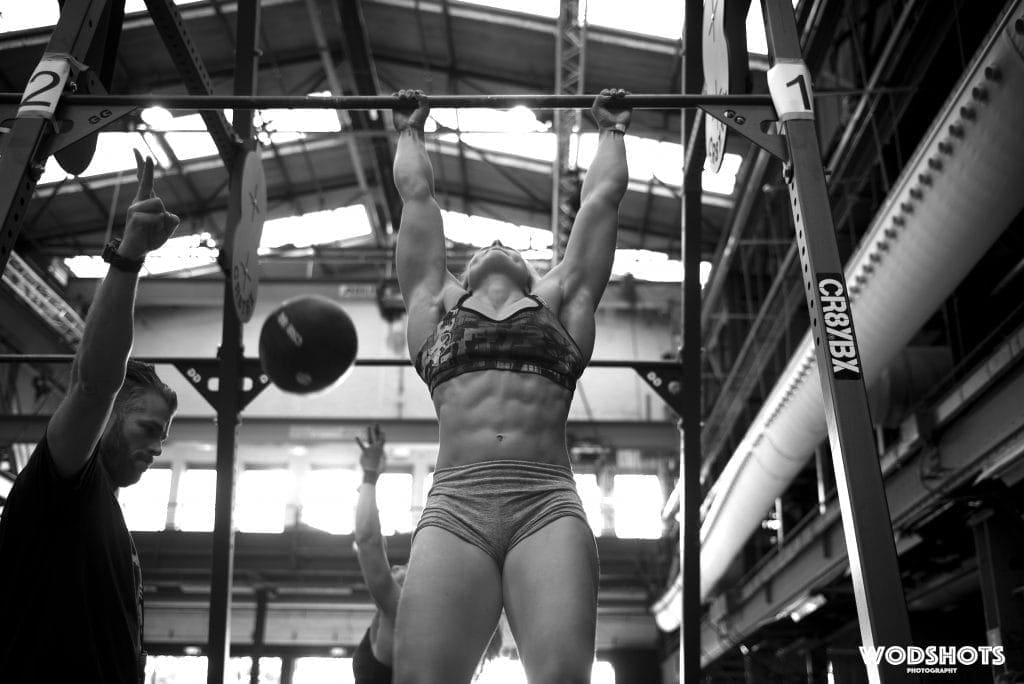
Grip strength allows you to stay stable on the bar, bearing the full weight of the movement. Building strength in your forearms, wrists and hands is also helpful for a ton of functional exercises — especially those with a barbell.
Dead hangs look exactly how they sound. You hang from the bar without lifting or swinging. The goal is to stay stable and strong for as many seconds as possible.
Pull-Up Variations / Pull-Up Progression
On your journey to a strict pull-up, you should attempt some pull-up variations that will help build the muscles you need.
Assisted Pull-Ups
Equipment: Pull-up bar / Medium-heavy resistance band / Buddy or coach to help spot
Using a resistance band to assist you is one of the best ways to practice as you build up to strict pull-ups.
- Depending on where you are in your pull-up training, start with a band with plenty of resistance; this will make the exercise easier. This will also help you get a feeling for the movement.
- Loop the band to your pull-up bar.
- Put one foot in the loop of the bar, and put your other foot over the looped food for safety incase the band slips off your foot.
- Next, pull yourself up until your chin reaches the bar, using the resistance of the band to assist your back muscles in pulling you up and down.
Negative Pull-Up
Negative pull-ups use gravity to work on your upper body and build strength. With an overhead grip at shoulder width, keep your body straight and jump up to grip the bar, using a box or raised surface if necessary.
The momentum from the jump will get your chin over the bar. This the starting position. Lower yourself slowly back the ground, engaging your core and lats.
Chin-Ups
Chin-ups are the pull-ups slightly more achievable little brother. If you’re struggling with pull-ups, you might have more luck working on your chin-up technique.
The difference between a pull-up and chin-up is the position of the hands. This engages slightly different muscle groups.
- Begin by using an underhand grip, with your palms facing towards you.
- Engage your core, lats, biceps, and triceps to pull yourself up.
- Once your chin reaches the bar, lower yourself back down. This is one rep.
There are also many more pull-up variations you can also try to help you achieve your goal.
Beginners 6-Week Training Program For Pull-Ups
Using the exercises above, this training plan will help you build the strength required to
- Complete these sets twice a week as part of your training program.
- Alongside the exercises, practice with the pull-up variations above. This will help you measure your progress.
- The more you challenge yourself the easier it will become. Keep form in mind.
- Take 30-60 seconds between sets to rest.
- Keep in mind: If you want to lift your bodyweight with your upper body, aim to tackle that amount of weight in your training program. Start where it’s comfortable and work up.
Week 1
Dead Hang: 10 second hold x 4 reps. Rest for 20-30 seconds in between.
Dumbbell Row: 4 x 12 reps. Pick a weight that feels comfortable enough to complete 12 reps with good form.
Lat pulldown: 4 x 8 reps.
Seated back row: 4 x 8 reps.
Week 2
Dead Hang: 10 second hold x 4 reps. Rest for 20-30 seconds in between.
Dumbbell Row: 4 x 12 reps. Pick a weight that feels comfortable enough to complete 12 reps with good form.
Lat pulldown: 4 x 8 reps.
Inverted row: 4 x 8-12 reps.
Negative pull-ups: 3×3-5 reps.
Week 3
Dead Hang: 15 second hold x 4 reps. Rest for 20-30 seconds in between.
Negative pull-up: Aim to get 3×3 reps.
Pull-up machine: 4 x 5 reps. Give yourself a challenge by keeping the weight high and reps low.
Inverted Row: As many as possible / to failure.
Week 4
Inverted Row: 4 x 8-12 reps.
Dead Hang: 20 second hold x 3 reps.
Seated back row: 4 x 8 reps.
Dumbbell Row: As many as possible / to failure.
Week 5
Dead Hang: As long as possible x 3 reps. Try and see if you can stay hanging for 20-30 seconds. Rest in between as needed.
Negative pull-up: 3×3 reps.
Inverted Row: 4 x 8-12 reps.
Lat pulldown: As many as possible / to failure.
Week 6
Dead Hang: As long as possible x 3 reps. Try and see if you can stay hanging for 20-30 seconds. Rest in between as needed.
Pull-up machine: 5×5. Use as little support weight as possible.
Assisted band pull-ups: Work on getting 3 assisted pull-ups, reducing the resistance of the band if necessary.
Tips for Beginners
Do not neglect your core! When you lift your bodyweight, engage your core alongside your lats and shoulders. This will help you pull yourself up.
Don’t stress: Pull-ups are notoriously hard. If you haven’t build the strength in six weeks, don’t worry. You have all the tools to get to where you want to be, but depending on a variety of factors, you may need longer than 6 weeks.
No shame: There is no shame in using any of the assisted variations above. All of them engage your upper body and build strength for increased functionality and aesthetics.