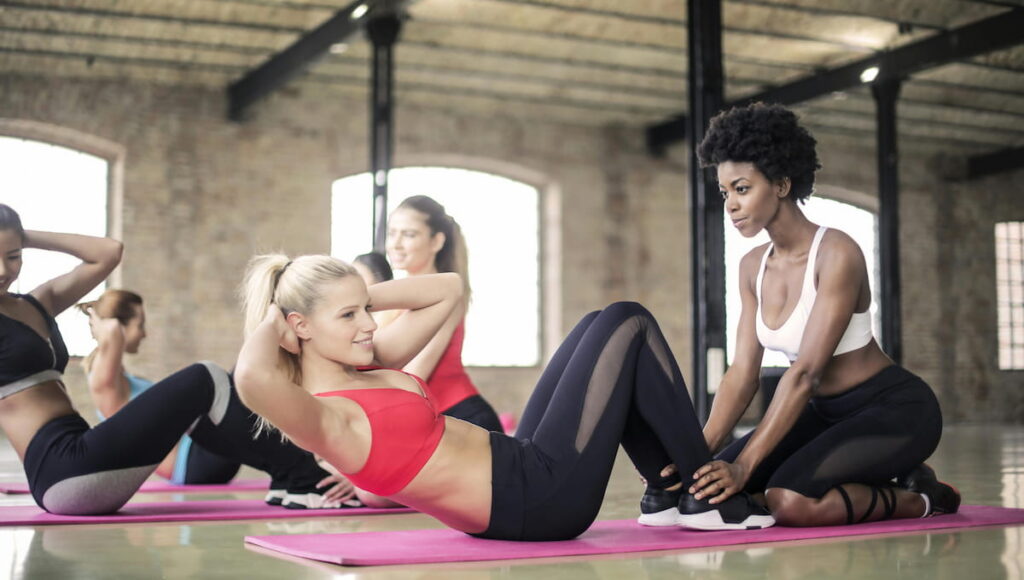
Sit-ups have long been hailed as a go-to move for strengthening the abdominal muscles. However, mounting evidence shows they may not be the most effective or safest way to develop core strength. Several superior exercises offer more targeted engagement, reduced risk of injury, and improved overall core activation.
This article breaks down seven ab exercises that are scientifically proven to outperform sit-ups, backed by peer-reviewed research.
Why Sit-Ups Fall Short
Despite their popularity, sit-ups come with limitations. The primary issue lies in their movement pattern. Sit-ups predominantly engage the hip flexors rather than isolating the abdominal muscles. Moreover, they place repetitive stress on the lumbar spine, increasing the risk of lower back injury, particularly in deconditioned or older individuals. A study by McGill (1995) found that repeated spinal flexion, as performed in sit-ups, can lead to disc herniation in a cadaver model, suggesting potential harm when replicated in living subjects over time.
Another downside is that sit-ups offer limited functional transfer to athletic performance or daily activities. Core stability, not flexion, is the cornerstone of effective movement and injury prevention. Hence, exercises that emphasize isometric holds or dynamic stabilization tend to be more beneficial.
1. Plank Variations
Why Planks Work
The plank is a foundational isometric exercise that engages the entire core, including the rectus abdominis, transverse abdominis, obliques, and lower back. Unlike sit-ups, planks avoid spinal flexion and instead focus on maintaining a neutral spine under load. Research by Ekstrom et al. (2007) showed that planks result in significantly higher activation of the transverse abdominis compared to traditional crunches.
How to Do It
Begin in a forearm plank position, keeping your body in a straight line from head to heels. Engage your core, squeeze your glutes, and avoid letting your hips sag. Hold the position for 30 to 60 seconds, increasing duration as you build strength. Progressions include side planks, plank with leg lifts, or RKC planks.
2. Dead Bug
Why the Dead Bug Is Effective
The dead bug is a dynamic stabilization exercise that enhances core coordination and lumbar spine control. It trains contralateral limb movement, replicating functional patterns like walking or running. According to a study published by Endleman and Critchley (2008), exercises like the dead bug activate the deep stabilizers of the core more effectively than traditional sit-ups.
[wpcode id=”229888″]
How to Do It
Lie on your back with your arms extended toward the ceiling and your knees bent at 90 degrees. Slowly lower your right arm and left leg toward the ground while keeping your lower back pressed into the floor. Return to the starting position and repeat on the other side. Perform 3 sets of 8–12 controlled reps per side.
3. Hanging Leg Raises
Superior Lower Ab Engagement
Hanging leg raises are particularly effective at targeting the lower portion of the rectus abdominis, an area often under-stimulated by sit-ups. They also engage the hip flexors and grip muscles. A study by Escamilla et al. (2006) found that hanging leg raises produced significantly higher EMG activity in the lower abs compared to crunches and sit-ups.
How to Do It
Hang from a pull-up bar with your arms fully extended and feet off the ground. Keeping your legs straight, raise them to a 90-degree angle, then slowly lower them back down. Ensure controlled movement to avoid swinging. Beginners can start with bent-knee raises.
4. Ab Wheel Rollouts
Total Core Integration
Ab wheel rollouts are highly effective for engaging the entire core, especially the anterior chain, which includes the rectus abdominis and obliques. They also challenge the lats, shoulders, and hip flexors. According to research by Comfort et al. (2011), ab wheel rollouts elicited among the highest levels of core activation across various exercises tested.
How to Do It
Kneel on the floor with the ab wheel in front of you. Slowly roll forward, extending your body as far as your core can control without allowing your lower back to arch. Reverse the motion to return to the starting position. Perform 3 sets of 8–10 reps.
5. Pallof Press
Anti-Rotation Strength
The Pallof press is an anti-rotation exercise that trains the core to resist external forces, a key component of functional strength. Research from Sato and Mokha (2009) demonstrated that the Pallof press significantly enhances trunk stability and can improve posture and reduce back pain in sedentary populations.
How to Do It
Attach a resistance band to a fixed point at chest height. Stand perpendicular to the anchor point, holding the band with both hands close to your chest. Press the band straight out in front of you and hold for 2–3 seconds before returning. Perform 3 sets of 10 reps per side.
6. Bird Dog
Posterior Chain and Core Synergy
The bird dog targets spinal stabilizers and improves coordination between the upper and lower body. It effectively engages the multifidus and erector spinae, muscles often neglected in flexion-based ab exercises. A study by Stevens et al. (2006) found the bird dog to be a top-rated core stabilizer with minimal spinal load.
How to Do It
Start on all fours with hands under shoulders and knees under hips. Extend your right arm and left leg simultaneously, keeping your spine neutral. Hold briefly at the top, then return and repeat on the opposite side. Perform 3 sets of 10–12 reps per side.
7. Cable Woodchoppers
Functional Oblique Engagement
Cable woodchoppers simulate rotational movements found in many sports and daily activities. They effectively engage the internal and external obliques, enhancing rotational power and core stability. According to a study by Willardson et al. (2004), rotational exercises like the woodchopper demonstrate superior oblique activation compared to linear movements such as sit-ups.
How to Do It
Set the cable machine to a high pulley position. Stand with feet shoulder-width apart, holding the handle with both hands. Pull the cable down and across your body in a diagonal motion, keeping arms extended and core engaged. Repeat on both sides for 3 sets of 8–10 reps.
Conclusion
While sit-ups may have earned their place in gym class routines, modern sports science provides us with a clearer picture of how to effectively train the core. Exercises that challenge core stability, involve multiple planes of motion, and minimize spinal strain offer more functional and safer alternatives. Whether you are training for performance, aesthetics, or health, incorporating these seven exercises into your routine will deliver superior results.
References
Comfort, P., Pearson, S. J. & Mather, D. (2011). An electromyographical comparison of trunk muscle activity during traditional and instability-based exercises. Journal of Strength and Conditioning Research, 25(4), 1101–1107.
Ekstrom, R. A., Donatelli, R. A. & Carp, K. C. (2007). Electromyographic analysis of core trunk, hip, and thigh muscles during 9 rehabilitation exercises. Journal of Orthopaedic and Sports Physical Therapy, 37(12), 754–762.
Endleman, I. & Critchley, D. (2008). Transversus abdominis and obliquus internus activity during pilates exercises: measurement with ultrasound scanning. Archives of Physical Medicine and Rehabilitation, 89(11), 2205–2212.
Escamilla, R. F., McTaggart, M. S., Fricklas, E. J., DeWitt, R., Kelleher, P., Taylor, M. K., Hreljac, A. & Moorman, C. T. (2006). An electromyographic analysis of commercial and common abdominal exercises: implications for rehabilitation and training. Journal of Orthopaedic and Sports Physical Therapy, 36(2), 45–57.
McGill, S. M. (1995). Mechanical loadings of the spine during exercise. Clinical Biomechanics, 10(2), 88–91.
Sato, K. & Mokha, M. (2009). Does core strength training influence running kinetics, lower-extremity stability, and 5000-M performance in runners? Journal of Strength and Conditioning Research, 23(1), 133–140.
Stevens, V. K., Bouche, K. G., Mahieu, N. N., Coorevits, P. L., Vanderstraeten, G. G. & Danneels, L. A. (2006). Trunk muscle activity in healthy subjects during bridging stabilization exercises. BMC Musculoskeletal Disorders, 7(1), 75.
Willardson, J. M., Fontana, F. E. & Bressel, E. (2004). Core stability and its relationship to lower extremity function and injury. Strength and Conditioning Journal, 26(2), 30–42.