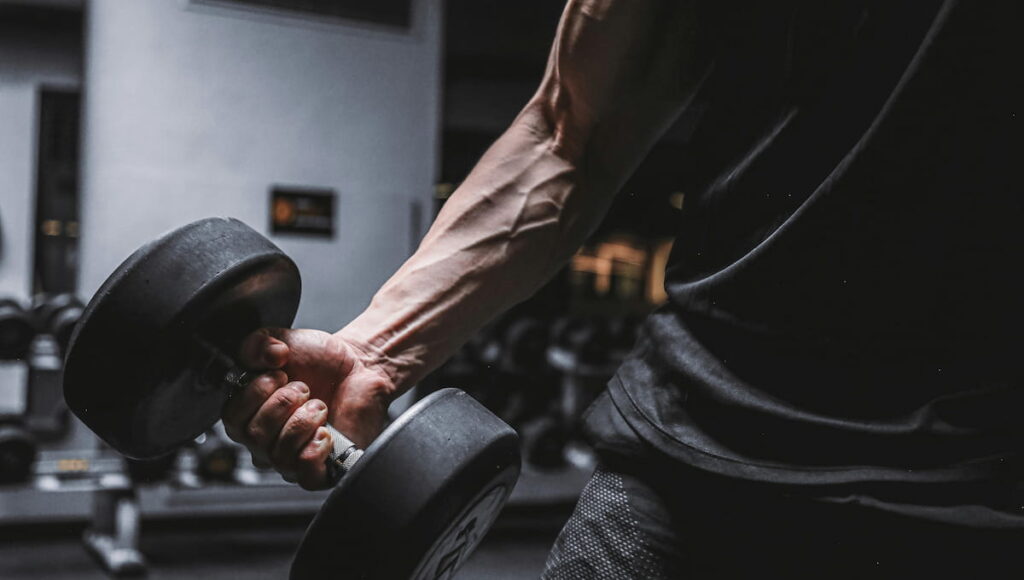
Building strong arms is more than an aesthetic pursuit — it’s a foundation for full-body strength, athletic performance, and long-term joint health. For beginners, choosing the right arm exercises is essential to stimulate muscle growth safely and efficiently.
This guide breaks down the 7 Best Beginner Arm Exercises backed by scientific evidence, explaining how each movement strengthens the muscles of your biceps, triceps, and forearms while supporting functional performance.
Each exercise included here has been selected based on its proven effectiveness in activating key arm muscles, simplicity of execution, and adaptability for progressive overload — the principle at the core of strength development.
Understanding Arm Anatomy and Function
Before jumping into the exercises, it’s crucial to understand the major muscles involved in arm training.
Biceps Brachii
The biceps brachii consist of two heads — the long head and short head — responsible for elbow flexion and forearm supination. EMG studies have shown that both heads are strongly activated during curling motions, particularly when the forearm is supinated (facing upward) (Signorile et al., 2002).

Triceps Brachii
The triceps brachii make up approximately two-thirds of the upper arm’s muscle mass. They consist of the long, lateral, and medial heads, which extend the elbow joint. Research indicates that compound pushing movements and isolation extensions activate the triceps effectively (Wakahara et al., 2012).
Brachialis and Brachioradialis
The brachialis lies beneath the biceps and contributes significantly to overall arm thickness. It’s most active during neutral or pronated grip curls. The brachioradialis spans the forearm and supports flexion at the elbow, particularly during hammer-style lifts (Marcolin et al., 2018).
The Science of Building Strength Fast
For beginners, strength gains occur rapidly due to neuromuscular adaptation — your nervous system becomes more efficient at recruiting muscle fibers. Studies show that neural improvements contribute significantly to early strength gains within the first 8–12 weeks of training (Sale, 1988).
To build strength fast:
- Focus on progressive overload — increasing resistance or volume over time.
- Use compound and isolation exercises for balanced development.
- Train with controlled tempo to maximize muscle tension.
- Allow for adequate recovery, as muscle growth occurs outside the gym.
1. Dumbbell Bicep Curl
Overview
A staple in arm training, the dumbbell bicep curl isolates the biceps and is easy for beginners to learn. It develops both strength and muscle endurance when performed with proper form.
Execution
- Stand upright with a dumbbell in each hand, palms facing forward.
- Keep your elbows close to your torso and curl the weights upward.
- Pause briefly at the top, then lower slowly to full extension.
Science Behind It
A study by Signorile et al. (2002) demonstrated that free-weight curls activate the biceps brachii more effectively than cable or machine alternatives due to increased stabilization demand.
Tips
- Avoid swinging the weights — use controlled motion.
- Alternate arms to improve focus and symmetry.
2. Triceps Dips (Bench or Parallel Bars)
Overview
Triceps dips target all three heads of the triceps while engaging the shoulders and chest as secondary stabilizers.
Execution
- Place hands shoulder-width apart on a bench or parallel bars.
- Lower your body by bending the elbows until upper arms are parallel to the floor.
- Push back up to full extension.
Science Behind It
Electromyography (EMG) analysis by Wakahara et al. (2012) found that bodyweight dips generate high activation in the triceps long and lateral heads, especially when performed at moderate intensity.
Tips
- For beginners, keep feet on the floor to reduce load.
- Maintain a vertical torso to focus on the triceps rather than the chest.
3. Hammer Curl

Overview
The hammer curl works the biceps, brachialis, and brachioradialis, building both upper arm thickness and grip strength.
Execution
- Hold dumbbells with palms facing inward (neutral grip).
- Curl the weights while keeping elbows stationary.
- Lower with control.
Science Behind It
Marcolin et al. (2018) found that neutral-grip variations increase activation of the brachioradialis compared to traditional curls, making them highly effective for complete arm development.
Tips
- Use moderate weights to maintain form.
- Squeeze at the top for maximum contraction.
4. Close-Grip Push-Up
Overview
This variation of the push-up shifts emphasis from the chest to the triceps, promoting strength and endurance in the posterior upper arm.
Execution
- Get into a push-up position with hands directly under the shoulders or slightly closer.
- Lower your chest while keeping elbows tucked near your body.
- Push back up until arms are extended.
Science Behind It
Calatayud et al. (2014) observed that hand placement significantly alters muscle activation, with closer grips increasing triceps involvement by up to 25% compared to standard push-ups.
Tips
- Keep core tight to prevent sagging.
- Gradually progress to weighted push-ups for added resistance.
5. Overhead Dumbbell Triceps Extension
Overview
This exercise effectively isolates the long head of the triceps, which is less engaged in pressing movements.
Execution
- Sit or stand holding a dumbbell overhead with both hands.
- Lower the weight behind your head by bending your elbows.
- Extend your arms back to the starting position.
Science Behind It
Wakahara et al. (2012) demonstrated that overhead extensions emphasize the long head due to its stretched position, leading to balanced triceps development.
Tips
- Keep elbows pointing forward, not outward.
- Avoid arching your back — engage the core.
6. Barbell Reverse Curl
Overview
Reverse curls emphasize the brachialis and forearm muscles, improving grip and forearm strength critical for functional lifting.
Execution
- Hold a barbell with a pronated (overhand) grip.
- Curl the bar upward to shoulder height.
- Lower under control.
Science Behind It
Research by Oliveira et al. (2009) confirmed that pronated-grip curls significantly activate the brachioradialis and brachialis, making them essential for balanced arm strength.
Tips
- Use light weights to maintain wrist control.
- Perform slowly to maximize time under tension.

7. Resistance Band Bicep Curl
Overview
Resistance bands offer constant tension throughout the movement, ideal for beginners training at home.
Execution
- Stand on the center of a band with handles in each hand.
- Curl upward while maintaining steady tension.
- Lower back slowly until arms are fully extended.
Science Behind It
Andersen et al. (2010) demonstrated that elastic resistance training induces similar muscle activation levels to free weights when intensity is properly matched, making bands a practical strength-building tool.
Tips
- Adjust resistance by widening or narrowing your stance.
- Maintain slow, deliberate control throughout.
Structuring Your Arm Workout
For beginners, full-arm training should occur 2–3 times per week with at least 48 hours of recovery between sessions. A sample routine might look like:
| Day | Exercise | Sets | Reps |
|---|---|---|---|
| Monday | Dumbbell Curl | 3 | 10–12 |
| Triceps Dips | 3 | 8–10 | |
| Wednesday | Hammer Curl | 3 | 12 |
| Close-Grip Push-Up | 3 | 10–15 | |
| Friday | Overhead Extension | 3 | 10 |
| Reverse Curl | 3 | 12 | |
| Band Curl | 3 | 15 |
Beginners should focus on form, consistency, and gradual progression rather than maximal weight. After mastering these seven movements, you can progress to more advanced compound lifts like chin-ups or close-grip bench presses.
Nutrition and Recovery
Building strength requires more than just lifting — your body needs adequate nutrition and recovery.
- Protein Intake: Research supports 1.6–2.2 g of protein per kg of body weight per day for optimal muscle protein synthesis (Morton et al., 2018).
- Sleep: Aim for 7–9 hours per night to support recovery and hormonal balance (Dattilo et al., 2011).
- Rest Days: Allow muscle fibers to repair and grow between sessions; overtraining can impair strength development.
Common Mistakes to Avoid
- Using Excessive Weight: Prioritize form over load to prevent joint strain.
- Neglecting Triceps: The triceps contribute the majority of arm size and pressing strength.
- Poor Recovery: Skipping rest or under-fueling hinders progress.
- Lack of Variation: Mixing grips and angles prevents plateaus and ensures balanced development.
Conclusion
For beginners aiming to build arm strength quickly, mastering these seven exercises provides a scientifically validated foundation. Each movement targets key arm muscles through safe, efficient mechanics that promote strength and hypertrophy. Combined with proper nutrition, recovery, and consistency, these exercises deliver measurable results within weeks.
Key Takeaways
| Principle | Description |
|---|---|
| Best Beginner Arm Exercises | Dumbbell Curl, Triceps Dip, Hammer Curl, Close-Grip Push-Up, Overhead Extension, Reverse Curl, Band Curl |
| Primary Muscles Worked | Biceps, Triceps, Brachialis, Brachioradialis |
| Frequency | 2–3 sessions per week with 48-hour rest |
| Scientific Basis | EMG and resistance training studies confirm effectiveness |
| Nutrition | 1.6–2.2 g/kg protein and adequate sleep essential for recovery |
| Goal | Strength and muscle foundation for long-term progression |
References
- Andersen, L.L., et al. (2010). Muscle activation during resistance exercises performed with free weights and elastic tubing. Journal of Strength and Conditioning Research, 24(2), 372–379.
- Calatayud, J., et al. (2014). Muscle activation during push-ups with different hand positions. Journal of Strength and Conditioning Research, 28(9), 2546–2551.
- Dattilo, M., et al. (2011). Sleep and muscle recovery: Neuroendocrinological and molecular basis for a new and promising hypothesis. Medical Hypotheses, 77(2), 220–222.
- Marcolin, G., et al. (2018). EMG activity of the biceps brachii during different curls and grips. Journal of Sports Science and Medicine, 17(2), 332–338.
- Morton, R.W., et al. (2018). Protein intake to maximize resistance training-induced gains in muscle mass: A systematic review and meta-analysis. British Journal of Sports Medicine, 52(6), 376–384.
- Oliveira, L.F., et al. (2009). Activation of the brachioradialis and brachialis muscles during arm curls with different grips. Journal of Sports Science and Medicine, 8(1), 24–29.
- Sale, D.G. (1988). Neural adaptation to resistance training. Medicine and Science in Sports and Exercise, 20(5 Suppl), S135–S145.
- Signorile, J.F., et al. (2002). Electromyographical activity of the biceps brachii during various elbow flexion exercises. Journal of Strength and Conditioning Research, 16(3), 482–489.
- Wakahara, T., et al. (2012). Differences in muscle activation during elbow extension exercises: EMG analysis of the triceps brachii. European Journal of Applied Physiology, 112(3), 1251–1259.