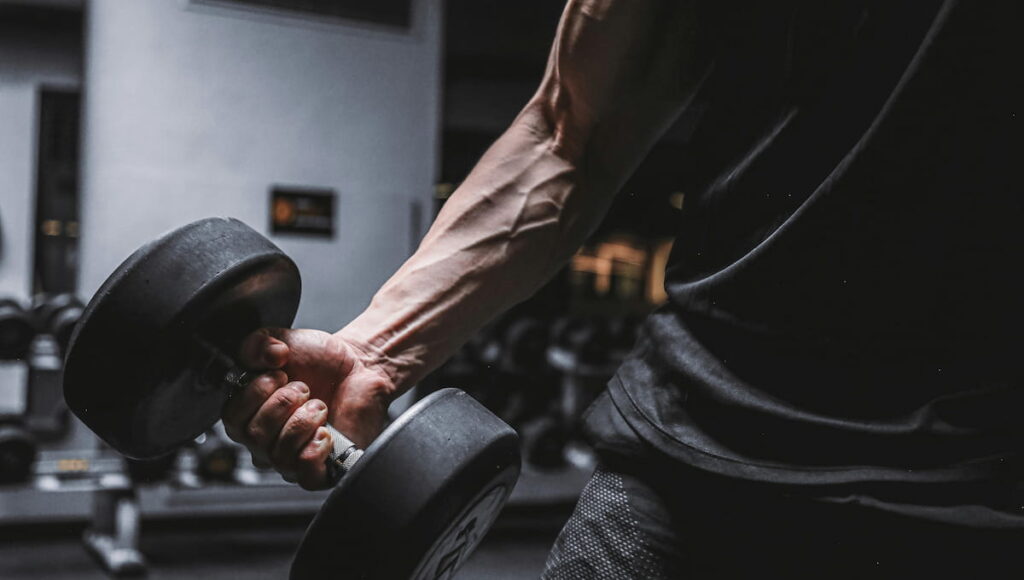
Building a strong, well-developed chest is not only an aesthetic goal but also a functional one. The chest muscles—primarily the pectoralis major and minor—play critical roles in pushing, stabilizing the shoulders, and supporting overall upper body strength. For beginners, establishing a foundation with the right exercises is essential before progressing to advanced training.
This article explores the 7 best beginner chest exercises, backed by science, to help you build muscle, strength, and proper technique from the ground up.
Why Chest Training Matters for Beginners
The chest muscles are central to many upper-body movements. The pectoralis major is responsible for horizontal adduction, flexion, and internal rotation of the shoulder joint. A strong chest contributes to better performance in pushing tasks—whether in sports, daily activities, or compound lifts like the bench press. Furthermore, strengthening the chest promotes balanced muscular development, reducing the risk of shoulder instability and injury.
Scientific research supports resistance training as a cornerstone for improving muscle mass, strength, and health markers. Hypertrophy-oriented programs enhance not only aesthetics but also functional capabilities such as bone density, joint health, and metabolic outcomes (Schoenfeld, 2010).
Principles of Beginner Chest Training
Before diving into the exercises, beginners should understand key training principles:
- Progressive overload: Muscles adapt to gradually increasing resistance. Start light, focus on form, and increase weight or reps progressively.
- Volume and frequency: Research indicates training each muscle group 2–3 times per week optimizes hypertrophy (Grgic et al., 2018).
- Technique first: Proper form reduces injury risk and ensures the targeted muscles are being worked.
- Mind-muscle connection: Studies suggest consciously focusing on contracting the chest enhances muscle activation (Calatayud et al., 2015).
The 7 Best Beginner Chest Exercises
1. Beginner Chest Exercises – Push-Up
Push-ups are a foundational bodyweight movement that target the chest, shoulders, and triceps. They also engage the core, making them an efficient beginner exercise.
Execution:
- Place your hands slightly wider than shoulder-width on the floor.
- Keep your body straight from head to heels.
- Lower your chest until it nearly touches the ground.
- Press back up to the starting position.
Scientific backing: Electromyography (EMG) studies show that standard push-ups elicit similar pectoral activation to the bench press when loads are matched relative to effort (Calatayud et al., 2015).
Progression: Start with incline push-ups if floor push-ups are too challenging, or move to weighted push-ups for progression.
2. Beginner Chest Exercises – Flat Barbell Bench Press
Often referred to as the king of chest exercises, the flat barbell bench press is a compound lift that allows for progressive overload and measurable strength gains.
Execution:
- Lie flat on a bench with feet planted firmly.
- Grip the bar slightly wider than shoulder-width.
- Lower the bar to mid-chest while maintaining control.
- Press the bar upward until arms are fully extended.
Scientific backing: EMG analyses consistently identify the bench press as one of the most effective movements for activating the pectoralis major, particularly when performed with moderate to heavy loads (Barnett et al., 1995).
Progression: Begin with an empty bar to master technique, then gradually increase weight.
3. Beginner Chest Exercises – Dumbbell Bench Press
Dumbbells allow for a greater range of motion compared to a barbell, encouraging balanced development and reducing muscular imbalances.
Execution:
- Sit on a bench holding dumbbells on your thighs.
- Lie back and press dumbbells upward with palms facing forward.
- Lower the dumbbells until elbows are at or just below chest level.
- Press back up to the starting position.
Scientific backing: Dumbbell presses have been shown to recruit stabilizing muscles more than barbell presses due to independent arm control (Saeterbakken et al., 2011).
4. Beginner Chest Exercises – Incline Dumbbell Press
The incline variation emphasizes the clavicular (upper) head of the pectoralis major, contributing to balanced chest development.
Execution:
- Set a bench to a 30–45° incline.
- Hold dumbbells at shoulder level, palms facing forward.
- Press upward until arms are extended.
- Lower dumbbells under control back to starting position.
Scientific backing: Research demonstrates that the incline press produces greater activation of the upper chest compared to flat pressing movements (Barnett et al., 1995).
5. Beginner Chest Exercises – Chest Dips
Dips primarily target the lower chest when performed with a forward lean, while also engaging the triceps.
Execution:
- Grip parallel bars with arms straight.
- Lean forward slightly to emphasize chest engagement.
- Lower your body until elbows are at 90°.
- Push yourself back up to the top position.
Scientific backing: Studies have shown that dips performed with torso inclination significantly activate the pectoralis major compared to a more upright posture (Youdas et al., 2010).
Progression: Beginners can use an assisted dip machine or resistance bands.
6. Beginner Chest Exercises – Cable Chest Fly
The cable fly isolates the chest by working through horizontal adduction with constant tension across the movement.
Execution:
- Stand in the center of a cable station with handles set at chest height.
- With a slight bend in elbows, bring the handles together in front of your chest.
- Slowly return to starting position, resisting the pull of the cables.
Scientific backing: EMG research highlights high activation of the sternal portion of the pectoralis during fly variations, making them valuable for isolation (Trebs et al., 2010).
7. Machine Chest Press
Machines are excellent for beginners, providing stability and guided movement, which helps build confidence and reduce injury risk.
Execution:
- Adjust seat height so handles align with mid-chest.
- Grip handles and press forward until arms are extended.
- Return under control to starting position.
Scientific backing: Machine presses are effective for muscle activation while reducing joint stress and technical complexity, making them ideal for novice lifters (Schick et al., 2010).
Structuring Your Beginner Chest Workout
For optimal results, combine compound lifts with isolation work. A sample beginner chest workout might look like this:
- Flat Barbell Bench Press: 3 sets of 8–10 reps
- Incline Dumbbell Press: 3 sets of 8–10 reps
- Push-Ups: 3 sets to near-failure
- Cable Chest Fly: 2–3 sets of 12–15 reps
Beginners should train chest 2 times per week, with at least 48 hours of recovery between sessions.
Common Mistakes Beginners Should Avoid
- Using excessive weight: Prioritize form over load to avoid injury.
- Partial range of motion: Incomplete reps reduce muscle activation.
- Neglecting upper chest: Balance between flat, incline, and accessory movements prevents imbalances.
- Poor scapular control: Pinch shoulder blades together during pressing to protect the shoulders.
Conclusion
The best beginner chest exercises provide a foundation for both strength and hypertrophy while emphasizing proper form, progression, and balanced development. By integrating these seven exercises, supported by scientific evidence, beginners can build a chest that is not only strong and functional but also aesthetically well-proportioned.
Key Takeaways
| Exercise | Type | Primary Focus | Key Benefit |
|---|---|---|---|
| Push-Up | Bodyweight | Overall chest activation | Accessible and scalable |
| Flat Barbell Bench | Compound | Mid-chest, triceps, shoulders | Heavy load potential and strength gains |
| Dumbbell Bench Press | Compound | Chest with stabilization | Greater ROM and balance correction |
| Incline Dumbbell Press | Compound | Upper chest | Emphasizes clavicular head of pec major |
| Chest Dips | Compound | Lower chest, triceps | Bodyweight progressive overload |
| Cable Chest Fly | Isolation | Sternal chest | Constant tension and chest isolation |
| Machine Chest Press | Machine-based | General chest | Stability and beginner-friendly |
References
- Barnett, C., Kippers, V. and Turner, P. (1995) ‘Effects of variations of the bench press exercise on the EMG activity of five shoulder muscles’, Journal of Strength and Conditioning Research, 9(4), pp.222–227.
- Calatayud, J., Borreani, S., Colado, J.C., Martin, F., Tella, V. and Andersen, L.L. (2015) ‘Bench press and push-up at comparable levels of muscle activity results in similar strength gains’, Journal of Strength and Conditioning Research, 29(1), pp.246–253.
- Grgic, J., Schoenfeld, B.J., Davies, T.B., Lazinica, B., Krieger, J.W. and Pedisic, Z. (2018) ‘Effect of resistance training frequency on gains in muscular strength: a systematic review and meta-analysis’, Sports Medicine, 48(5), pp.1207–1220.
- Saeterbakken, A.H., Mo, D.A., Scott, S. and Andersen, V. (2011) ‘The effects of bench press variations in competitive athletes on muscle activity and performance’, Journal of Strength and Conditioning Research, 25(10), pp.2752–2758.
- Schoenfeld, B.J. (2010) ‘The mechanisms of muscle hypertrophy and their application to resistance training’, Journal of Strength and Conditioning Research, 24(10), pp.2857–2872.
- Schick, E.E., Coburn, J.W., Brown, L.E., Judelson, D.A., Khamoui, A.V., Tran, T.T., Uribe, B.P., Czerwinski, S.J., Lagalante, A.F. and Shim, J. (2010) ‘A comparison of muscle activation between a Smith machine and free weight bench press’, Journal of Strength and Conditioning Research, 24(3), pp.779–784.
- Trebs, A.A., Brandenburg, J.P. and Pitney, W.A. (2010) ‘An electromyography analysis of 3 muscles surrounding the shoulder joint during the performance of a chest press exercise at several angles’, Journal of Strength and Conditioning Research, 24(7), pp.1925–1930.
- Youdas, J.W., Amundson, C.L., Cicero, K.S., Hahn, J.J., Harezlak, D.T., Hollman, J.H., Krause, D.A. and Laskowski, E.R. (2010) ‘Surface electromyographic activation patterns and elbow joint motion during a push-up progression in healthy men and women’, Journal of Orthopaedic and Sports Physical Therapy, 40(10), pp.676–684.