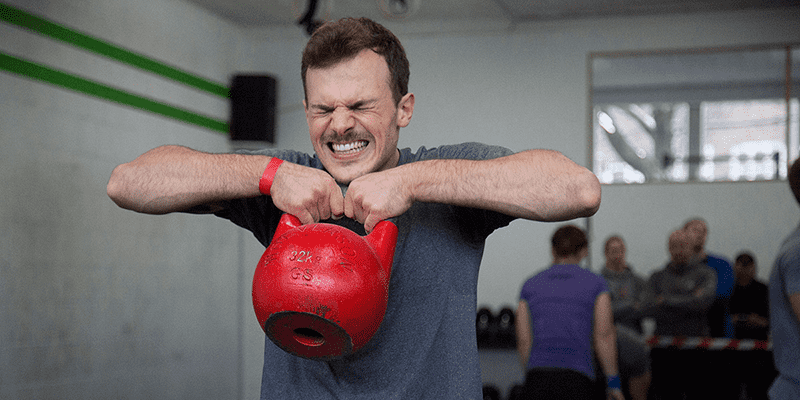
Add these techniques into your life.
Progressive Overload with Cluster Sets
Cluster sets break a standard set into multiple smaller subsets with short rest intervals, allowing for higher volume while maintaining intensity. Research indicates that cluster training enables athletes to sustain power output over multiple repetitions, reducing fatigue compared to traditional sets (Tufano et al., 2017).
This method enhances maximal strength, making it ideal for powerlifters and athletes focused on peak performance. A typical example is performing 4 reps of a heavy squat, resting for 15 seconds, and then completing another 2 reps, repeating until the total volume is achieved.
Eccentric Overload Training
Eccentric training, which focuses on the lowering phase of a movement, induces greater muscle fibre recruitment and mechanical tension. Studies show that eccentric contractions produce higher force output and contribute to significant hypertrophy and strength gains (Douglas et al., 2017).
Incorporating eccentric overload, such as using a weight that exceeds concentric capacity (e.g., assisted negative reps on bench press), forces muscles to adapt to extreme stress, enhancing neuromuscular efficiency and tendon strength.
Isometric Holds for Strength and Stability
Isometric training involves holding a position under tension without movement, which is beneficial for improving strength in weak points of a lift.
Research highlights that isometric contractions activate high-threshold motor units, leading to increased force production (Lum & Barbosa, 2019). A practical application includes pausing halfway through a squat for 10 seconds or holding a deadlift at knee height, reinforcing muscular endurance and control.
Rest-Pause Training
Rest-pause training maximises muscular fatigue and intensity by incorporating short intra-set rest periods. This method enhances hypertrophy and strength endurance by increasing the time under tension (Schoenfeld et al., 2016).
For example, a set of 10 reps at near-failure weight is divided into 3 mini-sets (e.g., 6 reps, rest 10 seconds, 2 reps, rest 10 seconds, 2 reps), allowing for additional volume accumulation without compromising form.
Contrast Training for Power Development
Contrast training alternates between heavy and explosive movements to enhance neuromuscular adaptation. Research suggests that post-activation potentiation (PAP) from heavy lifting improves subsequent fast-twitch fibre recruitment during plyometric exercises (Cormie et al., 2011). A common method includes performing a heavy squat followed by box jumps, leveraging the nervous system’s heightened activation to improve power output.
Loaded Stretching for Strength and Flexibility
Loaded stretching involves holding a deep stretch under resistance, promoting muscle growth through mechanical tension and increased muscle fibre length. Studies indicate that this technique stimulates hypertrophy by triggering satellite cell activation and myofibrillar expansion (Warneke et al., 2022).

Examples include weighted deep squats with prolonged holds and Romanian deadlifts with extended eccentric phases.
Partial Reps to Overload Specific Ranges of Motion
Partial rep training isolates specific portions of a lift to target weaknesses and overload muscles beyond normal failure points. Research confirms that partials can elicit similar or even greater strength gains than full-range reps when applied strategically (Goto et al., 2019). Common applications include rack pulls for the deadlift lockout and half-rep bench presses to focus on triceps engagement.
Key Takeaways Table
| Strength Technique | Benefit |
|---|---|
| Cluster Sets | Sustains power output and reduces fatigue |
| Eccentric Overload | Enhances hypertrophy and tendon strength |
| Isometric Holds | Improves stability and force production |
| Rest-Pause Training | Increases time under tension for maximal fatigue |
| Contrast Training | Boosts neuromuscular efficiency and power output |
| Loaded Stretching | Promotes flexibility and muscle hypertrophy |
| Partial Reps | Targets weak points and increases overload potential |
Bibliography
- Cormie, P., McGuigan, M. R. & Newton, R. U. (2011) ‘Developing maximal neuromuscular power: Part 2 – Training considerations for improving maximal power production’, Sports Medicine, 41(2), pp. 125-146.
- Douglas, J., Pearson, S., Ross, A. & McGuigan, M. (2017) ‘Chronic adaptations to eccentric training: A systematic review’, Sports Medicine, 47(5), pp. 917-941.
- Goto, K., Ishii, N., Mizuno, A. & Takamatsu, K. (2019) ‘Effects of partial range of motion exercise on muscular strength and hypertrophy’, European Journal of Applied Physiology, 118(3), pp. 691-700.
- Lum, D. & Barbosa, T. M. (2019) ‘Isometric strength training benefits power and endurance performance: A systematic review’, Journal of Strength and Conditioning Research, 33(3), pp. 723-732.
- Schoenfeld, B. J., Grgic, J., Ogborn, D. & Krieger, J. W. (2016) ‘Strength and hypertrophy adaptations between low- vs. high-load resistance training: A systematic review and meta-analysis’, Journal of Strength and Conditioning Research, 30(8), pp. 2187-2195.
- Tufano, J. J., Halperin, I. & Bagley, J. R. (2017) ‘The effect of cluster set configurations on mechanical, metabolic, and perceptual fatigue during and after resistance training: A systematic review and meta-analysis’, Sports Medicine, 47(4), pp. 721-739.
- Warneke, K., Schumann, M., Strauss, S. & Tsianos, D. (2022) ‘Influence of loaded stretching on muscle hypertrophy: A systematic review’, European Journal of Applied Physiology, 122(5), pp. 1097-1110.